Opening The Rift
therift
© 2026 The Rift. All Rights Reserved.
Bhubaneswar Slum Evictions Amid Severe Heatwave: OHRC Directs BDA to Provide Temporary Rehabilitation
The Commission noted that no prior notice was served and due legal procedures were ignored, leaving vulnerable families homeless in life-threatening conditions.

Key Takeaways
1 of 3
Automatically generated. Read full article for complete context.
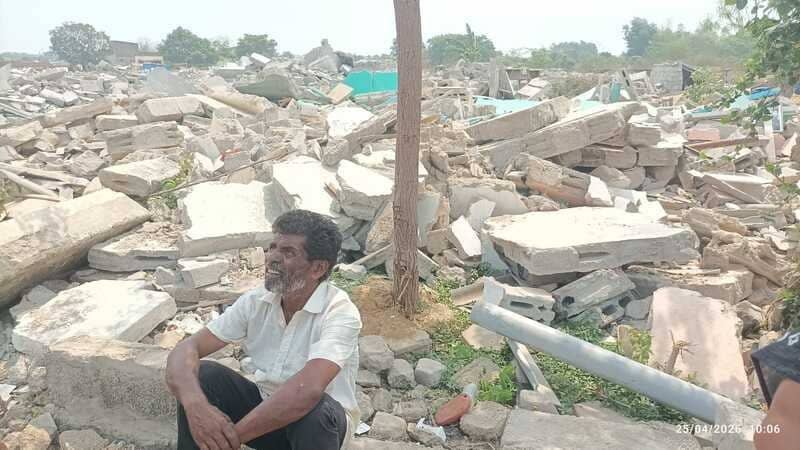
Bhubaneswar, Odisha: In Subhashree Pradhan vs. State of Odisha (OHRC Case No. 1611 of 2026), the Odisha Human Rights CommissionOdisha Human Rights Commission (OHRC)A statutory body established to protect human rights and investigate alleged violations in the state of Odisha. (OHRC) has sharply criticised the Bhubaneswar Development Authority (BDA) for forcibly evicting 1,226 families from the Subarnapur-Sampur Bhoodan Slum during an extreme heatwave. Among the demolished shelters were 926 completed houses and 300 under-construction units. The Commission noted that no prior notice was served and due legal procedures were ignored, leaving vulnerable families homeless in life-threatening conditions.
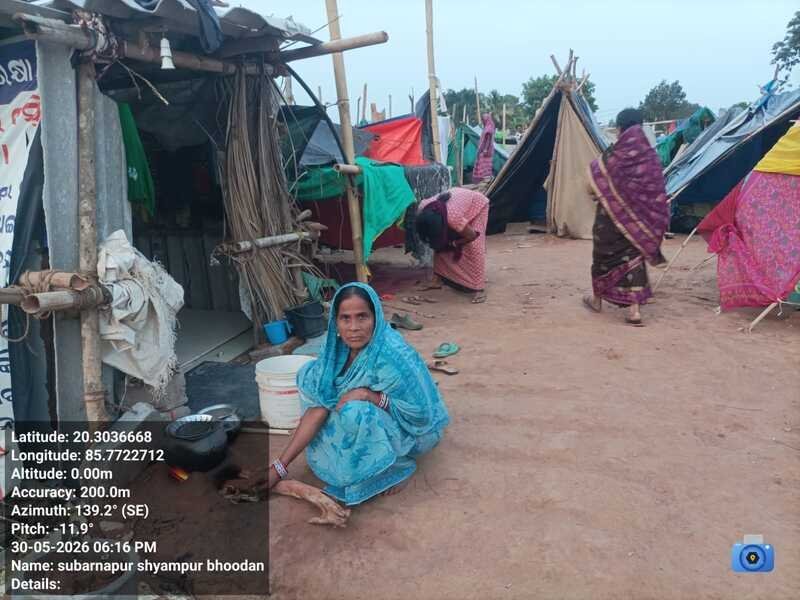
The OHRC expressed grave concern over the apparent violation of residents’ fundamental rights and directed the authorities to respond, including providing immediate remedial measures such as temporary rehabilitation and protection for the evicted families. The Commission emphasized that such actions must strictly adhere to legal and human rights norms, particularly when extreme weather conditions place citizens’ lives at risk.
Heat Wave Conditions amid Slum Evictions
In view of rising daytime temperatures, the State Government, vide Letter No. 8651/SME dated 02.04.2026, directed all schools under the School and Mass Education Department to reschedule class timings from 6:30 AM to 10:30 AM with immediate effect from 2 April 2026, until the commencement of summer vacation. The Government further clarified that the revised timing schedule would remain in force every year during the summer season.
Subsequently, in response to intensifying heatwave conditions across the State, Chief Minister Mohan Charan Majhi announced the immediate commencement of summer vacation for schools from 27 April 2026, ahead of the regular academic schedule, as temperatures continued to rise to extreme levels.
The decision marked a significant departure from the usual academic calendar, underscoring the urgency of the prevailing heatwave situation. With soaring temperatures posing serious health risks—particularly to young children—the State Government prioritised precautionary measures to minimise exposure to extreme weather and safeguard student well-being.
In addition, the National Human Rights Commission (NHRC), the Ministry of Labour and Employment, Government of India, and the Ministry of Housing and Urban Affairs, Government of India, issued separate advisories aimed at mitigating the impact of heatwaves and preventing casualties. These advisories particularly focused on vulnerable populations, including children, newborns, the elderly, patients, workers, and the urban poor across 21 States, including Odisha and NCT-Delhi.
Forceful Eviction during Severe Hot Summer
Despite the severe heatwave conditions, on 17 and 18 April 2026, the Bhubaneswar Development Authority (BDA) and the General Administration & Public Grievance (GA & PG) Department, deployed a large contingent of police personnel —including eight sections of male police force and two sections of female police force along with 50 police officers — accompanied by three executive magistrates (a DCP and two Addl. DCP-rank officers) — to evict residents from Odisha Bhoodan/Government land in question using 12 nos. of JCB Machine.
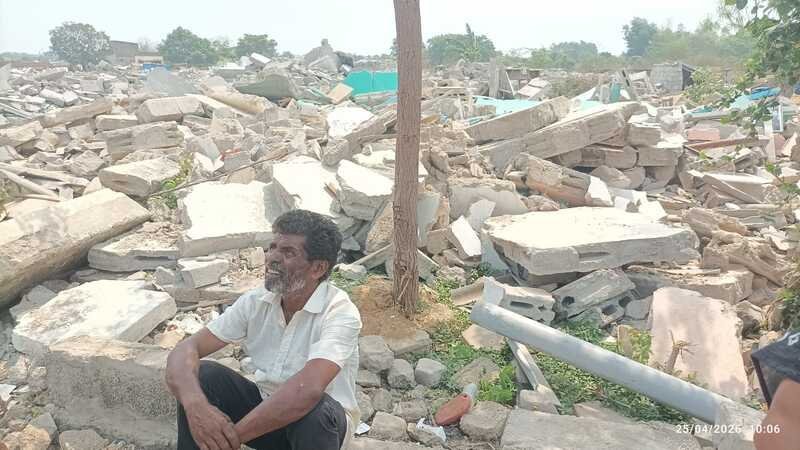
Declaring the residents as unauthorised occupants, the authorities demolished 1,226 houses—comprising 926 completed units (187 + 739) and 300 under-construction units (31 + 269)—through the Central Enforcement Monitoring CommitteeCentral Enforcement Monitoring Committee (CEMC)A specialized committee responsible for coordinating and monitoring eviction drives against unauthorized encroachments. (CEMC), without serving prior notices. This action was carried out in violation of the due process prescribed under the Orissa Public Premises (Eviction of Unauthorised Occupants) Act, 1972 , including its subsequent amendments.
When residents resisted the eviction/demolition and requested time to remove their belongings safely from their homes, the authorities refused, showing a photograph of a notice that was posted on the walls. The residents asserted that they had never received any notice and later discovered that the notice had been removed by the authorities after being photographed, as evidenced.
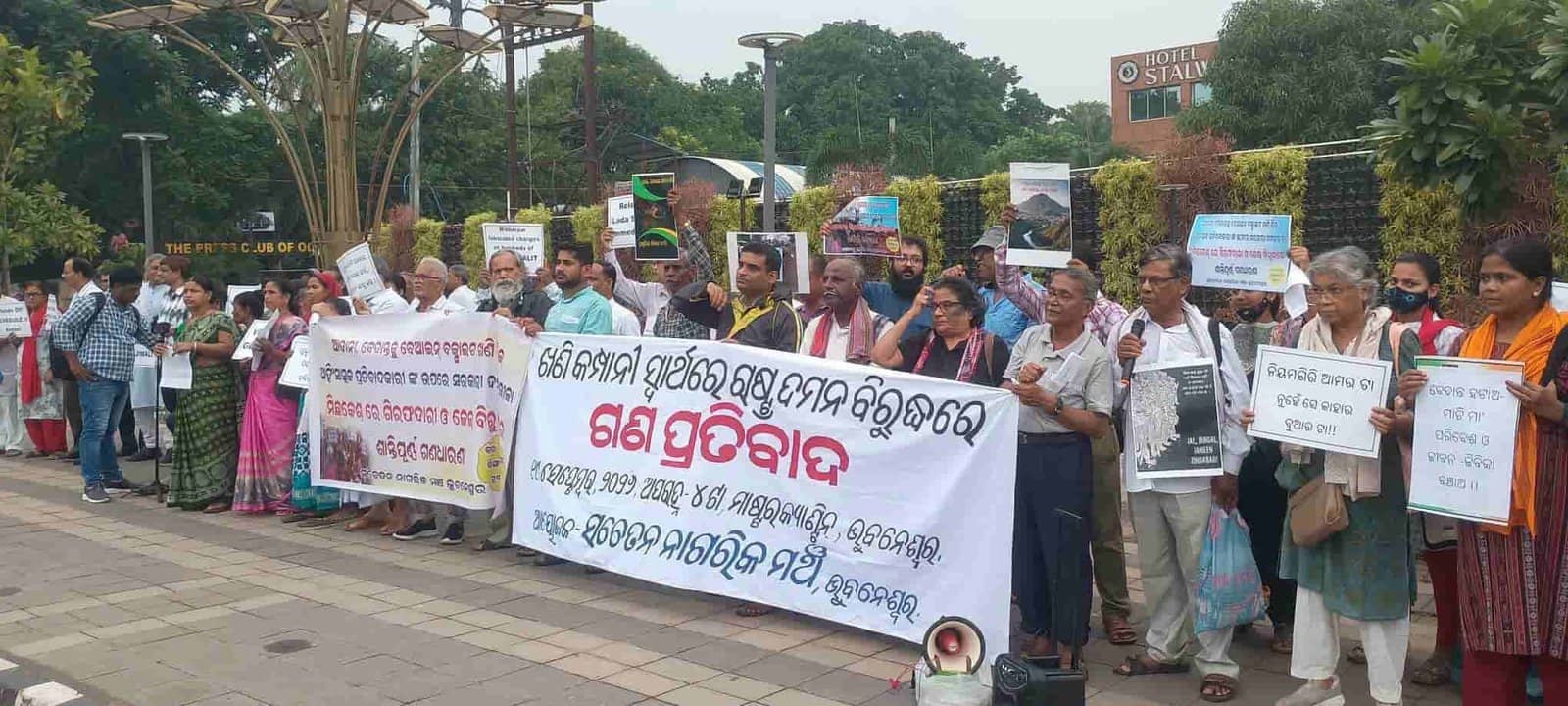
Slum dwellers opposed the sudden eviction and demolition carried out by the government without issuing prior notices, protesting against the action. In response, authorities resorted to water cannons and tear gas to disperse the protestors, leaving one person seriously injured with a fractured leg. Residents state that about 10 persons were arrested for a day as they protested against the action and released by police on PR Bond. Eventually, all the houses were forcefully demolished, leaving poor families, including children and elderly members, to live under polythene sheets amid an intense heatwave. Their bore wells—their primary source of water—were destroyed, making survival even more difficult during the severe heat conditions, at a time when the government itself had closed schools and announced early summer vacations due to the heatwave. Their cots, utensils, solar panels, and other household belongings were bulldozed without any regard for humanity. The medical prescriptions of their family members, their children’s books, important documents, food and clothing, and other important and essential belongings could not be retrieved, as the BMC cleared everything during the night.
No Shelter, No Water, No Relief
The government demolished houses that served as shelters, along with borewells that were essential sources of drinking water and daily use. During the sweltering heat on the day of eviction, when slum dwellers requested drinking water, officials reportedly refused, stating that water bottles had been arranged only for police personnel, drivers involved in the demolition, enforcement teams, and supervising officials.
When residents requested a water tanker, officials allegedly responded that since the government had already destroyed the borewells to facilitate eviction, it could not be expected to provide drinking water under any circumstances.
Further, the displaced families were not permitted to retrieve their belongings, including food supplies, gas stoves, and cooking utensils, leaving them unable to prepare meals. Despite this, no cooked food was provided to the affected families. While officials and enforcement personnel consumed the available food packets, the evicted residents were left without any relief.
No emergency assistance was arranged—no temporary shelter, no drinking water, no cooked meals, and no dry rations—despite the eviction being carried out without prior notice, leaving families exposed to severe heat and extreme hardship.
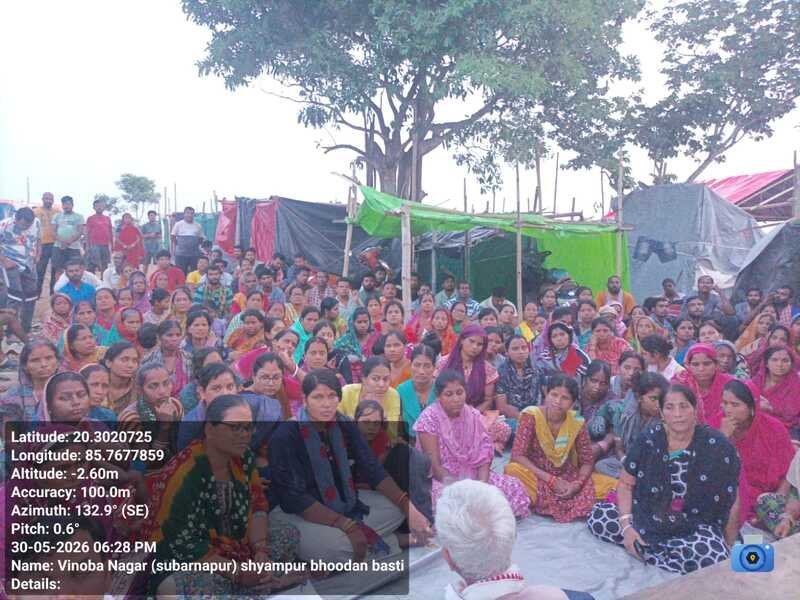
A group of the affected families continued to take shelter under the shade of trees during the peak summer heat, surviving on dry food for several days. Subsequently, they erected polythene shelters on a corner of the same land where the slum previously existed and began cooking meals to sustain their families. With no alternative housing options available in the city, they continue to live under the open sky, struggling to endure the harsh summer conditions.
Intervention by the Odisha Human Rights Commission
A group of families evicted from the Subarnapur-Sampur Bhoodan Slum approached the Odisha Human Rights Commission (OHRC), which registered their complaint as Case No. 1611 of 2026. The matter was subsequently tagged with two other related cases—OHRC Case Nos. 1498 of 2026 and 1609 of 2026—for joint consideration by the Commission.
On May 4, 2026, the Commission issued notices to the Secretary of the Bhubaneswar Development Authority (BDA), the Secretary to the Government of Odisha in the General Administration & Public Grievance (GA & PG) Department, and the Commissioner of the Bhubaneswar Municipal Corporation (BMC), seeking reports on the allegations. The Commission subsequently heard the matter on May 22, 2026 and issued reminders to the authorities for submission of their responses.
On May 29, 2026, Mr. R.K. Nanda, counsel for the BDA, submitted documents claiming that the land belongs to the GA & PG Department and had been handed over to the BDA. The complainants including eminent RTI Activist Pradip Pradhan strongly contested this, asserting that the land belongs to the Bhoodan Yagna SamitiBhoodan Yagna SamitiA committee established under the Bhoodan movement to redistribute voluntarily donated land to landless poor families., and that the GA Department had no authority to transfer it to the BDA. They argued that the eviction carried out by the BDA was therefore illegal and without jurisdiction.
In addition, Adv. Biswapriya Kanungo, a noted human rights activist, argued on behalf of the complainants that, without admitting that the land belongs to the GA & PG Department, even if, for the sake of argument, it is assumed that the land belongs to the GA & PG Department and was subsequently transferred to the BDA, the authority—being a creature of statue of the Government of Odisha, over which the State has deep and pervasive control—has no right to carry out arbitrary evictions without following due process of law. He argued that the eviction constituted a clear violation of human rights.
The complainants highlighted that over 300 families are currently living under polythene shelters, exposed to scorching heat, without access to basic amenities such as drinking water, electricity, and toilets. They requested the Commission to issue an interim order directing temporary rehabilitation.
Considering these submissions of the complainants, the Commission directed Mr. Nanda, counsel for the BDA, to obtain specific instructions regarding the prayer for interim rehabilitation and place them before the Commission on the next date of hearing. The Commission further warned that, failing such instructions, it would proceed to pass appropriate orders on the matter.
On June 2, 2026, Mr. Abhishek Nanda, counsel appearing for the BDA, informed the Commission that he could not obtain instructions regarding temporary rehabilitation due to the unavailability of concerned officials and requested an adjournment. He also raised a preliminary objection, asserting that the land belongs to the BDA, the occupants were trespassers, and therefore not entitled to rehabilitation.
The Commission, however, was not inclined to accept these objections. It noted that the houses were demolished without following due process of law and without issuing prior notice, leaving families in extreme distress under polythene shelters amid intense summer heat and rain, without access to basic facilities. Despite being given ample opportunity, the BDA has not proposed any interim relief or rehabilitation measures.
In view of these circumstances, the OHRC recommended that the BDA provide temporary rehabilitation to the evicted families—except those who have already approached the High Court or other civil courts—for at least one month. The Commission directed that suitable shelter should be arranged at the same site or nearby locations, with basic amenities such as drinking water, electricity, and toilet facilities. It clarified that this temporary arrangement does not confer any rights over the land, where from they are evicted or place they are rehabilitated in any manner and remains strictly interim, subject to any orders from competent authorities or courts.
The matter has been adjourned to July 23, 2026.
This article first appeared in Countercurrents.
Disclaimer:The views and opinions expressed in this article are those of the author(s) and do not necessarily reflect the official policy or position of The Rift.