Opening The Rift
therift
© 2026 The Rift. All Rights Reserved.
A Climate Resilience Model Based on Water Conservation, Small Farmer Support and Nutrition Gardens
Parmarth’s model strengthens climate resilience while simultaneously bolstering the sustainable livelihoods of villagers in Bundelkhand.

Key Takeaways
1 of 3
“In the context of climate adaptation, Parmarth’s highest emphasis has been on water conservation and adequacy, alongside promoting low-cost farming and nutrition gardens to improve health and nutrition in low-cost ways.”
Automatically generated. Read full article for complete context.
Parmarth, a leading voluntary organization in the Bundelkhand region in India, has evolved a model of climate mitigation and adaptation in a rural context which is in conformity with the sustainable livelihood needs of farmers. As Sanjay Singh, secretary of Parmarth says, “we try to strengthen climate resilience in such a way that the sustainable livelihoods of villagers are strengthened simultaneously.
In the context of mitigation, the emphasis has been on planting more trees with the more recent emphasis on the concept of ‘oxygen garden’ or oxygen vatika where trees considered best for fresh air are prioritized. The reliance on fossil fuels in farming is sought to be reduced by encouraging natural and organic farming.
In the context of climate adaptation, Parmarth’s highest emphasis has been on water conservation and adequacy, alongside promoting low-cost farming and nutrition gardens to improve health and nutrition in low-cost ways.
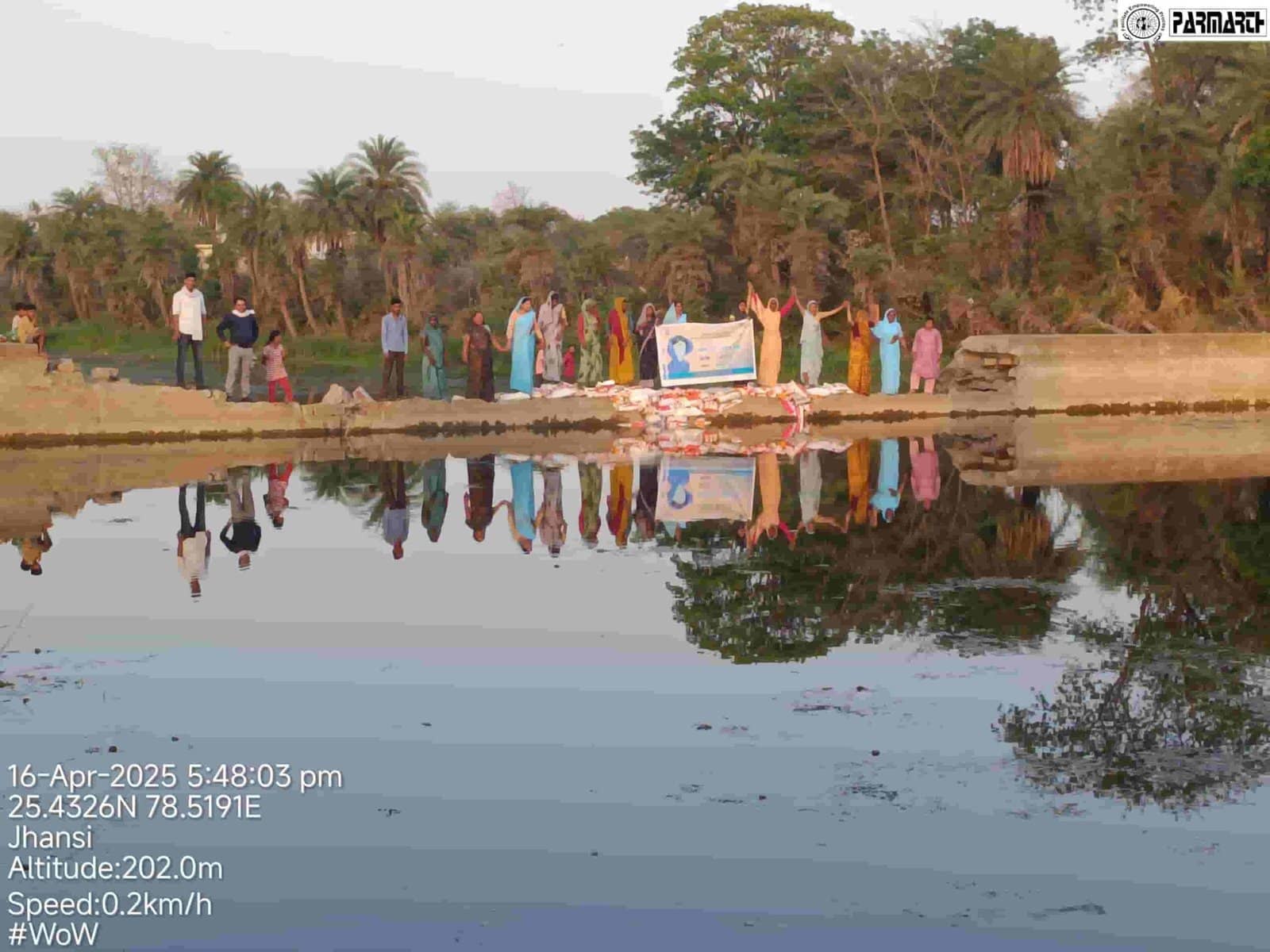
In the context of water conservation, Parmarth has emerged as a leader in mobilizing a cadre of voluntary women water workers, known as jal sahelisJal Sahelis (Water Friends)A cadre of voluntary women water workers mobilized by Parmarth, playing a crucial role in water conservation and management in rural communities., who have made important contributions to water conservation and adequacy. More specific priorities have included the rejuvenation of rivers and streams, restoration of water tanks and wells, improving water supply with the support of rural water organizations or pani panchayats.
Parmarth has also supported irrigation methods that minimize wastage of water. The Bundelkhand Mahila Sinchai SanghBundelkhand Mahila Sinchai Sangh (Bundelkhand Women’s Irrigation Association)A pioneering women-led initiative in the Bundelkhand region focused on improving irrigation governance and promoting water-efficient technologies. is a pioneering effort led by women for improving irrigation governance. This initiative is supporting shared irrigation systems and water efficient technologies.
Parmarth has supported small farmer livelihoods in several ways including providing special help at the time of disasters to enable farmers to recover from adverse situations. Speaking in the context of several villages of Jhansi district, a member of the Parmarth team, Shelly, said that since several farm research organizations and scientists are located here, efforts are made to obtain their help for the success of nutrition gardens which can be multi-layered vegetable gardens with some fruit trees but which can also be even smaller kitchen gardens that can be taken up even by those households that do not have any farmland. Parmarth’s documents highlight the success stories of several nutrition gardens. In Madhepura village of Jalaun district, Neeraj Devi, who had just one acre of land, was able to increase her income significantly by growing a diversity of vegetables using organic methods. She was helped by the support she received through her membership in a self-help group. Ganesh Kushwaha of Surwa village has also increased his income significantly through organic cultivation of vegetables and marigold flowers. His income is reported to have increased substantially in a short time.
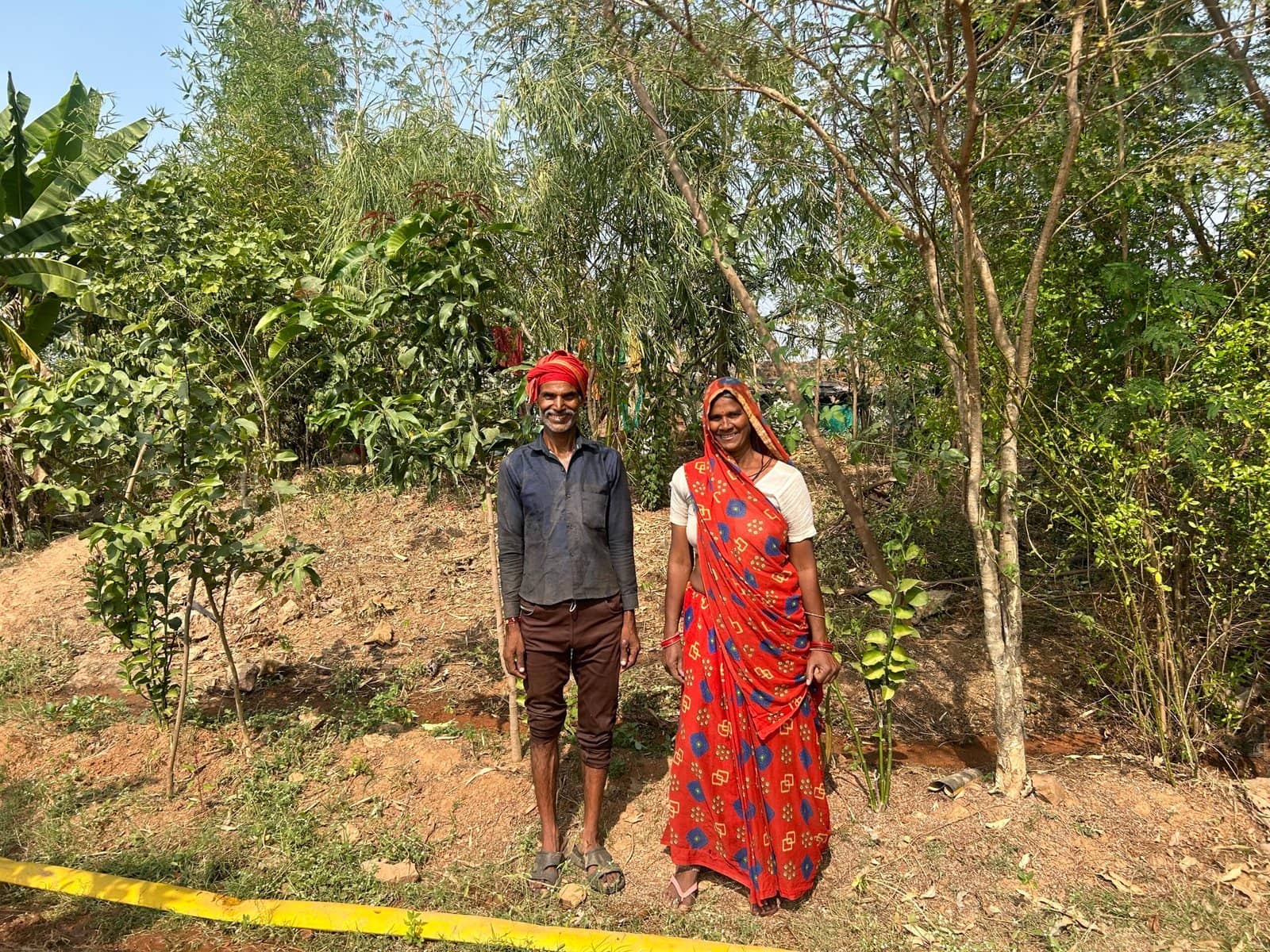
In the course of my travels in the Parmarth’s work area, I came across a very remarkable farming couple showing great commitment to natural farming. In Bamauri village of Talbehat block (Lalitpur district of Uttar Pradesh), Maniram and his wife Shanti work in difficult conditions to cultivate their small one hectare farm. Together, they have worked to create a very beautiful farm and garden. Within one hectare, within a mixed farming system, with appropriate crop rotations they grow cereals and millets, fruits and vegetables, legumes and oilseeds, as well as some flowers, herbs and spices.
They have trees of lemon and other citrus fruits, anvla or gooseberry, pomegranate, guava, mulberry, banana and different varieties, both small and large, as well as marigold flowers. Both Maniram and Shanti are completely committed to natural farming. They do not use any chemical fertilizers and pesticides. Maniram said, “I must care about my health and my family’s health. Equally important, I must care about the health of everyone who eats the produce of our small farm and their health must also be protected.”
However even such a highly creative farmer like Maniram was once unable to work on his remote, isolated field due to lack of water. So he had to migrate to places like Indore in search of work. The situation changed when a water pond was created by the government, and to feed water to it check dams were constructed by Parmarth, while the village community contributed with voluntary labor and land. It was this cooperative effort of Parmarth, the village community and the administration that created the basic water support which enabled Maniram to transition from migrant worker to largely self-reliant and happy small farmer. Parmarth also helped them in other ways with seeds, plants, and so on.
It is a sustainable, ecologically protective farm. Its only fossil fuel connection is the use of diesel for lifting water, but it creates organic soil and grows many trees that can absorb much more carbon. As a low-cost, self-reliant and sustainable farm that has hardier and more resilient mixed crop systems, it is also highly beneficial for climate change adaptation. It is protective of both environment and health.
Disclaimer:The views and opinions expressed in this article are those of the author(s) and do not necessarily reflect the official policy or position of The Rift.