Opening The Rift
therift
© 2026 The Rift. All Rights Reserved.
From Migration to Identity: Water, Hard Work, and Women’s New Flight
“We used to think this land could only survive on rain. But when water came, we understood that the real strength was always in our own hands.”

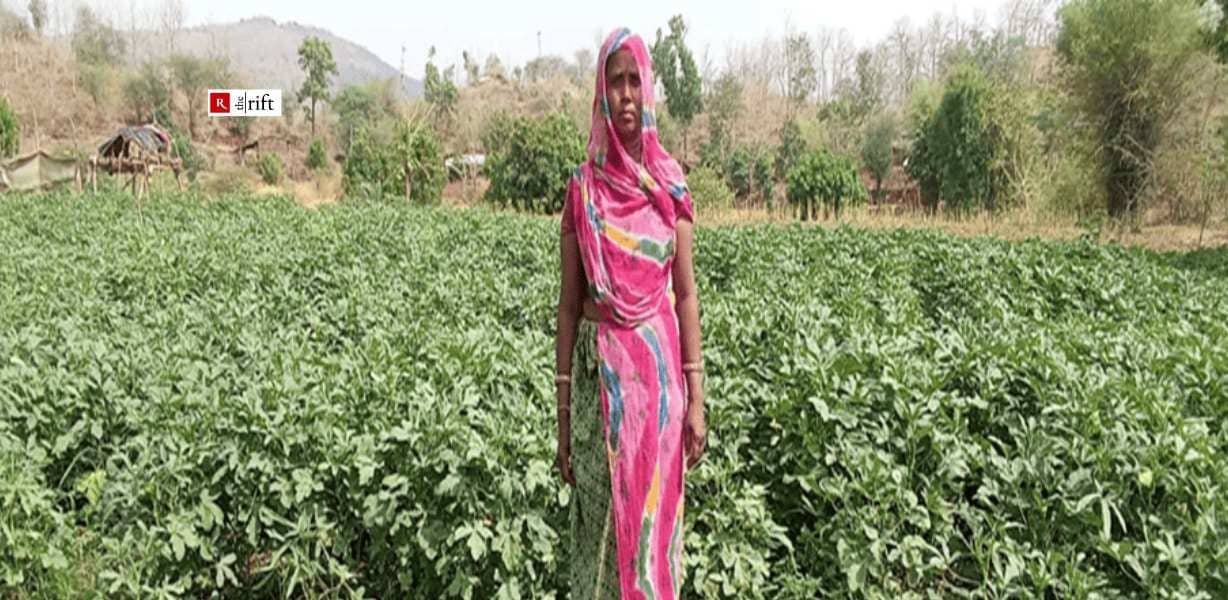
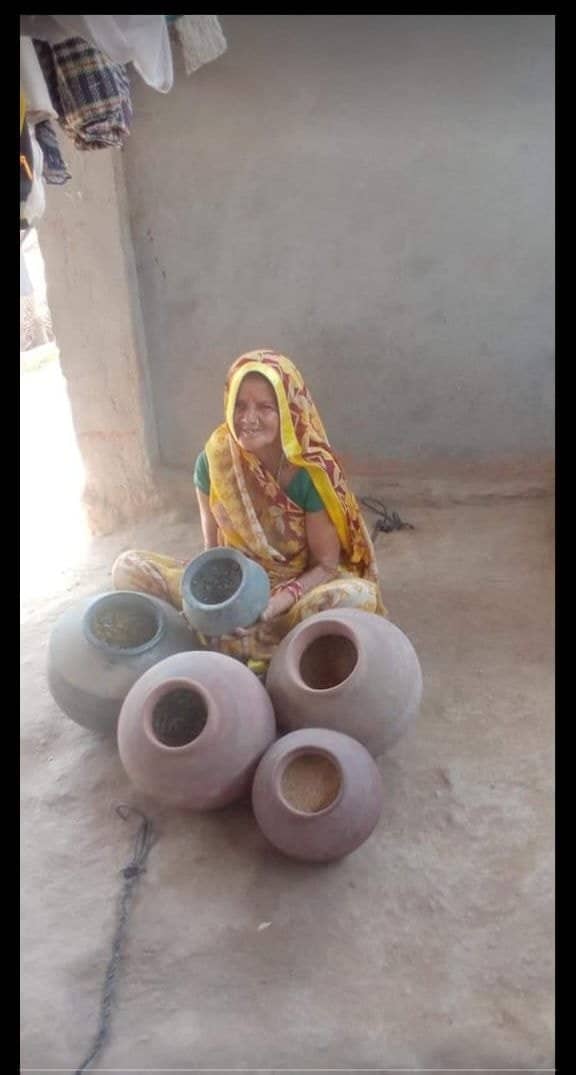
Kala Devi, with her brinjal (eggplant) and okra crop.(Photo Credit: Mukesh Maida, Block Facilitator, Vaagdhara).
Key Takeaways
1 of 3
Automatically generated. Read full article for complete context.
In the Ghatol block of Banswara district in Rajasthan lies a village called Lamba Ghata. The journey this village has undertaken over the past few years stands as a remarkable example of transformation. Today, the women here are growing vegetables in their fields, raising livestock, going to market to sell their own produce, and carving out pathways to permanent livelihoods for their families. But this picture was not always so bright.
Turn the clock back five years, and the soil of Lamba Ghata knew no support other than the drops of the monsoon rain. Irrigation was so scarce that even the modest water from local streams reached only a handful of farmers during the rabi seasonRabi SeasonThe agricultural season spanning winter and spring in India, typically relying on irrigation as opposed to the monsoon-dependent kharif season.. For everyone else, farming was never a stable livelihood. When the rains came, the fields turned green; when they left, the fields fell desolate. This desolation pushed most of the village’s families to abandon their homes out of sheer compulsion. Industrial cities from Mandsaur in Madhya Pradesh to Ahmedabad and Surat in Gujarat became the second home of Lamba Ghata’s labourers. Every year, the same cycle repeated itself: return to the village with the monsoon, do a little farming, and as soon as the harvest was done, pack up and hit the road to the cities again. Maju Devi, a woman from that very village, recalls those days with quiet sadness. “When my husband would leave, months would pass without any news. The fields lay dry and barren, and I would just wait, sometimes for rain, sometimes for him to come back.”
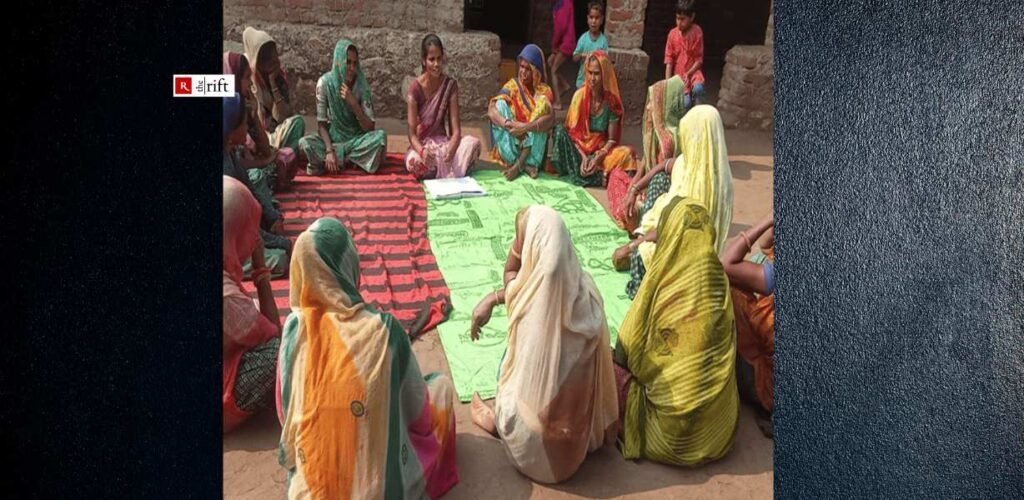
Life within the home was even harder. When VAAGDHARAVAAGDHARAVAAGDHARA is a non-profit organization that operates under the Rajasthan Societies Registration Act, 1958. The name VAAGDHARA is derived from its working area, Vagad, which is the tribal region of Rajasthan bordering Gujarat, and Dhara, meaning stream. began community meetings in the village in 2021, women’s attendance barely touched thirty to forty percent. And those who did come sat in silence, unable to summon the courage to speak. Kala Devi remembers that period clearly: “Even going to the meeting felt like a big deal back then. Speaking up there was something we couldn’t even imagine. We thought, what do we know? Who would listen to us?”
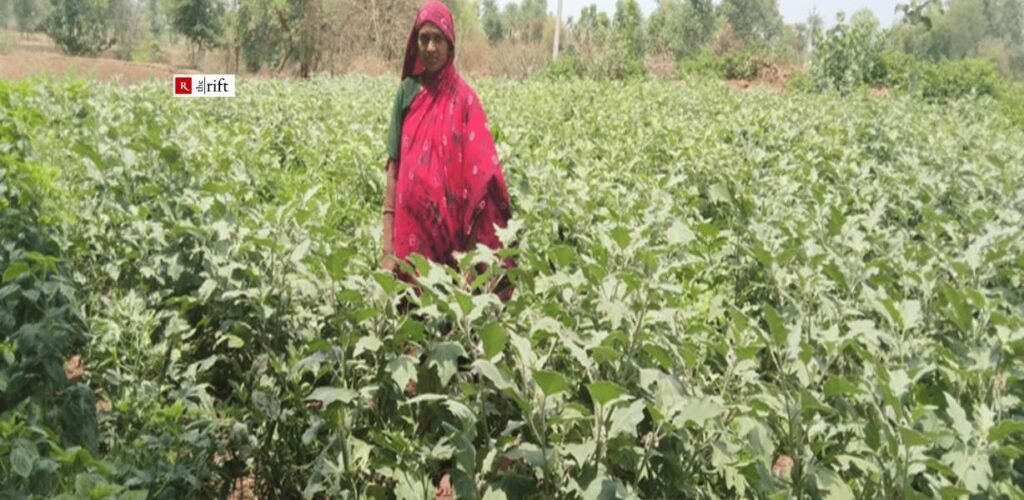
We used to think this land could only survive on rain. But when water came, we understood that the real strength was always in our own hands. The first time I sold my bottle gourd at the market, that money was mine, earned by my own labour.” – Sapna Devi
It was then that VAAGDHARA began its work around concepts like “Sachcha Swaraj” (True Self-Governance), “Sachchi Kheti” (True Farming), and “Sachcha Bachpan” (True Childhood), forming groups like Saksham Samuh, Gram Swaraj, and Bal Swaraj. But the organization faced a dual challenge: on one hand, bringing women out from behind their household thresholds and into the meetings, and on the other, building within them enough confidence to speak freely, ask questions, and voice their opinions.
It was the community facilitator Indira Devi who refused to give up. She went door to door, talking to women, explaining things to the elderly and to men, and bringing with her examples from other villages where improved irrigation and greater vegetable production had gradually reduced the compulsion to migrate. In meeting after meeting, she would say, “Until water reaches our fields, our children will keep wandering in the dust. Even one borewell can change the fate of ten families.” These were words of faith spoken in a language that slowly began to sink into the hearts of the women. On the foundation built through this sustained dialogue and effort, the first concrete milestone came when a group of women collectively initiated the digging of a community well near their fields. The proposal was approved under the MNREGA schemeMNREGAThe Mahatma Gandhi National Rural Employment Guarantee Act, an Indian labor law guaranteeing 100 days of wage employment in a financial year to rural households., with a sanctioned amount of approximately two and a half lakh rupees for the new well. When the water came, so did the possibility of zaidZaid SeasonA short cropping season in India between the rabi (winter) and kharif (monsoon) seasons, typically used for growing summer crops like vegetables. (the summer crop season). The first to walk this new path was Sapna Devi, a member of the Saksham Samuh, who began growing bottle gourd, round gourd, cucumber, cluster beans, sesame, moong, brinjal, and okra in her field. Even today, the joy of that first harvest is fresh in her voice: “We used to think this land could only survive on rain. But when water came, we understood that the real strength was always in our own hands. The first time I sold my bottle gourd at the market, that money was mine, earned by my own labour.”
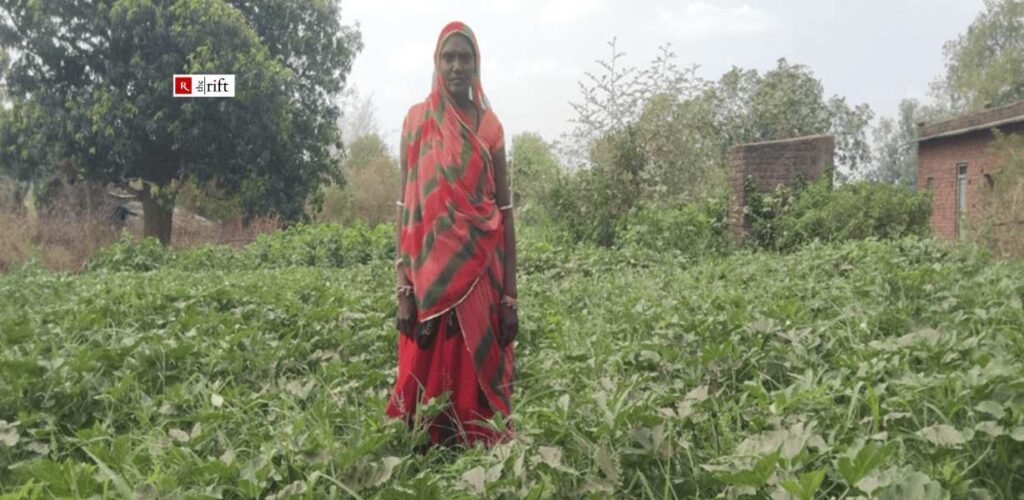
As word of Sapna Devi’s success spread through the lanes of the village, other women followed. Kala Devi, Pooja Devi, Rama Devi, Suka Devi, Maju Devi, Radha Devi, Jeev Devi, Toli, Meera, Kesar Devi, Jija, and Katuri; one after another, women began stepping into their fields to grow okra, cluster beans, cucumber, bottle gourd, ridge gourd, sponge gourd, chilli, brinjal, and sesame. The conversations changed: at the water-filling spots, while dropping children at school, during the evening gatherings. Pooja Devi captures this transformation in the simplest of words: “Before, when we met at the well, we talked about who had rations at home and whose husband had sent money. Now we talk about whose okra yielded more and who sold it at what price. This change is not small; it is a change in the way we think.”
The Zaid Harvest: Crop Diversification
⚠ Before
Monsoon Only
Rain-fed farming forcing seasonal labor migration.
🌾 Today
9+ Varieties
Okra, cucumber, bottle gourd, cluster beans, and more.
VISUALS BY THE RIFT
As the fields grew greener, the voices of women in the meetings grew louder too. Kala Devi of the Saksham Samuh shares her experience: “Now I don’t feel afraid to speak in meetings. Earlier we thought, what will we even say? Now we think, speaking is necessary, otherwise who will put our case forward?” These words may sound simple, but behind them lies the story of a profoundly deep transformation. Other families too, through mutual support, began constructing borewells and wells. Farming was no longer a seasonal activity dependent on the mercy of the monsoon; it had become the primary and year-round source of livelihood.
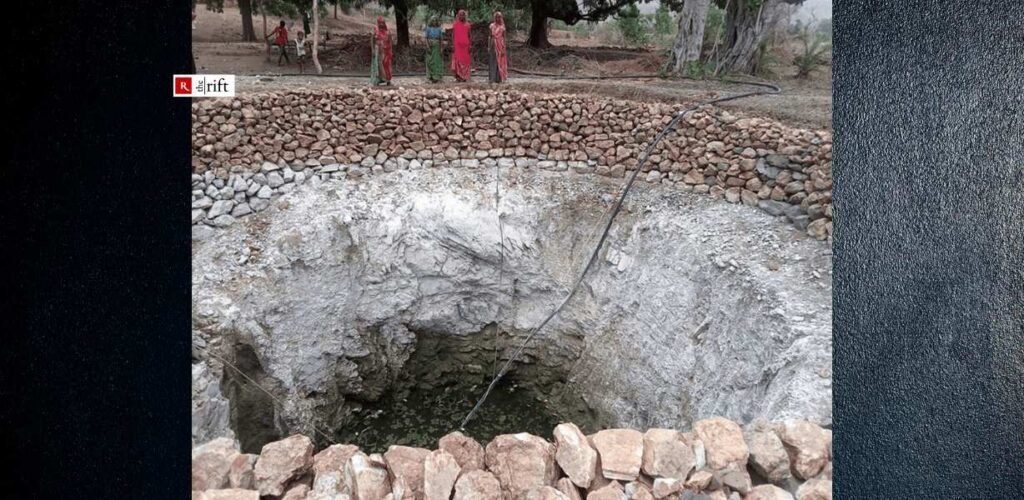
This community solidarity reached yet another milestone in 2023, when the water problem was formally raised in a Gram Swaraj group meeting and a proposal for well construction at the panchayat level was prepared. Group members presented data on the need in meetings, documented the village’s problems in written form, and maintained sustained dialogue with administrative officials. In August 2024, the well was completed, and more than ten surrounding families gained access to drinking water.
Milestones of Transformation
◴ 2021
VAAGDHARA meetings begin with low female attendance.
◴ 2023
Proposal for community well raised at panchayat level.
◴ August 2024
Well completed; over 10 families gain water access.
VISUALS BY THE RIFT
Today, almost every woman associated with the Saksham Samuh is producing seasonal vegetables in or near her home and earning an average additional income of six hundred to seven hundred rupees per day. Most families have also integrated livestock rearing into their livelihoods. Better food is reaching homes, children’s books are arriving on time, and the compulsion to borrow money has reduced considerably.
The Economic Shift
⬈ Additional Income
₹600–700
Average daily earnings from vegetable sales
⚙ Livelihood Status
Year-Round
Shifted from seasonal migration to permanent farming
VISUALS BY THE RIFT
But the change that runs deeper than this economic transformation is the change in the identity of these women. Suka Devi’s words carry this transformation unmistakably: “Earlier, if anything needed to be bought for the home, I had to ask my husband. Now I go to the market myself, bring the money myself, and decide for myself what the household needs.” Women now keep their own account of their income, manage the responsibility of selling vegetables at the market themselves, and this economic independence has naturally increased their participation in household decisions as well.
The most humane dimension of this entire effort is the remarkable reduction in migration. Children whose schooling used to be repeatedly disrupted are now moving steadily forward in a single school. Radha Devi says today: “Now my daughter goes to school every day, and her books come on time. Earlier I used to think she would stay on the farm just like me. Now I think she can become something else, and that thought itself is my greatest earning.”
Indira Devi, the architect of this entire transformation, describes it with characteristic humility: “We didn’t do anything great. We simply made every woman believe that she herself can change her own life. Once that belief came, everything else followed on its own.” And the essence of this entire journey finds its most beautiful expression in Sapna Devi’s words: “We are the same, the land is the same, but now there is water. And when there is water, there is hope. And when there is hope, there is everything.”
Disclaimer:The views and opinions expressed in this article are those of the author(s) and do not necessarily reflect the official policy or position of The Rift.