Opening The Rift
therift
© 2026 The Rift. All Rights Reserved.
AS COTTON CULTIVATION BECOMES UNVIABLE IN MANY VILLAGES OF INDIA, GM CROPS FACE MORE CRITICISM
Whatever the short-term gains, if any, these are quickly exhausted, leaving farmers burdened with more pests, more pesticides, higher costs of seeds and pesticides.

Key Takeaways
1 of 3
Automatically generated. Read full article for complete context.
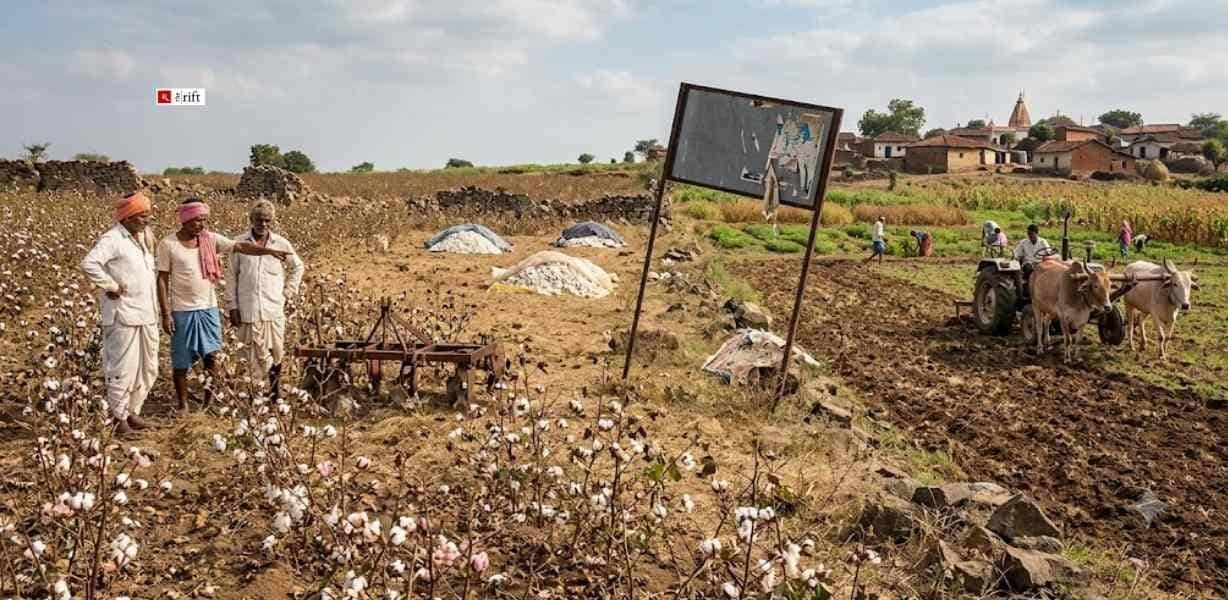
At a recent meeting in Rohtak of the All India Kisan Sabha or farmer assembly (AIKS), its Haryana state committee drew pointed attention to a ‘drastic decline’ in cotton cultivation in the cotton belt of the state. Among the various factors identified for decline, AIKS national vice-president Inderjit Singh said that pink bollwormPink BollwormA destructive insect pest that primarily attacks cotton crops, burrowing into the bolls and destroying the fibers. attacks have devastated farms growing Bt cottonBt CottonA genetically modified variety of cotton producing an insecticide to combat bollworms, developed by Monsanto., even though the seeds were marketed by companies describing these as pest-resistant. Farmers were then sold large volumes of pesticides which too failed to control infestations. Similarly there was shrinkage in the cotton cultivation in neighboring states of Punjab and Rajasthan too (reported in the Hindu, Chandigarh edition, June 9, 2026–news report titled ‘AIKS to mobilize cotton growers as crop turns unviable in Haryana’).
The figures quoted by AIKS mentioned a decline in cotton area in Haryana from 0.72 million hectares in 2019-20 to 0.40 million hectares in 2024-25. This is a big decline. However more updated figures quoted by Smart Information Services report an even bigger decline, a 65% decline from 2019-20 to 2025-26—from 0.80 million hectares to 0.28 million hectares.
At the national level also a decline has been reported, although to a lesser extent. A UNDP report titled “Cotton has become a headache’ from tribal community villages in Odisha has stated that the spread of chemical intensive Bt cotton monoculture is spreading through Rayagada district—harming health, deepening debt, irreversibly eroding indigenous knowledge and sowing the seeds of a climate crisis. The traditional system of growing diversity of foods here was climate resilient and provided food security. So why not go back to this? A farmer answered—now in the new system we are indebted to the moneylender and he gives money only for cotton.
So it is not only a question of shrinking cultivation but also of Bt cotton cultivation continuing to create more problems in the area where it is grown. However the peddlers of GM (genetically modified) crops interpret the situation in an entirely distorted way—they want more and new GM varieties to come in, while actually this will only bring more problems.
Over a period of more than two decades the experiences of over 7 million cotton growing farmers in India has changed drastically as a diversity of cotton varieties have been replaced to the extent of perhaps over 90 per cent by genetically engineered Bt cotton varieties like Bollgard I and Bollgard IIBollgard IIA second-generation Bt cotton containing two different insecticidal genes to combat resistance, which has since widely failed against the pink bollworm in India.. This change was widely promoted by very influential and resourceful private companies as varieties which will be less susceptible to pests, particularly the pink bollworm (PBW), reduce pesticide use and increase yields, a win-win situation of increasing earnings and reducing costs. However the actual experience of farmers has been very different from this.
A paper titled ‘Long-term impacts of Bt cotton in India’ by K.R. Kranthi and Glenn Davis Stone, published in Nature ( 13 March, 2020 ) has stated that cotton farmers today have to spend more on pesticides than before the introduction of Bt cotton. What is more, this paper predicts on the basis of the experiences so far, “the indications are that the situation will continue to deteriorate.” The first mentioned author of this paper has been very closely involved with cotton research in India at very senior levels.
Another important paper has been published in Nature (February 7, 2022). This paper, written by Katharina Najork, Jonathan Friedrich and Markus Keck is titled, ‘Bt cotton, pink bollworm and the political economy of sociobiological obsolescence: insights from Telengana, India’. This paper has stated, “After genetically engineered Bt cotton lost its effectiveness in central and southern Indian states, pink bollworm infestations have recently returned to farmers’ fields and have substantially shifted their vulnerability context. We conceive Bt cotton as a neoliberal technology that is built to protect farmers only temporarily from Lepidopteran pests while ultimately driving the further concentration of capital.
“Based on data from a representative survey of three major cotton-producing districts of the state of Telengana, we find that pink bollworm pest infestations are a shock to farmers that lead to severe losses in yield and income. We argue that Bt cotton includes an inherent obsolescence that results in a systematic dispossession of resource-poor households while providing appropriation opportunities for other actors. Finally, reproduced hegemonic structures facilitate the accumulation of capital through a redistribution of assets from the bottom to the top of agricultural sector. Claims that considered Bt cotton as a pro-poor technology were thus flawed from the outset.”
In a study of 15 villages this study found that 80% of farmers interviewed saw pink bollworm pest infestations in their Bt cotton crop during the last five years, and 96% of these farmers reported the first appearance of these pests within the last five years. The smaller farmers growing Bt cotton have been forced to take more loans and their debts have increased, endangering their survival as farmers.
While this study was more in the context of southern parts and partly central parts of the country, more recently this issue has become important in the context of northern parts too. Farmers across a vast cotton growing area of Punjab and some parts of neighboring Haryana are today extremely bitter about the extensive damage caused by pink bollworm pest, while memories of other serious pest attacks also continue to trouble them. Neel Kamal reported in The Times of India ( Chandigarh edition, 28 September, 2021), “ The pink bollworm attack on cotton crop in Punjab has made farmers a worried lot, as memories of whitefly attack in September 2015 are still fresh in their minds…the 2015 whitefly attack had caused over 60% damage to cotton crop.” This report noted that pink bollworm attack is the highest this time in Punjab, although attacks were reported earlier in Gujarat and Maharashtra.
This report stated that this time (2021) the bollworm attack is more in Bathinda and Mansa districts, but other reports described the extensive damage in other districts as well. The Tribune reported on October 9 2021 (Chandigarh edition, news titled Cotton in 85 Sangrur villages under bollworm attack)—“ The cotton crop on 1500 acres in 85 villages of Sangrur district has come under the pink bollworm attack. In Barnala, the attack has caused panic among farmers. In many villages, the repeated sprays of insecticide have failed to prevent the spread of the attack…Department officials are organizing special camps at various villages, recommending sprays and making farmers aware against spurious ones.”
Thus unfortunately solutions are still being sought more and more in pesticides. As another report in The Times of India titled ‘Channi checks damage to cotton by pink bollworm’ stated—(the then) Chief Minister Charanjit Channi while visiting affected villages “asked the officers to pump in all the resources in terms of best available insecticides and pesticides to save the precious crops of the farmers.”
In 2017-18 very widespread damage was reported to Bt cotton crop from pink bollworm in Maharashtra. A report in the Economic Times dated 21 January 2018 by G.Setthraman titled ‘These Two Issues Could Put the Brakes on the Bt Cotton Story’ quoted a senior agriculture official of Maharashtra as stating that 80% of the cotton growing area of the state had been affected in the current season. This report also stated that Bt cotton is the only commercialized GM ( genetically modified) crop in India and it is due to the vast spread of this alone that India has the fifth highest area under GM crops in the world and Bt cotton seeds account for 40% of the Rs.14000 crore national seeds market. This report said—“ the loss caused by the pink bollworm infestation has raised serious questions about the sustainability of GM cotton, which accounts for over 90% of all cotton grown in the country.” This report documented the very rapid growth of Bt Cotton. Monsanto introduced its first generation Bt Cotton called Bollgard I (BG-I) in 2002 and Bollgard II ( BG-II) in 2006. Over the last three years, this review said, reports have emerged of the pink bollworm becoming immune to Bollgard II. In addition this review drew attention to illegal sale of herbicide tolerant (HT)Herbicide Tolerant (HT) CottonUnapproved, illegal GM cotton seeds engineered to withstand heavy spraying of weed-killers like glyphosate, raising severe ecological and health concerns. variety of Bt Cotton, amounting to 3.5 million packets in 2017-18 alone. Keeping in view the high expenses of Bt cotton cultivation, this review concluded, its viability cannot be taken for granted anymore.
Here it needs to be pointed out that the claims of Bt Cotton relating to high yields have been refuted by several eminent experts from time to time. Dr.Jack A.Heinemann, of the School of Biological Sciences, University of Canterbury, Christchurch, New Zealand, has a long experience of reviewing safety information from companies on their genetically engineered crops. He writes, “the “Bt” trait does not increase yield, it just is becoming nearly impossible to source the best varieties without the Bt transgenes.”
Why is this so? Dr. Heinemann answers, “The yield benefit (in Bt cotton) comes from the use of high yielding hybrids that are only available as GM varieties because genetic engineering companies like Monsanto control a large proportion of the seed supply and only offer them as GM cotton varieties.”
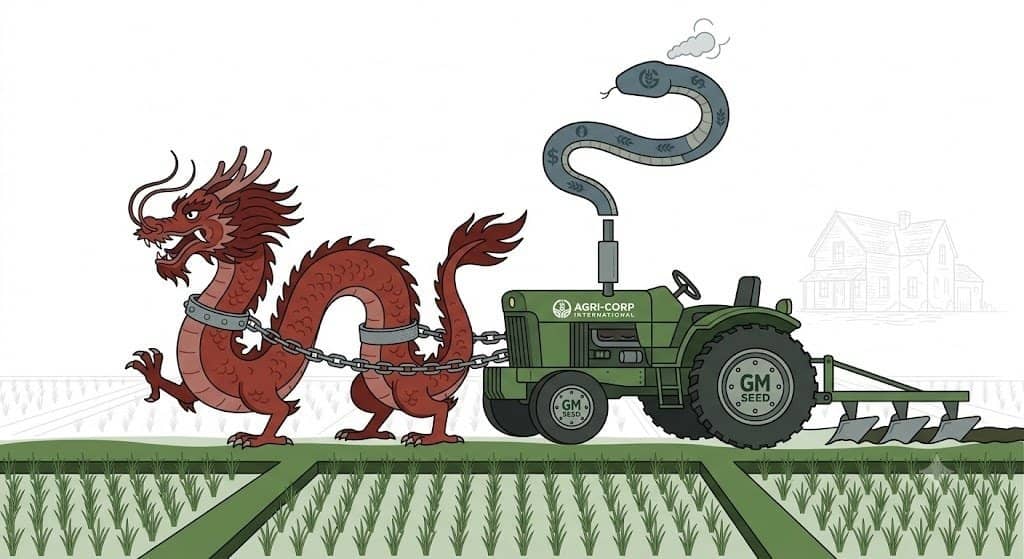
This was confirmed by P V Satheesh, (former) Convener of South Against Genetic Engineering, “The final nail in the coffin of non Bt cotton cultivation was hammered in 2006 when the industry – by forming a corporate seed cartel – successfully threw out all non Bt cotton seeds from the market firmly shutting out all options for farmers except the cultivation of Bt cotton.”
Jack A. Heinemann asks, “Where is the data that these same high yield varieties lacking the Bt trait and grown using sustainable techniques such as integrated pest management and agroecology perform less than GM varieties,” He answers, “There is none at all to my knowledge, while there is evidence that GM varieties undermine sustainable agriculture.”
In some parts while yields of cotton increased significantly in the phase of spreading Bt varieties for some years this was mainly due to the impact of good weather and improvements in irrigation, as also the government devoting more resources for this particular GM variety of cotton.
On the experience of the USA Dr. Heinemann writes, “The yields of Bt cotton in the US, for example, have not been consistently or sustainably higher than cotton produced using high yield varieties that were not genetically engineered, and GM varieties have contributed to financial losses for farmers. The high costs of genetically engineered seeds put farmers at financial risk.”
Heinemann concludes, “Does India want to export control of its food? Then go with genetic engineering. If India wants to feed itself, then go with proven but so far neglected approaches that work, such as agro ecology.”
In the very first year of Bt cotton’s commercial cultivation in India (2002-03), the Andhra Pradesh dept. of agriculture concluded a study of 3709 farmers growing this Bt cotton. As many as 71% of these farmers reported low yields with Bt cotton.
In Madhya Pradesh the average yield of cotton between 1996-2002 (before the introduction of Bt cotton) was 612.7 kg/ha. However in the six years after the introduction of Bt cotton average cotton yield was reduced to 518.3 kg/ha.
These realities specific to cotton should be seen together with other objections to all GM crops.Given the high hazards, risks and uncertainties associated with GM crops, these can never be sustainable. The more specific evidence against Bt cotton shows that its benefits have been frequently exaggerated by making wrong comparisons. Whatever the short-term gains, if any, these are quickly exhausted, leaving farmers burdened with more pests, more pesticides, higher costs of seeds and pesticides. These aspects come out more clearly in longer-term reviews which also bring out the collapse of several small farmers who cannot bear the high risks and losses, become indebted and may even lose their land, while some of the richest persons are able to benefit as agents of seeds and pesticides, as moneylenders and land-grabbers. What is more in cotton-growing villages the entire system becomes very highly dependent on exploitative seed companies with almost monopolistic tendencies and control. This has happened in a country which used to have the most celebrated cotton textiles historically and this in turn was made possible by a very rich diversity of cotton varieties. This was ruined very quickly and this trend is continuing. Big changes are needed in the future path of cotton sector development, including cotton cultivation.
Disclaimer:The views and opinions expressed in this article are those of the author(s) and do not necessarily reflect the official policy or position of The Rift.