Opening The Rift
therift
© 2026 The Rift. All Rights Reserved.
Pesticides and other threats endanger honey bees and their crucial ecological roles
If natural pollination processes are disrupted then the threat to the potential of natural farming will be very high as this farming depends more on natural systems.

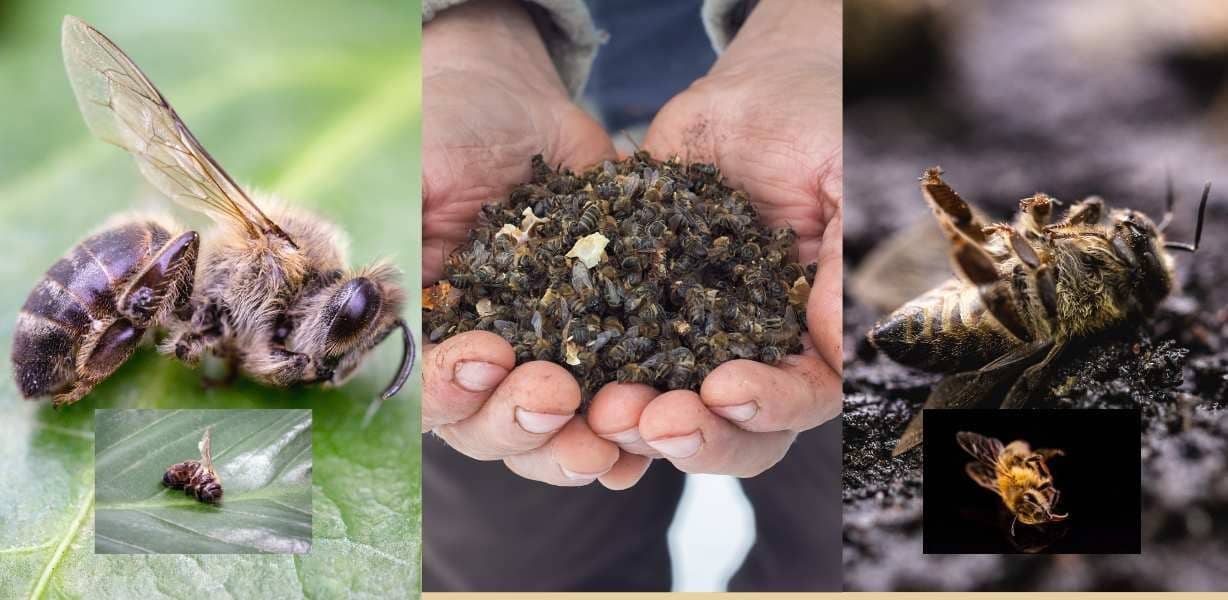
Image | Representative Only
Key Takeaways
1 of 3
Automatically generated. Read full article for complete context.
Well-known environmentalist Pandurang Hegde has been leading a campaign for saving bees in Karnataka. So imagine his distress when he recently found hundreds of honey bees on his farm in great pain and confusion, swirling, trembling and losing their senses after some time. Finally, he had to clear hundreds of dead bees from the honey bee boxes on his farm. The fact that he had to do this on World Bees Day increased his distress further.
What had happened was that pesticides had been sprayed indiscriminately on areca trees in some neighboring farms. Unsuspecting bees which had gone foraging there had returned with toxic pollen containing pesticide residues. This is what led to their acute distress and finally death of hundreds of them.
A sharp reduction in the number of honeybees and their colonies has been reported in many countries of the world including India. This is seen as a matter of huge concern as honeybees also have a very crucial role in pollination. Hence protection of honeybees is vital for our crops and plants, our food system and bio-diversity systems. Diversity of bee species is known to be related to diversity of plant species in forests and they exist in mutually protective relationships.
The decline of honey bees has led to concern among many health-conscious persons that there will be a decline in the availability of a very healthy food. They also point out that the only reason packaged honey remains plentiful in the market—despite the big decline in wild honeybee numbers—is that artificial products are being heavily added. The product may be available in abundance, but its health benefits are simply not the same.
Certainly these health and nutrition concerns are justified but the much bigger although perhaps less visible threat is the wider threat to our food system and to our bio-diversity. If natural pollination processes are disrupted then the threat to the potential of natural farming will be very high as this farming depends more on natural systems. Hence it is really important to protect honeybees by reducing the impact of the factors that have been harmful for honeybees.
Two aspects of highly distorted farming practices which have been very harmful for honeybees are the introduction of genetically modified crops or GM crops and secondly the increasing use of chemical pesticides, insecticides and herbicides. At times these two factors are also related as the introduction of some GM crops is accompanied by the use of some very harmful herbicides like glyphosateGlyphosateA widely used broad-spectrum herbicide linked to severe ecological disruption and alleged human disease.. There has been a huge debate recently on the risks of glyphosate and those who have suffered have claimed and obtained huge damages due to the alleged poisonous impact causing serious disease. If these are so harmful to human beings one can imagine the great harm caused to honeybees and other beneficial pollinating insects like butterflies.
NeonicotinoidsNeonicotinoidsA class of neuro-active insecticides chemically related to nicotine that are highly toxic to bees and persist in the soil. are added as seed coatings in several crops and these manage to reach the pollen and nectar. Hence apart from their adverse health and environmental impacts, honey bees are greatly harmed by them. These can persist in soil for a long time and hence can be also very harmful for earthworms and soil organisms that are very important for the health of soil. Another very adverse factor relates to the introduction of exotic bees which often has a very harmful impact on local honeybee species. There have been cases of diseases spreading in local species so that these perish in large numbers. At the same time the exotic species may not be able to perform their expected role in new settings and a different climate. When honeybees from a cold region have been introduced in a different region which is much warmer and experiences intense heat as well, the response of the exotic bee is often a complete refusal to forage in such extreme heat. The result is that there is very little pollination and very little honey-making. In fact colonies of exotic honeybees sometimes collapse in a big way. Some of them may be artificially kept alive by feeding a lot of sugar and medicines, but overall their survival has again been difficult.
It is important to learn from past mistakes and to take all protective measures to save honeybees as protecting honeybees is integral to protecting environment and maintaining the health of food systems and bio-diversity systems.
Disclaimer:The views and opinions expressed in this article are those of the author(s) and do not necessarily reflect the official policy or position of The Rift.
*BiodiversityBiodiversity LossGM CropsHoney Bee Conservationnatural farmingNeonicotinoidsPesticide Impact