Opening The Rift
therift
© 2026 The Rift. All Rights Reserved.
Mahatma Gandhi’s Message for Our Deeply Troubled Times
Gandhi’s contribution is of a more basic kind which goes to the heart of the troubling questions and to the search for basic answers, as distinct from patchwork solutions.

Key Takeaways
1 of 3
Automatically generated. Read full article for complete context.
“We may all be happy and grateful that destiny gifted us with such an enlightened contemporary (Gandhi), a role model for generations to come. Generations to come will scarcely believe that such a one as this walked the earth in flesh and blood.”
—Albert Einstein
“If humanity is to progress, Gandhi is inescapable. He lived, thought and acted, inspired by the vision of humanity evolving towards a life of peace and harmony. We may ignore him at our own risk.”
—Martin Luther King
Those who are truly great best understand the true greatness of others. And so, the increasing relevance of the lessons and message from Mahatma Gandhi for our deeply troubled and endangered world today could be foreseen well in advance by Einstein and King. The deep truth of the world today is that it faces an existential crisis or a survival crisis, in the sense that basic life-nurturing conditions are badly threatened. These threats, in turn, are broadly speaking, related to three factors. Firstly, there are nearly 13,000 nuclear weapons and other weapons of mass destructionWeapons of Mass Destruction (WMD)Nuclear, radiological, chemical, biological, or any other weapon that can kill and bring significant harm to a large number of humans or cause great damage to human-made structures, natural structures, or the biosphere.. Secondly, there are nearly a dozen life-threatening environmental problems led by but certainly not confined to climate change. Thirdly, there are a number of highly disruptive technologies led by AI.
Global Challenges & Gandhian Solutions
Nuclear Threat
Challenge: Nearly 13,000 nuclear weapons pose an existential risk.
Gandhi’s Solution: Basic message of nonviolence at all levels of human life, advocating for a future without wars and terrible weapons.
Environmental Crisis
Challenge: A dozen life-threatening environmental problems, including climate change.
Gandhi’s Solution: Life led by need, not greed; voluntary reduction of consumerism, simplicity, and inter-faith harmony for environmental protection.
Disruptive Technologies
Challenge: Rapid, indiscriminate introduction of technologies like AI with harmful social impacts.
Gandhi’s Solution: Warning against technology ignoring wider impacts; emphasis on ethical issues in education, livelihoods, and economy; self-reliant communities.
VISUALS BY THE RIFT
Now, looking at the comprehensive lessons from the life and writings or speeches of Mahatma Gandhi, he has something very important to contribute in each of these three contexts. For solving the environmental crisis, he has an essential message of life being led by need and not greed; of voluntary reduction of consumerism and a life based on simplicity, as well as a host of related messages on issues ranging from food and health to community and rural life. To the urgent need for reducing wars and violence, Gandhi contributes a very basic message of nonviolence at all levels of human life—a life guided at all levels by nonviolence. at all levels of human life, of life guided at all levels by nonviolence. As Martin Luther King said, “The choice is no longer between violence and nonviolence. It is now either nonviolence or non-existence.” Thirdly, Gandhi was ahead of his time in warning repeatedly against indiscriminate introduction of technology and machines, ignoring their wider social or other harmful impacts.
Thus, in the context of the most troubling issues of our times, Mahatma Gandhi has something very important to contribute. What is more, his contribution is of a more basic kind, which goes to the heart of these troubling questions and to the search for basic answers, as distinct from patchwork solutions.
While this confirms the great hopes and trust placed in the greatness of Mahatma Gandhi’s life and teachings, it is also evident from the wide recognition of the contribution of Gandhi’s ideas by many significant struggles in India and elsewhere. Ho Chi Minh said, “I and others may be revolutionaries, but we are the disciples of Mahatma Gandhi, directly or indirectly, nothing more nothing less.”
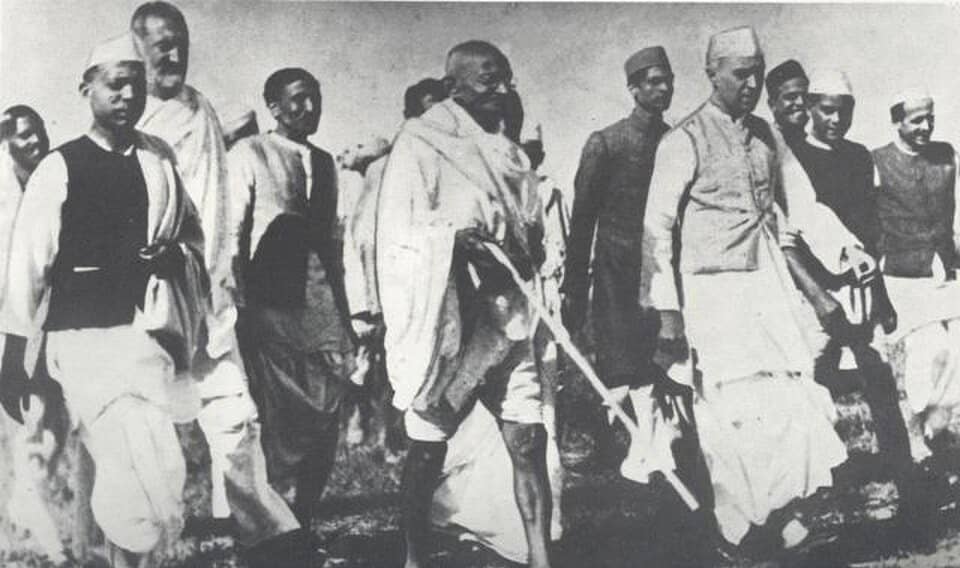
On October 2, the world observes the birth anniversary of Mahatma Gandhi at a time when many thoughtful persons grappling with the most serious problems of our increasingly troubled and endangered world are increasingly realizing the great value of several essential messages he left behind after a very eventful, thoughtful, and inspiring life.
One of these relates to understanding and appreciating the great importance of nonviolence in everyday life. In a world so deeply distressed by alarming incidence of gender violence, domestic violence, workplace violence, street violence, etc. better understanding and appreciation of the importance of non-violence implies a reduction not just in actual acts of violence but also conscious efforts to reduce anger, jealousy, greed, aggressive competitiveness and other tendencies associated with violence in daily life.
While this by itself leads to reduction of distress in daily life, this also serves as a training ground for the wider task of resisting injustice in non-violent ways. Nonviolence devoid of its links to resisting injustice is a very limited concept. The wider significance of nonviolence comes from its important link to resisting injustice of various kinds. In fact, injustice has very close linkages with violence, violent thinking, dominance, and the urge for dominance. Hence, to think of violence as a means of resisting injustice is not very natural and rational, as violent thinking is itself a part of the web of injustice. On the other hand, it is much more natural for nonviolence to be a means of resisting injustice. By leaving the path of violence and opting for the path of non-violence for resisting injustice, we may be able to find more durable and sustainable ways of creating a justice-based society that has wider acceptability.
If in two neighboring countries there are many more people practicing non-violence in daily life and also using non-violence to resist injustice in numerous small ways at the local levels, the chances become very high that these countries will never fight a war, will not engage in an arms race, and will find peaceful, justice-based ways of resolving differences. This is how a strong local base is created for peace and how it can be linked to global issues. If there is strong commitment at the world level, within a decade very strong support for a future without wars and without the most terrible weapons can be created.
As part of his overall efforts for peace, Gandhi made a very strong plea for inter-faith harmony. His message to people of all religions was to pursue their religious beliefs in such a way that there is no hostility with other religions; so that, away from any aggressive inclinations, religion is restored to its essential role of providing strength for spiritual progress, and this in turn provides conducive conditions for the most important tasks of peace, justice, and protecting the environment.
Most destructive weapons, on the one hand, and ecological ruin, on the other hand are the two most serious problems of our world today. These are usually treated separately, but one basic cause is common to both—greed and the urge for snatching the share of others based on this, and the acceptance of this as a predominant social value.
Mahatma Gandhi rejected this and instead pleaded for the voluntary acceptance of frugality and simplicity—a life of limited needs—as the desirable norm of life. The essence of this message is that if we all learn to be happy in a simple life based on the voluntary acceptance of limited requirements, then the web of never-ending greed, unlimited acquisition, and the urge for dominance linked to this that traps humanity can be broken, leading to contentment in daily life and the ability to meet the needs of all without causing an ecological crisis, providing enough space for meeting the needs of other life-forms, and creating a strong foundation for durable world peace.
With his strong emphasis on frugality, Gandhi continued experimenting in various ways in important areas of food, health, education, etc. His experiments led towards maintaining good health in natural, simple ways, with emphasis on hygiene, living close to nature without relying too much on expensive medication. There is a complete rejection of alcohol, tobacco, and all intoxicants. Education should never lead to alienation but instead should involve getting closer to community needs, combining creativity in intellectual as well as manual work like crafts, farming, etc. Ethical issues are most important, whether in education, livelihoods, or the overall economy.
Another important message from Gandhi is for more self-reliant and resilient communities that are capable of meeting many of their needs at the local level in very creative, decentralized ways, combining very satisfactory livelihoods close to home with access to high quality, healthy food, and many other basic goods and services. For meeting other requirements and securing additional opportunities, integration with the national and global economy of course continues to exist. This is community life based on close relationships and protection of livelihoods and basic needs regardless of fluctuations in the global economy. Such community life, with precepts and practice of equality and justice, provides a good base for creating a world based on peace, justice, and environmental protection. Gandhi placed more emphasis on rural community life without rejecting urban life.
As many activists and people try to engage with some of these most essential and creative tasks, the work and ideas of Mahatma Gandhi continue to be an increasingly important source of help and inspiration. The relevance of his ideas for checking some of the most important problems of the present-day world is increasing. As Albert Einstein stated, “I believe that Gandhi’s views were the most enlightened of all the political men of our time.”
My recent two YouTube videos further discuss the many-sided continuing and in fact increasing relevance of the message of Mahatma Gandhi. These videos in English and Hindi—
Disclaimer:The views and opinions expressed in this article are those of the author(s) and do not necessarily reflect the official policy or position of The Rift.