Opening The Rift
therift
© 2026 The Rift. All Rights Reserved.
Demolition of Undocumented Heritage: If It Is Not In The Record, It Does Not Legally Exist
If the foundational premise of the claim were accepted at face value, a straightforward logical problem emerged: how could a structure be on Railway land if it predated the railway by 800 years?

Ganj-Shaheed-Mosque
Key Takeaways
1 of 3
Automatically generated. Read full article for complete context.
On the night of June 2–3, 2026, bulldozers moved through Varanasi’s Rajghat area escorted by hundreds of security personnel drawn from the police, PAC, and RPF. Twenty two minutes later the Azgaib Shaheed Mazar and the adjacent mosque “within the Kashi Railway Station premises” were rubble. The action, carried out after a court order confirming that the structures were “unauthorized encroachments on railway land”, was part of a ₹350 crore redevelopment project to transform Kashi into a modern multi-modal terminal. What followed on social media was as instructive as the demolition.
A post circulating widely claimed the demolished mosque dated to 1034 CE, making it “nearly 1,000 years old” and therefore predating Indian Railways by over eight centuries. The irony was immediate and devastating: Indian Railways was formally inaugurated on April 16, 1853, with the Bombay-to-Thane passenger service operated by the Great Indian Peninsula Railway. If the foundational premise of the claim were accepted at face value, a straightforward logical problem emerged: how could a structure be “on Railway land” if it predated the railway by 800 years? The question exposed the fault line that defines a broader controversy: the collision between antiquity as a social claim and land title as a legal fact.
Two Systems of History: Faith vs. Archives
Two entirely different systems of historical reckoning operating simultaneously were structurally incapable of communicating with each other. One spoke history, the other spoke faith. The first is the archival, administrative history of Indian Railways. This history is linear, documented, and legally enforceable. The rail story in the Varanasi region begins in December 1862, when the East Indian Railway (EIR), under Chief Engineer George Turnbull, pushed its line from Howrah through Patna and reached Mughalsarai, on the opposite bank of the Ganges from the city. Formal rail entry into Varanasi itself came in 1872, when what is now Varanasi Junction was established as Banaras Junction by the Oudh and Rohilkhand Railway, concurrently with a new line linking the city to Lucknow. The physical connection across the river was only completed in 1887 with the inauguration of the Dufferin Bridge (now renamed the Malviya Bridge). The land upon which this entire network was built was acquired under Act XLII of 1850 and the consolidated legislative framework that followed: processes that generated “Land Acquisition Awards” and “Collectorate Registers” that remain the primary documents of title even today. These are not sentimental documents; they are the foundational evidence of state ownership.
The second history is the living, oral, and “mythological heritage” of communities who have occupied sites across this ancient city for generations. The attribution of 1034 CE to the Azgaib Shaheed Mazar derives from regional folklore surrounding the raids of Ahmad Niyaltigin, a general of Mahmud of Ghazni, in the Varanasi region. Scholars and archaeologists are unanimous: there is no primary documentation: no inscription, no land grant, no imperial record: that verifies the existence of a permanent, continuous structure at this specific site from the 11th century. The “1034” date is, more accurately, a “foundation myth”: a symbolic tethering of a community’s presence to a moment of early Islamic military history in the Gangetic plains. Even the mosque committee’s own more modest assertion, that the structure was “several hundred years old,” aligns far better with architecturally comparable structures from the late Mughal or early British colonial periods, a dating that the mainstream media also adopted: describing the mosque as approximately 200 years old.
This is not a trivial distinction. In a court of law, the difference between “200 years old” and “1,000 years old” is irrelevant if neither timeline is supported by a document that predates the railway’s land acquisition. The legal system does not calibrate protection based on moral seniority of occupation; it calibrates protection based on recorded title. However, for perspective to be correct, it is noteworthy that the question is not whether the State once had title, but whether it still possesses a legally enforceable right. A title deed from 1850 may establish ownership at the inception, but it cannot erase fifty years of uninterrupted adverse possessionAdverse PossessionA legal doctrine allowing a person who possesses the land of another for an extended, continuous period to claim legal title to it.. The law does not reward dormant ownership indefinitely. Once the statutory period has run and the State has failed to vindicate its rights, the law extinguishes its remedy and, with it, the practical incidents of ownership.
The Constitution cannot permit the executive to accomplish by demolition or administrative fiat what the law of limitation forbids it from achieving through a court of law.
The Primacy of Cadastral Title
The 2026 proceedings at Varanasi crystallized a legal dynamic that has played out repeatedly across India’s urbanization story. The court’s ruling rested on two interlocking pillars, both of which are deeply embedded in colonial-era administrative law.
The first is the primacy of cadastral title. When railway land surveys were conducted in the 1860s and subsequently updated, the specific plots were recorded as “Railway Property” in the district land registers. This recording, however imperfect or coercive its original process, became the legal universe within which all future claims had to operate. The mosque committee’s inability to produce a competing document: a prior deed, a waqf registration pre-dating the railway acquisition, or a mention in the Collectorate’s compensation awards: meant the claim was (as per the Railways) legally indefensible from the outset.
The second pillar is the consistent judicial subordination of oral tradition and informal use to formal documentation. Indian civil courts have, across decades of land dispute jurisprudence, developed a clear evidentiary hierarchy. Oral histories, continuous community use, and religious significance are acknowledged as social facts, but they do not create title. In the absence of documentation, “adverse possessionAdverse PossessionA legal doctrine allowing a person who possesses the land of another for an extended, continuous period to claim legal title to it.“: the legal doctrine of acquiring title through long, uninterrupted occupation: is extremely difficult to establish against the Union of India or its statutory bodies, particularly for religious structures.
The court did not rule on the contested architectural history: neither on whether the pillars and lintels suggested material repurposed from an earlier Hindu structure, nor on whether the 1034 CE date had any historical merit. The court addressed a simpler, starker question: whose name is on the land record? The answer was unambiguous. When the railway issued notice to vacate and compliance was refused, demolition became the legally sanctioned conclusion. Or did it? Did it do away with sec. 27 of the Limitation ActThe Limitation Act, 1963An Indian law specifying the time limit within which a lawsuit must be filed, including establishing adverse possession (typically 12 years, or 30 years against the state). which, on expiration of thirty years’ possession against the State, extinguishes the State’s title, whatever may have been its records? (The Railways are State within the meaning of Article 12 of the Constitution.)
The Danger of Overclaiming Antiquity
The Varanasi episode also demonstrates how historical ambiguity is routinely weaponized in contemporary public discourse, often with results that are drastic. The claim that the mosque was built upon a repurposed temple site, drawn from observations about the structure’s architectural style, illustrates this. Whether or not such architectural “syncretism” existed, it became a narrative device: for one side, evidence of cultural erasure requiring rectification: for the other, justification for the demolition’s moral legitimacy. Neither use is correct as both are advocacy dressed in archaeological cloak.
More consequentially, the “1034 CE” claim that would make the mosque older than Indian Railways itself, and indeed older than the Bombay-Thane line by more than eight centuries, actively harmed the community it sought to protect. “Overclaiming” antiquity without evidentiary support does not strengthen a legal or moral case; it weakens it, by inviting ridicule and allowing the opposing narrative to dismiss the entire heritage argument as fabrication. When a community’s best-documented claim is approximately 200 years of continuous presence, that is actually a significant and respectable history. Squandering it in pursuit of a millennium of symbolic capital was a strategic error which should have been avoided.
It is equally important to note that the demolition was not religion-specific in its legal rationale. A Hanuman temple on the same railway premises was also demolished on the same night as part of the same drive. The bulldozer, in this instance, was discriminating: not by faith but by documentation.
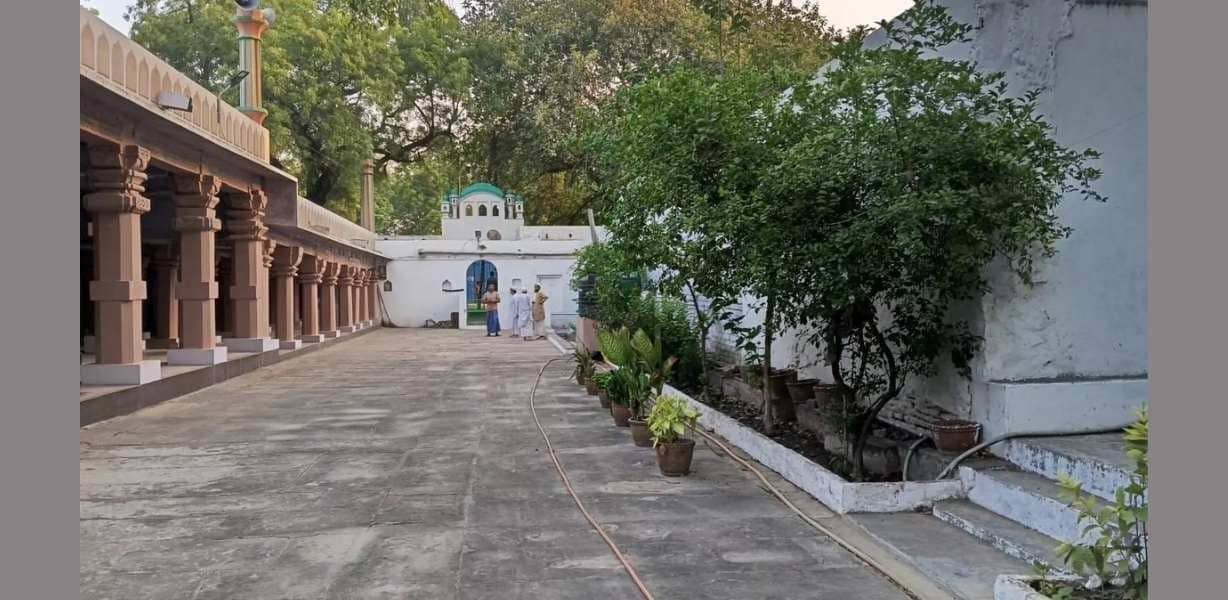
The story is not over. As of mid-June 2026, a notice has been served on the Ganj Shaheeda Mosque: a separate structure: by the Northern Railway, with a deadline of June 20, 2026, to vacate the land for the same multi-modal terminal project. The Anjuman Intezamia Masajid Committee, which also manages the Gyanvapi Mosque, has characterised the notice as misleading and has announced its intention to pursue legal remedies. This sets the stage for a fresh legal contest: one in which the community has the opportunity to apply lessons learned from the Azgaib Shaheed episode before the bulldozers arrive, not after.
The Way Forward: From Oral Claim to Archival Shield
The way forward for communities whether Muslim, Hindu, Sikh, or tribal who hold sites of deep religious and historical significance that have never been formally registered, the demolition at Kashi Railway Station is a structural warning, not merely a political one. The following is not counsel to abandon heritage advocacy, but to conduct it more effectively, in a language the state actually understands and the court respects.
First, move from oral claim to archival documentation and do it urgently. Comb the district gazetteers, colonial-era survey maps, settlement records, and Collectorate registers for any mention of the site. Evidence of “pre-existing use”: historical photographs, inclusion in 19th-century travelogues, mentions in administrative correspondence: all this creates an evidentiary trail that courts can weigh against a railway land record. This is essential forensic preparation.
Second, seek formal listing at the municipal and state levels before facing a project notice. The Archaeological Survey of India’s central protection bar is high and politically contested, but State Departments of Archaeology offer “state-protected” status that should trigger mandatory review protocols in land acquisition proceedings. Municipal Heritage Conservation Committees provide a parallel track. Either listing converts a community’s informal claim into a statutory speed-breaker that the state has to procedurally address.
Third, formalize community structures as registered legal entities. An informal group of devotees has no standing to sue for an injunction or negotiate terms of use with the Union of India. A registered Trust or Society is a legal person, capable of holding property, appearing in court, and entering into enforceable agreements. Registration is not a bureaucratic nicety; it is the threshold of legal personhood.
Fourth, engage strategically with the urban planning process before projects are announced. The Master Plan drafting process for every city is a public process. Petitioning for “Heritage Zoning” of specific areas during the draft Master Plan consultation phase is infinitely more effective than filing a PIL after demolition notices have been issued. By the time bulldozers are at the gate, the legal architecture that permits them has already been constructed across years of administrative approvals.
Fifth, deploy the Places of Worship (Special Provisions) Act, 1991Places of Worship Act, 1991A law mandating that the religious character of a place of worship must be maintained as it existed on India’s Independence Day (Aug 15, 1947)., where applicable. This legislation mandates that the religious character of any place of worship as it existed on August 15, 1947, must be maintained. If a site can be documented as a functioning place of worship at Independence, this Act provides a specific statutory shield: albeit one that applies to character, not necessarily to title over the land beneath. Combined with waqf registration and ASI or state heritage listing, it can form part of a proper legal defence.
The essential reality of the Indian legal system, as the Kashi Railway Station demolition confirms, is captured in a simple formulation: if it is not in the record, it does not legally exist.
The Indian Railways, as an institution, embodies the continuity of the colonial administrative state: an apparatus that has, since the 1850s, consistently treated infrastructure as the highest-order public purpose, before which informal occupation, community sentiment, and even genuine antiquity has to yield.
The Kashi multi-modal terminal project targeted for completion by 2027, will proceed. The question is whether the communities along its path: and the broader landscape of undocumented heritage sites across urban India: will learn, finally, that protection is not an act of memory. It is an act of translation, converting deep, intangible emotional connection to a technical vocabulary of surveys, deeds, and registry filings. Communities that make that translation proactively, before the project announcement, arm themselves with the only shield the present legal framework genuinely respects. Those that wait to make the argument in the language of faith and history, after the notice has been served, will almost always find that they missed the bus.
I am not giving legal advice, merely saying that communities facing active demolition notices should engage qualified legal counsel immediately. The dominant legal narrative emerging from the Kashi Railway Station demolition is one of claimed state title triumphing over community sentiment. It is a narrative that is largely accurate: but not complete and certainly open to interrogation in terms of limitation law. There is a dimension of Indian statutory law that, had it been pressed with documentary rigour before a competent civil court, may well have produced a materially different outcome. That dimension is the law of adverse possessionAdverse PossessionA legal doctrine allowing a person who possesses the land of another for an extended, continuous period to claim legal title to it., as codified in the Limitation Act, 1963The Limitation Act, 1963An Indian law specifying the time limit within which a lawsuit must be filed, including establishing adverse possession..
The Unused Shield: Adverse Possession
The framework is well-established. Article 65 of the Limitation Act prescribes a limitation period of twelve years for a suit relating to possession of immovable property when the claim is against a private individual: the clock beginning from the moment the plaintiff’s possession becomes adverse to the true owner. However, when the suit concerns land belonging to the Government: and Indian Railways, as a statutory body under the Union of India, indisputably qualifies: Article 112 of the same Act extends that period to thirty years. The logic of the extension is sound: the state manages vast tracts of land, its records are imperfect, and it deserves a longer window to identify and reclaim encroached property. But that extended period is not infinite, and it is not without consequences for the state when it expires.
The doctrine of adverse possession, as consistently interpreted by Indian courts including the Supreme Court, requires the claimant to establish possession that is open, peaceful, continuous, uninterrupted and, most critically, to the knowledge of the true owner. In the instant case it was. The possession must be adverse to the title of the real owner, meaning the occupant holds without permission and in assertion of an independent right over the land. When all these ingredients are established for the full statutory period, the title of the original owner is extinguished, and the possessor acquires a corresponding right: not merely a defence against a suit, but a completed title by operation of law.
Now apply this framework to the facts on record at Rajghat. The mosque community’s own most conservative estimate of the structure’s age places it at approximately 200 years. The media reports from June 2026 consistently adopted this figure. If we take 200 years as the operative baseline, the Azgaib Shaheed Mazar and its adjacent mosque were established no later than the 1820s: a full four decades before the East Indian Railway even reached Mughalsarai in 1862, and fifty years before a station was established within Varanasi itself in 1872. The railway land acquisition framework, governed by Act XLII of 1850 and subsequent legislation, would have intersected with a pre-existing occupation of the site. The central legal question, then, is not simply “whose name is on the railway land record?” but rather, did the railway’s acquisition in the 1860s effectively displace a possessory right that had already been ripening for decades, and if not, did the subsequent 160 years of open, continuous occupation extinguish whatever residual title the railway may have held?
The thirty-year threshold of Article 112 would have been satisfied: multiple times over: by any reasonable accounting of the mosque’s history. A structure documented as operating continuously for 200 years, in a location within what was to become the expanded railway precinct, was occupying that land openly and to everyone’s knowledge. Railway officials, district administrators, and revenue officers cannot credibly claim ignorance of a mosque: a structure of public worship, visibly used by a community, equipped with a minaret, and embedded in the urban fabric of one of India’s “under considerable surveillance” and historically recorded cities. The “to the knowledge of the state” requirement, which is the most difficult element for adverse possession claimants against government land, was, on these facts, arguably satisfied without the need for elaborate proof.
The legal consequence of this analysis is significant. If adverse possession had ripened: and a 200-year period of open, continuous, undisturbed occupation against a state entity that demonstrably knew of the structure’s existence would, in principle, satisfy every ingredient of the doctrine: the correct legal position would be that the railway’s title had been extinguished by operation of law, irrespective of what any possible land acquisition record said. The Limitation Act does not merely bar the remedy: when adverse possession is complete, sec. 27 says it extinguishes the right itself. A court confronted with this argument, supported by documentary evidence of continuous occupation pre-dating the railway’s own land acquisition, ought to have been compelled to treat the mosque committee not as an encroacher asserting a sentiment, but as a possessory title holder asserting a statutory right.
This is precisely where the outcome in a court of law, as opposed to a court of administrative expedience, ought to have been different. The failure, it may be said, was not entirely the court’s. It was possibly in some measure a failure of legal strategy. Adverse possession is a plea that must be affirmatively raised, documented, and argued. It does not apply automatically. The mosque committee’s legal position, insofar as public reports that I read disclose it, appears focused on religious significance and the antiquity of the structure as a matter of cultural heritage: the categories of argument that Indian courts have consistently found legally insufficient in land title disputes against the state. The thirty-year shield of Article 112, and the doctrine that could have converted 200 years of occupation into extinguished railway title, required the managing committee to do something far more: to dig into the district’s Collectorate registers, establish the pre-railway date of occupation, demonstrate the continuity and openness of possession across the acquisition period, and squarely plead that the Union of India’s title had been extinguished by operation of the Limitation Act long before any multi-modal terminal was ever conceived.
Had that argument been raised: and had it been supported by the archival evidence that, by all historical accounts, exists in the Public Works Department proceedings and district revenue records of Varanasi from the mid-19th century: the court would have faced a materially different case. It would not have been a case of sentiment versus statute, of oral tradition versus land record. It would have been a case of one statutory right: the railway’s recorded title: against another statutory right: the community’s completed possessory title under the Limitation Act. In that contest, the outcome far from predetermined, the result could have been different.
The demolition of the Azgaib Shaheed Mazar, viewed through this legal lens, is therefore not simply a story of a community without rights. It is the story of a community whose rights may have been legally substantial but were less than potently legally articulated. The thirty-year rule exists precisely because the state, however powerful, is not exempt from the consequences of long acquiescence.
A sovereign that knows of an occupation, tolerates it across generations, collects no rent, issues no notice, and raises no objection for two centuries (or thirty years) cannot, in good conscience or good law, be heard to claim that the occupant is a mere trespasser.
The Limitation Act, in its design, agrees. The tragedy at Rajghat is not that the law did not support this argument, but because it was not made it in time, with the right documents.
For the Ganj Shaheeda Mosque, for which a notice of June 20, 2026 has now been issued, the window has not yet closed. The argument from adverse possession under Article 112 of the Limitation Act remains available. The clock that matters is not the one showing 1034 CE. It is the one that has been running, quietly and lawfully, for the last two hundred years.
The writing is on the wall. It must be read.
Jai Hind.
Disclaimer:The views and opinions expressed in this article are those of the author(s) and do not necessarily reflect the official policy or position of The Rift.