Opening The Rift
therift
© 2026 The Rift. All Rights Reserved.
The Guardians of the Republic: Why Citizenship Must Remain Larger Than Memory
The constitutional challenge is therefore not simply to preserve liberty. It is to preserve a political order in which inherited grievances do not determine the rights and status of living citizens.

Key Takeaways
1 of 3
Automatically generated. Read full article for complete context.
Part 3
The Constitution did not emerge from the Constituent Assembly as a self-executing document. Its survival depended upon institutions capable of preserving its principles when those principles became politically inconvenient. The framers understood this reality. They had witnessed the collapse of constitutional orders elsewhere. They knew that rights written on paper could be rendered meaningless unless supported by institutions prepared to defend them.
Among those institutions, none occupies a more critical position than the judiciary.
Legislatures respond to electoral pressures. Executives respond to political imperatives. Courts, by contrast, are expected to maintain fidelity to constitutional principle even when doing so is unpopular. Their function is not to govern. Their function is to ensure that constitutional government remains possible.
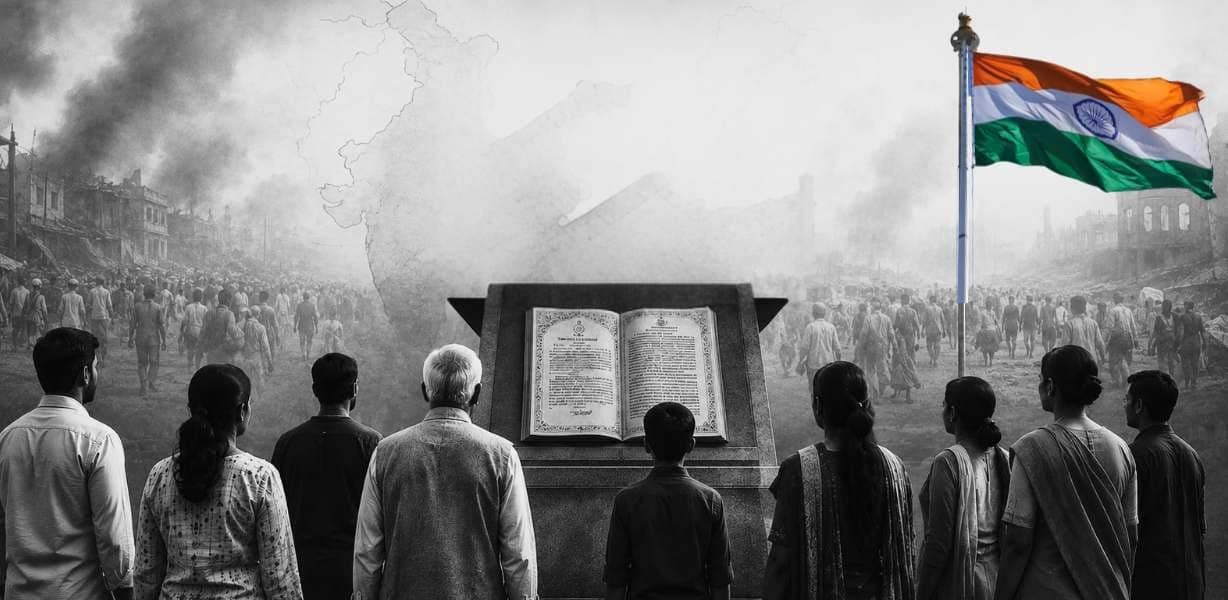
This responsibility becomes especially important in societies burdened by historical trauma. Collective memories are powerful political resources. They can inspire solidarity, resilience and civic responsibility. They can also be manipulated into instruments of exclusion. The constitutional challenge is therefore not simply to preserve liberty. It is to preserve a political order in which inherited grievances do not determine the rights and status of living citizens.
Indian constitutional jurisprudence confronted this challenge most directly in S. R. Bommai v. Union of IndiaS. R. Bommai v. Union of IndiaA landmark 1994 Supreme Court verdict that curbed the arbitrary dismissal of state governments and cemented secularism as an unamendable feature of the Constitution., a decision that defined the identity of the Republic. Although that case arose formally from disputes concerning the dismissal of State governments under Article 356Article 356A provision in the Indian Constitution that allows the central government to impose President’s Rule, effectively suspending a state’s elected government., the case ultimately became a profound reflection on the constitutional character of India itself. The Supreme Court recognised that the issues before it could not be separated from the larger question of what kind of state the Constitution had created.
The answer was unequivocal. Multiple judges held that secularism forms part of the Constitution’s basic structureBasic StructureA judicial doctrine holding that certain fundamental features of the Constitution (such as democracy, equality, and secularism) cannot be altered or destroyed by parliamentary amendments. and therefore lies beyond the reach of transient political majorities. The significance of that conclusion extends far beyond the doctrine of constitutional amendment. The Court recognised that secularism in India is not merely an administrative arrangement. It is one of the foundational conditions of equal citizenship. The state cannot identify itself with any religion because such identification would inevitably diminish the citizenship of those who do not belong to the preferred faith.
Justice Sawant observed that religion and the state must operate within distinct spheres and that the state has no religion of its own. Justice Jeevan Reddy explained that the Constitution does not permit the use of governmental power to advance one faith over another. The Republic belongs equally to all its citizens.
These observations reflected more than legal analysis. They reflected historical memory. The Court understood that the Constitution had been framed in the shadow of Partition. It recognised that the framers consciously rejected the proposition that religious identity should determine political membership. The judgment therefore transformed the framers’ political wisdom into enforceable constitutional doctrine.
The Bommai case did not establish secularism as an abstract ideal. It established secularism as a constitutional imperative. The decision remains important because it identifies a fundamental truth about constitutional democracy. Equal citizenship cannot coexist with state-sponsored religious preference. Once the state begins distinguishing between citizens on the basis of inherited identity, the constitutional project itself is placed at risk.
Subsequent decisions reinforced this understanding, and in Bijoe Emmanuel v. State of KeralaBijoe Emmanuel v. State of KeralaA 1986 Supreme Court case that upheld the right of Jehovah’s Witnesses to respectfully remain silent during the national anthem on the grounds of religious freedom., the Court protected members of a religious minority who declined, on grounds of conscience, to sing the national anthem. The judgment recognised that constitutional loyalty does not require uniformity of belief. In Aruna Roy v. Union of India, the Court reaffirmed that Indian secularism is not hostility toward religion but equal respect for all faiths.
In Shayara Bano v. Union of IndiaShayara Bano v. Union of IndiaThe historic 2017 Supreme Court judgment that struck down the practice of instant triple talaq, invoking constitutional values of dignity and equality., constitutional values of dignity and equality were invoked to protect individual rights against a practice incompatible with fundamental constitutional commitments.
Running through these decisions is a common thread : the Constitution exists not merely to reflect social majorities but to protect the equal citizenship of all persons. This principle has found powerful expression beyond India as well.
No constitutional court has confronted the legacy of historical division more directly than the Constitutional Court of South Africa. The South African Constitution emerged from the wreckage of apartheid, a system that had institutionalised racial hierarchy through law itself. The framers of the post-apartheid constitutional order therefore made a remarkable commitment. The Constitution expressly declared that one of its purposes was to heal the divisions of the past and establish a society founded upon democratic values, social justice and fundamental human rights.
That language merits attention. Most constitutions describe governmental institutions. The South African Constitution also articulated a national moral project. The Constitutional Court embraced that responsibility from its earliest decisions. In S v MakwanyaneS v MakwanyaneA watershed 1995 South African Constitutional Court ruling that abolished the death penalty, establishing human dignity as the paramount constitutional value in the post-apartheid era., the Court abolished capital punishment despite widespread public support for its retention. The judgment remains one of the most important constitutional decisions of the modern era.
Although about criminal punishment, the case addressed a larger question : how should a society emerging from decades of institutionalised brutality define itself? The Court answered by placing human dignity at the centre of constitutional life, and recognised that constitutional democracy could not be built upon the logic of vengeance. A society committed to human dignity could not selectively apply that principle only to those it found sympathetic.
The judgment demonstrated that constitutionalism requires moral courage. Courts sometimes preserve constitutional values precisely by refusing to mirror public passions. The same philosophy appeared in National Coalition for Gay and Lesbian Equality v Minister of Justice. The Court invalidated criminal prohibitions directed at a historically marginalised group especially because constitutional rights derive significance only when they protect those whom society finds easiest to oppress or exclude.
In another case, Minister of Home Affairs v Fourie, the Court held that Constitutional rights could not be denied merely because exclusion of some people had become socially familiar or acceptable.
The Constitution existed not simply to reflect society as it was but to guide society toward what it ought to become. Similarly, in Prince v President of the Law Society, the Court confronted questions concerning minority religious practices and the accommodation of difference within constitutional democracy. The case highlighted a recurring challenge faced by plural societies : whether constitutional rights remain meaningful when they protect only popular beliefs.
The answer, consistently provided by the Court, was no. Rights acquire significance precisely when they protect difference. Taken together, these decisions reveal a coherent constitutional philosophy. The purpose of constitutional adjudication is not merely to maintain order. It is to preserve the conditions necessary for equal citizenship within a diverse society. Courts do not erase history. They prevent history from becoming destiny.
This insight possesses particular relevance for contemporary India. The controversies that periodically arise around monuments, places of worship, historical narratives and public symbolism are not fundamentally disputes about architecture or geography. They are disputes about memory.
Who owns the past? Which historical experiences deserve public recognition? Which community’s narrative shall define the meaning of a monument, a city, a region or a nation? These questions increasingly shape public life.
Hyderabad provides a striking illustration. Charminar is not merely a structure of stone. It is a repository of memory. Like many historic monuments, it exists simultaneously as architecture, history and symbol. When competing groups seek to redefine its meaning, the dispute concerns far more than urban space. It concerns ownership of historical identity itself.
The same dynamic appears whenever historical grievances are invoked to define contemporary citizenship. Songs, slogans and political narratives that encourage citizens to view one another through inherited religious categories perform a subtle but significant and vitiating constitutional transformation. They relocate political identity from citizenship to communal memory.
The danger lies not in disagreement. Democratic societies require disagreement. The danger lies in allowing historical trauma to become a permanent organising principle of public life. A republic cannot function indefinitely if each generation inherits not only the memories but also the antagonisms of its predecessors.
The Constitution offers a better possibility. It does not seek amnesia. While it is clear that the dead deserve remembrance. Historical suffering deserves the acknowledgement of it being an event, but only as comprising a regrettable past. Communities are entitled to preserve their memories and honour their ancestors, but constitutional democracy insists upon a distinction between memory and citizenship.
The rights of living citizens cannot be allowed depend upon events that occurred before their birth. This principle ultimately returns us to Ambedkar’s idea of constitutional morality.
Constitutional morality requires more than obedience to legal rules. It requires fidelity to the underlying values that make democratic coexistence possible. It demands restraint when passion urges excess. It demands equality when prejudice seeks privilege. Above all, it demands fraternity.
Fraternity remains the most neglected constitutional virtue. Liberty and equality can be expressed through institutions and legislation. Fraternity concerns the moral imagination of a society. It asks whether citizens recognise one another as fellow participants in a shared constitutional enterprise. Without fraternity, liberty becomes fragile and equality becomes conditional. With fraternity, historical memory can coexist with democratic solidarity.
The judiciary cannot create fraternity by judicial decree. Courts cannot legislate empathy. They cannot command reconciliation. What they can do is preserve the constitutional conditions within which reconciliation remains possible. They can ensure equal protection of law. They can protect minorities from exclusion. They can restrain governmental action that undermines constitutional equality. They can affirm, repeatedly and publicly, that citizenship rather than communal identity remains the organising principle of the Republic.
In this sense, the judiciary occupies a position analogous to that of a trustee.
The common law speaks of a trustee de son tort : a person who assumes responsibility for a trust and thereby assumes the obligations attached to it. Constitutional judges occupy a similar position. Having accepted judicial office, they assume obligations not merely toward litigants but toward the constitutional order itself.
Their duty is not to preserve the popularity of constitutional values. Their duty is to preserve the values themselves.
History is not kind to institutions that confused passivity with neutrality. Every constitutional generation confronts the same question : will it permit inherited divisions to define the future, or will it insist that citizenship remains larger than memory?
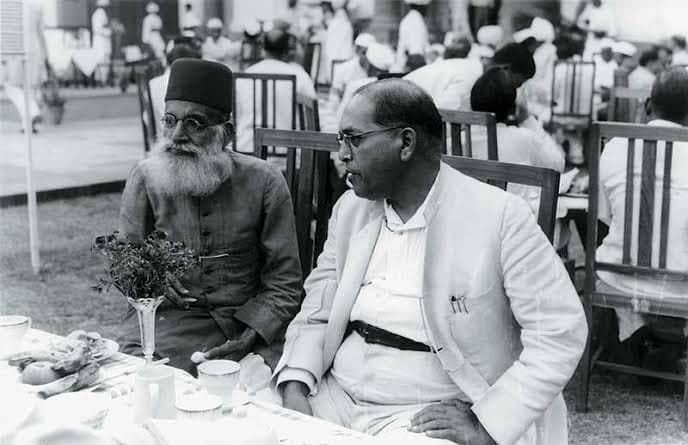
The framers answered that question through the Constitution. Jawaharlal Nehru answered it through the Objectives Resolution. Abul Kalam Azad answered it through the idea of composite nationalism. Ambedkar answered it through constitutional morality and fraternity. And rising to the occasion, our Supreme Court answered it in the Bommai case. The Constitutional Court of South Africa answered it in Makwanyane, Fourie, Prince and National Coalition. All arrived at the same conclusion.
The legitimacy of constitutional democracy depends upon its ability to create a political community larger than inherited grievance. The Republic was not founded to preserve historical antagonisms. It was founded to transcend them. The measure of a nation’s fidelity to its past is not the intensity with which it remembers old injuries. It is the quality of the future it builds despite them.
That remains the unfinished constitutional task of India. And upholding those constitutional values is the trustee in charge of India’s destiny : the judiciary.
Jai Hind
Disclaimer:The views and opinions expressed in this article are those of the author(s) and do not necessarily reflect the official policy or position of The Rift.
*CitizenshipConstitutional MoralityEqual CitizenshipS.R. BommaiSecularismSouth African Constitutional Court