Opening The Rift
therift
© 2026 The Rift. All Rights Reserved.
Beyond Religion: Reinterpreting support of Kashmiri women for Iran
The overwhelming participation of women in demonstrations reflects an alternative perspective of togetherness, transcending sectarian differences.

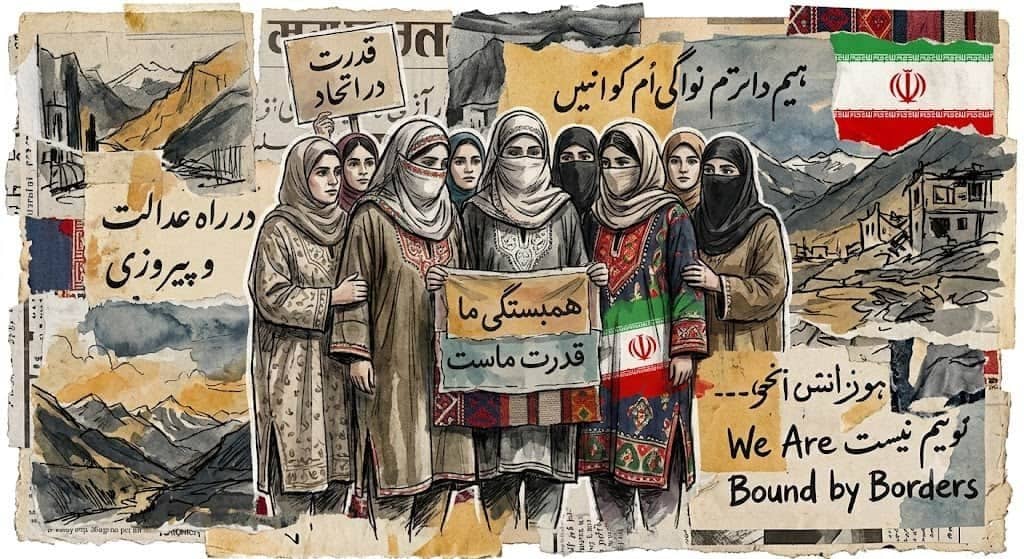
(Representative Image)
Key Takeaways
1 of 3
Automatically generated. Read full article for complete context.
The war on Iran has substantially cemented nations across the world into increasingly distant binaries. Even people in India found themselves in polarising camps because of their incompatible views on the protracted conflict between Israel, backed by the United States, and Iran. Some places, including Kashmir, openly supported Iran. There is, inarguably, a religious sensibility behind the protests staged by the people of Kashmir. However, the overwhelming participation of women in these demonstrations reflects an alternative perspective of togetherness. Notwithstanding the passivity and inconsistency of Kashmiri women in negotiating religious affairs, as is common in patriarchal societies, they mourned the death of Ayatollah Ali Khamenei, whose regime has been continuously accused by Western media of gender discrimination.
this essay seeks to highlight the more appealing and sophisticated elements of shared and lived realities that transcend sectarian differences and have influenced women’s lives.
The Persian Empire has, significantly, profoundly shaped the landscape of South Asia over the centuries. Kashmir, the northernmost part of the subcontinent, was among the regions that were exposed to these changes from very early times. Iranian handicrafts transformed the cultural and economic domains of Kashmir and influenced women’s lives as well. In contemporary times, despite the waning economic significance of handicrafts, a large section of women in Kashmir remains engaged in the handicraft sector for various reasons. Therefore, against the backdrop of the current scenario of Kashmiri women protesting in support of Iran, this essay seeks to highlight the more appealing and sophisticated elements of shared and lived realities that transcend sectarian differences and have influenced women’s lives.
Persianised Islam, after establishing its hold in Kashmir around the fourteenth century, was partly diluted owing to its creative tensions with the much more popular Kashmiri Sufism and, later, with the puritanical movements of the nineteenth and early twentieth centuries. Religious practices, beliefs, and customs, as illustrated by conflict theorist Robert K. Merton, “may not always contribute to society. Many of them may turn dysfunctional at a certain time due to their inherent weakness in resisting or adapting themselves to a given social system.” A comprehensive analysis of the formative period of Islam in Kashmir situates the mission of pre-eminent Iranian Sufis, including Mir Syed Ali Hamadani, not only within the confines of scriptural Islam. Rather, Kashmir also underwent profound economic transformations engendered by the material culture of handicrafts, introduced and promoted by early itinerants who were zealous proponents of Iranian art and craftsmanship.
The story that we call history is therefore never simply ‘the past’, since it is a discourse that is always produced by a particular present.”_Pierre Vesperini
Although culture cannot be defined by a set of static aspects, its material dimensions have held remarkable and demonstrative sway in cultural expression. It is difficult to understand the convivial cultural ties between Iran and Kashmir across the ages without delineating the extent of the transformation brought about by these cultural relations among different sections of Kashmiri society, especially women. Although often obscured, women’s contribution to the development of the artistic elegance of Kashmiri crafts is quite remarkable. In fact, the womenfolk of Kashmir, despite the inexpressible hardships they have endured both before and after militarisation, have kept the roots of handicrafts intact within the region. When speaking about the historiography of Kashmir, as in other regions of the Indian subcontinent, there exists a momentous interplay of power dynamics in terms of gender discrimination in scholarship. Consequently, it was the chroniclers, customarily Kashmiri Brahmins, who disregarded handicraft work as impure and repugnant, thereby failing to provide a thorough description of artisans. As Pierre Vesperini remarks, “The story that we call history is therefore never simply ‘the past’, since it is a discourse that is always produced by a particular present.”
According to Kalhana’s Rajatarangini, artisanship already existed in Kashmir in ancient times, but it was organised and institutionalised by renowned rulers, including Zain-ul-Abideen (1420–1470 CE), and later by the Mughals, who generously extended patronage to the handicraft industry. Additionally, following the establishment of the Sultanate in 1339 AD by Sultan Shamsuddin Shah Mir, handicrafts never remained entirely confined within gender boundaries.
Bulwarks Behind Handicrafts
Although women occupied a disadvantaged position, much of the work in handicrafts—including embroidery, weaving, spinning, dyeing, and other related activities—was carried out by them, either within households or occasionally in karkhanas (workshops). Craftwork provided the women of Kashmir with a sense of belonging to a community during the most difficult periods of their lives. Undoubtedly, women have suffered across religious communities and in different historical contexts. The condition of women, especially in medieval Kashmir, should be evaluated against the backdrop of the prevailing political and economic exigencies.
Kashmir had a long history of the begar system (unpaid labour), which was imposed upon different occupational groups, including carpenters, weavers, peasants, and other workers. Under this system, men were required to perform numerous tasks, including saffron collection and domestic service. As P. N. K. Bamzai notes, “the frequent corvée levied on them to carry the baggage and supplies for the invading or defending armies took them out of the secluded Valley to the plains of the Punjab and the hilly tracts of Afghanistan.” Such time-consuming service often caused severe economic destitution within their households. These difficult and improvised conditions compelled women to extend their support for domestic sustenance. Their contribution to labour-intensive handicrafts, largely undertaken at the household level, strengthened bonds of sisterhood. Since it was often difficult for a single artisan to meet the deadlines imposed by the karkhanas while simultaneously managing domestic responsibilities, women frequently worked collectively. Such cooperative work may have left them with little option but to share their emotional experiences within these reciprocal spaces.
The handicraft sector, though infrequently, equips women to bargain at the domestic (family) level, which is, as Bina Agarwal points out, “a complex matrix of relationships in which there is ongoing negotiation.” Moreover, the late Kamla Bhasin, in her book Understanding Gender, observed that “women’s income-earning capacity, when realised, places them in a stronger bargaining position vis-à-vis other members of the household, especially if their income is essential for the family’s survival.” Although this did not bring about any structural transformation within male-dominated households, women’s economic contribution has, to some extent, enabled them to become active participants in household decision-making.
Initially confined to urban centres, particularly Srinagar, handicrafts gradually spread across the rural areas of Kashmir. The dissemination of these artistic activities and the engagement of rural communities were primarily due to the fragile nature of agricultural production. Frequent natural calamities, including droughts and famines, along with the exploitative taxation policies of oppressive rulers, prompted rural people to adopt handicraft work as an alternative means of sustenance. In rural areas, women, along with their male counterparts, worked tirelessly to meet their household needs.
It would not be incorrect to argue that women artisans played a greater role than men in ensuring the continuity of handicrafts,…”
It should be borne in mind that the handicraft industry in Kashmir never attained substantial profitability within the market-driven capitalist economy due to the lack of mechanisation. As Amit Kumar rightly observes, “The handicraft industries have survived on the margins of capitalism—where, more than the logic of capital accumulation, it is an economy of need and sustenance that works and proliferates.” These challenges became even more severe following the establishment of imitation textile companies, such as those producing Paisley designs in Scotland during the nineteenth century. The decline of the industry was further aggravated by the exploitative policies of the Dogra rulers, who, driven by religious prejudice, adopted a discriminatory attitude towards the Muslim population, the majority of whom were associated with crafts, unlike the Hindu Brahmin population, which remained influenced by notions of “purity” and “impurity.” It would not be incorrect to argue that women artisans played a greater role than men in ensuring the continuity of handicrafts, as many men, following the severe setbacks suffered by the industry during the nineteenth century and the increasing connectivity of Kashmir with the rest of the Indian subcontinent, migrated to the Indian mainland in search of livelihood opportunities.
Post-1947 Residues
With the changing economic trajectory, handicrafts gradually entered the realm of nostalgic memory. The introduction of the First Five-Year Plan (1951–56) by the Planning Commission of India, which primarily focused on strengthening the primary sector, followed by land redistribution under Shaikh Abdullah—though still subject to criticism—further diminished the importance of handicrafts. For understandable reasons, individual empowerment and the agro-based economy of Kashmir received significant attention from the Government of India during the initial decades.
However, the unorganised handicraft industry, largely due to the advancement of machine-made products, lagged behind. Nevertheless, the legacy of handicrafts continued to survive in the resilient margins of Kashmiri society. The Gujjar-Bakarwal community of Kashmir, known for its nomadic lifestyle, has long been exposed to the adverse implications of conflict as well as environmental fluctuations. The intensification of conflict during the last decade left the community in a perplexing situation, as their “hibernated faces” (living outside Kashmir during the winters) became targets of suspicion in the Valley. Furthermore, Kashmir, once known for its harsh winters, has witnessed substantial climatic changes that have obstructed the soul-searing yet cherished journeys of these nomadic people. During the winter months, one can observe that the women of this nomadic community have transformed their tiny tents into spaces for handicraft work, particularly sweater weaving.
Presently, women are more actively engaged in this informal industry than men. However, compared with other income-generating opportunities in the Valley, the handicraft sector now holds relatively little economic significance. Reconstructing the lives of women artisans is largely subject to phenomenological approaches because official documents primarily present numerical data on women rather than the motivations and compulsions behind the blood-soaked fingers that work meticulously with miniature pinching tools. Scholars have ceaselessly sought to foreground the lives of women artisans, most of whom remain unlettered. Tanveer Ahmad Khan, in a peer-reviewed paper titled “Livelihood Challenges in the Handicraft Industry,” has attempted to present the motivations and compulsions behind women’s artisanal work. What I find particularly pressing and alarming is the psychological dimension. The conflict in Kashmir has profoundly affected the psychological well-being of its people. Women, particularly those in rural areas, who continue to experience gender discrimination in education and economic opportunities, coupled with the pervasive fear generated by conflict, often find solace in handicraft work as a means of coping with psychological trauma. As Lila Abu-Lughod aptly observes, “Militarization always has hidden consequences for women; these surely have more force than ‘culture’ or ‘tradition’.” Furthermore, many widows in Kashmir, in the absence of other viable livelihood opportunities, continue to preserve this cultural heritage by earning a livelihood through handicraft work, albeit with limited demand and supply within their immediate neighbourhoods.
the overwhelming participation of women in demonstrations in both Iran and Kashmir challenges the long-standing narrative surrounding the subjugation and denial of women’s rights, particularly as portrayed by the United States and much of the Western media.
In conclusion, the overwhelming participation of women in demonstrations in both Iran and Kashmir challenges the long-standing narrative surrounding the subjugation and denial of women’s rights, particularly as portrayed by the United States and much of the Western media. Certainly, gender discrimination exists across the world, and discussing it comprehensively lies beyond the scope of this essay. Undoubtedly, the religious ties between Iran and Kashmir have remained central to these protests and expressions of support. Nevertheless, by adopting a worm’s-eye view, we can infer other auxiliary yet equally significant perspectives that help illuminate the multidimensional and cubist portrait of the historical relationship between Iran and Kashmir.
Disclaimer:The views and opinions expressed in this article are those of the author(s) and do not necessarily reflect the official policy or position of The Rift.