Opening The Rift
therift
© 2026 The Rift. All Rights Reserved.
Cow Dung Becomes a Source of Income, Durga Maida Shows the Path to Self-Reliance
When thinking moves in the right direction and effort continues without pause, nothing is ever too small or too worthless.

When thinking moves in the right direction and effort continues without pause, nothing is ever too small or too worthles
Key Takeaways
1 of 3
Automatically generated. Read full article for complete context.
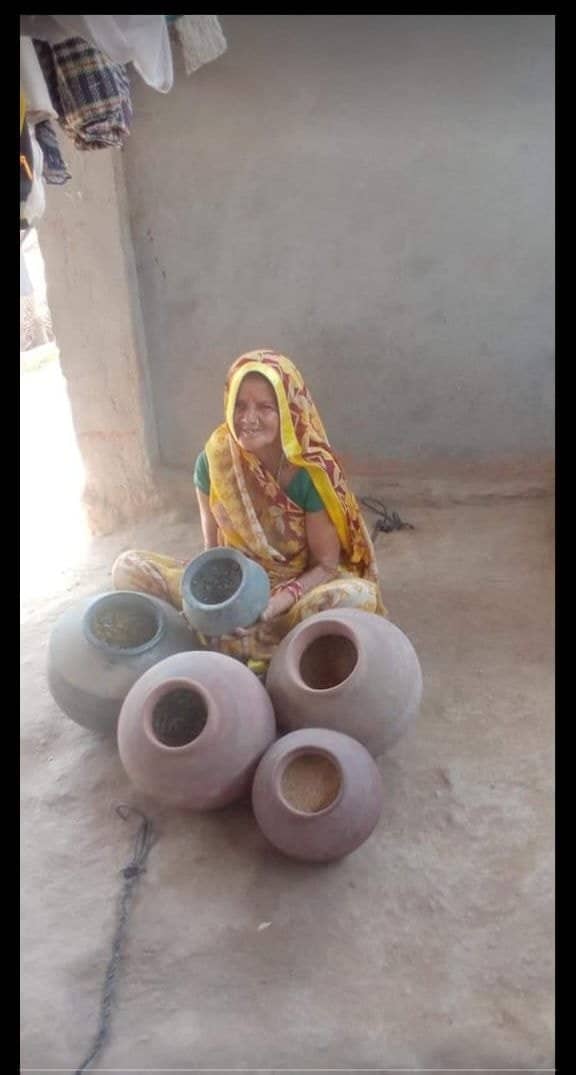
In Sailana block of Ratlam district lies a small village called Govardhanpura. This is where Durga Maida lives with her family her husband and four daughters. Farming, for them, meant just one bigha of land, far too little to feed six people. Grain for the whole year was out of the question; even meeting daily expenses was a struggle. Besides farming, she kept livestock and took up wage labour whenever she could. There was no shortage of hard work, but it brought in very little money. By the end of many months, the accounts simply didn’t add up, forcing her to borrow. Looking back on those days, Durga Maida says life felt very difficult then farming held no appeal, and there was no sign of any new hope. This wasn’t just her family’s struggle; it was the condition of nearly every small farmer in the area.
One day, VAAGDHARA facilitator Divya Sharma invited Durga Maida to join the “Saksham Samuh” (Empowerment Group), and she began attending the monthly meetings. There, she learned a great deal that was new to her how to farm organically, how to make manure from cow dung, how to handle seeds properly, and how to grow a nutrition garden near the house. When the conversation turned to making manure and dung cakes from cow dung, it brought back memories of her childhood. She recalled that her elders used to put cow dung into the fields, and the crops back then used to be very good but somewhere along the way, that practice was abandoned. It was in the middle of this very conversation that the thought struck her: if cow dung were used properly, it could also become a source of income.
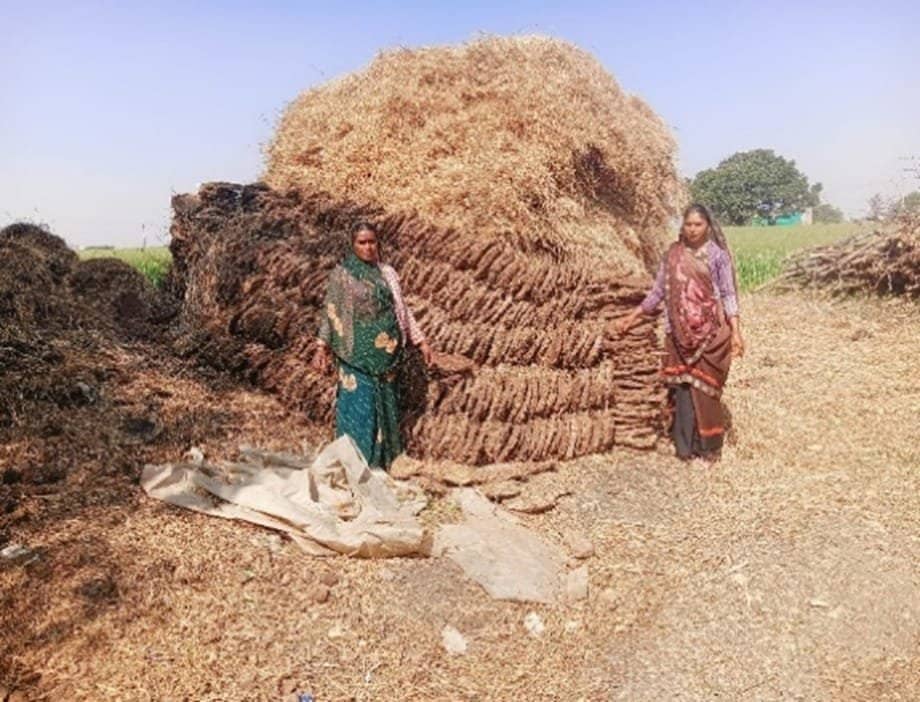
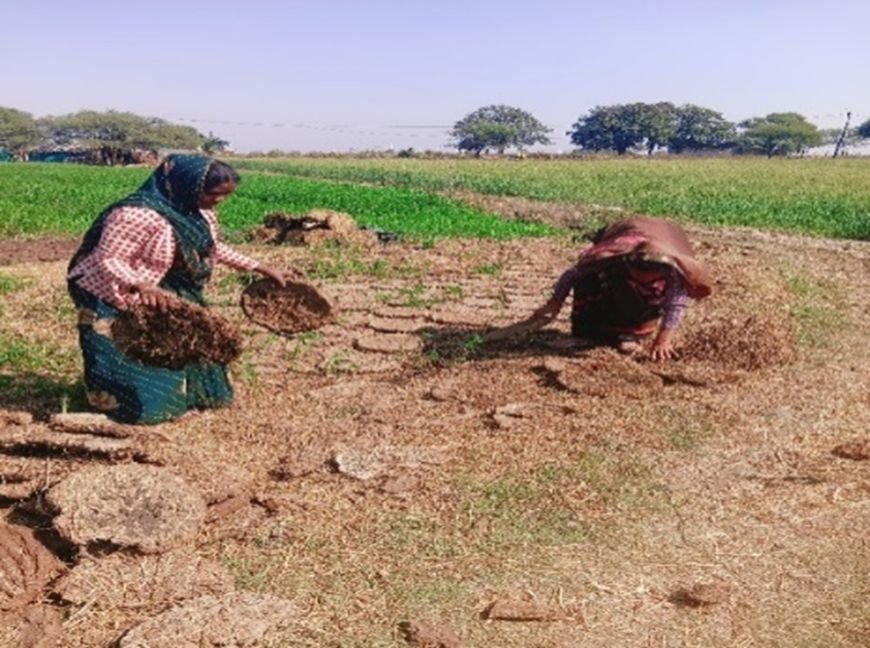
That was the turning point in her thinking. She decided to make full use of the cows and buffaloes already at home she has four buffaloes and two cows in all. Instead of using their milk only within the household, she began making and selling ghee, curd, and buttermilk, curd and buttermilk from it, which brought in a small but steady daily income. She then turned her attention to something most people consider waste cow dung itself. Durga Maida started making dung cakes from it. She prepared a batch of a thousand cakes and sold them to a nearby brick kiln. Each cake sold for five rupees, meaning that single batch brought her five thousand rupees. Today, this has become her daily work, and the dung cakes alone earn her close to five thousand rupees every month.
Alongside the income, she also changed her approach to farming. She began putting dung-based manure into her fields, which strengthened the soil and improved the quality of the crop. She explains that manure made from cow dung helps the field retain moisture, improves the quality of the crop, and brings down costs. Along with this, she began using indigenous seed varieties, already suited to the local soil and climate. To keep the seeds safe, she stores them with neem leaves and ash so that pests cannot damage them. She now has her own seed bank. The effect of all these efforts has shown up across her entire life the manure raised her farm’s yield, selling milk and milk products increased her daily earnings, and selling dung cakes gave her a new standing in the village. Around the same time, she also set up a small nutrition garden near her field, growing seasonal vegetables and a few fruit trees. Its benefit reached the family’s plate directly nutrition in their meals went up, and their spending on vegetables went down. Speaking about her experience, Durga Maida says with confidence that they used to simply throw away cow dung earlier, but now that very dung has become a means of her livelihood hard work and the right thinking turned it into a source of income. Her dream is that every woman in the village should stand on her own feet and depend on no one.
VAAGDHARA’s grassroots work stands as a solid example of this a place where old knowledge and new understanding are coming together to open up paths to sustainable income. What makes the Saksham Samuh distinctive is that it teaches women to look at the things already around them with a fresh perspective. Cow dung, once an integral part of farming but pushed aside as chemical fertilizers took over, is now once again emerging as a support for both the economic health of farmers and the health of the soil. In areas like Sailana, where landholdings are very small and small farming families constantly struggle with scarcity, such experiments show a way to turn farming into a profitable pursuit.
In villages like Govardhanpura, land is often being divided further and further, forcing families to farm in ever-smaller fragments. As a result, many families see their men move to cities in search of work, leaving the entire responsibility of both home and field to the women. In this situation, women like Durga Maida drawing income from the resources already present at home is not merely an economic matter it is also a kind of social change. When one woman demonstrates that the condition of her household can be improved through her own livestock and her own labor, without any outside help, the impact doesn’t stop at her doorstep. Other women nearby draw courage from it too and begin thinking about what new thing they might try. Since joining the group, another change has come over Durga Maida the confidence to speak her mind. Where she once sat quietly listening in meetings, she now advises other women herself and shares her own experience with them.
In the end, it can be said that Durga Maida has shown, through her hard work and good sense, that when thinking moves in the right direction and effort continues without pause, nothing is ever too small or too worthless. The cow dung once overlooked has today become the biggest support of her livelihood. This seemingly ordinary woman of Govardhanpura has become a living example of hope for the women of her village and the surrounding area proof that the road to standing on one’s own feet can begin right at one’s own doorstep.

Disclaimer:The views and opinions expressed in this article are those of the author(s) and do not necessarily reflect the official policy or position of The Rift.