Opening The Rift
therift
© 2026 The Rift. All Rights Reserved.
Ending Water Scarcity: A 50-Year Journey of Community-Led Transformation in Rural India
It was only when water scarcity ended that we could move forward in other areas.

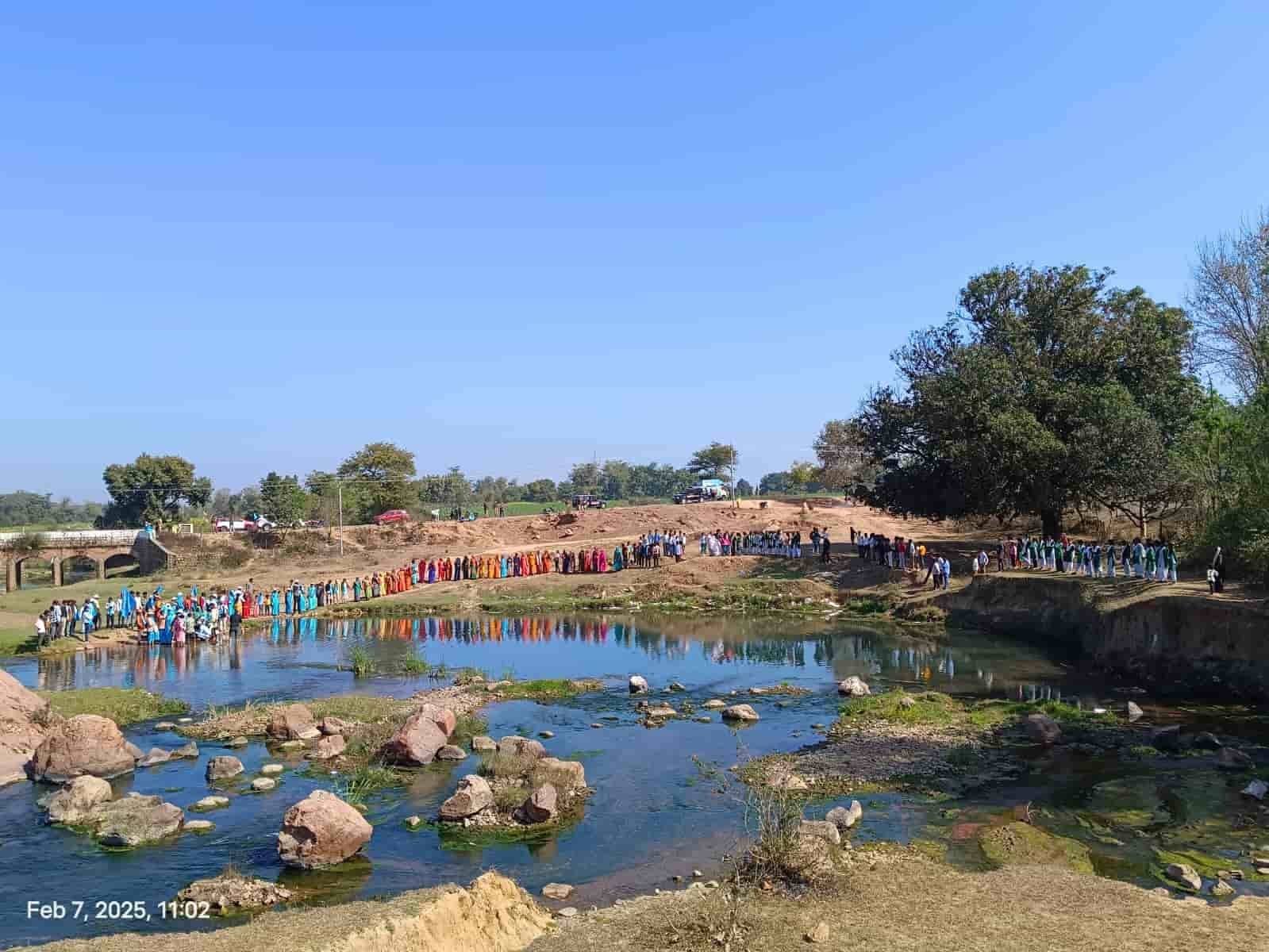
Foot march of jal sahelis for water conservation.
Key Takeaways
1 of 3
Automatically generated. Read full article for complete context.
“We have progressed in several areas, but the real game changer has been the availability of adequate water. It was only when water scarcity ended that we could move forward in other areas.”
These words of Anita, a middle-aged woman from Shyampur village in Karauli districtKarauli DistrictA district in the Indian state of Rajasthan, known for its historical significance and often facing water scarcity challenges. (Rajasthan) would have made anyone happy, but these were even more meaningful for me as my journey to villages striving to end water scarcity is now completing five decades. What I have learnt in the course of my journeys is precisely what Anita stated—and other women of this village confirmed–in the course of a recent group discussion.
When I first decided to live my entire life as an independent writer in the mid-1970s, a question arose regarding what kind of a writer I should be. What should be most important for my writing work?
It appeared to me that the most significant contribution I could make was in the context of reporting on problems of remote rural areas, particularly in the context of the efforts being made to reduce the distress and problems of the people living there.
When I started visiting these villages I increasingly felt that water scarcity for people in many of these villages could be the most distressing part of their life. On the one hand, there was an acute water scarcity particularly in the peak summer season for people as well as farm animals. On the other hand, the farming-based livelihoods reliant on irrigation water were very adversely affected.
In Patha (plateau area) of Chitrakut district (Uttar Pradesh), I found during the drought conditions of early 1980s that women of Kol tribal communityKol Tribal CommunityAn indigenous tribal group primarily found in central India, particularly in states like Uttar Pradesh and Madhya Pradesh, often among the most marginalized communities. were walking for about 5 km in hot weather to somehow fetch two pitchers of water. This water too was not always clean. Cattle which had been receiving a lot of affection from rural families now had to be abandoned as there was no water for them. They could survive some days without fodder but not water. I saw a woman crying after she had been forced to do something that she had been trying to avoid for a long time–when it became clear that water for cattle just could not be arranged, she applied a vermillion mark on their forehead as a symbol of respect before sadly abandoning them to their own fate—to find water on their own if they could do so. No words could console her.
In fact in the course of my long travels I found one such bullock (abandoned by someone) who had actually come close to a water source. The tragic situation was that the water pond had dried up for the greater part. Just a small ditch being deeper than the rest of the pond had some water left in this. No one had made an effort to access this water because the portion of the pond now without water had become very dangerous and anyone walking in it would soon be sinking in mud in certain patches of this. The bullock, desperate for water, had walked into this danger zone, and was slowly sinking into this mud as people looked on helplessly.
Elsewhere I saw wells in which water had sunk very low and people were resorting to desperate and dangerous steps in order to be able to obtain water from these wells. Such situations are much rarer now as the government’s programs to ensure drinking water supply to villages have progressed significantly since then. However, even now, one comes across several villages with acute water scarcity. One aspect of this problem is that even as government programs for drinking water supply in villages progress, there are several aspects of ecological ruin (such as deforestation, shrinking of rivers, encroachments on water sources and their catchments) which cause water levels to decline. This can lead to a situation in which water taps and pipes exist, but regular water supply is missing as water sources have dried up.
Hence the crucial importance of water conservation is now increasingly realized. Rains in India are largely concentrated in the monsoon seasonMonsoon SeasonThe primary rainy season in India, typically from June to September, crucial for agriculture and replenishing water sources. from June to September. Hence, it is very important to conserve rainwater. This was well recognized in historical times and various parts of the country have rich traditions of conserving rainwater in keeping with specific local conditions. However, such decentralized systems were disrupted during colonial British rule. Even after independence, when water projects based on modern engineering, including large dam projects, received greater priority, several traditional systems of rainwater conservation did not get the same priority or attention.
However some of the voluntary organizations working at the grassroots were more conscious of working along these lines, learning from traditional wisdom while simultaneously using modern science, as seen in the watershed management approach, to further advance the cause of water conservation.
The Bundelkhand region, comprising 14 districts spread over two states has seen several such efforts at local levels. In Patha region these efforts have been led by Gaya Prasad Gopal (affectionately called Gopal Ji), founder of a voluntary organization ABSSS, which worked closely with international organizations like Oxfam and Action Aid, as well as government organizations like NABARD, to undertake a lot of very useful work that also received a prestigious water conservation award from the Federation of Indian Chambers of Commerce and Industry. which worked closely with international organizations like OxfamOxfamA confederation of 21 independent charitable organizations focusing on the alleviation of global poverty. and Action AidActionAidAn international non-governmental organization whose primary aim is to work against poverty and injustice worldwide. as well as government organization like NABARDNational Bank for Agriculture and Rural Development (NABARD)An apex development financial institution in India, providing credit for agriculture and other economic activities in rural areas. to take forward a lot of very useful work which also received a prestigious water conservation award from the Federation of Indian Chambers of Commerce and IndustryFICCIA non-governmental trade association and advocacy group based in India, promoting business and industry.. In the course of several visits to Patha I tried to understand Gopal’s perspective on water conservation which has influenced many younger activists engaged in water conservation.
Now in his eighties, Gopal likes to sit in the middle of numerous trees he has planted near his home and office in Chitrakut. He says, “It is very important to understand the way in which the traditional systems of water conservation worked and then only with this understanding use what modern science offers. It is important also to work in close partnership with local communities including women members and experienced elder people.”
Gopal’s face lights up as he adds, “In addition, it is very important to increase the tree cover and plant more and more indigenous species of trees. I have also tried to promote this, and these efforts must have by now led to the planting of about one hundred thousand trees with good survival rate.”
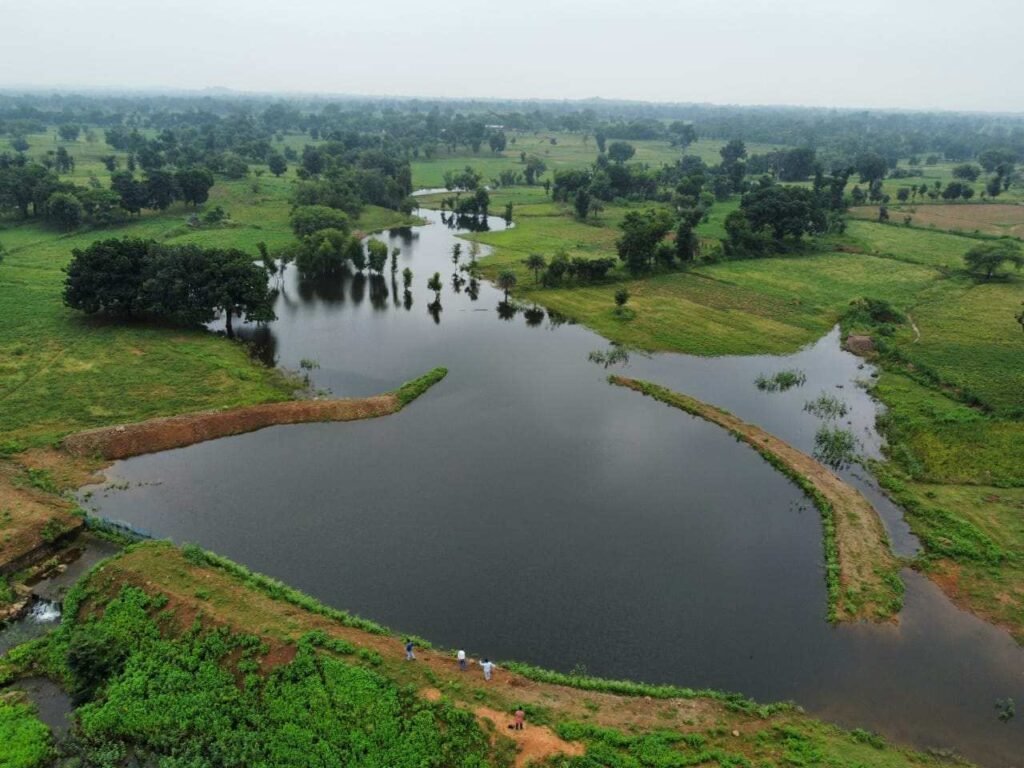
Antyodya organization has followed the same approach in nearby Mahoba district. I visited a beautiful tank full of lotus flowers in Kheminkhera village, one of the numerous historical water sources in Bundelkhand. This tank was de-silted to increase its water collection capacity. In another village Boura of this district, acute water scarcity had resulted from the heavy siltation of the existing tank. Here too, Antyodya mobilized the community members to work for de-silting. This has helped greatly to reduce water scarcity in the area and to save the farming of chestnuts around tank banks. What is more, the villagers have formed a water protection committee to ensure water conservation on a more durable basis.
Both Antyodya and ABSSS have at times worked with SRIJANSRIJAN (Self-Reliant Initiatives through Joint Action)A non-profit organization in India focused on promoting sustainable livelihoods, natural farming, and water conservation among rural communities., an organization that has prioritized the water conservation and spread of natural farmingNatural FarmingAn ecological farming approach that minimizes human intervention, focusing on soil health, biodiversity, and reducing external inputs like chemical fertilizers and pesticides. in several parts of India. When I visited Markhera village in Tikamgarh district, people here told me they were earlier suffering from acute water scarcity. Water level in wells had fallen and many hand pumps were not yielding any water any more. In these conditions SRIJAN helped to repair check dams which had been badly damaged, and also dug ditches in the rainwater channel called dohas so that water could remain here for a much longer time after the rains. These simple but effective steps helped the village to improve its water conservation considerably and water table has risen significantly. During my visit I found women in particular to be very happy, as they have more responsibility for arranging water supply. The villagers responded to the efforts of SRIJAN by contributing as volunteers in a tree planting effort which will help further in water conservation.
Coming back to Shyampur village, most of the farmland here had been barren due to lack of water about a decade back. As villagers here told me, this started changing fast with water conservation initiatives undertaken by SRIJAN. 18 new water bodies were created and 14 existing ones that needed repairs were renovated. A big water tank was de-silted and the fertile silt taken out of the tank was deposited in farms. Then natural farming practices were spread here. Along with their other benefits of protecting environment and producing healthy food, natural farming reduces water needs of crops. Nearly three-fourths of the cultivated land here has been brought under cultivation only recently because of the recent water conservation initiatives
The situation here is the same as in Jogipura village of this district where water conservation work could change the entire development prospects in the village and from a stage of hopelessness and neglect, the people of this very remote village are now looking forward to many-sided opportunities.
Parmarth, another leading voluntary organization active in Central India, has created a cadre of women water volunteers called Jal Sahelis (translated as water friends). They have been working for de-silting and cleaning water sources and spreading wider public consciousness on the importance of water conservation. Sarkunwar, the first Jal Saheli to emerge from Udgawaan village of Lalitpur district (Uttar Pradesh) made a very important contribution to improving water conservation and sanitation efforts in her village. Despite having to bear increasing family responsibilities due to her husband being injured in a serious accident and other adversities, Sarkunwar could find the time for this work, ultimately getting elected to rural decentralization governance posts.
Several small rivers play a very important role in meeting water needs of villagers here but these have been getting increasingly depleted due to a number of factors including harmful mining practices. With the help of Jal Sahelis Parmarth has helped in the rejuvenation of some of these rivers. As Sanjay Singh, founder-director of Parmarth, says the entire experience of Jal Sahelis shows the vast potential of voluntarism to take forward some of the most important tasks like water conservation. They have not just lived up to the original expectations, they have surpassed these.
The contribution of water conservation work improves further when it is linked more closely to improving the prospects of the weaker and poorer sections of society. The ABSSS was working for the settlement and land rights of some of the poorest people in the Patha area, and this was followed up with the creation of a water tank along the lines of traditional water conservation practices. Thus the people of the newly created Harijanpur village who had just received some farmland in land distribution effort of the government, were now able to cultivate this land. Thus, once landless people could become successful farmers and their children could progress by accessing educational facilities. During a recent visit many farmers related their journey from a completely insecure existence to progress and economic security.
SRIJAN’s national coordinator Prasanna Khemaria says, “In our work, we place maximum emphasis on working with weaker and poorer sections of society and within these sections, with women, our effort being to work in ecologically protective ways as well as in ways that promote justice at various levels.”
An important aspect of such efforts that needs more attention is the ability to maintain the success of water conservation over a longer period of time. Since often this work is taken up as part of time bound projects, a question arises whether the same community involvement can be mobilized for maintenance work once the project is over. Varsha Rathore, who has been associated closely with the water conservation efforts of a leading voluntary organization Seva Mandir in South Rajasthan, says, “The key to ensuring longer-term success is to create and stabilize community organizations and promote local leadership who will continue to take good care of water conservation and other community efforts. We have always emphasized the creation and promotion of such community organizations based on equality and non-discrimination, and this has proved very helpful.” I could see this in Ramaj village of Udaipur district, where Seva Mandir’s efforts of planting trees and constructing several check dams, gabions, and field bunds led to this village emerging as a significant success of water conservation, leading to a rise in the water table and improved livelihoods. and field bunds led to this village emerging as a significant success of water conservation, leading to rise of water table and improved livelihoods. Such success can be seen in several other villages here as well. Despite the contributions of community institutions to protect these gains, there are still challenges, such as how to keep the younger generation more involved in such community work.
At a more personal level, my journey of reporting on the struggles and efforts to quench the thirst of remote villages has given me the joy of proximity to many heartwarming efforts of success in water conservation. In the course of this long journey, I recently tried to dig deep into my small pockets to support some small work of water conservation on my own. This effort was in the hamlet of poorest dalit people of Bhanwarpur village in Banda district. This village had a very useful well that served well to meet its water needs for many decades, but its usefulness diminished due to the accumulation of tree leaves and other dirt. So I took the initiative to contribute a substantial share of the costs for cleaning this well, while the people living in this hamlet contributed voluntary work, and any shortfall in the funds needed was met by a voluntary organization, Vidydham Samiti.. This cooperative effort resulted in clean water supply for some of the poorest families of this village. This gave me great satisfaction, which I’d like to share and use to call on more people to be involved in such efforts. The various ponds, tanks, wells and other water bodies created or improved under these efforts are extremely useful for people in villages, their farm animals, as well as stray animals, wild animals, and birds.
Disclaimer:The views and opinions expressed in this article are those of the author(s) and do not necessarily reflect the official policy or position of The Rift.
*Water ConservationCommunity InitiativesEnvironmental JusticeIndiaNGOsRural DevelopmentTraditional Wisdom