Opening The Rift
therift
© 2026 The Rift. All Rights Reserved.
The rise of Artificial Intelligence and fall of Human Intelligence
Over-reliance on AI in education is propagating a system worse than rote learning, killing critical thinking and creativity, and ultimately hurting collective human intelligence.



Key Takeaways
1 of 3
Automatically generated. Read full article for complete context.
When we were under-graduate students, we attended classes like millions of us do, took down notes during lectures, kept track of the syllabus, went through the suggested books list and borrowed books from the library to prepare self-notes since majority of the books were more expensive than gold and it was beyond the means of us students to afford them on our own. The same was true for when we were graduate students with one extra addition – presentation slides.
During our time as PhD scholars at esteemed educational institutes, we noticed how the method of studying had changed drastically in the past few years in conjunction with the rise of AI models.
Before the COVID-19 pandemic, the pattern remained more or less the same. Students attending classes, taking notes during lectures, preparing additional notes from library books and referring to the presentation slides provided by the professors.
After COVID-19, however, the picture began to change drastically. Nowadays, students do attend classes but don’t make study notes like the previous generations. They don’t refer to books or take copious amounts of notes during lectures but instead rely primarily on presentation slides and LLMs. To study any topic, they head straight to… you guessed it, Chat-GPT or Claude or some other LLMs. They type in their question and the AI model spits out an answer.
Nobody cares to check whether the answers provided by these AI models are factually correct. Sometimes the answers are barely satisfactory and sometimes blatantly incorrect as AI throws up bits and pieces of information accumulated from various sources even referencing sources that don’t actually exist… Many have started to label AI generated content as AI slop. But who cares!
There are students who submit entire assignments that was copied and pasted from output generated through AI. We ourselves know of such students. Even Reddit is filled with similar stories. At first, we were not aware that any student could do such a thing but after some time it became evident that most did. When we asked some of those students as to why they are studying through AI instead of reading proper course books, we got a few answers – higher course burden, back-to-back semesters with very little break in between, pressure to outperform batchmates and time-saving.
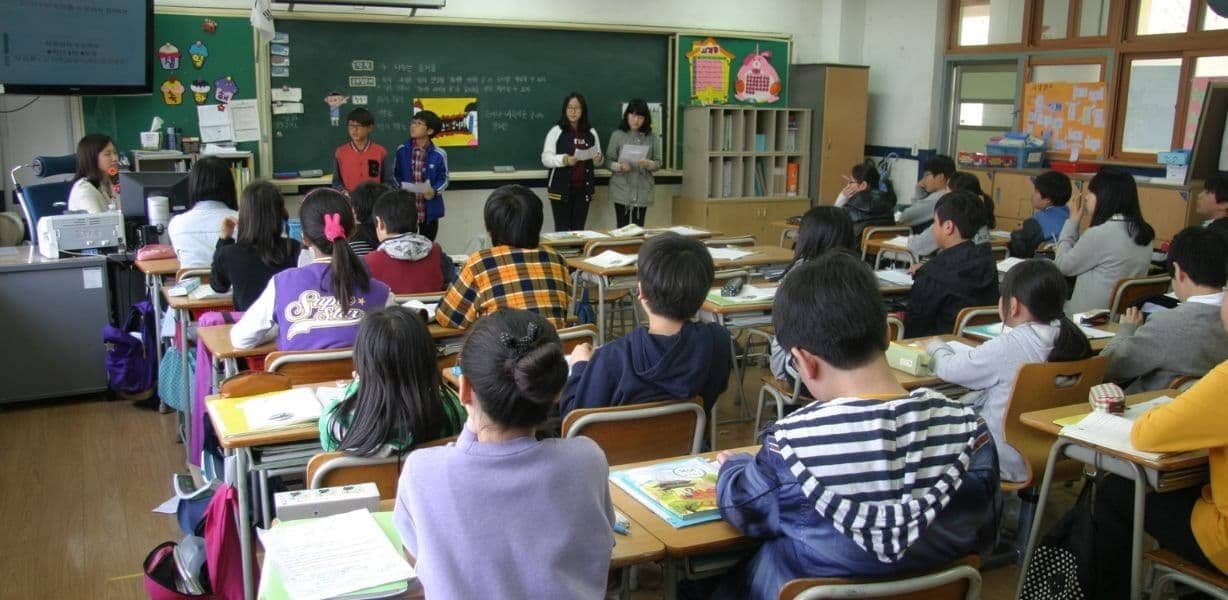
Unfortunately, this educational crisis is not just unfolding in colleges and universities. School students are increasingly relying on YouTube and LLMs for help with their school work. They learn half-baked lessons from AI and regurgitate the same AI garbage in their school assignments and answer sheets. Decreased interest in reading books has in reality, limited their vocabulary from a very young age. Reduced vocabulary directly reflects in school students’ diminished writing capabilities which in turn, could become responsible for decreased literacy rates in the near future. Whether a student is in school or college – over-reliance on AI negatively affects them and their future and that of their country.
Rote learning was once the classical hallmark of school educational systems worldwide, something most educators were against. Major steps have been taken by several countries to encourage critical thinking and discontinue rote learning. What most of us are overlooking is that a system worse than rote learning is being propagated by utilisation of AI under the guise of being a productivity tool where millions of students worldwide are learning the same topic in the exact same style that kills critical thinking and creativity.
When we spend our time researching about a topic by going through books, journal articles and opinion pieces we are not just writing down the important points, we are subconsciously, preparing a mental picture of the said topic and accumulating long term information in our brains. Such activities, keep our brains sharp and help to reduce the risk of dementia and other neurological disorders. When the same task is relegated to AI, we are giving up on the benefits of keeping our brains sharp and often choose to spend whatever time we saved by using AI on doomscrolling which further reduces our cognitive abilities.
We form our opinions and worldview by acquiring knowledge initially through the school education system and later by self-exploration. AI subverts this natural progression of knowledge seeking with quick short explanations. Explanations that don’t fully explain a topic in its entirety leaving gaps in knowledge. These gaps will later give rise to even bigger gaps that will hurt the collective human intelligence in the long run something we all should be concerned about.
When asked to answer a question, every person will articulate their views and opinions slightly differently because our answers are a compilation of the knowledge acquired through education and life experiences. Hence, every person has a different intellectual voice.
AI, on the other hand, has been fed an unsurmountable mountain of data that has been created by humans – literature, scientific discoveries and even art. No AI has any lived experience from which it can draw upon to deliver nuanced answers. So, when AI is asked the same question as humans, it will give an answer that is devoid of the human touch or lived experience. On top of that, AI has a very particular way of framing an answer and once you come across such AI generated content, it becomes very easy to differentiate between human written, AI-assisted and fully AI generated answers.
Like how in the not so distant past, teachers advised against reading articles on Wikipedia, for the information in those articles was fragmented and not at par with what was present in books. The same holds true about LLMs. Today information can get updated almost every single moment and disseminated instantly, it is quite difficult for books to keep up with this. But books have the upper hand when it comes to safeguarding knowledge. Anyone can rewrite a book or an article online. It is feasible to completely get rid of online articles and websites but is it extremely difficult to purposefully get rid of every copy of a book. Even if a single copy survives, that piece of information survives. Information provided by AI models can be tweaked by introducing changes in their algorithms and the websites and books they draw their information from. Changes that may or may not be introduced intentionally to reflect shifting attitudes. One has to be extremely cautious.
Some may label us as AI fearmongers but we have no qualms about it. And yes, we did not use any AI assistance to write this post.
Disclaimer:The views and opinions expressed in this article are those of the author(s) and do not necessarily reflect the official policy or position of The Rift.