Opening The Rift
therift
© 2026 The Rift. All Rights Reserved.
Sanawar’s Rich Educational Legacy Should be Strengthened Further
Despite a record of diverse past achievements, the school should strive to achieve more at a time when there are big challenges before the education system.

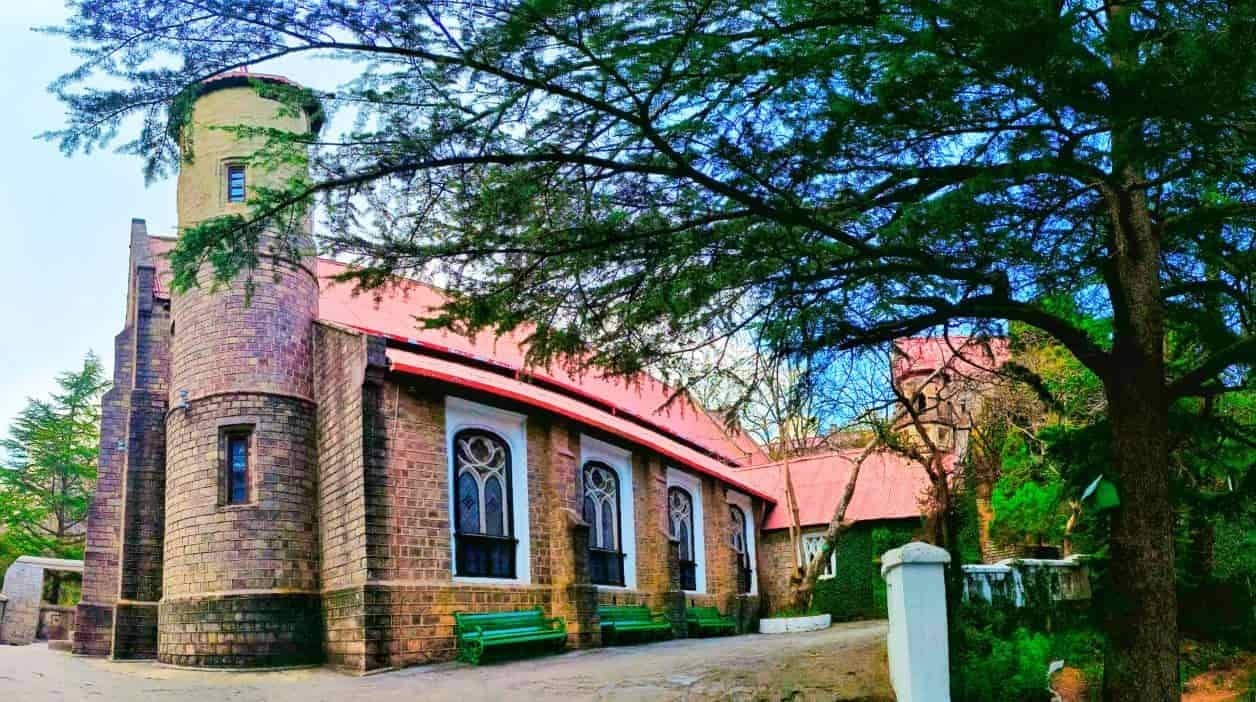
The iconic School Chapel, the oldest existing building at Sanawar, symbolizing its enduring educational legacy.
Key Takeaways
1 of 3
Automatically generated. Read full article for complete context.
On cold days in tough hilly terrain, when workers struggled to create a few small constructions for an asylum for orphans and other needy children of soldier households in 1847, they could not have imagined that 177 years later this would be one of the most sought-after schools in India.
At that time some British representatives inclined towards welfare activities were merely doing the best they could to meet a real need in ‘best Christian traditions’ as they saw this. They could not have foreseen that over a hundred years later in independent India a student from this school will have the honor of being the youngest ever to win the highest award for bravery in armed forces, that several students from here will go on to become leading decision makers of the country as chief ministers and union ministers and that some other students from here will quite literally ‘reach the top’, the boys successfully reaching the summit of the Mount Everest and girls the top of Mount Kalimanjaro.
Yes, the Lawrence Sanawar School, situated in a beautiful, biodiversity rich campus near Kasauli in Himachal Pradesh, has come a long way since it was first visualized as a help for children of soldier families facing difficult times. The fact that it could overcome many difficulties is still attributed by some local persons to the noble intentions of the founders Henry Lawrence and his wife Honaria Lawrence. At an early stage they came in contact with a well-run orphanage for girls near Calcutta to which they donated their savings. This also inspired them to do more for children on their own. Henry was willing to work hard and had the inclination and the ability to establish close relationships with native people. He rose fast to occupy very senior official positions in Punjab (including present day Himachal), Rajasthan and Oudh. Due to his friendly ways Henry became close to several Punjabi nobles and when Lord Dalhousie adopted more aggressive policies, Henry resigned from a senior governance position in Punjab. His biographers note that his departure from Lahore looked like a funeral procession as those who had worked with him and had developed affectionate relationships were crying. Later from his senior positions in Rajasthan and Oudh he is reported to have warned about the urgency of improving the condition of natives and native soldiers to avoid discontent and rebellion. The importance of his warnings was realized at the time of the great 1857 uprising in India. Posted in a very senior position then in Oudh, Henry was seriously injured in an attack. When in bed with considerable pain, he summoned those serving him and gave them one year’s advance pay. He died after this in 1858, at the age of 53. Honoria had died earlier from disease in 1854. However, before their deaths, the two had done enough through their commitment to children to ensure lasting benefits, leaving behind a rich legacy that continues to this day.
EDUCATIONAL JOURNEY
A Legacy Forged Through Time: Sanawar’s Historical Milestones
1
1847: Founding as an Asylum
The school begins as an asylum for orphans and needy children of soldier households.
2
1858: Demise of Co-founder Henry Lawrence
Henry Lawrence, a key founder, passes away at the age of 53.
3
1947: Post-Independence Crisis & Revival
Faces major crisis as British students leave; Education Minister Maulana Azad’s visit restores hope.
4
1971: Alumni Arun Khetrapal Awarded PVC
Arun Khetrapal becomes the youngest recipient of the Param Vir Chakra at age 21.
5
~2023: First Woman Headmaster Appointed
After approximately 178 years, Ruchi Pradhan Datta takes up the leadership role.
VISUALS BY THE RIFT
They had found time in the middle of busy official engagements (including one in Nepal) and some health setbacks to obtain official permission as well as to collect donations (the biggest one coming initially from the king of Jammu who was close to Henry, a fact that, of course, could not have foreseen that a future Chief Minister of Jammu and Kashmir, Omar Abdullah, would get his school education here). Thanks to this, several educational institutes could start and three of these continue to make important contributions to this day. Two of these are in India, the Lawrence School, Sanawar (Himachal Pradesh) and the Lovedale Lawrence School near Ooty. The third such institute is in Pakistan—the Lawrence College in Ghoragali, Muree Hills.
The school at Sanawar was the first one to come up in 1847, and notably, as a co-educational school for its era. It is arguably the earliest co-educational boarding school. This school had achieved a great reputation in British times, but faced a major crisis around 1947 as most British students left following independence. However, the visit of Education Minister Maulana Azad helped restore hope for its continuation as a school of great repute, leading to several changes suitable for the evolving times. In the post- independence years the first three principals E.G. Carter, Major Ravi Som Dutt and Somi Ranjan made a significant contribution of stabilizing the school. Earlier the famous friend of Mahatma Gandhi, C.F.Andrews, had also been the principal here for some time.
The Lawrence School Sanawar is widely known for its encouragement of a wide diversity of curricular and extra-curricular activities, as seen also in the contributions of its alumni in very diverse areas of national life. Arun Khetrapal, a student from here who died defending the western borders in the 1971 war, became the youngest recipient of the highest award of armed forces the Param Vir Chakra at the age of only 21. In addition there are several other recipients of bravery and courage awards from this school. At a different level, students from here have excelled in cinema (Parikshat Sahni, Sanjay Dutt and several others), mountaineering, sports (including several Olympians), and have occupied very senior positions in government and business. Extra-curricular activities for which opportunities are provided are highly diverse including (apart from most sports) carpentry, Indian dance, western and classical music, painting, sculpture, ceramics, bamboo craft, robotics, photography, fashion designing, aeromodelling, writing and editing, debating, drama, literary studies, birdwatching, stargazing, Model United Nations (MUN).. There are students from all over India and abroad, as also exchange programs with several countries.
A particularly strong aspect of this school is the wide and strong network of former students called Old Sanawarians (OS). OS have helped the school to initiate several activities including those for inclusiveness (such as a tie-up with the Salaam Balak Trust for the education of selected children from economically weaker sections. for education of selected children from economically weaker sections here. OS support also enabled the school to take up several helpful efforts for migrant workers during the COVID-19 pandemic. Students from Sanawar have much appreciated programs for helping rural communities, improving water and sanitation, assisting orphanages and leprosy patient centers.
Srishti Priya, who studied here for six years says, “There is so much happening here and students need to make independent decisions so many times in a single day that it increases their confidence and prepares them very well for the many challenges of life ahead. For me the biggest gift of Sanawar has been the long-term and very close friendships formed here which add so much meaning to our life and are helpful in many diverse ways.”
However despite a record of diverse past achievements, the school should strive to achieve more at a time when there are big challenges before the education system globally. Cannot education help to create a world based on peace and non-violence? Cannot schools make a better contribution for a world based on environmental protection and justice? There are several such questions that are important but have not received the due attention in the education system at world level.
Despite being the oldest co-educational boarding school, Sanawar did not have a woman as headmaster or principal for about 178 years. It is only recently that the first woman Headmaster, Ruchi Pradhan Datta, has taken up this leadership role. The school and its well-wishers have very high hopes from her, not only for strengthening past achievements but also for initiating new ones.
Disclaimer:The views and opinions expressed in this article are those of the author(s) and do not necessarily reflect the official policy or position of The Rift.