Opening The Rift
therift
© 2026 The Rift. All Rights Reserved.
JAMIA IS NOT JUST AN INSTITUTION — IT IS A LEGACY OF RESISTANCE
Jamia was born out of resistance. How, then, can the voice of resistance be silenced on its own soil?

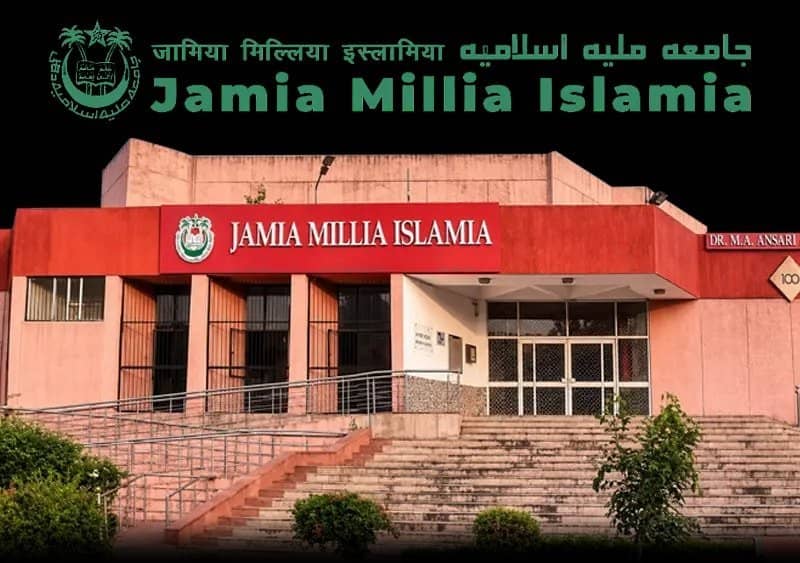
Jamia Millia Islamia, an institution with a rich history of student activism and resistance.
Key Takeaways
1 of 3
Automatically generated. Read full article for complete context.
In 1920, when the Non-Cooperation MovementIndian Independence MovementA nationwide civil disobedience movement launched by Mahatma Gandhi in 1920 to protest British rule in India, advocating for non-violent resistance and boycott of British goods and institutions. challenged British colonial rule, Jamia Millia IslamiaCentral University in DelhiA public central university in New Delhi, India, originally established in 1920 during the Non-Cooperation Movement as a nationalist institution promoting education independent of British colonial influence. was born out of a refusal to surrender the dream of an independent India. It was built by visionaries such as Mahatma Gandhi, Maulana Mohammad Ali Jauhar, Hakim Ajmal Khan, Dr. Mukhtar Ahmad Ansari and Dr. Zakir Husain. They did not build Jamia merely to educate generations; they built it upon the principles of freedom, dignity, courage, and resistance against injustice.
Jamia was born out of resistance. How, then, can the voice of resistance be silenced on its own soil?
Why Does Jamia Need a Students’ Union?
A Students’ Union is not merely an organisation or a political platform. It is a bridge between students and the administration. It carries students’ grievances to the authorities, demands accountability, protects students’ interests, and helps resolve academic, financial, hostel, and other administrative problems.
Without an elected representative body, thousands of students are left without a collective, democratically elected voice. If the administration believes that students’ problems matter, why should it fear a Students’ Union?
The history of Jamia’s Students’ Union
Jamia’s first elected Students’ Union was formed in 1981–82, with Zubair Khan as its first elected president. The union was discontinued in 1997, restored through elections in 2005, and dissolved again on 31 March 2006.
KEY MILESTONES
Timeline of Jamia Millia Islamia Students’ Union
1981–82
First elected Students’ Union formed.
1997
Students’ Union discontinued.
2005
Union restored through elections.
March 31, 2006
Union dissolved again.
December 20, 2022
Delhi High Court order disposed of petition, no prohibition on future elections.
October 24, 2026 (as per article)
Recent student protest and confrontation with administration.
VISUALS BY THE RIFT
The administration has cited campus violence, disruption of academic activities, and incidents culminating in an attack on the Vice-Chancellor as reasons for the 2006 dissolution. But a question remains: Should the actions of some individuals deprive generations of students of their democratic right to representation?
The Delhi High Court’s order of December 20, 2022, did not prohibit Jamia from holding elections in the future. The petition was disposed of after the university’s counsel stated that the union had been dissolved. Where, then, is the judicial prohibition that prevents the administration from initiating a fresh, fair and peaceful election process?
Nearly two decades have passed. India has changed. Society has changed. Students have changed.
Twenty years ago, many villages in Bihar lacked electricity and proper roads; many villages in Uttar Pradesh faced similar difficulties. Today, much has changed in those places. Just as society has progressed, students have also evolved. This is the age of social media, digital awareness and instant communication.
Today’s students are not the same as those of twenty years ago. They are not a generation to be dismissed as hooligans without giving them a chance. Hold the elections first. Trust the students. Let democracy be tested through a fair process.
What Happened on 24 October 2026?
Registrar Prof. Md. Mahtab Alam Rizvi, Dean of Students’ Welfare Prof. Neelofar Afzal, Dean of Humanities and Languages Prof. Iqtidar Mohd Khan, and Dean of Social Sciences Prof. Zubair Meenai came to speak with the protesting students, including those who had been on hunger strike for thirteen days.
Instead of a meaningful resolution of the students’ demands, the confrontation escalated. Students alleged that university personnel attempted to dismantle the protest site and forcibly take hunger-striking students away. Allegations of force against protesters, including the pulling of hijabs of female students, are deeply disturbing and demand an impartial inquiry.
The administration subsequently shifted classes online. Meanwhile, the students’ principal demand for restoration of the union remained unresolved.
My questions to the administration are simple: Why were the students’ demands not addressed with the urgency they deserved? Why did a dialogue intended to resolve the crisis end in confrontation? And why should students have to undertake a hunger strike to demand an elected representative body?
My Questions to the Vice-Chancellor and the Faculty
Prof. Mazhar Asif, the Shaikh-ul-JamiaVice-Chancellor of Jamia Millia IslamiaAn honorific title historically used for the Vice-Chancellor of Jamia Millia Islamia, signifying the head of the institution. and Vice-Chancellor, I ask you: Is this the way a university should be administered? Are the students’ demands illegal, unethical or immoral? Since when has raising one’s voice for one’s rights become wrong on the soil of Jamia?
You are entrusted with the responsibility of protecting students and safeguarding the institution. Students call you Sir because they look up to you as a teacher, a guide and a guardian. That trust carries a responsibility beyond administrative authority.
My questions to Prof. Zubair Meenai and Prof. Iqtidar Mohd Khan are equally direct. You received your higher education at Jamia. As students, did you never witness injustice? Did you never question an administration when you believed something was wrong? Did you never raise your voice for what you considered right?
Then why should today’s students be denied the very space to question that previous generations demanded?
At freshers’ events, farewell ceremonies, and university gatherings, professors and staff speak of unity, mutual respect and standing beside one another. But when students allege that their fellow students were manhandled and that female students’ hijabs were pulled, where was that solidarity? Where was the courage to stand beside them?
If your own daughters were in that situation, would silence have been acceptable?
A teacher’s character is not measured only by the speeches they deliver, but by the principles they defend when those principles are put to the test.
To Registrar Prof. Mahtab Alam Rizvi and Dean of Students’ Welfare Prof. Neelofar Afzal
Jamia is not anyone’s private property. No authority should treat students’ accommodation, education, or future as matters to be decided without compassion and due consideration.
Students who come from distant states apply for hostels because they have nowhere else to live near the university. Asking students to vacate hostels by the 31st, especially when semester examinations are approaching, raises serious questions about their accommodation, academic preparation, and mental well-being.
Where are these students supposed to go? How are they expected to prepare for examinations while facing uncertainty about their homes and education?
Administrative authority exists to serve students, not to make an already difficult life unbearable.
Jamia’s History Must Not Be Forgotten
We cannot forget December 2019, when the anti-CAA and NRC protestsCitizenship Amendment Act (CAA) and National Register of Citizens (NRC) ProtestsA series of widespread protests across India in late 2019 and early 2020 against the Citizenship Amendment Act and the proposed National Register of Citizens, which were seen by critics as discriminatory against Muslims. and the police action at Jamia left a lasting scar on the institution’s collective memory. Many students still remember those events as one of the darkest periods in Jamia’s history.
Now, in 2026, students demanding an elected union are once again facing a confrontation with the administration.
I want to ask Prof. Mazhar Asif: Your speeches often draw upon the Qur’an, Hadith and the poetic tradition of our civilisation. Were those merely words, or were they principles you intended to practise?
The Qur’an reminds us that righteousness must be reflected in our conduct. Faith, integrity and justice cannot remain confined to speeches; they must guide our actions.
Allama Iqbal’s verse comes to mind:
“Yun to Sayyid bhi ho, Mirza bhi ho, Afghan bhi ho;
Allama Iqbal
Tum sabhi kuchh ho, batao to Musalman bhi ho.”
What meaning do religious and moral teachings hold if we fail to stand for justice when it is demanded of us?
I ask every professor, clerk, administrative official and member of the university community: When you return home, can you honestly explain to the next generation why students asking for democratic representation had to face such a struggle?
This Is Bigger Than Any One Organisation
The students fighting for a union today are writing a chapter in Jamia’s history. Organisations such as NSUI, MSF, SIO, SFI and the Fraternity Movement, along with other supporters, will remember this struggle for the cause it represents.
The students sitting on hunger strike deserve to be remembered for standing up for representation, accountability and the rights of future generations.
I want to remind the administration that power and positions are temporary. Institutions survive beyond the people who occupy their offices. A university’s true reputation is determined not by the authority it exercises over students, but by the justice, dignity and freedom it affords them.
Prof. Mazhar Asif, Prof. Mahtab Alam Rizvi, Prof. Neelofar Afzal, Prof. Zubair Meenai and Prof. Iqtidar Mohd Khan: Please stop treating the demand for a Students’ Union as a threat. Restore democratic representation. Announce a clear election process. Listen to the students before this conflict causes further damage to Jamia’s academic and moral standing.
The students have repeatedly demanded a union in good faith. They have now taken their protest to the point of a hunger strike. Their determination should be met with meaningful action, not an endless administrative process.
Jamia does not belong to a Vice-Chancellor, a registrar, a dean or any political ideology. Jamia belongs to its people, its students, its teachers and the generations who built it through sacrifice.
I remain convinced that the students’ determination will prevail if they continue to stand firmly for their legitimate demands. No administration can permanently silence a generation that refuses to abandon its principles.
Jamia is not merely its buildings, offices or official orders. Every student who struggles to preserve its dignity, every student who raises a voice against injustice, and every student who demands a more democratic institution is part of Jamia itself.
I stand in solidarity with the students on hunger strike and with every student demanding a fair, peaceful and democratically elected Students’ Union.
I end with Allama Iqbal’s immortal words:
“Tu Shaheen Hai, Parwaaz Hai Kaam Tera;
Allama Iqbal
Tere Saamne Aasmaan Aur Bhi Hain.”
Disclaimer:The views and opinions expressed in this article are those of the author(s) and do not necessarily reflect the official policy or position of The Rift.