Opening The Rift
therift
© 2026 The Rift. All Rights Reserved.
Gaurav Mehla v. Haryana: When Rules Fail the People They Protect
When courts treat procedural compliance as an end in itself, divorced from the substantive goals it is meant to serve, they do not uphold the rule of law. They hollow it out.

Key Takeaways
1 of 3
Automatically generated. Read full article for complete context.
In a landmark ruling delivered on June 11, 2026, the Supreme Court of India intervened to prevent what it rightly identified as a gross injustice: the termination of employees who had served honestly for over a decade, not because they had done anything wrong, but because officials of the appointing authority failed to show up for a meeting. The judgment in Gaurav Mehla & Ors. v. State of Haryana & Ors. is far more than a service law dispute. It is a meditation on what public law is actually for.
A Decade of Service
In 2014, the Thanesar Cooperative Marketing-cum-Processing Society Ltd., Kurukshetra, advertised vacancies for the posts of Clerk-cum-Salesman and Peon-cum-Chowkidar. The recruitment followed the prescribed path: public advertisement in newspapers, receipt of applications, interviews conducted by a sub-committee, and approval by the Board of Directors (BOD) at its meeting on August 13, 2014. The selected candidates (the appellants) joined service and worked without any allegation of misconduct, fraud, or ineligibility for over ten years.
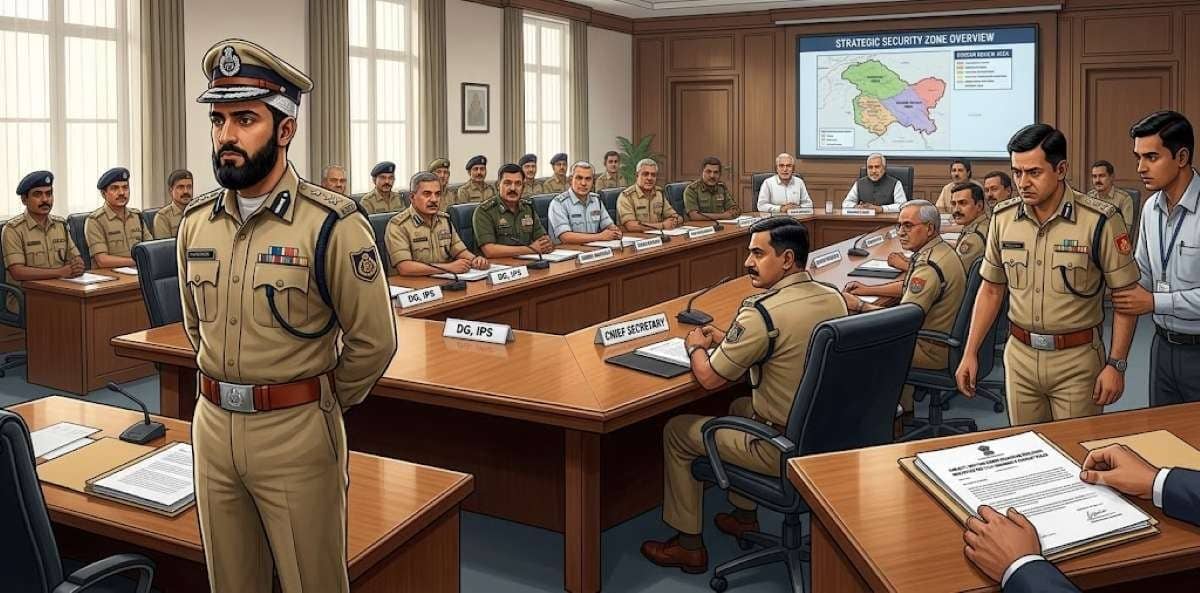
The trouble arose from a provision buried in the amended Rule 3 of the Primary Cooperative Marketing-cum-Processing Societies Ltd. Staff Service Rules, 2003. The amendment, adopted by the society in April 2011, required that the meeting at which appointment decisions are finalised must be attended by the Assistant Registrar (Cooperative Societies), the Inspector (Cooperative Societies), and the District Manager, HAFED. None of these officials were present at the August 13 meeting. The Assistant Registrar had been on medical leave.
On a complaint filed by two members of the cooperative society, the statutory authorities set aside all the appointments. The High Court of Punjab and Haryana both the Single Judge and the Division Bench affirmed the cancellations. The appellants, who had by then crossed the upper age limit for fresh recruitment, were left with nothing.
The question the Supreme Court was called upon to answer is one that recurs endlessly in Indian administrative law: when a procedural requirement is described as “mandatory”Mandatory vs. Directory RulesMandatory rules carry strict legal consequences if broken, whereas directory rules serve as general guidelines., does its violation automatically render everything that followed it null and void?
The traditional answer reflected in a long line of precedents and accepted by all three authorities below is yes. Once you characterise a rule as mandatory and show it was breached, the consequential appointments are void ab initioVoid Ab InitioA legal term meaning “invalid from the outset.”, regardless of how many years have passed or how blameless the employees were.
The Supreme Court, in an opinion authored by Justice Nongmeikapam Kotiswar Singh and concurred in by Justice Sanjay Karol, declined to accept this mechanical approach.
Reading “Mandatory” Intelligently
The Court’s reasoning turns on a careful analysis of why Rule 3 requires the presence of these three officials. The Board of Directors of a cooperative society is composed largely of elected members — the President and other Directors — who may not have technical expertise in service matters. The non-elected official members (the Assistant Registrar, Inspector, and District Manager) are therefore included in the BOD precisely to serve a supervisory and checking function. Their role, the Court reasoned, is to verify that the recruitment process followed proper norms: that eligibility criteria were applied, that the advertisement was adequate, that the interview was conducted fairly.
This is a salutary purpose. But it leads to a crucial conclusion. If the entire recruitment process (advertisement, interview, merit assessment) was properly conducted and suffered from no fundamental defect, then the absence of supervisory officials at the final approval meeting cannot retroactively corrupt what was already clean. The supervisors were not present to certify a process that had, in fact, been conducted correctly. That is an institutional lapse. It is not a flaw in the recruitment itself.
The Court articulated this by breaking the recruitment process into three stages: (1) public advertisement and invitation of applications; (2) the actual method of recruitment, in this case an interview; and (3) the formal decision by the Appointing Authority to make appointments. Stages one and two, the Court found, were unimpeachable. No unsuccessful candidate complained. No fraud or manipulation was alleged. No ineligible person was appointed. The sole defect was in stage three, the procedural composition of the approval meeting.
The Recruitment Severability Principle
✓ Stages 1 & 2: Advertisement & Interview
Unimpeachable; no fraud or manipulation alleged.
Unimpeachable; no fraud or manipulation alleged.
⚠ Stage 3: Board Approval
Procedural Defect: Supervisory officials absent.
Procedural Defect: Supervisory officials absent.
VISUALS BY THE RIFT
Critically, the Court held that a defect at stage three does not necessarily contaminate stages one and two. They are severable. The cure, therefore, lies not in tearing down the entire edifice, but in directing the BOD to reconvene (this time with the mandatory officials present) to reconsider whether the recommended candidates were eligible and properly selected.
The Equity Dimension
The Court also did not shy away from the human dimension of the case. The appellants had continued in service for over ten years, admittedly under the protection of an interim order, but in continuous, unblemished service. They had crossed the maximum age limit for fresh recruitment during the litigation. Terminating their appointments meant not merely sending them home, but permanently closing the door on their employment prospects in this category of posts.
The Court was careful not to let sympathy alone drive the outcome — equity cannot validate what law prohibits. But the Court’s analysis showed that law did not, in fact, prohibit these appointments when the recruitment process is read holistically. Equity reinforced a conclusion that the legal framework itself supported.
There is a deeper principle embedded here, one articulated in earlier precedents the appellants relied upon: employees cannot be penalised for institutional lapses over which they had no control. The appellants had no role in whether the Assistant Registrar attended the August 13 meeting. They had no power to compel his presence. Punishing them for his absence is not the enforcement of rule of law: it is its inversion.
It is worth being precise about the limits of this ruling. The Court did not hold that Rule 3 is merely directory. It did not say the requirement of official presence can be ignored. It directed the BOD to reconvene with the mandatory officials present and to take a fresh decision. If, upon that reconsideration, the officials find that the candidates were ineligible, or that the selection was unfair, or that more meritorious candidates were overlooked, the BOD is free to say so. The appellants are not guaranteed reinstatement only a fair second look.
The judgment also draws a clear line about what cannot be reopened. The reconvened BOD cannot re-examine the advertisement or the conduct of the interview. Those stages are settled. This prevents the proceedings from becoming a fishing expedition to find retrospective justification for terminating appointments.
Significance for Service Law
This judgment contributes to an emerging and welcome tendency in the Supreme Court to interrogate the consequences of rule violations rather than simply categorising rules as mandatory or directory and mechanically applying that label. The relevant question is not just “was this rule breached?” but “what was the purpose of the rule, was that purpose defeated, and what should follow from that?”
Applied across administrative law, this approach could save thousands of employees from losing their livelihoods due to bureaucratic failures that had nothing to do with them. It shifts the locus of accountability where it belongs: to the institution, not the individual.
The ruling also serves as a quiet rebuke to the complainants in this case, two members of the cooperative society who had no competing claim to the posts but successfully weaponised a procedural technicality to destabilise the careers of seven people for over a decade. That the legal system permitted this kind of challenge to persist through multiple rounds of litigation, with the appellants ultimately prevailing only at the Supreme Court after being removed from service in August 2025, is itself worth reflecting on.
Gaurav Mehla v. State of Haryana is a reminder that the purpose of procedural rules in public employment is to ensure fairness, transparency, and accountability: not to provide ammunition for eliminating appointments that were, by all accounts, legitimately made. When courts treat procedural compliance as an end in itself, divorced from the substantive goals it is meant to serve, they do not uphold the rule of law. They hollow it out.
The Supreme Court, in this case, looked through the form to the substance. That is what courts are for.
Disclaimer:The views and opinions expressed in this article are those of the author(s) and do not necessarily reflect the official policy or position of The Rift.