Opening The Rift
therift
© 2026 The Rift. All Rights Reserved.
Innovative Couple Achieves Great Results on Small Farm
On just one-fourth of an acre, a couple in Rajasthan built a thriving farm, demonstrating a powerful model for sustainable livelihoods, biodiversity, and climate resilience.

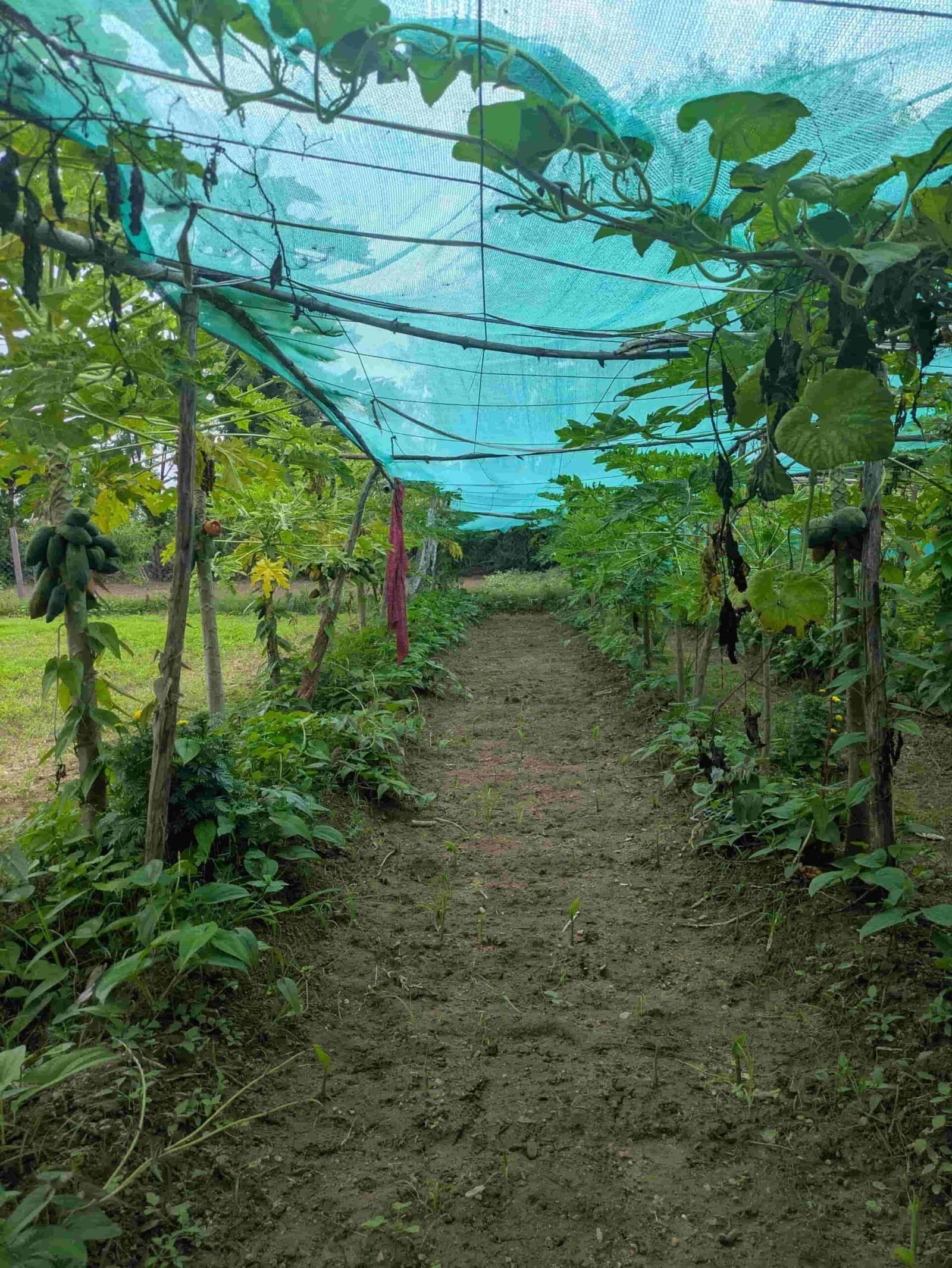
Small farm, showcasing innovative farming techniques and achieving great results
Key Takeaways
1 of 3
Automatically generated. Read full article for complete context.
In Sema, a remote village of Rajsamand district (Rajasthan), Bhagwati Lal and his wife Rekha share equal honors for creating a beautiful farm that has become a lesson for many villagers and visitors on how even a very small piece of land can be used to create a strong base for sustainable livelihoods and how to integrate this with climate resilience and broader environmental protection.
There are two great learnings from their experience. Firstly, it is never too late to start something good, something one feels called to do. Bhagwati Lal told me that he had spent nearly a decade of his youth away from his village but then decided to respond to a growing yearning to return to farming.
Secondly, one should not be deterred by a shortage of resources from any good work. This couple has only about one-fourth of an acre of land (aadha bigha zaminHalf Bigha LandA ‘bigha’ is a traditional unit of land measurement in parts of India, varying in size by region. ‘Aadha bigha’ means half a bigha.), the kind of landholding that may be simply dismissed by many as non-viable for income-yielding farming, and yet it is on this small farm that Rekha and Bhagwati have created their beautiful new world.
Sema Farm: Key Achievements & Resources
Land Area
0.25 Acre
(Aadha Bigha)
Crop Diversity
~30 Kinds
(Food Crops & Fruits)
Livestock
3 Cows, 1 Buffalo
(For Milk & Manure)
Farm Output
Self-Sufficient
(Organic Manure & Pest Control)
Health Impact
Negligible Medical Expenses
(Due to Healthy Food)
VISUALS BY THE RIFT
An interesting part of this achievement is the bio-diversity they are able to achieve on their small farm. About 30 kinds of food crops and fruits are grown over the year, and this does not include those crops grown just to enrich soil, or to provide ingredients for pest control, or grown in very small quantities for experimentation or limited home use. A significant share of the farm is occupied by an orchard of mainly papaya trees and another part by a multi-layer vegetable garden in which a greater diversity of vegetables can be grown on very limited land.
In addition, this couple has three cows and a buffalo, valued not just for their milk but also for the dung and urine they provide, particularly the cows, for farm-level preparation of organic manure and sprays for pest control.
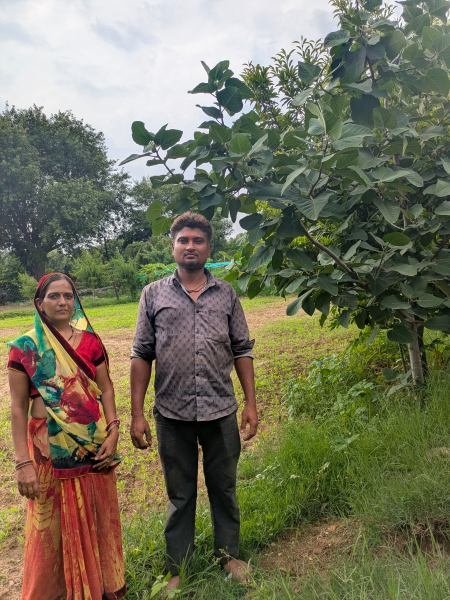
Only natural farming methods are employed on this farm. Chemical fertilizers and pesticides are completely avoided. In fact, the farm is able to produce more than its own requirement of organic fertilizer and sprays to repel pests so that it can provide the extra supply to others too. With careful and affectionate nurturing of plants, this farm is able to achieve good yields without using chemical fertilizers and pesticides. At the same time, emphasis on natural farming improves soil and its organic content. In addition, special crops like sunn hemp are grown just to improve soil and are ploughed back into the soil. By making use of waste materials, any problems relating to residues and waste disposal are minimized.
The burden of fossil fuels on the farm has been minimized, leading to climate mitigation. The significant number of trees on the farm is also helpful in this regard. The soil improvement and its growing organic content are helpful in absorbing more carbon into the soil. The highly reduced cost of cultivation, their growing self-reliance, the improved soil quality and its ability to absorb more water and moisture, the greater diversity of crops and fruits all contribute in terms of climate adaptationAdjusting to Climate ChangeAdjustments in natural or human systems in response to actual or expected climatic stimuli or their effects, which moderates harm or exploits beneficial opportunities..
Rekha says, “The reduction of expenses should not be seen only in the narrow sense of reducing purchased inputs like chemical fertilizers. What is very important is that by eating food, particularly vegetables and fruits, produced using natural farming methods, our family’s health has improved and our expenses on medicines or going to doctors have become negligible.” Bhagwati Lal adds, “We are happy to eat healthy food and also to make healthy food available to others.”
The food from their farm is not just healthy, it also tastes very good, as we could readily appreciate while eating figs and papaya slices from freshly plucked fruit, generously served by the couple.
Consequently, it is clear that marketing has never been a problem for this couple. In fact, they do not generally go to the market, customers come to their farm, attracted by the quality of their produce.
While talking about their journey so far, Bhagwati thanks the multifaceted help provided by a voluntary organization Seva Mandir, whether in the form of protective nets, seeds, training, or any other help or guidance needed from time to time. As Varsha Rathore, a senior member of the Seva Mandir team, says, this voluntary organization has been helping and encouraging many farmers in its work area to adopt practices that integrate the strengthening of sustainable livelihoods with climate resilience.
Disclaimer:The views and opinions expressed in this article are those of the author(s) and do not necessarily reflect the official policy or position of The Rift.
*Sustainable FarmingBiodiversityClimate Resiliencenatural farmingRajasthanRural DevelopmentSeva Mandir