Opening The Rift
therift
© 2026 The Rift. All Rights Reserved.
India’s Agrarian Crisis: A Life Extinguished Every Hour
An average of twenty-eight farmers and farm labourers are ending their lives every single day across the country, a life extinguished every hour.

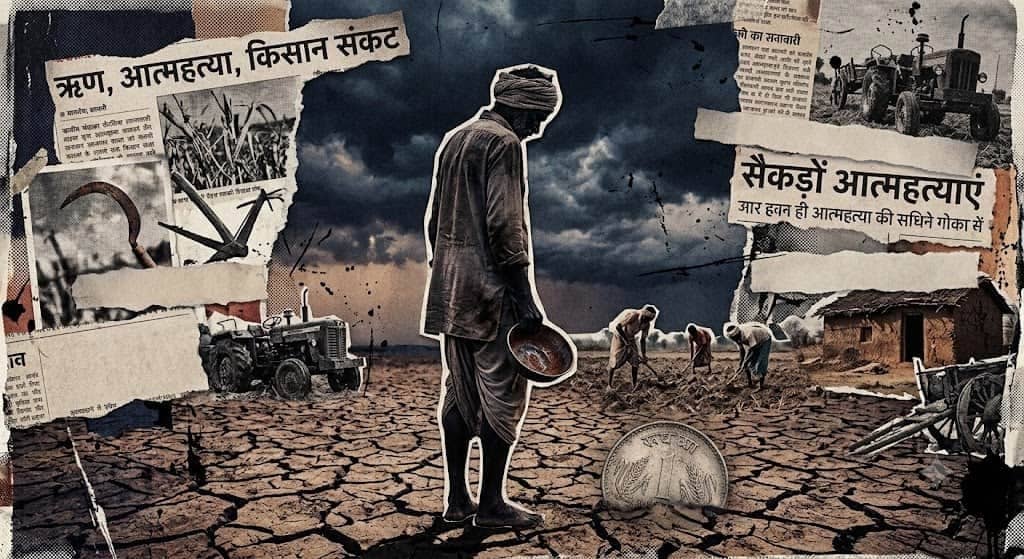
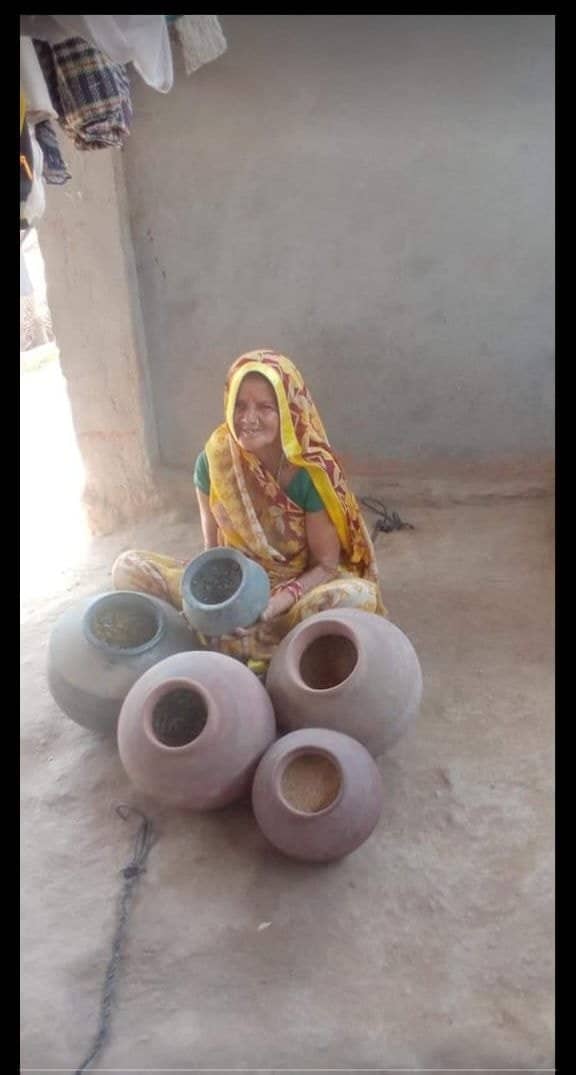
An Indian farmer in a barren field, highlighting the plight of farmers amidst the agrarian crisis (Representative Image)
Key Takeaways
1 of 3
Automatically generated. Read full article for complete context.
The statistic that a life is lost every hour in India’s agricultural sector reads as simply as it strikes at the heart. According to the report “Accidental Deaths and Suicides in India 2024,” released by the National Crime Records Bureau (NCRB) in May, as many as 10,546 people linked to farming took their own lives across the country over the past year. Of the nation’s total of 1,70,746 suicides, this figure amounts to roughly 6.2 per cent. In sheer numbers, this is slightly lower than the 10,786 recorded in 2023, but the reality behind it offers little comfort. This is the second consecutive year that the count has declined, a downward slide that began after the peak of 11,290 in 2022. Even so, an average of twenty-eight farmers and farm labourers are ending their lives every single day across the country, which means nearly one victim is claimed by the agrarian crisis every hour. A closer look at the past five years of data makes clear that this marginal drop in the overall number is not a sign that the problem has been resolved, but merely a fluctuation in the figures; conditions on the ground have changed little.
India’s Agrarian Crisis: Key Figures (2024)
Total Farming Suicides
10,546
Share of National Suicides
6.2%
Landless Labourers (of farming suicides)
56%
Cultivators (of farming suicides)
44%
VISUALS BY THE RIFT
The most disturbing part of this report is the rising share of farm labourers among those taking their own lives. Of the total 10,546 farming-related deaths, as many as 5,913 — a full 56 per cent — were landless agricultural labourers with no land of their own; this is the second-highest such share in the past five years. In 2020, this share stood at barely 47.5 per cent, and it has climbed steadily since, particularly after 2021. By contrast, the suicide rate among farmers who actually cultivate their own land had been declining in recent years, but 2024 saw a slight uptick; the share of cultivators among total agricultural suicides rose from 43.5 per cent in 2023 to nearly 44 per cent. This shift is not merely a play of numbers but a reflection of a fundamental transformation underway in the structure of rural India’s incomes. According to NABARDNational Bank for Agriculture and Rural DevelopmentAn apex development financial institution in India, focused on rural development and agricultural credit.‘s All India Rural Financial Inclusion Survey, the share of farm income in total household income fell from 49 per cent in 2012-13 to 37.70 per cent by 2018-19, while over the same period the share of income from wage labour rose from 32 per cent to 40 per cent. In other words, income from one’s own land is shrinking, and families are increasingly forced to make ends meet by labouring on someone else’s fields. This class—having lost their land or never having owned any—falls outside every social safety net: they receive no crop insurance, no benefit from loan waivers, and when a season fails, there is no work left for their hands. That, in essence, is the real tragedy.
Looking at the state-wise figures, Maharashtra’s situation is once again bleak. In 2024, the state recorded 3,824 suicides among farmers and farm labourers, accounting for 36.5 per cent of the country’s total agricultural suicides — meaning one in every three such deaths in India occurred in Maharashtra. While the NCRB report does not record the precise causes behind these suicides, it is not hard to draw a connection with the record of climate disasters. In 2024, extreme weather events such as heavy rainfall and floods affected more than 20,37,000 hectares of crop area in the state, nearly half of the 40,72,000 hectares affected by such events nationwide. Karnataka follows Maharashtra, with 2,971 deaths recorded, and among the larger states it also saw the sharpest rise—a jump of 22.5 per cent over 2023. Madhya Pradesh recorded 835 deaths, a rise of 7.25 per cent; while Rajasthan too saw an increase of around 14 per cent. In contrast, Andhra Pradesh, which ranks fourth with 780 suicides, saw its figure fall by more than 15 per cent compared to the previous year—a reminder of just how uneven the regional character of this crisis is. Tamil Nadu recorded 503 deaths and Chhattisgarh 486. Among the union territories, the figures from Puducherry proved the most alarming: between 2019 and 2022 not a single agricultural suicide had been recorded there, but ten cases emerged in 2023, and by 2024 that number had jumped straight to thirty-three — a rise of 230 per cent in a single year, and every one of these victims was a farm labourer.
The situation in a large, densely populated agrarian state like Uttar Pradesh also emerges from this report. Although its absolute numbers remain lower than those of Maharashtra, Karnataka, or Madhya Pradesh, the pace of increase there is striking; even as the share of livelihoods based on farm labour grows within the rural economy, suicides among farm labourers there too have been rising sharply. This is not an isolated example limited to one state, but an indication that a crisis traditionally seen as confined to southern and western Indian states such as Maharashtra, Karnataka, and Andhra Pradesh is now raising its head just as seriously in the states of northern and central India. Looking at the trend over the past five years, fourteen states have recorded a rise in agricultural suicides, and in thirteen states the number of suicides among farm labourers has now overtaken that among actual cultivating farmers; in 2019, only nine states fell into this category. This means the agrarian crisis is no longer confined to landowning farmers alone, but is shifting toward the most vulnerable class — those without land, surviving on daily wages.
Looking at today’s figures, one must not forget that India’s agrarian suicide crisis carries a history stretching back nearly three decades. According to a twenty-eight-year analysis by the Centre for Science and Environment, a total of 3,94,206 farmers and farm labourers took their own lives across the country between 1995 and 2023—an average of more than 13,600 lives lost every year. This analysis notes that after India joined the World Trade Organization in 1995, subsidies on farming declined and rising imports weakened the incomes of small and marginal farmers. Around the same period, Bt cottonBacillus thuringiensis cottonA genetically modified organism (GMO) cotton variety that produces an insecticide to combat bollworm pests, widely adopted in India. spread rapidly; but this technology, which promised higher yields and protection from pests, did not prove as effective as expected. Instead, the cost of seeds and inputs rose, financial risk increased, and in the absence of guaranteed prices, many small farmers found themselves trapped in a cycle of debt. Between 2000 and 2009, more than 1,54,000 suicides were recorded nationwide, and 2002 proved the most devastating year, when 17,971 farmers lost their lives in that single year alone. The suicide rate in Maharashtra and Karnataka has remained consistently around two and a half times the national average since the mid-1990s. Southern and western India together accounted for about 72.5 per cent of all agricultural suicides recorded since 1995, while Andhra Pradesh and Telangana alone have recorded more than 1,70,000 deaths over these twenty-eight years.
Interventions such as the Mahatma Gandhi National Rural Employment Guarantee SchemeMGNREGS (or MGNREGA)An Indian labour law and social security measure that aims to guarantee the ‘right to work’ by providing at least 100/125 days of wage employment in a financial year to every rural household whose adult members volunteer to do unskilled manual work. played an important role in reining in this long-standing crisis to some extent, and the suicide graph in many states began trending downward after 2010. In Kerala, a figure of 1,118 recorded in 2005 fell to a mere 105 by 2014. In West Bengal, agricultural suicide records fell to zero by 2012, and Madhya Pradesh too saw a notable decline during this period. But in states like Maharashtra and Karnataka, where rain-dependent farming and market-dependent cash crops such as cotton and sugarcane are still cultivated on a large scale, the suicide rate remained high even after these welfare schemes were introduced—pointing to the limits of short-term relief and the absence of deeper agricultural reform. And now, since 2023, this declining graph appears to be climbing upward once again, particularly in the case of farm labourers.
Research directly linking the unpredictability of rainfall to these suicides has also become quite robust by now. Researchers studying year-wise data from 2014-15 to 2020-21 across five states — Chhattisgarh, Karnataka, Madhya Pradesh, Maharashtra and Telangana — have found that in years with a greater rainfall deficit, the rate of farmer suicides also rises correspondingly. In Maharashtra, Madhya Pradesh, and Chhattisgarh, 62, 44, and 76 per cent of land respectively is classified as drought-prone, and it is in these very states that farmer suicide rates have consistently remained high.
One aspect of this crisis is that official data does not always present the complete picture of reality. There is often a stark gap between the figures collected by various state governments and district administrations and those reported to the NCRB. In Yavatmal district of Maharashtra, for instance, district collectorate records show 2,617 farmer suicides between 2014 and 2021, while police records for the same period put the figure at only 1,207—a discrepancy that always carries the risk of underestimating the true scale of the crisis. Within this, the condition of women farmers remains even more overlooked. When a woman farmer or farm labourer dies by suicide, her death is often recorded under the category of “housewife” because her name does not appear on the land records and she is not formally recognised as a farmer at all; as a result, official data consistently understates the true extent of suicides among women farmers.
The plight of the family left behind after the earning member of a household is lost to suicide is equally telling. Surveys of such families show that a large number are forced to sell their land and livestock to repay debts or meet daily needs. Awareness about compensation, too, remains minimal; many widows do not receive a pension even a year after their husband’s death, and many are denied their rightful share in family land. As a result, women in such families are pushed away from farming and into unorganised work such as wage labour, animal husbandry, or selling milk and fruit — and this chain carries the burden of poverty and insecurity forward into the next generation. Migration is another less-discussed thread of this crisis. Families of farm labourers dependent on seasonal agriculture, particularly in tribal and remote areas, are forced to migrate to cities or other states once the monsoon season ends in search of a livelihood.
Where the option of migration exists, it offers some temporary relief, but where even that is not possible, the economic bind grows only more severe. What is needed today is for policymakers to recognise farm labourers as a distinct group deserving attention in their own right, with equal priority. Concrete steps are needed to expand the reach of schemes like MGNREGA, increase the number of guaranteed workdays, ensure timely payment of wages, and design a separate social security scheme for farm labourers. At the same time, the implementation of minimum support pricesMinimum Support Price (MSP)A form of market intervention by the Government of India to protect agricultural producers against any sharp fall in farm prices, ensuring a minimum profit for farmers. for farmers needs to be made more rigorous, the crop insurance process needs to be simplified and made transparent, and farming practices suited to a changing climate need to be encouraged. Most importantly, both the administration and society must show the sensitivity to see these suicides not merely as statistics, but to understand the shattered worlds of the families behind them. A life extinguished every hour is not merely a statistical entry—behind it lies a family, a village, and a series of dreams left unfulfilled. If this chain is to be broken, policy and compassion must work together; otherwise, next year too, this same figure will stand before us with the same relentlessness.
Disclaimer:The views and opinions expressed in this article are those of the author(s) and do not necessarily reflect the official policy or position of The Rift.