Opening The Rift
therift
© 2026 The Rift. All Rights Reserved.
India’s Foreign Policy Shift: The Cost of Siding with Israel
India’s foreign policy shift from strategic autonomy to US-Israel alignment is costing New Delhi its Global South credibility and energy security. Here is what went wrong.

Courtesy by Wikimedia Commons
Key Takeaways
1 of 3
Automatically generated. Read full article for complete context.
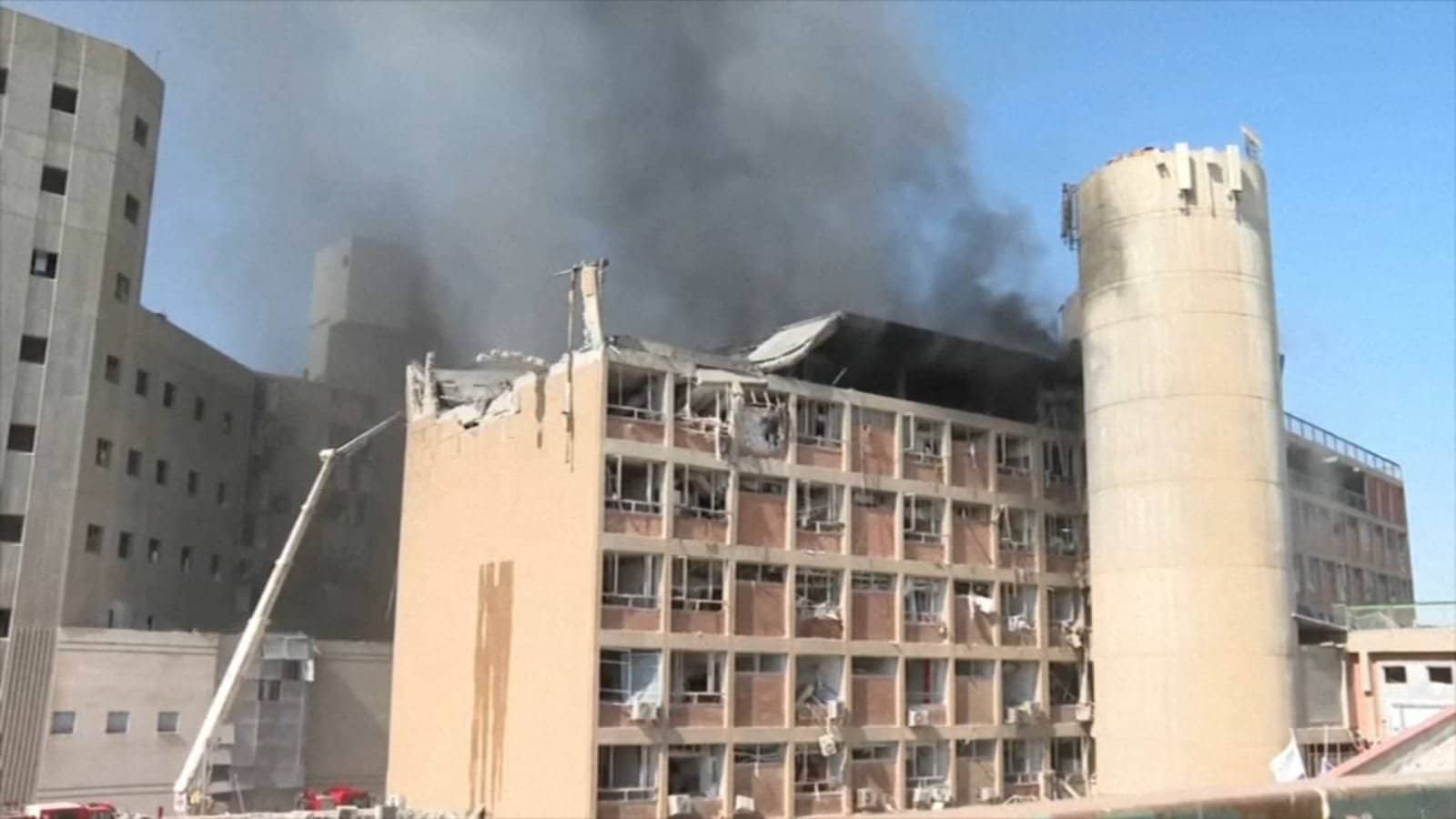
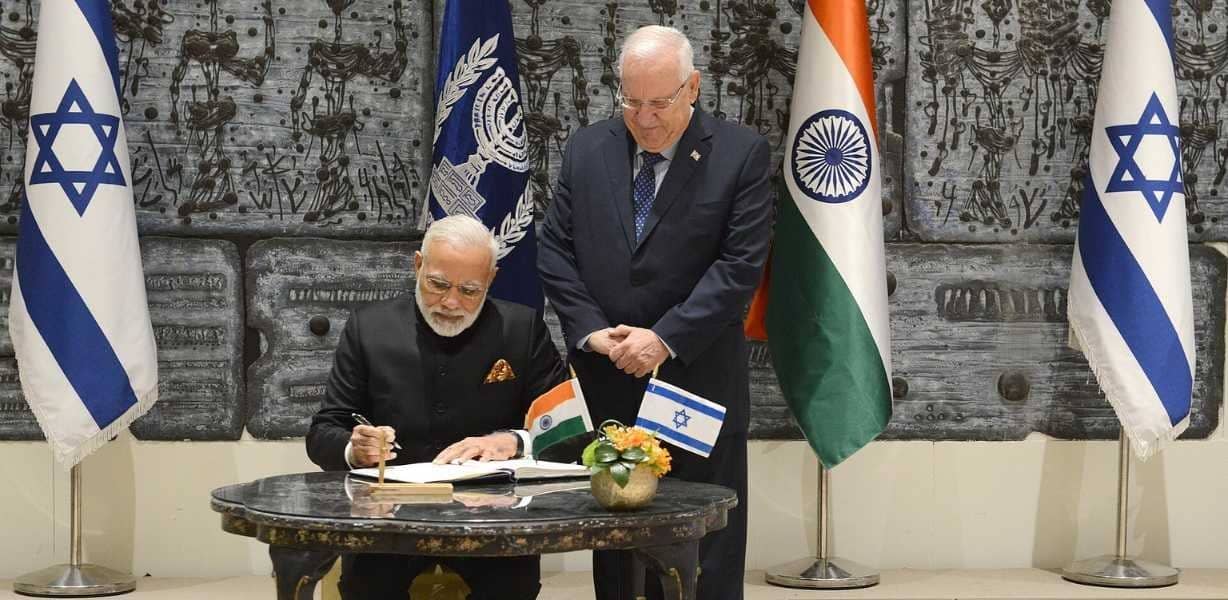
India’s foreign policy shift became impossible to ignore on February 25, 2026, when Prime Minister Narendra Modi landed in Tel Aviv for his first Israel visit in nine years. He upgraded the bilateral relationship to a “special strategic partnership,” signed 27 agreements spanning defence and critical technology, and stood beside Benjamin Netanyahu to declare a shared vision of counter-terrorism cooperation. Forty-eight hours later, American and Israeli warplanes struck Iranian nuclear sites, military installations, and the compound of Supreme Leader Ali Khamenei in coordinated operations codenamed Roaring Lion and Epic Fury.
The proximity was not lost on anyone. Certainly not on India’s opposition, which accused the government of “moral cowardice.” Not on the Arab street, where New Delhi’s silence read as complicity. And not on the 10 million Indian nationals living across the Gulf, whose safety suddenly became a talking point rather than a policy priority.
From Non-Alignment to Selective Alignment
India’s foreign policy shift under Modi did not begin with this visit, but the Israel trip crystallized it with rare clarity. For decades, New Delhi balanced its relationships across West Asia with deliberate ambiguity: buying Iranian crude, purchasing Israeli weapons systems, maintaining diplomatic channels with the Gulf monarchies, and championing Palestinian statehood at the United Nations. That balancing act earned India something money cannot buy in geopolitics: credibility as an honest broker.
That credibility is now under strain. India refused to condemn the strikes on Iran. Its official statement called on “all sides” to pursue “dialogue and diplomacy”, language so deliberately vague it could have been drafted before the bombs fell. Congress leader Rahul Gandhi said the government’s silence “undermined” India’s longstanding foreign policy principles rooted in sovereignty and peaceful dispute resolution. Newslaundry captured the broader critique in a headline that stung precisely because it was accurate: “India’s silence on Iran is not strategic autonomy. It looks more like strategic dependence.”
The Cost India Cannot Ignore
India’s foreign policy shift is not just a matter of optics or diplomatic reputation. It carries material consequences that are already becoming visible. Two-thirds of India’s crude oil imports transit the Strait of Hormuz. Iran’s retaliatory blockade of that chokepoint has sent oil prices surging and disrupted shipping routes that carry Indian exports worth billions annually to Gulf markets already battered by Trump-era tariffs.
The energy arithmetic tells its own story. India had been quietly reducing Russian crude imports, which fell to a 38-month low in December 2025, while increasing purchases of American oil by 31 percent. That diversification made strategic sense when the Middle East was relatively stable. Now, with the Strait threatened and Iranian supply shut off entirely, India finds itself caught between a supplier it alienated (Russia, through Western-aligned sanctions posturing), a region it destabilized by association (West Asia), and an energy market it cannot control.
The Global South Question
The timing could hardly be worse. India assumed the BRICS chairmanship in January 2026 under the banner of Vasudhaiva Kutumbakam, pledging to champion Global South interests. Foreign Policy magazine asked the pointed question just one day before Modi flew to Tel Aviv: “Does India Speak for the Global South?” The answer, at least this week, is that India speaks for India’s elite strategic calculations, which happen to align with Washington’s.
This growing deep proximity to USA and Israel despite their ongoing reckless killings of Palestinians betrays its past stand for decolonization” the very foundation on which its Global South leadership was built. Sudha Ramachandran succinctly capture this in her article in the diplomat : Modi has put India firmly in the Israel-US camp.
None of this means India cannot recover its diplomatic footing. But recovery requires acknowledging what has been spent. India entered 2026 as BRICS chair, the world’s fifth-largest economy, and a plausible voice for the developing world. It now risks being seen a real time collapse of India’s West Asia strategic balancing under the weight of its own contradictions.
Strategic autonomy was never just a slogan. It was India’s most valuable foreign policy asset. The question now is whether New Delhi traded it for something of equal worth, or simply gave it away.