Opening The Rift
therift
© 2026 The Rift. All Rights Reserved.
Is It Correct to Call Islam “Mohammadan”?
The term ‘Mohammadan’ is now seen as old and theologically incorrect, implying Muslims worship Prophet Muhammad PBUH, contrary to Islam’s monotheistic focus on Allah.

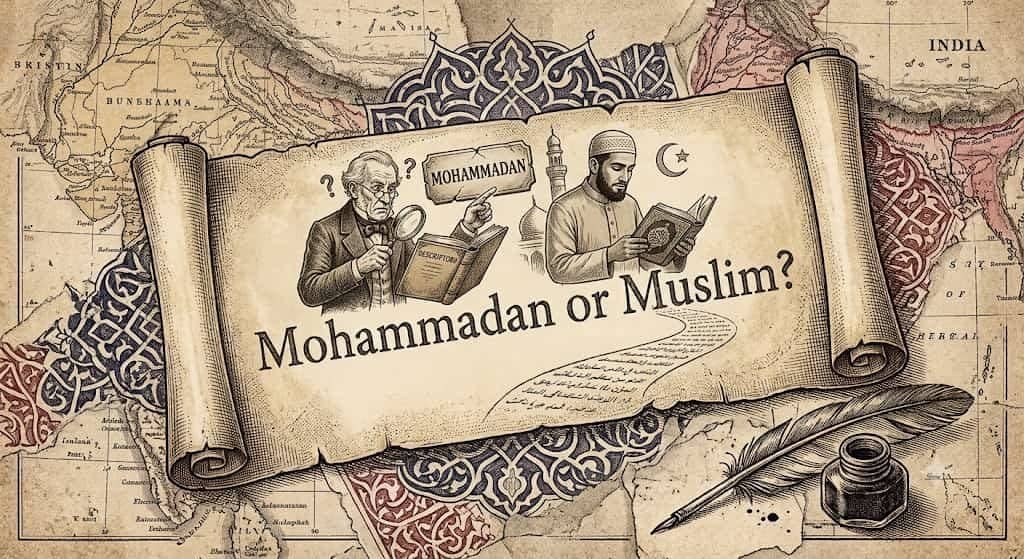
The term Mohammadan is often used to refer to Islam, but is it accurate? (Representative Image)
Key Takeaways
1 of 3
Automatically generated. Read full article for complete context.
The term “Mohammadan” has historically been used by colonial writers and administrators to describe Islam and Muslims. However, that term is now seen as old and theologically incorrect because it implies that Muslims worship Prophet Muhammad PBUH. Contrary to this, Islam is a monotheistic religion which focuses only on the worship of Allah in its purest form alone while Prophet Muhammad (PBUH) is viewed as only the final messenger of God. This article discusses the historical evolution of this term, its usage during the British colonization of India, and that it is high time to revise colonial-era vocabulary to instead refer more accurately to Islam, Muslims and Muslim Law.
Language forms how one self-identifies legally, culturally treats religion and anchors historical context. Several expressions gained entry to legal and administrative discourse during the colonial period without attention being paid to whether they accurately represented the beliefs of those communities so described. One such expression was the word “Mohammadan,” which came to be widely used for Islam and Muslims.
While the term was used in legal and judicial contexts for many years, modern scholars take a dimmer view of it as an inaccurate and misleading label. This was a term coined by Europeans, using Christian theological terms to try and explain Islam; ultimately producing a distorted understanding of Islamic theology.
Historical Origin of the Term
Mohammadan is a historical term originating from Medieval European writings about Islam. European scholars and theologians assumed that Muslims had an association with Prophet Muhammad (PBUH) similar to the relationship Christians had with Jesus Christ. As a result, “Mahometan” and “Mohammadan” became common terms in European works.
It was an interpretation that drew heavily on superficial, even polemical, understandings of Islam rather than serious Islamic scholarship. Orientalist writings tended to view Islamic civilization not using Muslim sources but imposing an external worldview. As a result, terminology gradually achieved an ongoing presence in European intellectual and political debate.
Colonial Usages in Indian Legal Framework
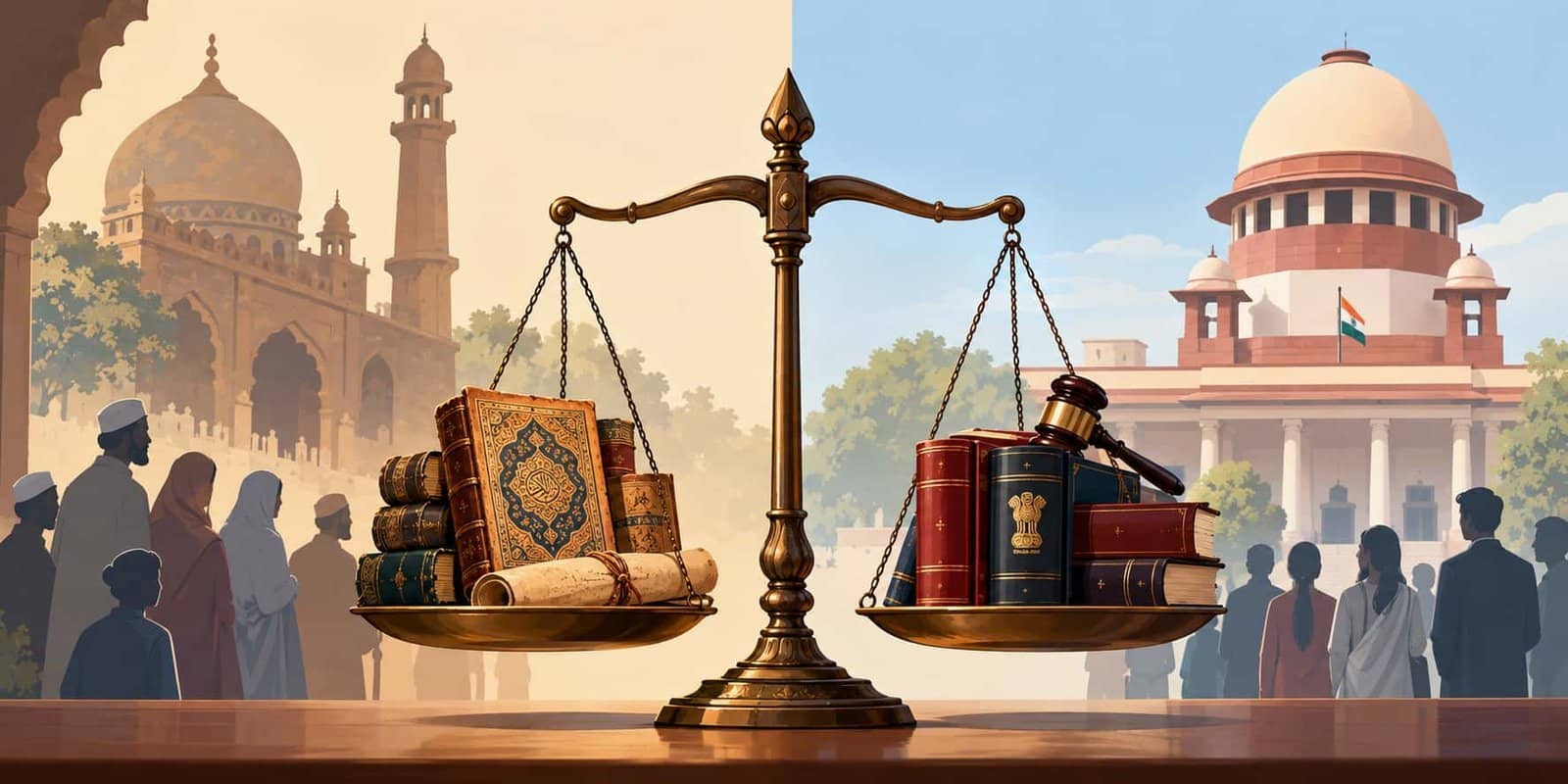
The term “Mohammadan Law” first appeared in the legal lexicon of British India under colonial rule. What it meant in practice – when the courts and administrators referred to “Shariʿa” as they adjudicated cases involving Muslims regarding inheritance, marriage, guardianship, waqf, and succession. Standard legal texts such as Outlines of Muhammadan Law and Principles of Mohammedan Law, also retained the terminology during this phase.
Relying on rigid legal classifications that focused on religion and community identity, the colonial administration tried to pigeonhole the Indian society. In the process, they used terms that were convenient to colonial administrators rather than how Muslims identified themselves. Soon after the independence, Indian legal scholarship began to move towards less problematic language such as “Muslim Law” and “Islamic law”; since the colonial constructs have always been on a very shaky footing.
Theological Inaccuracy of the Expression
From an Islamic theological perspective, the term “Mohammadan” is fundamentally incorrect. Tawhid is the concept of Islam based on Allah’s absolute oneness. Followers of Islam are termed “Muslims” in the Qur’an:
“He has named you Muslims both before and in this Revelation.”
Likewise, the Islamic shahada is an unmistakable declaration that separates worship of Allah and belief in Muhammad (PBUH) as a prophet:
“There is no deity but Allah, and Muhammad is the Messenger of Allah.”
Islam simply does not allow for the worship of any prophet or mortal. Even Prophet Muhammad (PBUH) went on record against overwhelming praise. Narrated by Sahih Al-Bukhari:
“Do not exaggerate in praising me as the Christians praised the son of Mary.”
Thus, this word “Mohammadan” misleadingly leads to a doctrinal misunderstanding by suggesting personality-centered devotion instead of oneness with God.
Decolonization of Legal Language
The persistence of colonial terminology in legal language invites larger questions about how we provoke decolonization through linguistic revolution amongst post-colonial societies. The legal vocabulary often carries over power structures and historical influences from the past.Thus, terms like “Mohammadan Law” show how colonial categories continued to remain part of legal education and scholarship even after independence.
Dignity, equality, and cultural sensitivity are the constitutional values of modern states. These days, one hears more and more often that communities should be named using their own terms rather than those imposed by colonial discourse. Replacing “Mohammadan” with Muslim is not just a symbolic victory but one that is intellectually and historically necessary.
The term “Mohammadan” emerged from medieval European misunderstanding and later became institutionalized during British colonial rule in India. Once an important part of the colonial legal lexicon, it is not a good representation of Islamic theology nor an accurate descriptor of Muslim identity. Islam, being a religion teaching total submission to one and only God (Allah), in which Prophet Muhammad PBUH is regarded only as his messenger.
Hence, contemporary legal and academic discourse should use more accurate concepts like “Islam,” “Muslims” and “Muslim Law.” Elimination of outdated colonial terms is a vital part of ensuring historic accuracy, theological correctness, and proper legal language.
Disclaimer:The views and opinions expressed in this article are those of the author(s) and do not necessarily reflect the official policy or position of The Rift.