Opening The Rift
therift
© 2026 The Rift. All Rights Reserved.
Saving a Generation: Jammu and Kashmir’s Fight Against Narco-Terrorism
Narcotics are no longer merely a public health concern. They have become a tool of destabilisation.

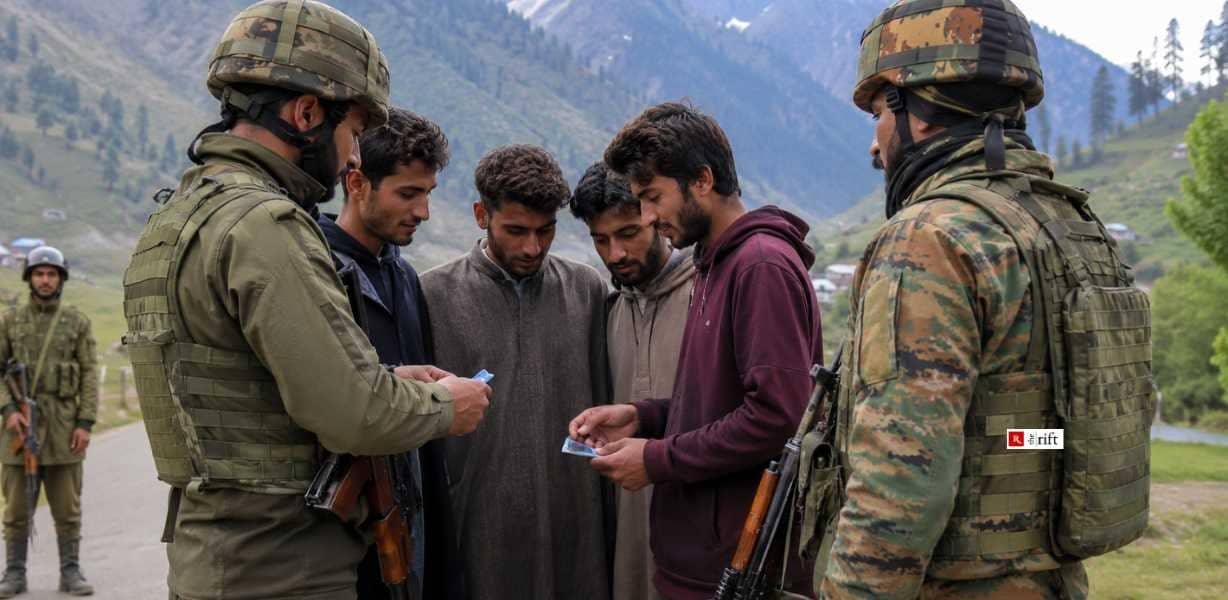
Image | Representative
Key Takeaways
1 of 3
Automatically generated. Read full article for complete context.
For decades, discussions on security in Jammu and Kashmir have largely revolved around terrorism, insurgency, and cross-border infiltration. Yet, another threat has steadily emerged over the years, one that is less visible but equally dangerous. Drug addiction has become a growing social crisis, affecting families, communities, and particularly the youth of the Union Territory.
What makes this challenge even more alarming is its connection to cross-border terrorism. Narcotics are no longer merely a public health concern. They have become a tool of destabilisation. Drug trafficking networks operating from across the border not only generate financial resources for terrorist groups but also weaken society from within by targeting its most valuable asset—its young population.
Today, Jammu and Kashmir is confronting a dual challenge: protecting its people from addiction while simultaneously dismantling the networks that use narcotics to finance violence. The launch of the 100-day Nasha Mukt AbhiyanNasha Mukt AbhiyanA national campaign in India aimed at making the country drug-free through awareness and rehabilitation. in April 2026 reflects an acknowledgement that the fight against drugs is not only a law-and-order issue but also a struggle to safeguard the future of an entire generation.
A Growing Social Crisis
Drug abuse has emerged as one of the most pressing social challenges in Jammu and Kashmir. According to official estimates, nearly 1.35 million people in the Union Territory are affected by substance abuse. The scale of the problem becomes even more disturbing when viewed through the experiences of young people and families.
Reports indicate that around 168,700 children and adolescents between the ages of 10 and 17 are using addictive substances. Thousands consume cannabis, sedatives, and inhalants, while many others have reportedly become dependent on more dangerous drugs. These figures point to a crisis that extends far beyond individual behaviour. They reveal a broader social problem that threatens education, public health, family stability, and community wellbeing.
The impact of addiction is rarely limited to the user alone. Families often face severe emotional and financial burdens while attempting to support relatives struggling with substance dependence. Parents witness declining academic performance, behavioural changes, and deteriorating health among their children. In many cases, addiction contributes to social isolation, unemployment, and criminal activity.
The consequences are particularly severe in a region where young people represent a significant share of the population and where aspirations for education, employment, and stability are closely tied to long-term peace and development.
When Drugs Become a Weapon
The drug problem in Jammu and Kashmir cannot be understood solely through a public health lens. It is deeply intertwined with regional security dynamics.
Over the years, security agencies have documented a steady flow of narcotics being smuggled into India from across the border. Between 2019 and 2023, authorities intercepted approximately 2,660 kilograms of heroin smuggled from Pakistan. Drugs are transported through traditional smuggling routes, cross-border networks, and increasingly through the use of drones that drop narcotics and weapons near the Line of Control and the International Border.
This is where the issue moves beyond addiction and enters the realm of national security.
Terrorist organisations operating in the region have increasingly relied on narcotics trafficking as a source of funding. The proceeds generated from drug sales help finance recruitment, logistics, weapons procurement, and operational activities. In effect, narcotics have become an alternative currency for sustaining violence.
The strategy is particularly dangerous because it serves two objectives simultaneously. First, it generates financial resources for terrorist networks. Second, it weakens local communities by trapping vulnerable youth in addiction. In this sense, narcotics function not only as an illicit commodity but also as a non-traditional weapon.
Narcotics function not only as an illicit commodity but also as a non-traditional weapon.
The growing convergence of drug trafficking and terrorism has led security analysts to describe the phenomenon as narco-terrorismNarco-TerrorismThe convergence of narcotics trafficking and terrorist activities to fund and facilitate operations.. Jammu and Kashmir has become one of the key theatres where this challenge is unfolding.
The Human Cost of Addiction
Statistics alone cannot capture the true impact of the drug crisis.
Behind every number is a family struggling to cope with uncertainty and loss. Addiction often begins with experimentation, peer pressure, or curiosity. For many young people, however, it gradually develops into dependency that affects every aspect of life.
Heroin has emerged as the most commonly used narcotic among addicts in the region. Reports suggest that a large majority of users consume heroin, and many administer it through injections. This practice significantly increases the risk of blood-borne diseases such as HIV and Hepatitis C, creating an additional public health burden.
The economic consequences are equally devastating. Addiction drains household resources and places immense pressure on families. In many cases, users are unable to continue their education or maintain stable employment. Some resort to criminal activities to finance their addiction, creating further social and legal complications.
Communities also pay a heavy price. Drug abuse contributes to insecurity, weakens social cohesion, and undermines local development. As addiction spreads, it affects not only individuals but also the broader social fabric that binds communities together.
A Campaign Rooted in Public Participation
Recognising the seriousness of the challenge, the Jammu and Kashmir administration launched the 100-day Nasha Mukt Abhiyan on 11 April 2026.
The significance of the campaign lies not only in its objectives but also in its approach. Rather than relying exclusively on policing and enforcement, the initiative seeks to mobilize society as a whole.
Awareness programmes have been organised in schools, colleges, villages, and urban centres. Sports competitions, public events, and outreach campaigns aim to engage young people and encourage healthy alternatives to substance abuse. Government departments, educational institutions, community organisations, and volunteers have all been encouraged to participate.
One of the most notable aspects of the campaign has been the growing involvement of ordinary citizens. Parents, teachers, social activists, and local leaders have become active stakeholders in the fight against addiction.
Religious institutions have also played an important role. In many areas, mosques have begun using sermons and community gatherings to raise awareness about the dangers of drug abuse. Such initiatives help reach audiences that traditional awareness campaigns may struggle to engage.
This broad-based participation has transformed the campaign from a government programme into a wider social movement. It reflects an understanding that lasting solutions require community ownership rather than state action alone.
Targeting the Drug Networks
While awareness and prevention remain essential, effective enforcement continues to be a critical component of the anti-drug strategy.
In recent years, authorities have intensified operations against traffickers and peddlers. Thousands of cases have been registered under the Narcotic Drugs and Psychotropic Substances (NDPS) Act. Arrests, seizures, and investigations have increased significantly as law enforcement agencies seek to dismantle organised trafficking networks.
The government has also adopted a financial approach to combating drug crime. Properties linked to narcotics trafficking have been attached and, in some cases, demolished. Assets acquired through illegal proceeds are being targeted to disrupt the economic foundations of criminal enterprises.
Such measures are intended to send a strong deterrent message. Drug trafficking is often driven by profit, and targeting financial assets reduces incentives for criminal involvement. At the same time, security agencies have strengthened border surveillance. Advanced technologies such as drones, motion sensors, night-vision devices, and artificial intelligence-enabled monitoring systems are being deployed to detect smuggling attempts. These measures have become increasingly important as traffickers adopt more sophisticated methods of transporting narcotics.
Beyond One Hundred Days
The launch of the Nasha Mukt Abhiyan represents an important step, but the challenge extends far beyond a single campaign.
Drug addiction is a long-term social problem that requires sustained intervention. Awareness drives must continue even after the campaign concludes. Rehabilitation centres need adequate resources and trained personnel. Schools and colleges must remain engaged in preventive education. Families require support systems to help individuals recover from addiction.
Equally important is the need to create opportunities for young people. Employment, skill development, sports, and educational initiatives can provide positive alternatives and reduce vulnerability to substance abuse.
The fight against narcotics cannot succeed through enforcement alone. It requires a comprehensive strategy that combines prevention, rehabilitation, community engagement, and security measures.
Protecting the Future
The struggle against drugs in Jammu and Kashmir is ultimately about more than narcotics. It is about protecting society, preserving families, and securing the future of the region’s youth.
Every young person rescued from addiction represents a life reclaimed. Every family supported through recovery strengthens the social fabric of the community. Every successful action against trafficking networks weakens those who seek to profit from instability and violence.
The growing public participation witnessed during the Nasha Mukt Abhiyan demonstrates that communities are increasingly willing to confront the problem openly. This collective response offers hope that the region can resist both addiction and the forces that seek to exploit it.
The battle against narco-terrorism is therefore not simply a security operation. It is a social mission. Its success will depend not only on the actions of security agencies and government institutions but also on the determination of citizens, families, educators, and community leaders.
The battle against narco-terrorism is therefore not simply a security operation. It is a social mission.
If sustained with commitment and public support, Jammu and Kashmir’s fight against drugs can become more than a campaign. It can become a turning point in protecting an entire generation from addiction, exploitation, and despair.
Disclaimer:The views and opinions expressed in this article are those of the author(s) and do not necessarily reflect the official policy or position of The Rift.