Opening The Rift
therift
© 2026 The Rift. All Rights Reserved.
Understanding the Law of Trusts, Juristic Personality and the Recent Supreme Court Ruling
The Indian Trusts Act, 1882, enacted nearly 140 years ago, has exposed limitations in the existing statutory conception of a trust.


Key Takeaways
1 of 3
Automatically generated. Read full article for complete context.
“Although the Indian Trusts Act, 1882, was enacted nearly 140 years ago, the proliferation, institutional expansion, substantial property holdings, and significant financial transactions of public trusts in contemporary India have exposed limitations in the existing statutory conception of a trust. It necessitates a clear and comprehensive legislative definition capable of recognising the distinct legal character and accountability of large public trusts and facilitating the effective initiation and prosecution of criminal proceedings arising from offences committed in connection with their affairs.”
Introduction
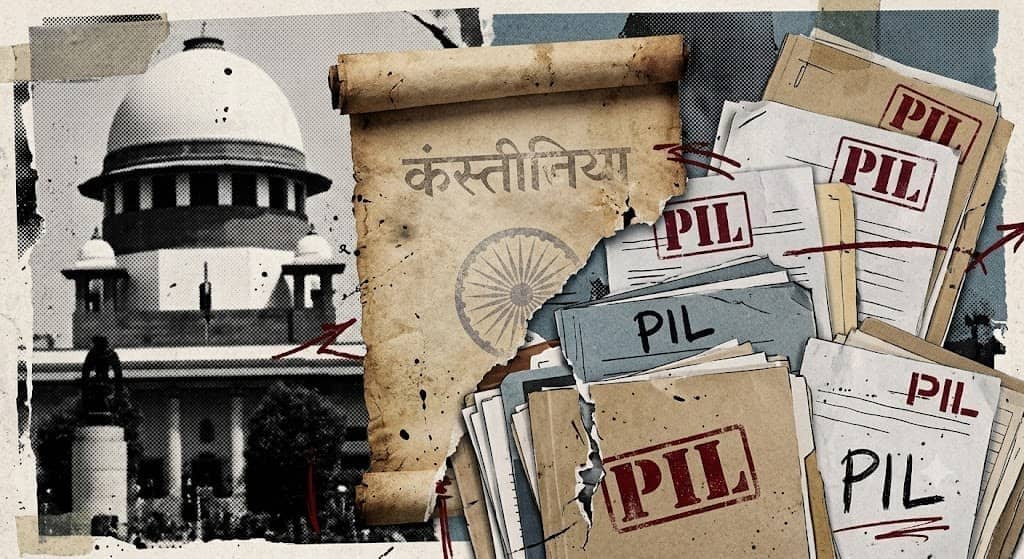
Last week, a two-Judge Bench of the Supreme Court of India delivered an order in Madasa Masih-Ul-Uloom Educational & Charitable Trust v. State of Karnataka (2026) that has reignited the debate on whether a trust, as such, can be prosecuted as an accused in a criminal case? The top court said no and held that a trust is not a Juristic personLegal EntityAn entity, such as a company or a trust (if recognized), that is treated by law as having rights and duties distinct from the natural persons who constitute or manage it. capable of being sued or arraigned as an accused under criminal law. This article examines the top court’s ruling stating that a trust is not a juristic personality and it is incapable of suing or being sued before the court of law. The Indian Trusts Act, 1882 has only interpreted the term trust and not defined the same.
India today has hundreds of thousands of registered public trusts running schools, colleges, hospitals, temples, mosques, orphanages, and welfare societies. In fact, many of them hold sizeable immovable property and receive donations that run into crores of rupees annually. These are not the small, family-style settlements that the framers of the Indian Trusts Act, 1882 had in mind when they drafted an interpretation clause treating a ‘trust’ as nothing more than an obligation annexed to property. Yet it is this very interpretation clause that has been untouched in its essentials for over 140 years and it continues to govern whether these large, public-facing institutions can themselves be held legally accountable when things go wrong, or whether accountability must always be traced back to the individual human beings who happen, at any given time, to hold office as trustees.
Scale of Public Trusts in Modern India
100,000s
Registered Public Trusts
Sizeable
Immovable Property Holdings
Crores
Annual Donations (INR)
VISUALS BY THE RIFT
Understanding Law of Trusts
The law of trusts in India is a product of British colonial legacy. The law governing trusts originated in the English Court of Chancery through the doctrines of uses, equity and equitable obligations. Trusts separate legal ownership from beneficial enjoyment of property. As British administration consolidated control over different parts of India in the nineteenth century, there was a need to codify equitable principles governing fiduciary relationships. Equitable principles had, until then, been applied by Indian courts through reference to English law of equity.
Resultantly, the Indian Trusts Act was enacted in 1882. It was a codifying statute that consolidated the law relating to private trusts and trustees. At the outset, it is important to note that the Indian Trusts Act of 1882 governed private trusts i.e. trusts for the benefit of individuals, such as family trusts. It has expressly excluded public or charitable trusts, religious endowments, and certain other categories. However, public charitable and religious trusts in India continue to be governed by a patchwork of general law, state-specific charitable endowment statutes, and, in some contexts, personal laws.
The Act has, since its enactment, been amended on several occasions. However, at its core, such as the definition of a trust, prescribing of the duties, liabilities, rights, and powers of trustees, the rights and liabilities of beneficiaries, remains largely the same as originally enacted more than a century ago.
The Statutory Definition of “Trust”
Section 3 of the Trusts Act only interprets ‘trust’ as, “an obligation annexed to the ownership of property, and arising out of a confidence reposed in and accepted by the owner, or declared and accepted by him, for the benefit of another, or of another and the owner.”
Three features clearly flow from this definition and these features also go to the very heart of the recent Supreme Court ruling.
- An obligation, not an entity. The trust is defined as an obligation i.e. a duty or burden. Such duties and obligations are attached to the ownership of property. It is not defined as a person, an institution, or a body corporate.
- A relationship of confidence. The obligation arises from confidence reposed in, and accepted by, the person who holds legal title to the property i.e. the trustee.
- A purpose-bound holding. The property is to be held and utilised for the benefit of another i.e. the beneficiary, or of another and the owner jointly.
Section 3 the Act also went on to state the constituent factors associated with the trust. The ‘author of the trust’ is the Settlor who reposes the confidence, the ‘trustee’ is the one who accepts it, the ‘beneficiary’ is the one for whose benefit the confidence is accepted, the ‘trust-property’ is the subject matter of trust and the ‘instrument of trust’ is the document, if any, by which the trust is created. After careful examination, it is found that nowhere in the given section does the statute contemplate the ‘trust’ itself as a subject capable of holding rights or bearing liabilities independently of its trustee.
Essential Ingredients of a Valid Trust
Sections 4 to 10 of the Act together deal with a valid trust. It requires the fulfilment of the following essential ingredients:
- Lawful purpose (Section 4): A trust may be created only for a lawful purpose. A purpose is unlawful if it is forbidden by law or would defeat the purpose of law if permitted or causes injury to a person or property, or is regarded by a court as immoral or opposed to public policy.
- Compliance with formalities (Section 5): For immovable property, the trust must be declared through a registered, non-testamentary instrument in writing or by will. As regards the movable property, either the same formalities apply, or ownership must be transferred to the trustee with a clear direction to hold it in trust.
- Reasonable certainty (Section 6): The author must indicate, with reasonable certainty, an intention to create a trust, the purpose, the beneficiary, and the trust property. He must actually transfer the property to the trustee.
- Competency of the author (Section 7): The author must be competent to enter into a contract.
- A capable beneficiary and a transferable subject-matter (Sections 8–9): The property must be transferable and the beneficiary must have the legal capacity to hold property.
- Acceptance by the trustee (Section 10): No one is compelled to accept a trust, but once accepted either expressly or by conduct, the trustee is bound by the obligations as per terms and conditions of trust.
Trusts are further classified as public or private. In a public trust, the beneficial interest vests in an uncertain body of persons i.e. the public or a section of it. All charitable trusts fall within this category. A private trust, by contrast, benefits certain individuals such as the members of a family.
It is against this statutory requirement that a trust is an obligation annexed to property and not a person that the question of juristic personality is involved.
The Concept of Juristic Personality
A ‘juristic person’ also called a legal person or artificial person is an entity solely created by law. It has rights and duties of its own and distinct from the natural persons who constitute, manage, or benefit from it. Companies incorporated under company law, registered societies, statutory corporations, and even, in limited contexts, idols, mosques and other religious places, have all been recognised by the judiciary as juristic persons which are capable of suing or being sued in their own name. Constitutionally speaking, article 300 says that the Government of India may sue or be sued by the name of Union of India. Hence, Union of India is a juristic personality. Juristic personality is not something which is an inherent or self-evident quality. It is a status conferred expressly by statute or something recognised by the judiciary.
The question that has repeatedly been encountered by the Indian judiciary is whether a ‘trust’ does possess this quality. The answer provided by the Act of 1882 is that it does not. Because Section 3 defines a trust as an obligation reposed in and accepted by a trustee rather than as an incorporated entity capable of suing or being sued.
The Recent Supreme Court Ruling
The 2026 order arose out of a large financial fraud investigation. A company referred to as IMAP Limited and its group entities had collected money from members of the public that were never refunded. This resulted in the registration of numerous First Information Reports by a Special Investigation Team and the State Anti-Corruption Bureau in the state of Karnataka. Later on, the matter was handed over to the Central Bureau of Investigation under the Delhi Special Police Establishment Act, 1946. Among the accused was the appellant trust. A charitable and educational trust, including its managing trustee. The trust was alleged to have used proceeds connected with the fraud to further the trust’s real-estate business.
The trust’s discharge application before the Special Court was rejected in its entirety. The High Court of Karnataka further declined to interfere. Before the Supreme Court, senior counsel for the appellant relied on the earlier decision in Sankar Padam Thapa v. Vijaykumar Dineshchandra Agarwal (2025), in which the top court had held that a trust is not a juristic person and cannot sue or be sued. The CBI, appearing through the Additional Solicitor General, sought to distinguish Sankar Padam Thapa case on the ground that it arose under section 138 of the Negotiable Instruments Act, 1881Commercial LawAn Indian law dealing with promissory notes, bills of exchange, and cheques, often invoked in cases of cheque bounce., whereas the present case involved offences under the Indian Penal Code, 1860Criminal LawThe main criminal code of India, covering various offenses and their punishments. and the Karnataka Protection of Interest of Depositors in Financial Establishments Act, 2004.
The Bench, invoking the principles laid down in earlier rulings, held that a trust is not a juristic person. Interpreting Sections 3 and 13 of the Trusts Act, the top court reiterated that a trust has no separate legal existence of its own. It is merely an obligation annexed to the ownership of property, and hence the duty to sue or defend suits rests on the trustee, not the trust.
Applying this reasoning, the Supreme Court held that the appellant trust could not be arrayed as an accused, since it was not a juristic person capable of bearing criminal liability. However, the prosecution against the second respondent i.e. the managing trustee who was separately accused of personally accepting and channelling funds was permitted to continue. The apex court was very much careful in its approach to confine its interference to the trust alone and left the criminal proceedings against the remaining accused, including the individual trustee, undisturbed.
Conclusion
The Supreme Court’s order in the present case is a timely reminder that the Indian Trusts Act, 1882 was well drafted on the premise that a trust is an obligation, not a juristic personality. The duties and obligations arising out of trust cast upon trustees rather than the trust itself. The foregoing provision’s silence on any concept of independent trust personality has been clearly answered by the top court. Until a larger Supreme Court bench settles the question conclusively, the position remains that a trust cannot sue or be sued. It is high time the parliament of India conclusively defines the term trust in line with modern times and put more liability on the trust itself so that fraud and breach-of-trust allegations against trust-based institutions can effectively be investigated and prosecuted across India.
Disclaimer:The views and opinions expressed in this article are those of the author(s) and do not necessarily reflect the official policy or position of The Rift.