Opening The Rift
therift
© 2026 The Rift. All Rights Reserved.
Pakistan at the Crossroads – Military Power Without Democracy
Why Balochistan, Pakistan-administered Kashmir, and the imprisonment of Imran Khan expose the crisis of the Pakistani state.

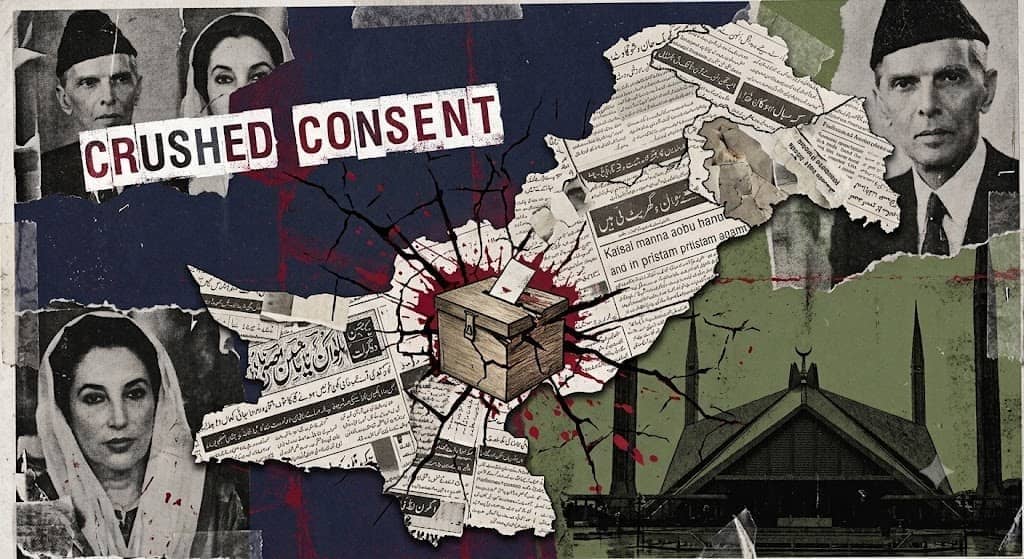
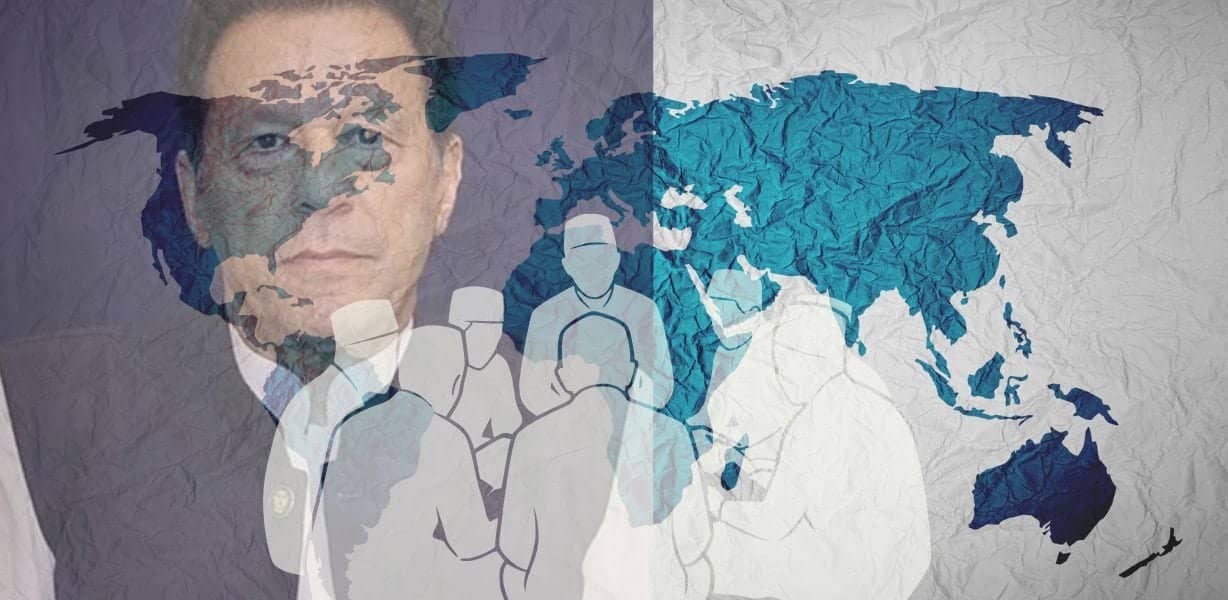
(Representative Image)
Key Takeaways
1 of 3
Automatically generated. Read full article for complete context.
Pakistan today confronts a crisis that no amount of military rhetoric can conceal. The unrest in BalochistanPakistani ProvinceThe largest province of Pakistan by area, located in the southwest. It is rich in natural resources but has faced a long-running insurgency and grievances over economic and political marginalization., the deadly repression in Pakistan-administered KashmirDisputed TerritoryRefers to the parts of the Kashmir region that are administered by Pakistan, including Azad Jammu and Kashmir (AJK) and Gilgit-Baltistan. Its status is disputed internationally., a collapsing democratic culture, and the continued imprisonment of former Prime Minister Imran Khan together raise a fundamental question: is Pakistan becoming a permanent security state where military authority has replaced democratic legitimacy?
Parliament has repeatedly been weakened, constitutional institutions have been subordinated, and elections have too often unfolded within political boundaries shaped by unelected centers of power.
This crisis did not emerge overnight. Since independence in 1947, Pakistan has struggled to establish an enduring balance between civilian government and military authority. Military rule under Ayub Khan, Yahya Khan, Zia-ul-Haq, and Pervez Musharraf interrupted constitutional governance for decades. Even during periods of elected government, civilian leaders have often governed under the shadow of RawalpindiMilitary HeadquartersA city in Pakistan, home to the General Headquarters (GHQ) of the Pakistan Army, often used metonymically to refer to the military establishment., where the military establishment has exercised decisive influence over national security, foreign policy, and frequently domestic politics. Parliament has repeatedly been weakened, constitutional institutions have been subordinated, and elections have too often unfolded within political boundaries shaped by unelected centers of power.
The consequence is a political culture in which democratic institutions have never been permitted to mature fully. Civilian governments come and go, but the military remains the country’s most enduring political institution. This imbalance has created a recurring cycle in which elected governments struggle to complete their mandates, public confidence in democratic institutions erodes, and military intervention—direct or indirect—is once again presented as the guarantor of national stability.
That cycle is once again on display.
In recent days, Pakistan-administered Kashmir has witnessed some of the bloodiest violence in years. Protesters demanding political and electoral reforms have clashed with security forces, with numerous deaths reported. Human rights organisations have called for independent investigations, while communications blackouts have made verification difficult. The unrest reflects deep grievances over governance, electoral integrity, economic hardship, and Islamabad’s continuing control over political life in the region.
These events carry wider implications. Pakistan has consistently argued that the future of Jammu and Kashmir should be determined according to democratic principles and the wishes of its people. That argument inevitably loses credibility whenever allegations arise of excessive force, restrictions on political freedoms, or suppression of democratic protest within territories administered by Pakistan itself. International legitimacy depends not only on the justice of one’s claims but also on consistency in applying democratic principles at home.
Military campaigns have failed for decades because they have never adequately addressed the political alienation, economic exclusion, and historical grievances that continue to fuel resistance.
At the same time, Balochistan continues to burn. For decades the province has endured insurgency, enforced disappearances, allegations of extrajudicial killings, and repeated military operations. Separatist attacks have intensified, while Islamabad continues to insist that foreign powers are manipulating the conflict. External interference cannot be entirely dismissed, but it would be a grave mistake to reduce the crisis solely to outside influence. Military campaigns have failed for decades because they have never adequately addressed the political alienation, economic exclusion, and historical grievances that continue to fuel resistance.
The tragedy of Balochistan is particularly striking because it is one of Pakistan’s richest provinces in terms of natural resources while remaining among its poorest in human development. Many Baloch communities believe that their resources are extracted for national benefit while local populations receive little meaningful development, political participation, or control over their own future. Massive infrastructure projects associated with the China-Pakistan Economic CorridorCPECA collection of infrastructure projects under construction throughout Pakistan, intended to upgrade its infrastructure and strengthen its economy with Chinese assistance. It is a part of China’s Belt and Road Initiative. have been promoted as symbols of progress. Yet many local communities argue that these projects have produced displacement, militarisation, and unequal distribution of benefits rather than genuine empowerment. Development imposed without political participation rarely produces lasting peace. Roads, ports, and investment cannot substitute for accountable governance, constitutional rights, and meaningful dialogue.
At the centre of this landscape stands Pakistan’s army chief, Asim Munir. His influence over Pakistan’s political system has expanded dramatically. Analysts increasingly describe Pakistan as evolving into what has been termed a “hard statePolitical Science TermA concept describing a state where the government, often backed by military or security forces, exercises strong, centralized control, often with limited democratic freedoms and a tendency to suppress dissent.,” where military authority increasingly dominates civilian institutions while political opposition encounters growing repression, particularly supporters of Imran Khan and the Pakistan Tehreek-e-Insaf (PTI).
Yet military control should never be confused with political legitimacy.
The Pakistani military today is far more than a defence institution. Over decades it has evolved into one of the country’s most influential political and economic actors. Through extensive commercial enterprises, welfare foundations, strategic industries, and land holdings, the military has acquired institutional interests extending well beyond national defence. It exercises decisive influence over foreign policy, internal security, and increasingly economic decision-making. Such entrenched authority inevitably creates incentives to preserve military predominance irrespective of electoral outcomes. Governments may change through elections, but the deeper structure of power often remains remarkably constant.
The military leadership remains deeply entrenched even as the number and complexity of the crises confronting it continue to multiply.
Some observers have suggested that Asim Munir himself may be beginning to lose the political initiative. There are certainly signs of mounting pressure. Pakistan confronts persistent insurgency in Balochistan, growing unrest in Pakistan-administered Kashmir, continuing economic distress, rising inflation, international financial dependence, and intense political polarisation. Yet it would be premature to conclude that Munir himself is politically fading. The military leadership remains deeply entrenched even as the number and complexity of the crises confronting it continue to multiply.
The larger issue therefore extends far beyond the standing of one general. It concerns the future of democracy itself.
No democracy can flourish while its most popular political leader remains imprisoned under circumstances that many Pakistanis regard as politically motivated. Whether one supports Imran Khan or opposes him is ultimately secondary. Democracies derive legitimacy from the people’s freedom to choose their leaders through open political competition, not from allowing military institutions or compliant judicial processes to determine who may participate in politics.
Until Pakistan restores confidence that elections are genuinely competitive and all political parties are free to organise, campaign, and seek office without intimidation, claims of democratic normalcy will remain deeply unconvincing.
The imprisonment of Imran Khan has therefore become symbolic of Pakistan’s wider democratic deficit. It is not simply the detention of one former prime minister. It reflects a political system in which dissent increasingly encounters prosecution rather than political engagement. Until Pakistan restores confidence that elections are genuinely competitive and all political parties are free to organise, campaign, and seek office without intimidation, claims of democratic normalcy will remain deeply unconvincing.
Pakistan has repeatedly experienced this pattern. Civilian governments emerge through elections only to find themselves constrained—or eventually displaced—by military influence. Institutions weaken, constitutional safeguards erode, public trust declines, and another period of instability follows. The greatest burden is carried not by politicians or generals but by ordinary Pakistanis confronting inflation, unemployment, insecurity, declining public services, and shrinking democratic space.
There is also an important international dimension to Pakistan’s predicament. Pakistan continues to occupy a strategically significant position in South Asia. Consequently, foreign governments have frequently prioritised military cooperation, counter-terrorism partnerships, and regional security over democratic reform. History demonstrates that powerful allies often tolerate authoritarian practices whenever geopolitical interests appear more pressing than democratic principles. This pattern has repeatedly undermined Pakistan’s own democratic aspirations.
Yet Pakistan’s future is not predetermined. The country possesses a vibrant civil society, an energetic legal community, courageous journalists, committed human rights defenders, and millions of citizens who continue to believe in constitutional government despite repeated disappointments. These democratic forces have survived previous periods of military rule. They continue to demonstrate remarkable resilience in demanding accountability, constitutionalism, and representative government.
Democracy is not merely a moral aspiration. It is an essential foundation for durable political stability and sustainable economic development.
Pakistan’s democratic crisis should concern the entire South Asian region. Stable neighbours are not built upon permanent emergency rule or expanding security states. Political systems sustained primarily through coercion eventually discover that repression becomes increasingly costly while legitimacy steadily declines. Excluding large sections of society from meaningful political participation deepens national divisions, discourages investment, weakens institutions, and drives talented citizens to seek more stable futures elsewhere. Democracy is not merely a moral aspiration. It is an essential foundation for durable political stability and sustainable economic development.
The essential question, therefore, is larger than Asim Munir or Imran Khan. Military predominance may preserve temporary order, but it cannot substitute for democratic legitimacy. The continuing reliance on coercion in Balochistan, the violence in Pakistan-administered Kashmir, and the incarceration of Pakistan’s most prominent opposition leader all point towards a political system struggling to reconcile authority with popular consent.
History offers a simple but enduring lesson. States may silence opposition for a time. They cannot indefinitely imprison the democratic aspirations of an entire people. When ballots lose credibility, streets inevitably become the arena of politics. Pakistan has travelled that road too many times already.
Pakistan stands today at a decisive historical crossroads. It can continue along the familiar path where security institutions dominate political life, dissent is increasingly criminalised, and democratic legitimacy steadily erodes. Or it can begin the far more demanding process of restoring constitutional supremacy, civilian accountability, judicial independence, and political pluralism.
No nation achieves lasting unity through fear alone. Military power may secure borders, but it cannot manufacture consent. Courts may imprison political leaders, but they cannot imprison public aspirations indefinitely. The people of Pakistan deserve more than perpetual cycles of confrontation between elected representatives and unelected centres of power. They deserve a republic in which governments rise and fall through the ballot box rather than through barracks or courtrooms.
Until Imran Khan is free to participate openly in politics, alongside all other political forces, Pakistan’s democracy will remain incomplete. The future of Pakistan depends not on the authority of one general or the popularity of one politician, but on whether the sovereign will of the Pakistani people is finally allowed to prevail.
Disclaimer:The views and opinions expressed in this article are those of the author(s) and do not necessarily reflect the official policy or position of The Rift.