Opening The Rift
therift
© 2026 The Rift. All Rights Reserved.
Of Monkeys and Human Kindness
Feeding wild animals, particularly monkeys, ultimately does them more harm than good, altering their natural behavior and ecological role.

Key Takeaways
1 of 3
Automatically generated. Read full article for complete context.
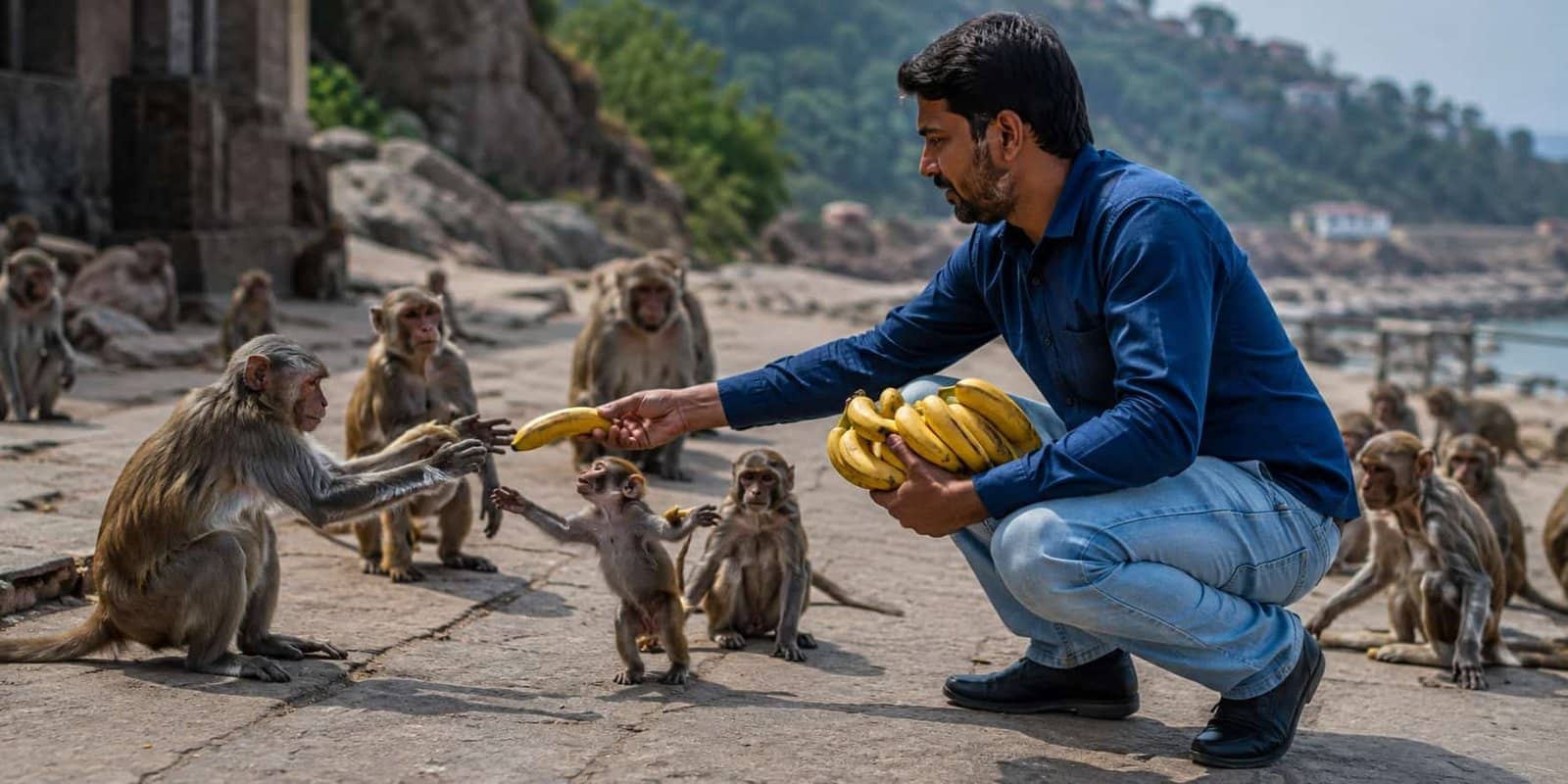
Social media these days is awash with videos of people arriving at secluded spots with car boots loaded with food—bananas, flatbreads, and other delicacies—to feed troops of monkeys. The warmth and familiarity between the animals and their benefactors make it evident that these are not staged performances merely to garner online attention. Rather, they appear to be part of a regular routine.
One can only admire the compassion that motivates such acts. The people feeding these monkeys are, in all likelihood, genuine animal lovers. While some may do so out of religious conviction, that alone hardly explains the scale of the generosity. Traditionally, those seeking religious merit by feeding monkeys on a Tuesday are content with a dozen bananas and a handful of roasted grams. What we increasingly witness today is something altogether different.
With full respect for the sentiments of animal lovers, I would nevertheless argue that feeding wild animals—particularly monkeys—in this manner ultimately does them more harm than good.
Every wild creature is an integral part of an ecosystem and performs a role shaped by evolution. Monkeys, for instance, are important seed dispersersEcological RoleAnimals that consume fruits and then excrete the seeds in different locations, aiding in plant reproduction and forest regeneration.. They also help regulate the spread of certain invasive plant speciesEcological ThreatNon-native plants that spread aggressively, outcompeting native species and disrupting local ecosystems.. Jim Corbett vividly described herds of deer in the Terai-Bhabar landscapeGeographical RegionA distinct ecological zone in the foothills of the Himalayas, characterized by grasslands, forests, and marshy areas, known for its rich biodiversity. eagerly feeding on the fresh silk-cotton flowers dropped from the trees by monkeys. Such interactions illustrate the intricate ecological relationships that sustain healthy forests.
The greater a wild animal’s dependence on humans for survival, the less effectively it performs the ecological role nature has assigned to it.
Equally important is the fact that a monkey’s digestive system evolved to process fibrous forest vegetation—foods that are naturally low in digestible sugars and calories. It was never designed for chips, burgers, cooked cereals, cultivated sweet fruits, or other foods created or modified to satisfy the human palate.
Dr Amy Plowman of Paignton Zoo in Devon, England, has even warned that feeding bananas to monkeys may be harmful. Modern bananas, selectively bred for human consumption, contain far higher levels of sugar and potassium than wild varieties. Such fruit can damage monkeys’ teeth and digestive systems and may also increase the risk of metabolic disorders, including diabetes.
Following these recommendations, many European zoos have significantly reduced or altogether stopped feeding bananas to their primates. Instead, monkeys are offered leafy vegetables, shoots, browse, and other foods that closely resemble their natural diet. Like children, monkeys have an obvious fondness for sweet foods, but nature designed their digestive systems very differently from ours.
Domestic animals such as dogs and cattle present an entirely different case. They have shared a close association with humans for thousands of years, and this long coexistence has inevitably brought about genetic and behavioural adaptations that make human-provided food more suitable for them than it is for truly wild animals.
Research also suggests that dependence on humans alters the social behaviour of monkeys. Their group cohesionSocial DynamicsThe degree to which members of a social group are attracted to each other and remain united, crucial for primate social structures. weakens, and even parental care may be affected. More importantly, once they lose the instinct and ability to forage efficientlySurvival SkillThe ability of an animal to effectively search for and acquire food in its natural environment, minimizing energy expenditure and maximizing nutritional intake. in the wild, any interruption in the supply of human food can make them aggressive.
Scientific studies indicate that a young monkey needs to travel nearly 17 kilometres a day to remain physically fit. But if food is readily available without effort, why would any monkey choose to expend that energy?
Daily Travel for Monkey Fitness
~17 km
Distance a young monkey needs to travel daily to remain physically fit.
VISUALS BY THE RIFT
Researchers at the Salim Ali Centre for Ornithology and Natural HistoryResearch InstitutionA prominent Indian research and education institution dedicated to ornithology and natural history, located in Coimbatore, Tamil Nadu. have also pointed out that diseases such as COVID-19 may potentially pass from humans to monkeys. Increased proximity to human settlements also results in far higher mortality from road accidents and electrocution. These deaths often go unnoticed, yet they are alarmingly common.
Perhaps, therefore, we should resist reinforcing the belief among monkeys that closeness to humans guarantees an easy meal.
I have witnessed a smaller version of this phenomenon in my own home.
Like many Indian households, we scatter grain every morning and evening for sparrows. Surrounded by a garden, our house also has numerous nesting boxes built into its walls, many of which are occupied by sparrows throughout the year. Sparrows, after all, have lived alongside humans for centuries and are almost domestic in their habits.
Over the past few years, however, the grain intended for sparrows has begun attracting treepies, rock pigeons, magpies, streaked thrushes, and several other birds. Species such as treepies, magpies, and streaked thrushes once undertook seasonal local migrations. After October or November they would disappear, only to return around April. Today, many of them remain throughout the year.
The consequences are becoming increasingly evident. Avocados, which ripen during December and January, were once left untouched by birds. Now protecting the fruit from these year-round visitors has become a constant challenge.
Unnecessary dependence on humans inevitably alters the natural behaviour of wildlife. Their instinctive way of life begins to change, and before long they become a problem—for themselves as much as for us.
The monkeys that snatch packets of chips from shopfronts or steal spectacles and mobile phones in exchange for a juice box or a biscuit are, in truth, creatures of our own making.
They are animals. Perhaps we cannot expect them to understand the consequences.
But we are human beings.
Disclaimer:The views and opinions expressed in this article are those of the author(s) and do not necessarily reflect the official policy or position of The Rift.