Opening The Rift
therift
© 2026 The Rift. All Rights Reserved.
The Satya Niketan Building Collapse and the Questions of Students
Systemic negligence and a lack of educational infrastructure force students into dangerous living conditions, raising urgent questions for the government.

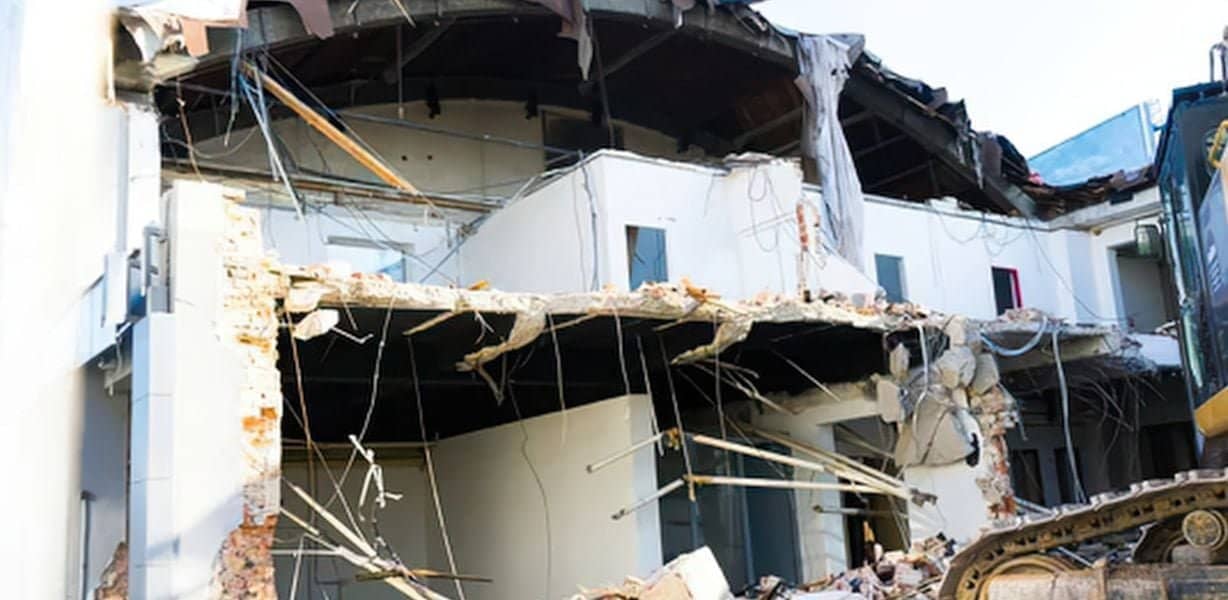
Representative image only
Key Takeaways
1 of 3
Automatically generated. Read full article for complete context.
The collapse of a private PG hostel in Delhi’s Satya Niketan area, which resulted in several student deaths and many injuries, has once again forced us to confront critical issues. collapsing in the Satya Niketan area of Delhi, in which several students lost their lives and many others were injured, has once again forced us to think. First, in this hour of grief, we express our deep condolences to the students of Delhi University and pray for the speedy recovery of the injured.
This incident is not an ordinary accident but a result of systematic government negligence. Who will take action against dilapidated houses and the arbitrary behavior of landlords in the heart of the national capital?
Students of Delhi University live in rented houses in and around the area where this incident took place. Obviously, if adequate hostel facilities were available, students would not be forced to risk their lives by living in such poor conditions.
When will the government, which repeatedly pushes education and employment issues out of the center of political discourse, understand that these are the real drivers of national development, and that development is impossible without prioritizing them?
On July 27, 2024, three students preparing for the civil services examination died after water entered the illegal basement library of Rau’s IAS Study Circle in Old Rajinder Nagar, New Delhi, following heavy rainfall. Who does not know about this tragedy? Students staged protests and placed several demands before the government and administration. What happened to those demands and how much action was taken is difficult to ascertain, as no clear information has emerged.
This is what often happens in such cases: for a few days or weeks, the government and administration take action merely for appearances, but as soon as the matter dies down, everything is pushed into cold storage. We are forced to continue living with a system that is crumbling, struggling, and stumbling along.
On June 22, 2026, a fire broke out in a three-story commercial building in the Aliganj area of Lucknow, killing at least 15 people and injuring five others. The building housed a graphics animation centre, a pet shop and a library. Most of those who died were students attending classes at the center on the second floor who became trapped. In this case too, the government formed an SIT, and under the guise of investigation, the matter similarly disappeared from public attention., and in the name of investigation, the matter disappeared from public attention in the same way.
If we examine these incidents sequentially, one thing becomes clear: we view each incident merely as an accident and never truly work towards finding a permanent solution. Such incidents are gradually becoming normalized.
We have to think about why this is happening. Which issues do we prioritize during elections, and which ones do we ignore? What are our expectations and hopes from the government? After these accidents, will we once again merely discuss the same issues, or will our priorities finally change?
The second important issue is the problem of hostels. India has entered the 21st century and completed 80 years of independence, yet why are we still struggling with problems such as school repairs and hostel shortages?
From Allahabad University to Delhi University, Jamia Millia Islamia, Jamia Hamdard in Delhi, and Maulana Azad National Urdu University in Hyderabad, the hostel problem persists. Even after decades, why are new hostels not being constructed when new courses are added and student numbers increase annually?
According to available information, not a single new hostel has been constructed at Delhi University in the last 12 years. Only one women’s hostel has been inaugurated, which had been approved by the Congress-led government.
Key Statistics on India’s Education Crisis
New Hostels (DU, 12 Yrs)
0
Kothari Commission Target
6% GDP
Current Education Spend (India)
~4% GDP
Population Earning < ₹25k/month
>50%
VISUALS BY THE RIFT
The situation is almost the same at Allahabad University. Hundreds of students from eastern Uttar Pradesh and various regions are forced to live in dirty and difficult conditions in nearby areas and settlements. Every year, the area faces flooding, with Baghada and surrounding areas becoming submerged, creating difficulties for students.
Everyone knows the conditions in Okhla and Jamia Nagar. Between lanes connected to other lanes and windows facing other windows, how students endure the rain and heat is something that needs no explanation.
The situation at Maulana Azad National Urdu University in Hyderabad is somewhat different. Because of its Urdu identity, most of its students come from Uttar Pradesh, Bihar, Kerala and Kashmir. Students who travel more than 1,000, 1,500, or even 2,000 kilometers to study here are forced to live in expensive areas of Hyderabad, which directly impacts their expenses.
The increasing number of new courses over the years gives students the hope of accessing higher education, but many students are unable to afford the cost of living outside the campus. As a result, they are forced to leave their studies midway and return home in search of some other opportunity.
In such a situation, the government must reconsider its priorities and which problems need greater importance. Otherwise, incidents like Satya Niketan and the financial burden on students will continue to close the doors of education for many.
Education and expenditure on education should be a major priority of a developed country. In this age of rapid technological advancement and global challenges, education is the path that can help us move forward efficiently and cost-effectively.
The Education Commission, known as the Kothari Commission, stated that public expenditure on education should be 6% of the country’s GDP to create a quality education system., stated that public expenditure on education should be 6% of the country’s total GDP to create a quality education system. This was stated by the Kothari Commission between 1964 and 1966. Even after five decades, we have reached only around 4%, while economic experts believe these figures may be manipulated, and the actual figure could be much lower.
At a time when the world is advancing rapidly in education and has already explored pathways to the Moon and Mars, if our governments continue to adopt an attitude of negligence and indifference, the problem will become even more serious.
Only when spending on education increases will pathways to research and technology open up. If students have to live outside the campus at their own expense, especially in a poor country like India where more than half of the population does not even earn ₹20,000–₹25,000 a month, then how can this system work?
Will a student study or run after employment? There are not even enough employment opportunities. Inflation is at its peak, and unemployment has also broken records of several decades. Millions of posts remain vacant in Central and State governments.
The government must find a way forward, because without giving priority to education, we cannot fight our other problems.
Finally, the government can no longer escape the real issues of the people and students by invoking systems and policies. It will have to take necessary and strong measures, because the decades-old fear created by the government in the minds of the new generation has disappeared. The government can no longer silence them with threats when they demand their needs and rights.
The government must answer for the incident at the private hostel in Satya Niketan and must move forward with a strong plan to prevent such incidents in the future.
Disclaimer:The views and opinions expressed in this article are those of the author(s) and do not necessarily reflect the official policy or position of The Rift.