Opening The Rift
therift
© 2026 The Rift. All Rights Reserved.
Reimagining Education: Four Urgent Reasons for Reform
The link of education with the creation of a better world is broken at several levels, necessitating urgent and comprehensive reforms.

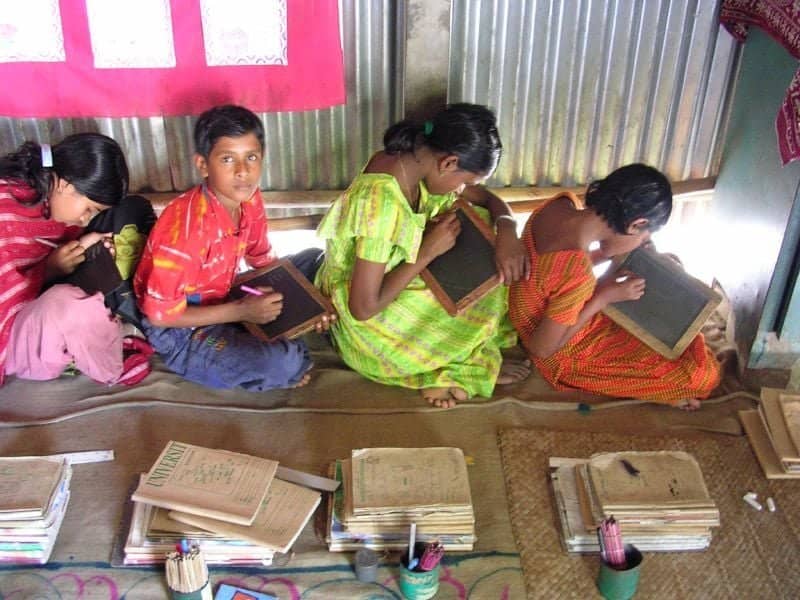
Students engaged in classroom activities, laying the groundwork for a better world (Representative Image)
Key Takeaways
1 of 3
Automatically generated. Read full article for complete context.
Education is perhaps the most important aspect of human life, particularly when education is understood in a much broader sense beyond merely completing a set number of years of school and college. It is clearly always of the highest importance to try to make the best possible efforts to ensure that education is as helpful as possible for students to lead a personally satisfying and socially useful life, and to best realize their potential by developing their creative talents and contributing to the creation of a better world. Thus, education is inherently both a personal and a social issue, aimed at personal development and its optimal contribution to social development.
However, a conflict between personal and social development arises when existing society and economy have serious distortions, which in turn lead to distortions in the education system.
It is within this wider context that the task of educational reform must be seen. While educational reform has always been important, there are at least four reasons why this has become even more important in recent times.
Firstly, in many countries, particularly those with a narrow resource base, high levels of inequality, and corruption, a significant number of students are unable to access reasonably good quality education. Even if they manage to reach certain levels, they struggle to find satisfactory jobs or self-earning opportunities that meet their needs, let alone their aspirations., inequalities and corruption are at higher levels, a significant number of students are unable to access education of reasonably good quality and even if they somehow manage to reach up to certain levels, are unable to get satisfactory jobs or self-earning opportunities that can meet their needs and much less their aspirations. Inequalities and the parallel existence of luxury lifestyles make them even more bitter regarding the unjust situations they face, leading to discontent.
Secondly, in keeping with the widespread trend of privatization, the spread of educational facilities is increasingly profit-driven, which in turn increases the costs of education, particularly higher education, to a shocking extent. Highly influential profit-maximizing interests have a vested interest in making education more stressful and aggressively competitive, instead of an experience of joyful, creative learning, to increase their grip over the education system. The more difficult and exasperating the exams and entrance exams are, the greater the rush for coaching institutes that claim to hold the key to success. The more the role of money increases in education, the more likely it becomes that corruption will also proliferate. All this increases the stress on students and their parents. It is quite possible that some medical students are exhausted by entrance examinations even before they begin their medical education.
Thirdly, all this increases the pressure on students and parents to opt for the highest-paying opportunities later, ignoring wider social considerations, to recover their ‘investment’ or to pay off educational loans. Even in an extremely rich country like the USA, the phenomenon of highly burdensome student debt has become an increasing part of higher education. Hence, students emerging from a profit-driven system often go on to strengthen it further after graduating, instead of challenging it.
Last but not least, it has been observed globally that some of the most objectionable careers or job positions—such as those linked to weapons and wars, various disruptive and harmful technologies, or roles involving high health and environmental risks—attract some of the most highly performing students from elite educational institutes due to the highest salaries and packages available. In fact, several elite educational institutes, in which Global South countries invest heavily, are structured in such a way that their ‘products’ will opt for and strengthen corporate and other interests in richer countries. This thereby involves a regular transfer of scarce resources from poor to rich countries, while also facilitating the allocation of the ‘best and the brightest’ to some of the most disruptive and harmful areas currently considered highly profitable in narrow terms. countries invest a lot are even structured in such a way that their ‘products’ will opt for and strengthen such corporate and other interests in the riches countries, thereby also involving a transfer of scarce resources from the poor to the rich countries on a regular basis, while also facilitating the allocation of the ‘best and the brightest’ to some of the most disruptive and harmful areas currently considered to be of highly profitability in narrow terms. After all, in highly destructive wars, those involved in decision-making processes or supplying weapons often come from elite educational institutes considered highly prestigious. Increasingly, this social aspect is not even raised, and it is considered normal to accept the highest-paying opportunities regardless of their adverse social role.
Hence, on the one hand, there is a denial of educational opportunities for many students, and on the other hand, education is unnecessarily made too stressful for those who can access it at higher levels. At the same time, the link of education with the creation of a better world is broken at several levels.
In such a situation, educational reforms are obviously essential. One aspect of such reforms must be to reduce inequalities by investing heavily in improving access to quality education for those with fewer or least resources. Secondly, education must involve, in various ways, continuing efforts for a better understanding of the surrounding socio-economic reality and environs, with an emphasis on possible improvements and how one’s own capacity building and creativity can contribute to this. and environs with an emphasis on improvements that are possible and how one’s own capacity building and creativities can contribute to this. At the same time, students should receive a reality-based assessment of available livelihood and career opportunities, and education should be linked to these.
Of highest importance is to provide a firm base of values that link a better personal life with the creation of a better world. Precepts that are simple yet life-changing should be advanced in interesting and participative ways. that are simple yet can be life-changing should be taken forward in interesting and participative ways. One such precept is: ‘I will try my best not to cause any distress to anyone else.’ Another precept is: ‘I regard all human beings as equal and do not discriminate on the basis of religion, caste, color, ethnicity, region, gender, etc.’ Yet another precept is: ‘I place very high value on protecting the environment and all forms of life.’
Creative training in peace and non-violence should be an important part of education. Honesty in financial matters is, of course, important, but in addition, there should be honesty in all important social relationships. The basis of any relationship is not dominance and selfishness but cooperation and understanding.
When most students emerge from schools and colleges with such values, they will always do something good, and there are very high chances that wherever they are, they will be happy and make others happy, contributing to making the world beautiful and safe.
Disclaimer:The views and opinions expressed in this article are those of the author(s) and do not necessarily reflect the official policy or position of The Rift.