Opening The Rift
therift
© 2026 The Rift. All Rights Reserved.
Covenant vs Betrayal: The Distorted Record of Muslim Governance in Jerusalem
The pattern that defined Crusader rule has re-emerged under Israeli governance with a consistency that demands legal and historical reckoning. The evidence is contemporaneous, documented, and abundant.

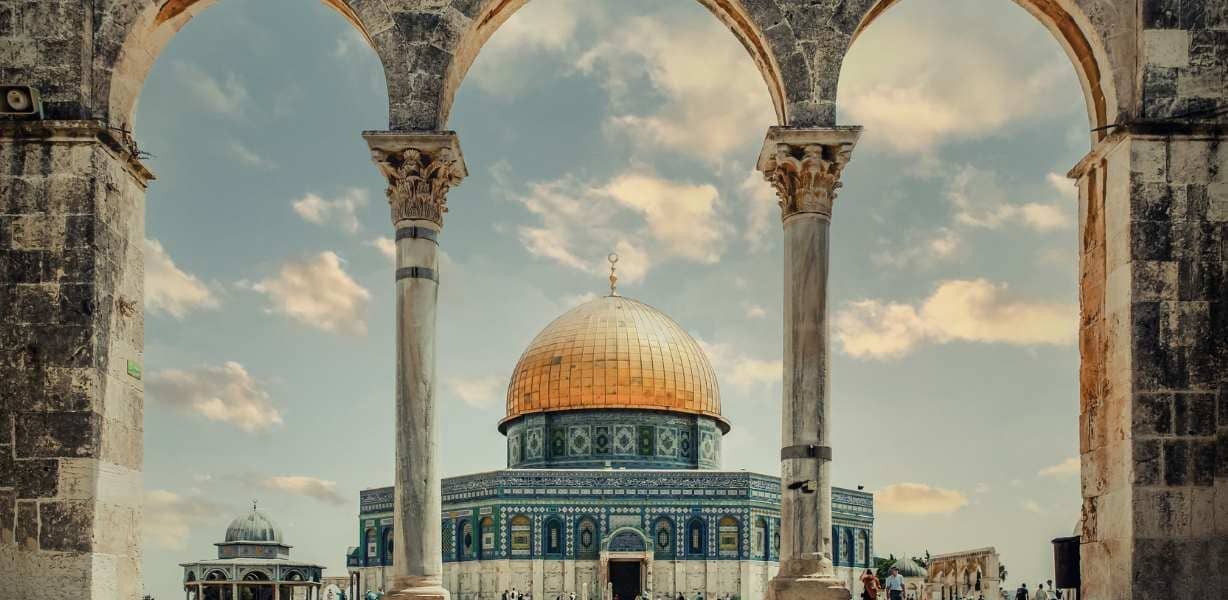
Key Takeaways
1 of 3
Automatically generated. Read full article for complete context.
The focus has shifted from destruction of Palestine to aggression against Iran. The murder of 50,000 Palestinians and the displacement of hundreds of thousands, obscures a vital series of past events. Lest they be forgotten in the midst of bombs and BS, here they are.
Few subjects in world history have been as persistently distorted as the record of Muslim governance in Jerusalem. Popular narratives, shaped by centuries of Crusade-era propaganda, colonial historiography, and contemporary geopolitical framing, consistently portray Muslim rule as an era of suppression and religious intolerance. The historical evidence, however, tells a starkly different story. Muslim rulers not only conquered Jerusalem with remarkable restraint, but actively invited persecuted minorities back into a city from which they had been forcibly expelled by Rome and, later, by Christian Crusader kingdoms. The very communities that Muslims protected and restored, Jews in particular, were subsequently massacred or expelled each time Christian forces retook the city. The arc of this history reveals not Muslim aggression, but Muslim generosity serially exploited and betrayed.
The very communities that Muslims protected and restored, Jews in particular, were subsequently massacred or expelled each time Christian forces retook the city.
A Covenant of Security
When the forces of Islam led by Umar ibn al-Khattab closed in on Jerusalem in 637–638 CE, enough Byzantine defenders remained to man the walls, yet the city’s political and military situation had effectively collapsed following the Arab victories at Yarmouk and elsewhere. The Patriarch Sophronius, a Christian Arab of considerable stature, demanded that surrender negotiations be conducted with none other than the Caliph himself, a remarkable insistence that already signals the moral authority the Muslim leadership had acquired in the eyes of even its adversaries.
What followed upon Umar’s arrival is among the most documented acts of sovereign humility in history. The Caliph arrived not in martial splendour but sharing a camel with a servant, both dressed in worn, mended garments. The surrender terms he offered were without parallel in the warfare of the era: the Roman political class could depart with all they could carry, and there would be no plundering, no enslavement, and no seizure of private property. Sophronius, shaped by the brutal norms of Byzantine conquest (in which defeated populations were routinely enslaved and pillaged), was so astonished by these terms that he surrendered the city immediately. The surrender document formalized a guarantee of security (amanAmanA formal guarantee of security and protection under Islamic law.) for the lives, churches, and properties of Jerusalem’s Christian inhabitants, representing one of the earliest codified instruments of religious pluralism in governance.
Perhaps the most telling episode of Umar’s tenure in Jerusalem is his foresight and deliberate refusal to pray inside the Church of the Holy Sepulchre, despite being formally invited to do so by Sophronius the Patriarch himself. Umar’s reasoning was explicitly jurisprudential: he would not establish a precedent that could later be invoked by Muslim claimants to convert the church into a mosque, thereby dispossessing Christians of their most sacred sanctuary. Instead, Caliph and Patriarch prayed side by side on an unclaimed, open ground, an act that was simultaneously a gesture of fraternity and a binding legal safeguard for Christian worship.
This episode reflects the Islamic legal principle that the rights of zimmisZimmi / DhimmiProtected non-Muslim subjects living under Islamic governance. (also written dhimmis) as protected non-Muslim subjects, are not merely tolerated as a matter of grace but are positively secured as a matter of covenant. The Caliph’s refusal was not symbolic theatre but a deliberate act of constitutional norm-setting, ensuring that his own piety could not be weaponized by posterity against the very community that had just entrusted him with their city. This jurisprudential foresight stands in categorical contrast to the conduct of the Crusaders who, four and a half centuries later, would convert mosques to churches and the Al-Aqsa Mosque into a palace without hesitation.
The Caliph’s refusal was not symbolic theatre but a deliberate act of constitutional norm-setting, ensuring that his own piety could not be weaponized by posterity against the very community that had just entrusted him with their city.
Reversing Racial Exclusion
One of the most historically significant (and least celebrated) acts of the year 638 CE conquest was Umar’s restoration of Jewish residency in Jerusalem. Since Emperor Hadrian’s decree in 135 CE, Jews had been legally prohibited from inhabiting Jerusalem. This prohibition was maintained with full force throughout the five subsequent centuries of Byzantine Christian rule. In a single act of governance, Umar reversed five hundred years of religiously motivated racial exclusion. He dispatched a Jewish convert to Islam to locate seventy to eighty Jewish families willing to relocate to Jerusalem, actively resettling a community that the city’s previous Christian rulers had treated as permanently expelled.
Upon being shown the Temple Mount (which Byzantine authorities had deliberately maintained as a refuse dump for five centuries as an act of theological contempt toward Judaism), Umar and his forces themselves cleared the garbage. The symbolism is profound: the Muslim conqueror, on behalf of a community not his own, literally cleaned up the deliberate desecration perpetuated by those who had presented themselves as the city’s rightful custodians. This stands not as an incidental anecdote but as emblematic of a governance philosophy rooted in the Quranic injunction against corruption on earth (fasad fil-arzFasad fil-arzQuranic injunction against spreading corruption or destruction on earth.) and the prophetic command to do justice even toward one’s enemies.
The Crusader Purge
The events of July 15, 1099, offer the starkest possible contrast to the conduct of Umar in 638. On breaching the walls of Jerusalem, the Crusader army massacred nearly the entire Muslim and Jewish population of the city. The Crusader chronicle written by a participant records soldiers “wading ankle-deep in blood” as far as Solomon’s Temple. Muslim sources report that more than 70,000 were killed in and around Al-Aqsa Mosque alone, including scholars, ascetics, and pilgrims who had travelled to Jerusalem for devotion.
The Jewish community, which had been welcomed back by Umar and maintained under Islamic protection for over four centuries, was rounded up in their synagogue and burned alive, or sold into slavery. According to historian Karen Armstrong, the Crusaders systematically slaughtered approximately thirty thousand inhabitants over three days. The massacre emptied Jerusalem of its entire Muslim and Jewish population. The city that Muslim governance had preserved as a multi-faith sanctuary was converted, through Crusader violence, into an exclusive Christian enclave, one purged of the very minorities whose presence Muslim rulers had specifically secured and guaranteed.
This is not merely a moral contrast. It is a legal one. The Islamic laws of war (as codified in the conduct of the Prophet Muhammad at the conquest of Mecca, and as operationalized by Umar at Jerusalem) categorically prohibited the killing of non-combatants, the destruction of places of worship, and the enslavement of conquered populations. The Crusaders operated under no such constraints, and the historical record leaves no ambiguity about the consequences.
Chivalric Governance Restored
When Salahuddin retook Jerusalem in 1187 CE, he was confronted with a population that had, eighty-eight years earlier, massacred his co-religionists and expelled every Jew from the city. His response stands as one of the most documented expressions of chivalric governance in military history. Rather than retaliating in kind, Salahuddin issued orders strictly prohibiting bloodshed. Christians were permitted to leave with their possessions; those unable to ransom themselves were freed through the personal generosity of Muslim commanders. Salahuddin himself reportedly paid the ransom of numerous impoverished prisoners from his own treasury, including the widows and orphans of Crusader knights who had killed Muslims.
His treatment of the Jewish community was equally remarkable. In approximately 1190, Salahuddin issued a formal proclamation inviting Jews to return to Jerusalem: the first active governmental encouragement of Jewish settlement in the city since Umar’s restoration over five centuries earlier. Jews arrived from across the Mediterranean world: from Ashkelon, from North Africa fleeing persecution in Morocco and Algeria, and in the famous “Aliyah of the 300 Rabbis” from France and England. Under Ayyubid rule, Jewish residents were permitted to practice their faith, access sacred sites near the Temple Mount, and participate in the commercial and intellectual life of the city. This period of coexistence lasted approximately forty years.
In 1229 CE, the Treaty of Jaffa transferred control of Jerusalem back to Christian authority. The outcome was entirely predictable and historically consistent: Jews were once again prohibited from living in the city. The pattern that had defined the preceding six centuries repeated itself with mechanical precision: every time Christian sovereignty was restored to Jerusalem, Jewish and Muslim populations were expelled, massacred, or both. Every time Muslim sovereignty was established or re-established, those same communities were invited, protected, and restored.
Every time Christian sovereignty was restored to Jerusalem, Jewish and Muslim populations were expelled, massacred, or both.
It is a pattern that cannot be explained by coincidence or attributed to individual character. It reflects a structural difference between two legal and theological traditions in their approach to the governance of conquered populations and the rights of religious minorities. Islamic jurisprudence, as practiced by both Umar and Salahuddin, treated the protection of non-Muslim communities as a binding obligation of the conquering sovereign. Crusader governance treated those same communities as threats to be eliminated or obstacles to be removed.
Despite this record, mainstream Western historiography has persistently framed the Crusades as a defensive response to Muslim aggression and has consistently underplayed Muslim contributions to interfaith coexistence in Jerusalem. The narrative of Muslim intolerance (contradicted at every major turning point in Jerusalem’s medieval history) has been sustained through selective citation, the elevation of hostile sources, and the systematic marginalization of Arabic, Jewish, and Islamic accounts.
Modern scholarship, including studies published in peer-reviewed journals such as the Journal of Medieval History and the International Journal of Middle East Studies, has increasingly corrected this record. The 2025 study contextualizing the 1099 massacre as “an exceptional episode of medieval violence,” even by the standards of the medieval period, is illustrative of a growing scholarly consensus that the Crusader conduct in Jerusalem was extraordinary in its brutality, not ordinary. Yet popular discourse has been slow to absorb these corrections.
The stakes of this misrepresentation are not merely academic. In contemporary debates over Jerusalem’s status, sovereignty, and the rights of its diverse populations, the historical record of who built, protected, and pluralized the city (and who burned, expelled, and purged it) carries direct normative weight. A historiography that inverts this record does not merely distort the past; it corrupts the normative foundations upon which just governance of the city must be built.
A historiography that inverts this record does not merely distort the past; it corrupts the normative foundations upon which just governance of the city must be built.
The history examined compels a conclusion that is as legally precise as it is morally stark. Muslim rulers (in 638, in 1187, and in the intervening centuries) extended a covenant of protection to the communities of Jerusalem, including the very communities that would later become instruments or beneficiaries of the city’s conquest by forces hostile to Islam. That covenant was honoured with extraordinary consistency across different rulers, dynasties, and centuries. It was repaid, with equal consistency, by expulsion and massacre whenever Christian military power was restored.
The misrepresentation of this record is not a passive historiographical error. It is a sustained inversion of the evidence that serves specific ideological interests and that has been corrected, time and again, by the sources themselves: Crusader chronicles, Jewish medieval accounts, Byzantine records, and modern archaeological evidence alike. The scholarly and moral obligation of our time is to restore the record to its proper proportions: to recognize Muslim governance of Jerusalem not as an era of oppression to be overcome, but as a model of pluralistic stewardship that its successors neither replicated nor deserved.
Structural Replication
History, the jurist Maitland once observed, is not a seamless web but it is woven of continuous threads. The thread connecting the Crusader conduct of 1099 CE to the governance of Jerusalem under the modern Zionist state is not one of mere analogy: it is one of structural replication. The same pattern that defined Crusader rule (the expulsion of non-Christian populations, the desecration and confiscation of their places of worship, and the imposition of an exclusively sectarian sovereignty upon a city of universal religious significance) has re-emerged under Israeli governance with a consistency that demands legal and historical reckoning. The evidence is contemporaneous, documented, and abundant.
It is a largely suppressed irony of modern geopolitics that the Christian communities of Jerusalem and Palestine (who are among the oldest continuous Christian communities on earth, many of them Arabic-speaking heirs to the very Syriac and Byzantine traditions that Patriarch Sophronius represented) face existential pressure not from Muslim governance but from the Israeli state. As recently as May 2026, a French nun was physically assaulted in East Jerusalem in an attack that, according to Al Jazeera, Christian leaders in the city described as reflective of a normalizing culture of intolerance toward Christian presence. Palestinian Christians live under daily threat from escalating Israeli assaults in occupied East Jerusalem, with community leaders warning of a deliberate campaign to reduce the Christian demographic in the city.
Arab News, reporting in April 2025, documented “increasing hostility” toward Christians as “one of the oldest religious communities in the region,” noting that local and international church leaders had raised urgent concerns about the survival of Christian communities in Jerusalem. The Christian population of all of historical Palestine has been reduced to fewer than 50,000 souls, living under what religious leaders and human rights organizations uniformly describe as a regime of occupation and escalating attack. By April 2026, a joint ministerial statement issued by the UAE, Jordan, Turkey, Egypt, Indonesia, Pakistan, Saudi Arabia, and Qatar formally condemned “the illegal and restrictive Israeli measures against Muslims and Christians in Jerusalem”, a coalition of Muslim-majority states defending Christian rights in the Holy City, a detail rich in historical irony.
If Umar ibn al-Khattab’s first act upon entering Jerusalem was to protect a church he was invited to pray in, and if Salahuddin’s first act upon reconquest was to prohibit any harm to Christian lives and property, the Israeli state’s conduct in Gaza represents the diametric inversion of both.
ReliefWeb, drawing on international humanitarian law sources, characterized this campaign as a “total violation of the rules of war”, the very rules that Islamic jurisprudence had codified and practiced for fourteen centuries. The deliberate targeting of places of worship is not merely a war crime under modern international law; it is precisely what Islamic law of armed conflict (siyarSiyarThe classical Islamic law of armed conflict and international relations.) had always prohibited. The contrast is not rhetorical but juridical: one legal tradition built its conduct around the protection of sacred spaces; the other has built a documented military campaign around their systematic annihilation.
In occupied Jerusalem itself, the Euro-Mediterranean Human Rights Monitor reported in April 2026 that Israel was exploiting emergency conditions to “dismantle Jerusalem’s religious status”, constructing a legal architecture that “grants Israeli Jews privilege and control while depriving Palestinian Muslims and Christians of their inherent right to worship”. Al Jazeera, writing in April 2026, concluded that Israel was “actively trying to impose new rules, under which Muslim and Christian worship would be subject to full Israeli control”, a characterization that echoes, with precise historical symmetry, the Crusader conversion of Al-Aqsa Mosque into a palace and the Church of the Holy Sepulchre into an instrument of political exclusion.
In the law of evidence, and in the broader jurisprudence of comparative governance, conduct is the most reliable indicator of intent. Declarations of principle are cheap; the behavior of a sovereign toward the vulnerable populations under its power is the only honest measure of its values. This principle, recognized in both common law and Islamic jurisprudential traditions, provides the analytical lens through which the historical and contemporary record examined in this article must be evaluated.
Declarations of principle are cheap; the behavior of a sovereign toward the vulnerable populations under its power is the only honest measure of its values.
The Muslim record across fourteen centuries is consistent in its conduct:
Umar in 638 CE protected Christian churches, prohibited plunder, restored the Jewish community, and personally cleared the desecrated Temple Mount. Salahuddin in 1187 CE prohibited reprisal killings, ransomed the poor at his own expense, invited Jews expelled by the Crusaders to return, and granted Christians the right to remain, worship, and trade.
Across intervening centuries, the Umayyad, Abbasid, and Ayyubid periods, Jerusalem functioned (imperfectly, as all human governance does, but structurally) as a city in which Muslim, Christian, and Jewish communities coexisted under a legal framework of protected status (zimma/dhimma) that guaranteed life, property, and religious practice.
The Crusader and Zionist record, separated by eight centuries, is equally consistent in its conduct: Crusaders in 1099 CE: Massacred thirty thousand Muslim and Jewish inhabitants within days of entry; burned the Jewish community alive in their synagogue; converted sacred Muslim sites to secular and Christian use. The Treaty of Jaffa, 1229 CE: Restored Christian control and immediately re-imposed the prohibition on Jewish residence.
The Israeli state, 1948–present, expelled approximately 750,000 Palestinians in the Nakba; demolished hundreds of Palestinian villages; enacted the Absentee Property Law to permanently confiscate the property of the expelled; and in the ongoing Gaza campaign, destroyed over a thousand places of Muslim and Christian worship.
No honest jurist applying the rule that conduct reveals intent could arrive at any conclusion other than that these two traditions (the Islamic and the Crusader-Zionist) have demonstrated, through their behavior across centuries and continents, categorically different orientations toward the governance of pluralistic populations.
The argument advanced here is not utopian. It does not claim that Islamic governance is without historical blemish or that Muslim rulers have invariably honoured the standards established by Umar and Salahuddin. History records failures and excesses in every tradition of governance. The argument is narrower and more precise: that when Islamic political authority has been exercised in accordance with its own normative foundations (the Quran, the Sunnah, and the classical jurisprudence of siyar), it has produced governance characterized by the protection of religious minorities, the preservation of sacred spaces across faiths, and the active restoration of communities that prior rulers had expelled.
Were a Muslim-governed polity today to administer Jerusalem in accordance with the model of Umar and Salahuddin, the following would be legally required by its own normative framework: Non-Muslim communities would hold aman (security guarantees) binding on the state, not merely tolerated by it. Churches, synagogues, and all places of worship would be inviolable: not subject to confiscation, conversion, or destruction regardless of military or political pressure. Access to sacred sites would be guaranteed for all communities as a matter of covenant, not privilege. Expelled communities (whether Jewish, Christian, or of any faith) would, following Umar’s precedent, be actively invited to return and reestablish themselves. The legal personality of religious institutions would be recognized and protected, in accordance with the zimmi compact’s historical guarantee of communal self-governance.
This is not speculation. It is the direct extrapolation of documented historical practice. The historical record is, in the language of evidence law, the best available proof of what Islamic governance means in practice when exercised with fidelity to its own principles.
The argument can be stated in the precise terms of forensic reasoning: where conduct is the evidence, intent is the conclusion.
The Muslim conquerors of Jerusalem (in 638 and in 1187) demonstrated through their conduct their intent to govern the Holy City as a shared sanctuary, to protect its minorities as a matter of binding covenant, and to reverse the exclusions and desecrations of their predecessors.
The Crusaders in 1099, and the Zionist state in the modern era, have demonstrated through their conduct (massacre, expulsion, destruction of worship, demographic engineering) an intent to possess Jerusalem as an exclusive dominion, tolerable to no other faith on equal terms.
The historical record does not require apology or advocacy. It requires only honest reading. And honestly read, it delivers a verdict that centuries of misrepresentation have laboured to suppress: that the Islamic Muslim stewardship of Jerusalem represents, across its most significant chapters, one of the most remarkable examples of pluralistic governance in the pre-modern and modern world, and that its repudiation, first by the Crusaders and now by the Zionist state, has consistently produced the violence, dispossession, and desecration that Muslim governance, at its principled best, was specifically designed to prevent.
The conduct flows from intent, prescribed by the Qur’an. Res ipsa loquitur.
Jai Hind
Disclaimer:The views and opinions expressed in this article are those of the author(s) and do not necessarily reflect the official policy or position of The Rift.
*JerusalemCrusadesHistoryInternational LawIslamic GovernanceMiddle EastPalestinePalestinian RightZionism