Opening The Rift
therift
© 2026 The Rift. All Rights Reserved.
Pratap Jayanti Must Remain a Reminder of Inter-Faith Harmony and Unity
The famous battles of the days of the Mughal rule were not battles between the Hindus and the Muslims- instead the armies which fought each other were of a mixed composition.

Key Takeaways
1 of 3
Automatically generated. Read full article for complete context.
It has become increasingly important to read and discuss history more carefully so that right lessons can be drawn. On the other hand careless conclusions drawn hurriedly and sometimes with pre-existing, unjustified hostility can be harmful for our country and society, for our unity and harmony. All this is particularly important for South Asia.
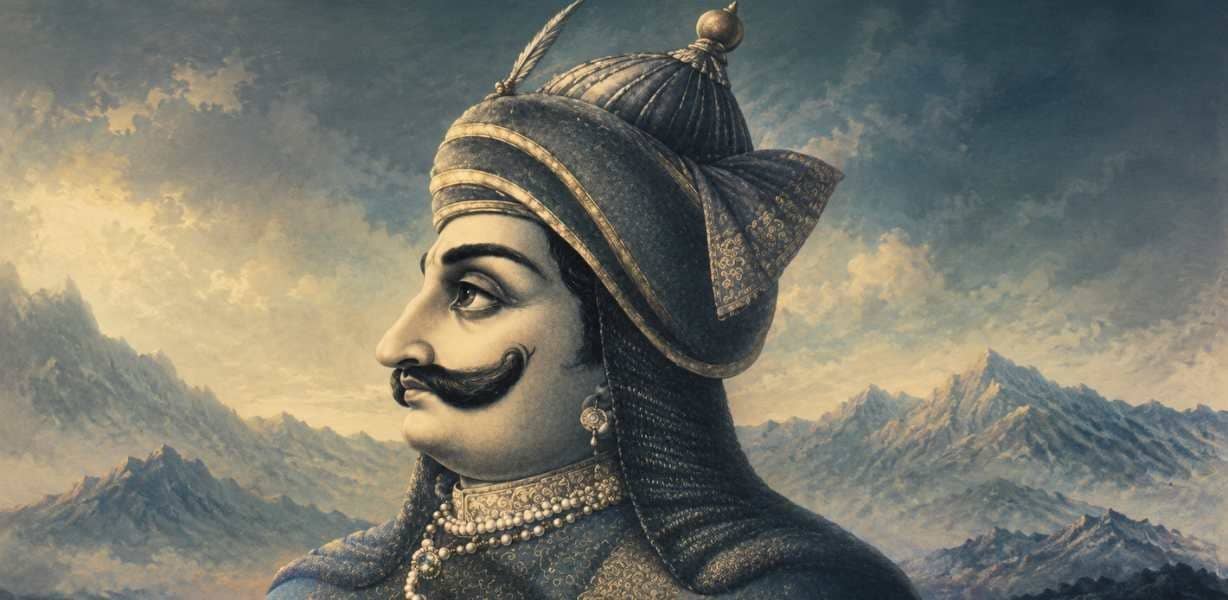
This is relevant in the context of the forthcoming celebration of Pratap Jayanti on 17 June. We should remember here that Rana Pratap was not just a great defender of liberty but in addition he was also a great promoter of unity among his people so that the Hindus, Muslims, the Rajputs as well as the tribal communities could all be together in the times of crisis and they along with all other sections like merchants could keep high the flag of their liberty. It is equally important that while the army of Emperor Akbar was the aggressor in this case, but at the same time the wider reality of Akbar is of a very far-sighted king who tried to create unity and harmony of all religions and promoted the learnings of all religions, and some of the initiatives he took in this context would have been of great value in avoiding colonial rule later if only these had been followed up and strengthened in the same spirit.
It is tragic that these two great kings fought a big and bitter battle, but this was the sad reality of those times of many non-rational wars being fought and such wars should not be interpreted to promote any sectarian or hostile feelings today.
Maharana Pratap is one of the most courageous kings of India’s history. Pratap defended his much smaller kingdom of Mewar very bravely against the much more powerful forces sent by Akbar, the great Mughal emperor in the famous battle of HaldighatiHaldighatiA mountain pass in the Aravalli Range, the site of the famous 1576 battle.. Later he continued his struggles from forests and hills, and by the time of his death he was able to reclaim some of his territory and forts.
However we should at the same time remember that in the battle of Haldighati the brave resistance offered by Maharana Pratap was led to a considerable extent by his brave commander Hakim Khan Sur (or Suri) and his Muslim soldiers. The fact that Maharana Pratap was greatly helped by Muslim soldiers is often deliberately suppressed, even though people of Mewar still remember the great courage of Hakim Khan Sur and his soldiers with great respect and a memorial has also been created to pay respect to Hakim Khan Sur.
Additionally, another suppressed fact is that Pratap had good relations with Muslim rulers like Taj Khan of Jalaur. He had given jagirsJagirsA type of feudal land grant in the Indian subcontinent. to Sindhi Muslims. He extended encouragement to Muslim artists who achieved a lot of accomplishments during his rule.
What is most important is to remember that while Hakim Khan Sur was a main commander of Maharana Pratap in the famous battle of Haldighati, Akbar’s forces were led by Raja Mansingh, a highly respected Hindu general of Akbar who was time and again given the most crucial responsibilities by him. Thus there is absolutely no justification for calling this a fight between Hindus and Muslims, even though such distortions have been repeated time and again.
It may also be noted here that Akbar’s rule was identified mainly with policies of social harmony and unity of all religions. Due to this he faced anger of some Muslim fanatics and to suppress this revolt he sent armies led by Mansingh and Todarmal! So to call these medieval battles Hindu-Muslim battles is historically inaccurate.
Another neglected aspect of Rana Pratap’s role is the respect he gave to adivasis. As a result during his years of exile the adivasis became his most trusted soldiers. They were also most capable of guerrilla warfare from forests and hills .So the great thing about Rana Pratap is that he could build a wider unity of Hindus, Muslims and Adivasis as he believed in respect for all communities. This was the real strength of his great struggles.
The long battle between Rana Pratap and Akbar is well known, but it is also important to recall that after both Pratap and Akbar had breathed their last, their sons decided to stop fighting. Amar Singh and Jahangir reached a most honourable agreement which appears to have satisfied both sides. At this stage the communal minded historians get caught in their own trap. Because in the earlier phase they have shown nothing but hatred for Mughal rulers, they are now forced to make at least mild criticism of Amar, while on a fair appraisal he comes out as a valiant warrior and a fine statesman, not afraid of struggle, yet not held back by sheer pride when the interests of his people demand this.
In the 1857 uprising against the British rule the Mughal king Bahadul Shah Zafar, despite his old age and weakness, became a symbol of freedom for Hindu and Muslim freedom fighters alike.
Most of the famous battles fought during the years of the Mughal rule have been falsely promoted as battles between Hindus and Muslims and people are surprised when told that Shivaji’s army had a significant number of Muslims and that all through Aurangzeb’s prolonged fight with Shivaji several Maratha nobles continued to occupy an important place in the Mughal court and army. The names of these Maratha nobles in Aurangzeb’s court are available in historical documents and in fact historians have compiled a list of such names. It was also common for several Hindu kings and chiefs to have Muslim nobles.
Much earlier in the battle of Khanwa, Mahmood Lodi and Hasan Khan Mewati had fought on the side of Rana Sanga against the army of Babar.
From these examples it should be clearly known that the famous battles of the days of the Mughal rule were not battles between the Hindus and the Muslims- instead the armies which fought each other were of a mixed composition. During 1580-81 Akbar sent Hindu generals to suppress revolt of Muslim fanatic elements. Describing this rebellion Prof. Satish Chandra writes, “The rebellion kept the empire distracted for almost two years (1580-81) and Akbar was faced with a very difficult and delicate situation. Due to the mishandling of the situation by local officials, Bengal and almost the whole of Bihar passed into the hands of the rebels who proclaimed Mirza Hakim as their ruler. They even got a religious divine to issue a FatwaFatwaA formal ruling or interpretation on a point of Islamic law given by a qualified legal scholar., calling on the faithful to take the field against Akbar. Akbar did not lose his nerve. He despatched a force under Todar Mal against Bengal and Bihar and another under Raja Man Singh to check the expected attack by Mirza Hakim.”
When the Hindu king of Bikaner was defeated by the King of Marwar, his family sought refuge in the court of Shershah Suri. When Humayun was defeated by Shershah Suri, he sought refuge with the (Hindu) King of Amarkot. Akbar was born here.
It is clear from the above examples that the history of Mughal India is not a history of fights between the Hindus and Muslims. Kings fought each other time and again, but generally there were mixed armies on both sides. Further heroes and villains did not exist in any one religion. On some occasions, the persons who showed great valour and large heartedness happened to be Hindus, on some other occasions they happened to be Muslims. In fact the biggest heroes of this age were those who rose above all sectarian considerations to spread the message of universal love and brotherhood – men like Sant Kabir and Guru Nanak. They further strengthened the heritage of the unity of people of all faiths.
The first Muslim scholars came to India before any Muslim rulers did, and they came with the spirit of learning and not conquering. They carried back from India several works of wisdom and these were then translated into Arabic. Acknowledging this intellectual gift, Arab author Yaquibi wrote in the year 895, “The Hindus are superior to all other nations in intelligence and thoughtfulness. They are more exact in astronomy and astrology than any other people. The Brahma Sidhanta is a good proof of their intellectual powers, by this book the Greeks and the Persians have also profited.” Another Arab historian Qazi Said wrote, “The Hindus have always been considered by all other people as the custodians of learning and wisdom.”
Thus the very first contacts were favourable, and these were strengthened subsequently at the upper level by far-sighted policies of harmony and integration initiated by Akbar and retained by several Muslim rulers of the smaller kingdoms such as Bijapur, Mysore and Oudh. More important, at the grassroots level, these ties were strengthened by the Bhakti and Sufi movements which emphasized the unity of God and religions and attracted millions of followers.
Akbar started many good traditions. He respected and listened to the views of learned men from several religions including not only Hindus and Muslims but also Sikhs, Christians and others. He gave liberal grants for maintenance of Hindu temples. He started a translation department to get the Ramayana, the Mahabharata and the Bible translated into Persian language.
In the Deccan kingdoms, a sixteenth century king Adil Shah followed a similar path. He established a very good library to look after which he appointed a Sanskrit scholar Vaman Pandit. His descendent Ibrahim Adil Shah was called the ‘friend of the poor’ and ‘world’s teacher’ due to his policies of benevolence and goodwill. In his songs he often pays respects to Saraswati, the Hindu Goddess of learning. He played an important role in the development of some Hindu religious places.
In Kashmir the 15th century king Zain-ul-Abdin was a scholar of Sanskrit as well as Persian, and played an important role in translating parts of the Upanishads into Persian. He publicly participated in Hindu festivals and constructed temples.
In Bengal Pathan kings like Sultan Nazir Shah and Sultan Hussain Shah followed similar policies and arranged for the translation of Mahabharata and Bhagwat Puran into Bengali.
A governor of the Vijaynagar empire at Mangalore committed some excesses and damaged four mosques. When this was made known to a higher officer called Baicheya Dannayaka and Emperor Devaraya II of the Vijaynagar empire, they ordered payment of compensation to the Muslims for repair of the four mosques.
King Jayasimha of the Solanki dynasty who ruled Gujarat in the first half of the 12th century was known for his sense of justice. When he came to know of the destruction of a mosque in Cambay then, having confirmed the news properly, he punished the culprits and gave 2,00,000 silver coins to the Muslims of Cambay to rebuild the mosque.
The Portuguese visitor Barbosa who visited the Vijaynagar empire between 1512-14 said, “The King allows such freedom that every man may come and go and live according to his own creed without suffering any annoyance and without any enquiry, whether he is Christian, Jew, Moor or Heathen.”
Bahmani Sultan Alla-ud-Din II (1436-58) was devoted to Narasimha Saraswati, a great Hindu sage. Ibrahim II, the Adilshahi ruler of Bijapur was also a devotee of Narasimha Saraswati. He built a small shrine near his palace in Bijapur and placed the paduka (footwear) of the saint here.
But more important was the impact of the Bhakti and Sufi movements at the grassroots level. These poets and teachers spoke against the artificial and ritualistic divisions among religions and in favour of the essential unity of all religions. They emphasized basically the purity and depth of the relationship between God and the devotees. The strength of this relationship would render the various rituals and artificial impositions as insignificant. They wrote devotional songs and poems in the common people’s language, thereby eliminating the necessity of intermediaries in worship.
Thus despite several adverse factors and problems, in significant ways integration and assimilation of Hindu and Muslim population was certainly taking place before the advent of the British rule.
Despite British efforts to divide and rule, the impact of this integration could be seen in the 1857 uprising against British rule in which Hindus united with the Muslims in an effort to oust the foreign rulers. This prompted the colonial rulers to initiate even more organised efforts to promote communal divides, but despite this glorious examples of communal harmony could be seen time and again in the Gandhian freedom movement, in the struggles led by Subhash Chandra Bose and in the struggles led by revolutionaries like Shahid Bhagat Singh. It is this heritage of mutual respect, of unity and cooperation, which will help us to create the most beautiful country in the world with the most beautiful culture. This peace and unity will help us to use the creativity of all people for development tasks and for true progress.
Disclaimer:The views and opinions expressed in this article are those of the author(s) and do not necessarily reflect the official policy or position of The Rift.