Opening The Rift
therift
© 2026 The Rift. All Rights Reserved.
Agriculture’s Deteriorating Economics and the Rising Cost of Nutrition
The farmer does not get a fair return for his sweat, and the consumer does not get the nutrition he needs on his plate.

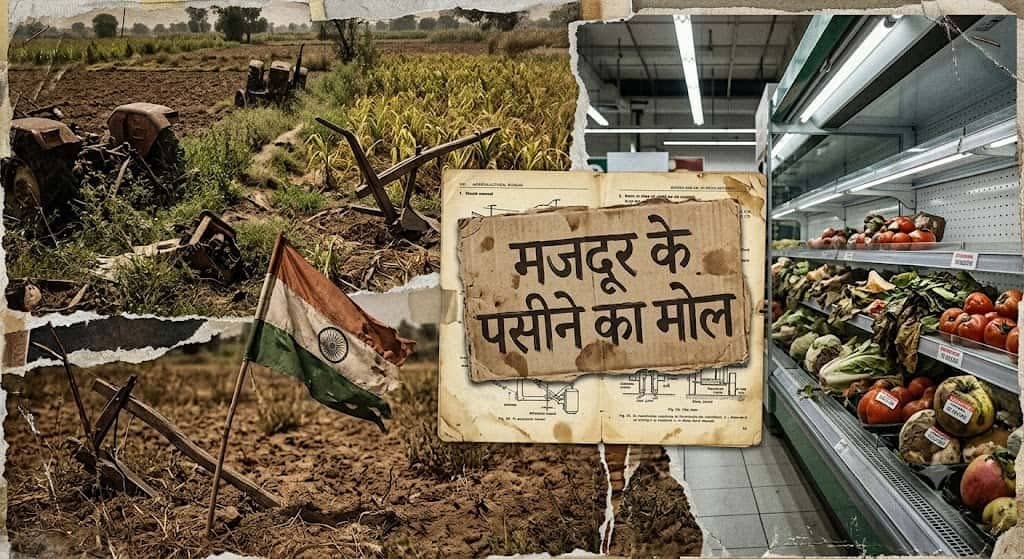
The rising cost of nutrition amid deteriorating agricultural economics (Representative Image)
Key Takeaways
1 of 3
Automatically generated. Read full article for complete context.
When the figures are carefully unpacked, one thing becomes unmistakably clear: Indian agriculture is passing through a deep and prolonged crisis. This sector is no longer a reliable source of income, and the government support needed to make it profitable again is not reaching in adequate measure. The farmer who, a few decades ago, owned his own soil is today gradually turning into a daily-wage labourer. Of a farming family’s total monthly earnings, barely one-third now comes directly from agriculture; the remaining larger share, nearly two-thirds, is made up through government or private jobs, wage labour, or various small enterprises. In other words, farming by itself is no longer enough to run a household.
What is more worrying is that, even as this sector remains under pressure, the number of new entrants into it is rising rather than falling, and these new entrants are joining mostly not as landowning farmers but as farm labourers. As landholdings are divided into smaller and smaller fragments, income from farming declines rapidly, and families are forced to depend increasingly on non-agricultural sources to survive. This is reflected in suicide statistics as well: of the total agricultural suicides recorded in 2024, more than half, at least 56 percent, were of farm labourers. This is not a sudden trend; it has been consistent since 2021. Of the total deaths that year, 4,633 were landowning farmers, while 5,913 were farm labourers, that is, workers who own no land in their name, who have no crop insurance cover, and who have no support to fall back on if the season fails. This group of daily-wage workers has today moved to the very centre of the agrarian crisis.
A survey conducted by the National Bank for Agriculture and Rural Development, that is, NABARDNational Bank for Agriculture and Rural DevelopmentA statutory body established by the Government of India for matters connected with policy, planning and operations for agriculture and rural development in India., brings out this same picture even more sharply. Over the past five years, nearly 30 percent of farming families reported crop losses caused by untimely rain, pest and disease attacks, cyclones, or drought. Additionally, 12 percent of families also suffered the blow of unexpected drops in market prices. Facing these crises, families were left with only two options: either exhaust their savings or take loans from moneylenders. The reality is stark: the average net income of a farming family was recorded at just ₹1,951, and it is out of this gap that the cycle of debt is born. It was found that the average debt on a farming household stood at 91,231 rupees, while the average debt on non-farming households was slightly lower, at 89,074 rupees. The Parliamentary Standing Committee on Agriculture, Animal Husbandry, and Food Processing has noted that this situation demands close monitoring and targeted interventions, so that farmers can sustainably bear the burden of their debt while continuing to invest in agriculture. The committee stated that the concerned department must ensure farmers do not get trapped in an unbearable cycle of debt and that schemes designed for them actually deliver benefits on the ground.
And this crisis will not stop here. A powerful super El NiñoEl NiñoA climate pattern characterized by the unusual warming of surface waters in the eastern tropical Pacific Ocean. It can affect weather patterns globally, often leading to droughts in some regions and heavy rainfall in others. is taking shape, and weather experts fear that it may disrupt the coming monsoon cycle. Farmers entering the new season already in loss and under the weight of debt have no strength left to absorb another shock. In this new era of shifting climate, providing farmers with a coherent, far-sighted policy framework is not some great demand, it is the bare minimum requirement.
The echo of this crisis in the fields reaches directly into urban kitchens, and today the sharpest edge of inflation is falling on the ordinary person’s plate. In India, a nutritious and balanced diet is becoming more expensive every year, moving further out of reach for millions of families. According to the United Nations’ latest report, ‘The State of Food Security and Nutrition in the World 2026,’ the per capita cost of a healthy diet in India has risen by more than 48 percent since 2017. The minimum cost of a daily balanced diet for an average Indian, which stood at $2.77 in 2017, reached $4.11 in 2025. This also marks a nearly 21 percent rise compared to 2021, when the figure stood at $3.4 PPP dollars.. Purchasing power parity (PPP) is a measure that does not depend on currency exchange rates alone; it accounts for the local prices of goods and services in a given country, thereby truly reflecting the burden on an ordinary person’s pocket.
Cost of Healthy Diet in India (PPP Dollars)
2.77
2017 (Approx.)
Previous Cost
4.11
2025 (Est.)
Current Cost
Source: UN Report (Est. figures based on article data)
VISUALS BY THE RIFT
This rise in prices hits poor and economically weaker families the hardest, because the moment prices rise, it is nutrient-rich foods such as fruits, vegetables, milk, and eggs that first begin disappearing from their plates. If a healthy diet remains this expensive, the path to a balanced diet will become even harder for families already struggling with malnutrition.. According to definitions set by the Food and Agriculture Organization and the World Health Organization, a diet is considered healthy only when it simultaneously provides the body with sufficient energy, essential nutrients, variety, and balance; mere fullness of the stomach is not the criterion. and the World Health Organization, a diet can be called healthy only when it simultaneously provides the body with sufficient energy, essential nutrients, variety, and balance, mere fullness of the stomach is not the criterion.
The global picture in this regard is not very different either. The average global per capita cost of a healthy diet has risen from $2.94 PPP in 2017 to $4.28 PPP in 2025, an increase of nearly 46 percent. The situation among India’s South Asian neighbours is even more severe than India’s own. In Bhutan, this cost has reached $6.17 PPP, a rise of 49 percent compared to 2017. In Bangladesh it stands at $4.59 with a 48.5 percent rise, in Sri Lanka at $5.21 with a 35 percent rise, in Pakistan at nearly $3.94 with roughly a 33 percent rise, and in Nepal at $4.19 with a 26 percent rise. In other words, India’s cost is higher than Pakistan’s but lower than Nepal’s, Bangladesh’s, Sri Lanka’s, and Bhutan’s. Yet, it must not be forgotten that in a country with a population as vast as India’s, even a small rise in cost can have a massive impact on the plates of millions of households.
Healthy Diet Cost Comparison: South Asia (PPP Dollars)
| Country | Cost (2025 Est.) | Increase vs 2017 |
|---|---|---|
| Bhutan | $6.17 | 49% |
| Bangladesh | $4.59 | 48.5% |
| Sri Lanka | $5.21 | 35% |
| India | $4.11 | ~21% |
| Pakistan | $3.94 | ~33% |
| Nepal | $4.19 | 26% |
Source: UN Report (Est. figures based on article data)
VISUALS BY THE RIFT
Global Healthy Diet Cost Trend (PPP Dollars)
2.94
2017
Starting Cost
4.28
2025 (Est.)
Ending Cost
Increase: ~46%
Source: UN Report (Est. figures based on article data)
VISUALS BY THE RIFT
There is, however, one reassuring point: The number of people worldwide unable to afford a healthy diet has declined from 297 crore (37.4 percent) in 2021 to 269 crore (32.7 percent) in 2025. Even so, nearly one in every three people in the world today still cannot afford the cost of nutritious food, and it is the African continent that is scorched the worst in this regard, where 66.6 percent of the population finds a healthy diet beyond reach.
Global Affordability of Healthy Diet
2.97 Billion
2021
(37.4%)
Unable to Afford
2.69 Billion
2025 (Est.)
(32.7%)
Unable to Afford
Decrease in number of people unable to afford a healthy diet.
Source: UN Report (Est. figures based on article data)
VISUALS BY THE RIFT
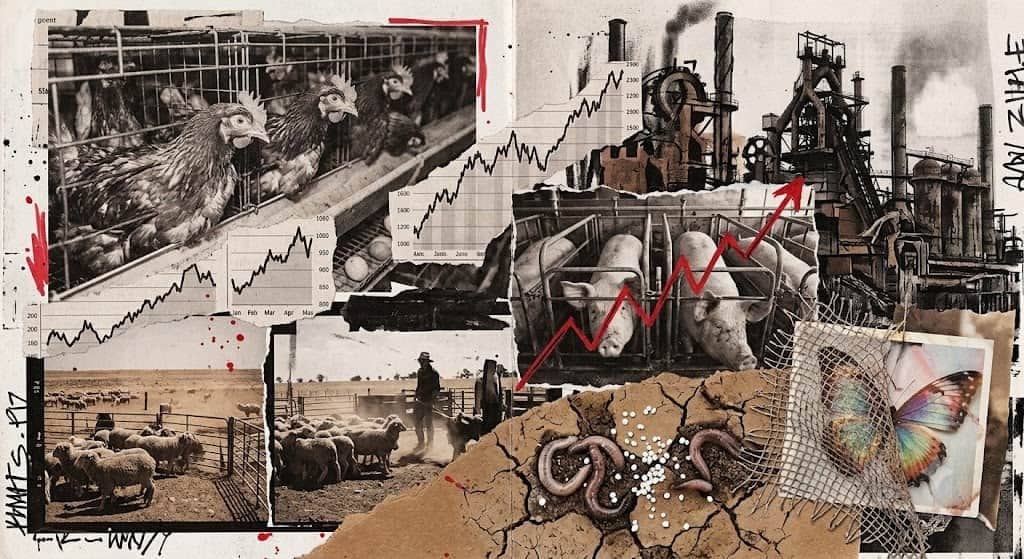
It is also worth understanding exactly where the larger share of the cost goes. The greatest expense falls on fruits, vegetables, milk, eggs, meat, and other fresh and animal-based foods, while grains like rice and wheat remain comparatively cheap. It is during the journey from farm to consumer, through processing, transport, storage, cold chains, and wholesale distribution, that the bulk of the cost is added. The shocking part is that as much as 70 to 75 percent of the total amount a consumer pays for their diet is spent purely within this middle chain. The result is that the farmer does not receive adequate reward for their labour, and the consumer does not get produce at a fair price; both sides end up at a loss. For example, in poor households in India, staple grains like rice and wheat are easily available through government schemes or subsidized markets. However, the prices of pulses, green vegetables, fruits, and milk—the very foods that provide the body with strength and immunity—have risen so much that they are slipping beyond the monthly budget of an ordinary family. The outcome is that while malnutrition and anaemia persist in the country, the inability to afford nutritious food is growing. persist in the country on one hand, the inability to afford nutritious food is growing on the other. This makes one thing entirely clear: merely supplying grain is not enough; the real test lies in delivering nutrient-rich components like fruits, vegetables, pulses, milk, and eggs to every plate at affordable rates. For this, irrigation, cold chains, research, food processing, and the supply chain will all need strengthening, while also curbing food wastage.
The Food and Agriculture Organization has issued another warning in its report: tensions in the Strait of Hormuz and an effective El Niño persisting until the end of 2026 could together place additional strain on global food and fertilizer prices in the period ahead. According to the organization’s Chief Economist, Maximo Torero Cullen, the real crisis facing the world is not a shortage of food but the rising cost of nutritious diets, and boosting local production could bring this cost down significantly.
It must be kept in mind that if nutritious food keeps slipping beyond the reach of the ordinary person, the consequences will not remain confined to hunger alone; they will cast their shadow over children’s growth, women’s health, working capacity, and the country’s overall economic productivity. This malnutrition will hollow out bodies from within, generation after generation. Therefore, India’s goal can no longer be limited merely to “food for all”; it must become “nutritious food for all.” Local production, a strengthened supply system, and nutrition-centred policies are today the greatest need of the hour.
It is said that habits formed on a child’s plate in early childhood shape the direction of health for an entire lifetime. Yet today, essential components like fruits, vegetables, pulses, and dry fruits are gradually vanishing from the plates of millions of children across the world. This reality has come to light through an extensive study conducted by researchers at Tufts University and published in the journal BMJ Global Health. Analysing data from more than 1,248 dietary surveys conducted across 185 countries between 1990 and 2018, the study assessed the consumption, among children and adolescents from birth to nineteen years of age, of five plant-based food groups: fruits, non-starchy vegetables, starchy vegetables, pulses, and nuts and seeds. According to the researchers, these components are important not only for physical growth but equally for learning ability, mental agility, and protection from many diseases later in life; yet, most children eat far fewer fruits and vegetables than experts recommend.
The suicide of a farmer in the field and the vanishing nutrition from a child’s plate may appear as separate events on the surface, but their roots lie buried in the same systemic failure. The farmer does not get a fair return for his sweat, and the consumer does not get the nutrition he needs on his plate, and it is the chain standing between these two ends that keeps reaping the greatest profit. As long as this imbalance within the chain remains uncorrected, this cyclical curse will return every year in a new form, sometimes as a farmer in the field, and sometimes as a malnourished child.
Disclaimer:The views and opinions expressed in this article are those of the author(s) and do not necessarily reflect the official policy or position of The Rift.