Opening The Rift
therift
© 2026 The Rift. All Rights Reserved.
Ganjam 67-Year-Old Widow’s Death by Suicide Linked to Three-Month Odisha Pension Delay; Fact-Finding Report Flags Systemic Governance Crisis, Questions ‘Technical Failure’ Claim
Sabitri Dora’s death is not an isolated personal tragedy but a consequence of systemic failures in the state’s social security pension delivery system.

Key Takeaways
1 of 3
Automatically generated. Read full article for complete context.
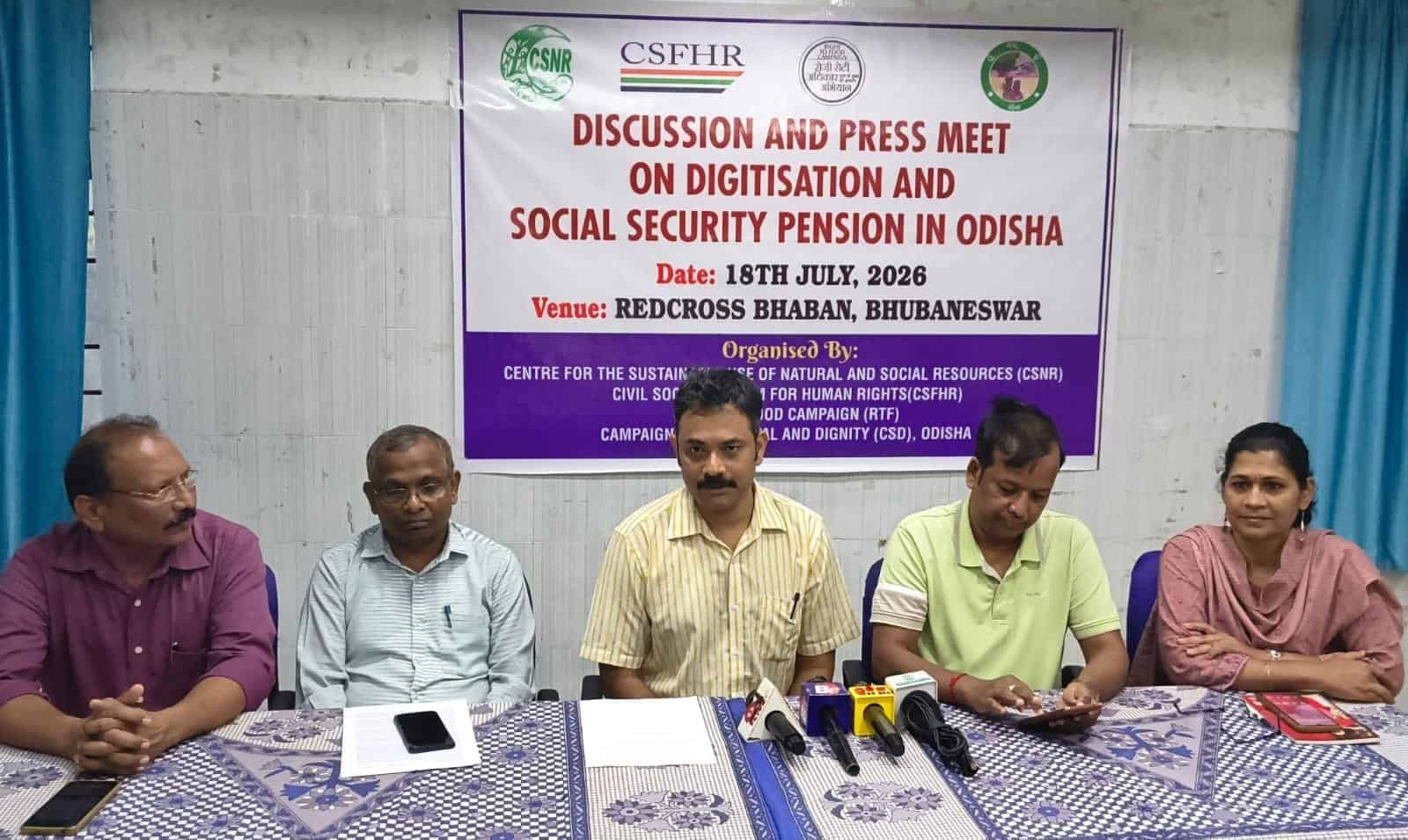
Bhubaneswar, Odisha : At a press conference held on 18 July 2026, a joint fact-finding team comprising Sameet Panda, Convenor of the Right to Food Campaign (RTC); Human Rights Activist Ranjit Sutar, Working Group Member of the Civil Society Forum for Human Rights (CSFHR); Dr. Sricharan Behera of the Campaign for Survival and Dignity (CSD), Odisha Chapter; Rakhi Ghosh, independent journalist; and advocate Sankar Pani, stated that the death of an elderly widow in Odisha’s Ganjam district was not an isolated personal tragedy but a consequence of systemic failures in the state’s social security pension delivery system.
The report, released following a field investigation, documents the circumstances surrounding the death of 67-year-old widow B. Sabitri Dora, a resident of Chadhiapada village under Beguniapada block in Ganjam district. Dora allegedly consumed poison on June 16, 2026, after she reportedly went without her monthly pension of Rs. 1,000 for nearly three months. She died while being taken to MKCG Medical College and Hospital in Berhampur.
According to the report, Sabitri Dora had depended almost entirely on her widow’s pension for food, medicines, and other essential expenses. Her husband had died nearly 17 years ago, and deteriorating health had prevented her from working as a daily wage labourer for the past decade.
Repeated Appeals Went Unanswered
The fact-finding team visited Chadhiapada village on June 24, 2026, where they interviewed Dora’s daughters, neighbours, panchayat representatives and the Beguniapada Block Development Officer (BDO). The team also examined pension records, bank documents and ration-related records.
Family members told investigators that Dora repeatedly visited the Gram PanchayatVillage CouncilThe basic unit of local self-governance in rural India, serving as a village-level administrative body responsible for local development and welfare. office, the block office and her bank to inquire about her pending pension payments after they stopped following her last payment in March 2026. Despite multiple visits, she reportedly received no explanation or interim relief.
On the morning of June 16, she had requested her daughter to accompany her to the block office once again to seek information about the delayed pension. When her daughter asked her to wait, Dora left by herself. A few hours later she was found unconscious near a village pond after allegedly consuming poison.
Statewide Pension Crisis
The report places the incident within a much larger crisis affecting Odisha’s social security pension programme.
According to the findings, approximately 18 lakhIndian Unit of MeasurementAn Indian unit of measurement equal to one hundred thousand (100,000). pension beneficiaries across Odisha experienced delays in pension payments between April and June 2026 due to technical failures in the government’s digital payment system. In Ganjam district alone, more than 1.49 lakh beneficiaries reportedly did not receive their pensions during the same period.
The state government attributed the disruption to software issues linked to the SNA-SPARSHDigital Payment PlatformA specific digital payment platform mentioned in the article, likely a government-developed or utilized system for processing social security payments in India. digital payment platform, through which Direct Benefit Transfer (DBTDirect Benefit TransferA system in India where government subsidies and welfare payments are transferred directly to beneficiaries’ bank accounts, aiming to reduce leakage and delays.) payments are processed. Officials later stated that arrears had begun to be released after the technical issues were resolved.
However, the report argues that the prolonged disruption exposed serious weaknesses in an exclusively digital pension delivery system.
Digitisation Became a Single Point of Failure
One of the report’s strongest observations is that digitisation, while intended to improve transparency and efficiency, became a “single point of failure” when technical glitches prevented millions of vulnerable beneficiaries from accessing their sole source of income.
The investigators argue that elderly widows, persons with disabilities, and destitute senior citizens cannot afford prolonged interruptions in pension payments, and that the government failed to activate any manual or cash-based backup system during the crisis.
The report recommends retaining cash and doorstep pension delivery, similar to Odisha’s earlier “Jan Seva DiwasPublic Service DayA previous model of pension delivery in Odisha, implying a system where money was delivered directly to beneficiaries, possibly at their doorsteps or designated centers, on a specific day each month.” model, alongside digital transfers to ensure beneficiaries are protected during technological failures.
Questions Raised Over Administrative Response
The fact-finding team questioned why repeated complaints made by Sabitri Dora to local authorities did not trigger any intervention.
It also asked why no emergency mechanism existed to identify beneficiaries wholly dependent on pensions and provide temporary assistance during payment delays.
The report further questions the state’s decision to move towards an exclusively AadhaarIndian Unique Identification NumberA 12-digit unique identification number issued by the Indian government to residents, widely used for identity verification and accessing government services and benefits.\-based payment architecture despite the widespread disruption witnessed during April-June 2026.
Statement by Civil Society Organisations and Activists
Gaurang Mahapatra, Convenor of Civil Society Forum for Human Rights(CSFHR), said that after the government introduced the digitalisation process in June, 67 year old widow B. Sabitri Dora’s pension was stopped. Due to not receiving food and money on time, her situation worsened. She repeatedly went to the bank, the block office, and the panchayat office, requesting the release of her money. However, due to problems in the digital process, she could not receive assistance. Gradually, she became financially weak, her mental condition deteriorated, and she ultimately took the tragic step of suicide. We need to examine this system. Reports indicate that around 17 lakh 60 thousand people are facing similar problems. The government must immediately release the pending money of all eligible beneficiaries. If people are pushed into such situations due to digital problems and are deprived of their entitled benefits, the system needs updating. We are not against digitalisation. Digital systems should maintain transparency and accountability. However, if people are unable to access the digital system, the government must create alternative arrangements.
Government officials should visit pension beneficiaries to complete the digitisation process, instead of placing the burden on elderly and vulnerable beneficiaries to visit government offices. He argued that the responsibility for implementing the digitisation process rests with the government and should not create additional hardship for pension recipients. Digitalisation should not become a reason for people to lose access to essential services. The government must ensure that people receive necessary support, including food security benefits such as five kilograms of rice, through an accessible system. The government must become more sensitive, responsible, and accountable regarding such issues.
Mahapatra also placed four key demands before the government and stated our four main demands are: First, an independent inquiry should be conducted into Sabitri’s death and those responsible should be identified, and accountability should be fixed. Second, the government must change the system so that in the future, no elderly person or widow is deprived of pension benefits and forced into such a situation. Third, a proper system should be developed, and an independent investigation should be conducted regarding system’s failure and report made public. Fourth, while implementing digitisation, alternative arrangements must be provided so that no one is excluded and people receive their pensions and entitled benefits on time.
The system must be made accessible and supportive for those who are unable to use digital facilities. Any gaps in the system should be immediately addressed so that such incidents do not happen again.
Sameet Panda, Convenor of Right to Food Campaign (RFC), said that for many years in Odisha, elderly people, widows, and vulnerable sections have been receiving pensions. Every month on the 15th, through Janaseva Divas, money was delivered directly into people’s hands.
But in the name of digitalisation, the entire process has been stopped, and complete dependence has been placed on online transfers. There is no need to provide money only through online transfers. Those who need money directly should be given that facility.
Panda also placed following four key demands before the Government:
- Immediate release of pending pensions and entitled benefits
The government should immediately release the pending pension payments and other rightful benefits of eligible beneficiaries who have been deprived due to problems in the system.
- Fix accountability for the failure of the system
The government should not only blame the system. The responsibility of concerned officials and individuals involved in the process must be identified and accountability must be fixed.
- Conduct a proper investigation and make the findings public
A investigation should be conducted into Sabitri’s death, those responsible should be identified, and the findings should be made public so that similar incidents do not happen again.
- Create an accessible alternative system along with digitalisation
The government should not rely only on digital processes. Alternative arrangements must be provided for elderly people, widows, and vulnerable persons who face difficulties accessing digital systems, ensuring they receive pensions and entitled benefits on time.
When contacted, Dr. Sricharan Behera of the Campaign for Survival and Dignity (CSD), Odisha Chapter, said the death of 67-year-old widow B. Sabitri Dora, who was living alone, reflected a collective failure of the system and what he described as the “collusive and insensitive” functioning of government institutions entrusted with protecting the rights of vulnerable citizens.
Dr. Behera said the government cannot absolve itself of responsibility by citing technical difficulties as the reason for the prolonged delay in pension payments. “Technical problems cannot be an excuse for denying essential social security benefits for such a long period. If a digital system fails, the government must have an alternative mechanism to ensure that eligible beneficiaries continue receiving their entitlements without interruption,” he said.
“Technology is meant to ensure secure, faster, and transparent transfer of benefits to eligible beneficiaries. Contrary to this objective, it cannot become a reason for delaying essential assistance for months without providing an alternative mechanism for delivery. A failure of technology should not result in the failure of the welfare service delivery system,” he added.
“The death of Sabitri Dora is the result of the collective failure of the system, coupled with the collusive and insensitive attitude of the government towards its duty to protect the human rights of the most vulnerable sections of society, particularly elderly persons, widows, single persons, and persons with disabilities. We lost Sabitri Dora because the system failed to respond despite her repeated attempts to seek her assured source of survival-pension. It signifies that the government failed to secure the fundamental human and constitutional rights of one of its most vulnerable citizens. Such a failure is not expected from a welfare state and a democratic country like India,” he said.
From a social perspective, Dr. Behera, who is a practising sociologist, said that the responsibility of caring for elderly persons should not rest solely with the government but must also be shared by families and society.
“Many elderly people are being left alone by their own children and, in some cases, are being sent to old-age homes without adequate family support or care. Many others are forced to depend entirely on government social security schemes for their survival. We cannot place the entire responsibility on the State while neglecting our own social obligations or duties as citizens. Children have a moral and social responsibility to care for their ageing parents who brought them into this world,” he said.
“At the same time, civil society organisations and the government must work together to create greater awareness about citizens’ responsibilities towards elderly persons and strengthen support systems for senior citizens living alone. Protecting older persons requires an accountable welfare system, state policies ensuring accessible old-age care facilities, and a compassionate society,” he added.
When contacted, Human Rights Defender and Working Group Member of CSFHR, Ranjit Sutar, described the prolonged delay in introducing new software or resolving the software update issues as unacceptable and unjustifiable. He stated that if the update has caused technical failures leading to the disruption of pension disbursements, the authorities should immediately roll back the system to the last stable version to restore payments and prevent further hardship for beneficiaries. He also called for accountability from the agencies, engineers, and government officials responsible for the design, implementation, maintenance, and oversight of the software and the digital pension delivery system, emphasizing that technological failures must not come at the cost of citizens’ fundamental entitlements.
Recommendations
Based on the findings of the Fact-Finding Report, the following recommendations are submitted to the Government of Odisha, with an urgent request for prompt and time-bound action on each.
- Release forthwith all pending pension arrears due to Sabitri Dora to her legal heirs, along with any food grain entitlements due.
- Extend appropriate ex gratia relief/compensation to her family and treat the family as a priority for continued welfare support.
- Conduct an independent inquiry—not confined to an internal preliminary inquiry—into her death, expressly examining the three-month pension stoppage as a contributory factor, and place the findings in the public domain.
- Ensure that all (pension ) arrears for April–June 2026 are credited to every affected pension holder across Odisha, with a public, district-wise reconciliation confirming that no one (eligible beneficiary) has been left out.
- Institute a binding service standard requiring pensions to be credited by a fixed date each month (for example, the 15th), with automatic escalation and public reporting whenever disbursal is delayed beyond a defined threshold.
- Establish a real-time, publicly accessible dashboard showing the status of pension disbursals at the district and block levels, so that stoppages are detected and addressed within days rather than months.
- Do not move to an exclusively Aadhaar-based, single-portal disbursal model. Reinstate, both in policy and in practice, a manual/cash and doorstep-delivery option (on the lines of the earlier Jan Seva Diwas) for all pension beneficiaries in the State.
- Mandate an automatic cash/manual fallback mechanism: whenever the digital Direct Benefit Transfer (DBT) channel fails for more than a defined number of days, the block administration must disburse pensions manually or in cash until the digital channel is restored.
- Prohibit the denial or stoppage of pensions on the grounds of pending Aadhaar seeding, e-KYCElectronic Know Your CustomerA paperless process for verifying the identity of customers, often utilizing biometric data and Aadhaar information, to streamline service access., or biometric authentication failure.
- Prioritise doorstep delivery of pensions for bedridden, very elderly, and socially isolated pension holders.
- Maintain a flagged list of “solely dependent” beneficiaries—including elderly single women, widows, persons with disabilities, and destitute persons with no other source of income—for whom any interruption in pension payments is life-threatening, and ensure they receive priority protection during any disruption.
- Require ASHA workersAccredited Social Health ActivistsCommunity health workers instituted by the Government of India’s National Rural Health Mission, serving as a link between the community and the public health system., Anganwadi workersIntegrated Child Development Services WorkersFrontline workers in India’s Integrated Child Development Services (ICDS) program, providing health, nutrition, and pre-school education services in rural areas., ward members, and panchayat functionaries to proactively check on such beneficiaries during any delay in pension disbursal.
- Establish a simple and accessible grievance redress mechanism for pension non-payment at the panchayat and block levels, with a time-bound response system and (a dedicated) helpline, and ensure that it is widely publicised.
- Ensure that every visit or complaint by a beneficiary regarding non-payment is logged/recorded and acted upon, with a designated official made accountable for its timely resolution.
- The Department of Social Security and Empowerment of Persons with Disabilities should conduct and publish a comprehensive review of the April–June 2026 pension disbursal failure—including its causes, the number of persons affected, and the corrective measures taken—and place the report before the State Legislature.
- Facilitate independent civil society monitoring of pension disbursal through the publication of transparent and disaggregated public data.
A Warning Beyond One Case
The organisations behind the report argue that Sabitri Dora’s death represents a broader failure of governance rather than an isolated incident. They contend that while the government eventually released pension arrears to millions after the issue became a public controversy, the delay proved fatal for at least one vulnerable beneficiary who depended entirely on the monthly assistance for survival.
The report concludes that the tragedy demonstrates the need for human-centred social protection systems that prioritise continuity of welfare benefits over technological dependence, warning that without institutional safeguards, similar incidents could recur.
Disclaimer:The views and opinions expressed in this article are those of the author(s) and do not necessarily reflect the official policy or position of The Rift.