Opening The Rift
therift
© 2026 The Rift. All Rights Reserved.
Russia and Ukraine—From Brotherly Neighbors to Victims of Proxy War
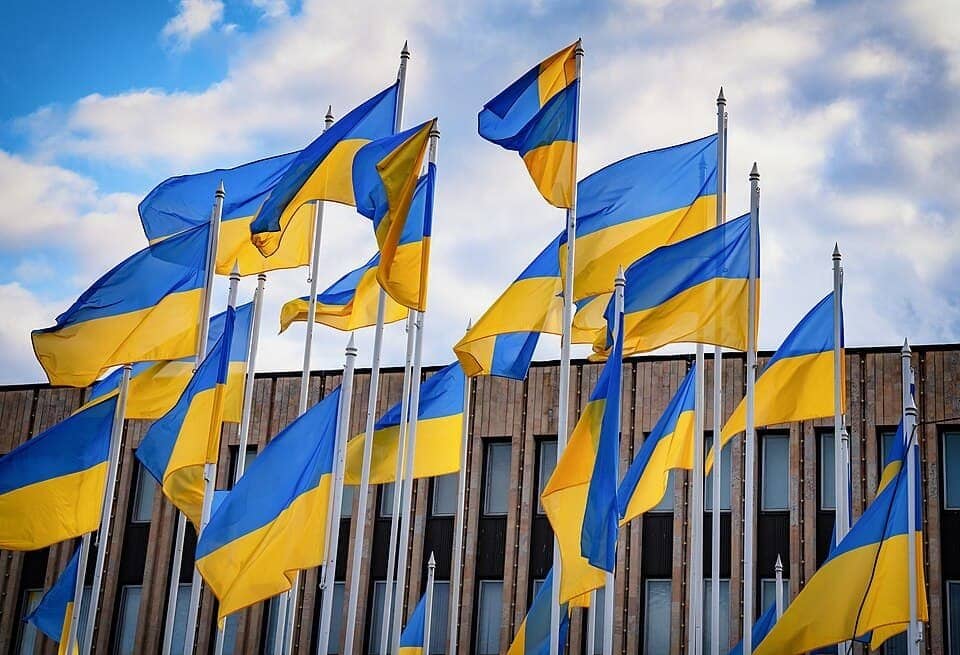
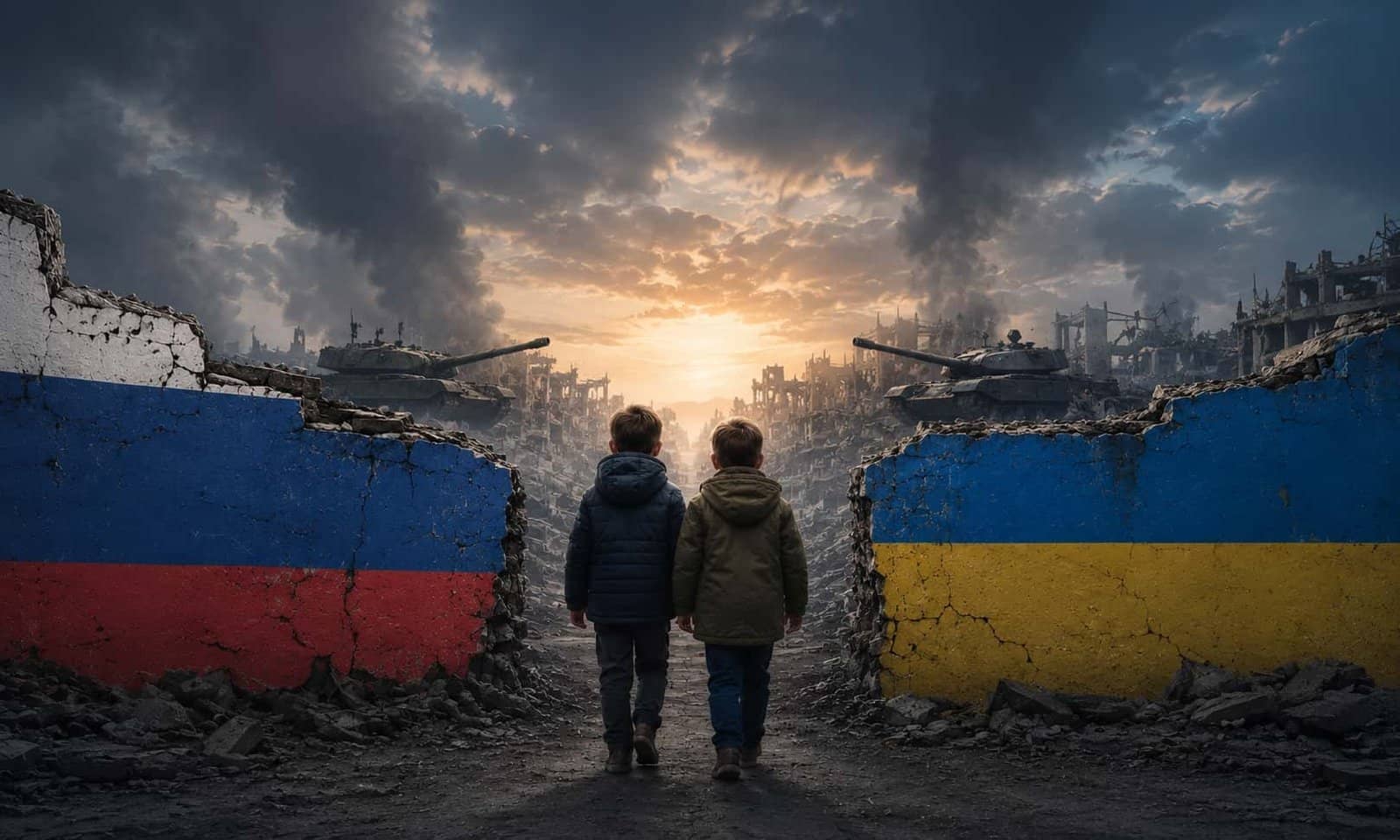
Russia and Ukraine are like brothers who, by cruel circumstances, have been turned into enemies at the instigation of others, leading to a highly destructive war.

Key Takeaways
1 of 3
Automatically generated. Read full article for complete context.
In recent times, all those committed to world peace and safety have been deeply worried about the Ukraine-Russia war getting increasingly prolonged and escalating in dangerous ways.
One aspect of the serious concern relates to the acute human distress associated with this war as nearly a million people are estimated to have been killed or seriously injured and disabled in this war, while around 9 million have been displaced internally and externally. The distress in parts of Ukraine is very acute and in addition the future of the country is badly threatened with increasing debt and concern over who will bear the costs of the huge reconstruction effort that will be required when the war ends.
Ukraine has also seen a population collapse as deaths outnumber births by a huge margin and in addition so many people have left the country. According to recently reported data for the first half of this year (2026) there were 73,292 births compared to 259,353 deaths. In other words, deaths were over three times the births. While before the war the average number of births in a month was 23,000, this has now been reduced to 12,000, as reported recently. 52 million people lived in Ukraine in 1991. In May 2026, Ukraine’s Minister for Social Policy, Denys Uliutin, stated in May 2026 that the number of residents in Ukraine is now 22 to 25 million (as reported by Responsible Statecraft on July 27).
So it is understandable that the war is increasingly unpopular in Ukraine and there have been riots against forced conscription. According to Ukraine’s former defense minister, there are about 2 million draft dodgers and about 200,000 military deserters.
According to a Gallup poll in June 2026, only 24% of the people polled want Ukraine to go on fighting till victory while 66% want a negotiated settlement to end the war as early as possible.
While the distress caused by this war over more than four years has been extremely unfortunate, in addition the risks posed by the escalation of this war into a wider, even world, and potentially nuclear war are even higher and this writer has warned several times regarding this. Several red lines have been increasingly crossed and now with the military help of western and NATO member countries the Russian mainland is being more and more frequently attacked by Ukraine, ultimately raising the risk of a Russia-NATO war which according to some can be stated to have already started and is in an early stage, an extremely dangerous situation.
All this is regrettable in the extreme as there is really no rational reason for Russia and Ukraine to be in a relationship of war, and that too a highly destructive war continuing for over four years. Russia and Ukraine are like brothers who, by cruel circumstances, have been turned into enemies at the instigation of others. Russia and Ukraine have deep cultural and other ties going back to more than a thousand years when the Kyivan Rus’ state was founded in the ninth century. state was founded in the ninth century. In the year 988 the adoption of Christianity further strengthened this unity. In 1654 the Ukrainian CossacksCossacksGroups of predominantly East Slavic people who became known as members of democratic, semi-military communities, predominantly in Ukraine and Southern Russia. They played a significant role in the history of both nations. broke from Polish rule to align with the Russian Tsar. During the Second World War Russian and Ukrainian people together fought the invading army of Hitler. (However, a small minority of Ukrainians sided with Hitler, and it is those who follow this legacy of Nazism who are even now counted as the most hostile to Russia.)
Even a quick look at the map or the globe would reveal that both Russia and Ukraine have everything to gain from friendship and a huge lot to lose from hostility. What is more, friendship with Russia does not preclude Ukraine from benefiting from the friendship of other European countries simultaneously. In fact neutrality is the policy most ideally suited for Ukraine to make the most of friendly relationships with both sides. This ideal situation could not be realized due to increased pressure from the West and NATO on Ukraine to adopt a hostile stance towards Russia.
As Ukraine’s NATO membership has been debated so extensively recently, it is useful to recall that in 2011 NATO had noted with concern the extremely low public acceptability of this membership in Ukraine. This can be seen in a NATO document titled ‘Post Orange Ukraine: Internal Dynamics and Foreign Policy Priorities,’ prepared by the NATO Parliamentary Assembly’s Sub-Committee on Democratic Governance in October 2011.
This document states very clearly, “The greatest challenge for Ukrainian-NATO relations lies in the perception of NATO among the Ukrainian people. NATO membership is not widely supported in the country, with some polls suggesting popular support for it was less than 20 percent.’ Further this document notes that NATO bombing of Belgrade was particularly unpopular in Ukraine.
Despite efforts being made to improve the perception of NATO among the people of Ukraine, this document noted, “for many Ukrainians the image of NATO still evokes a sense of fear.”
It is not just membership; most Ukrainians appeared to also oppose other kinds of close relations with NATO. As this document says, “A majority of Ukrainians supports neither membership of NATO nor even closer cooperation with the Alliance.”
If this was the view of the people, what was the view of the democratically elected government led by President Yanukovych at this point of time (when the document being quoted here was prepared in October 2011)? This document tells us –Mr. Yanukovych made it clear that Ukraine no longer needed NATO membership (though Ukraine’s membership had been accepted as a policy decision at the 2008 NATO summit). The document states–In June 2010, the President signed a bill committing Ukraine to a ‘non-bloc policy,’ meaning non-participation in military-political alliances. which means non-participation in military-political alliances’. What is more, there was also support of important opposition leaders for this. Some opposition leaders believed that Ukraine’s foreign policy had become more balanced.
So if the people, the government, and leading opposition figures were not in favor of NATO membership, the matter should have ended there. However the NATO document did not express its happiness or optimism with this growing agreement in Ukraine for opposing NATO membership. Instead the document expressed the likelihood that this neutrality would end or should end. More precisely, the document stated, ‘There is no consensus in Ukraine on whether maintaining a balanced approach between the West and Russia is possible in the long run.’ It can be argued that these two vectors are at least partly contradictory, and that Ukraine would eventually need to clearly choose its path.” Further this document stated even more clearly that the doors of NATO remain open for Ukraine.
No reasons for taking this position are given in the document, although common sense would suggest the contrary—that a longer-term policy of neutrality would be very useful for Ukraine’s stability and progress. Serious doubts are expressed in the document regarding the continuation of the neutrality path by Ukraine despite growing agreement among the Ukrainians that they needed neutrality and balance.
Others have also pointed out the lack of support for the policy of NATO membership or closer relations with NATO in Ukraine. Professor Glenn Diesen of Norway, in his essay titled ‘Destroying Ukraine with Idealism’ (available on the author’s Substack or the Brave New Europe website, July 17, 2024), wrote, ‘The Western public is rarely informed that every opinion poll between 1991 and 2014 demonstrated that only a very small minority of Ukrainians ever wanted to join the alliance (NATO).’
In addition all the time senior western diplomats, academics and other experts who are known for their commitment to peace have been warning against the eastwards expansion of NATO in general and making Ukraine a member of NATO in particular.
Jack Matlock, a top expert on Soviet affairs in the U.S. Foreign Service and later U.S. Ambassador to Moscow, stated around the time of Russia’s invasion of Ukraine, ‘There would have been no basis for the present crisis if there had been no expansion of the alliance (NATO) following the end of the Cold War.’ He further added, “What Putin is demanding is eminently reasonable.” As is well-known the main concern of Russia at that time was that there should be no NATO membership of Ukraine.
Earlier, Sir Roderic Lyne, former British Ambassador to Russia, had warned in 2020 that it was a huge mistake to push for NATO membership for Ukraine. He stated even more ominously, ‘If you want to start a war with Russia, that’s the best way of doing it.’ (R. Lyne, ‘The UC Interview Series: Sir Roderic Lyne’ by Nikita Gyazin, Oxford University Consortium, December 18, 2020).
Former German Chancellor Former German Chancellor Angela Merkel stated that Russia would interpret the possibility of Ukraine’s NATO membership as a declaration of war. (A. Welsh, ‘Angela Merkel Opens Up on Ukraine, Putin and Her Legacy,’ Deutsche Welle, June 7, 2022).
Earlier, 50 U.S. foreign policy experts, including former senior military officers, diplomats, and senators, had signed a letter titled ‘NATO Expansion: A Policy Error of Historical Proportions.’
So we had a situation around year 2013-14 in which Ukrainian people, government and opposition leaders were against Ukraine’s membership of NATO and prominent western experts and leaders known for desiring peace had serious concerns regarding the high costs and undesirability of NATO membership of Ukraine.
In this situation, the USA and close allies instigated a coup in 2014 to oust Ukraine’s democratically elected government and install a regime that would follow U.S. dictates. As the leaked Nuland-Pyatt phone conversation revealed, the USA was planning a regime change, determining who would be in positions of power, who would be kept out, and how justification for the coup would be found. (BBC, ‘Ukraine Crisis: Transcript of Leaked Nuland-Pyatt Call,’ February 7, 2014).
Ukraine’s General Prosecutor Viktor Shokin later complained that since 2014, ‘the most shocking thing is that all the (government) appointments were made in agreement with the US.’ (Newsweek, ‘Does Ukraine Have Kompromat on Joe Biden,’ August 8, 2023).
Adam Entous and Michael Schwirtz reported in The New York Times (‘The Spy War: How the CIA Secretly Helps Ukraine Fight Putin,’ February 25, 2024) that on the first day following the coup, Ukraine’s new spy chief contacted the CIA and MI6 to establish a partnership for covert operations against Russia (ultimately leading to 12 CIA spying bases along the Russian border). This kind of thing could not have been started so quickly without previous planning.
Hence, what is clear beyond doubt is that the issue of NATO membership did not have roots among the people of Ukraine, and support for this still-pending membership was imposed from outside after creating conducive conditions with a coup and all the follow-up changes.
Furthermore, while it has been frequently alleged that Russia attacked in early 2022 without provocation, Henri Guaino, a top advisor to former French President Sarkozy, wrote in the French newspaper Le Figaro in May 2022 that the U.S.-Ukraine Charter on Strategic Partnership in November 2021 ‘convinced Russia that they must attack or be attacked.’ This expert warned European countries under the strategic leadership of the USA against sleepwalking into a war with Russia. This article was quoted in another widely read article published in The New York Times in the same month (C. Caldwell, ‘The War in Ukraine May Be Impossible to Stop, and the U.S. Deserves Much of the Blame,’ May 31, 2022).
What is more, within days of the Russian invasion, feelers were exchanged for peace negotiations between Russia and Ukraine, and these negotiations had reached an advanced stage until they were sabotaged by the West, with UK’s Prime Minister Boris Johnson dashing to Ukraine and conveying strong Western support for continuing the war.
After this, one red line after another was crossed by the west by making available more and more weapons and intelligence for targeting and other purposes, allowing these to be used for attacking the Russian mainland and on one occasion even a part of the Russian nuclear triadNuclear TriadA three-pronged military force structure that includes strategic bombers with nuclear bombs and missiles, intercontinental ballistic missiles (ICBMs), and submarine-launched ballistic missiles (SLBMs), providing a robust nuclear deterrent.
All this has led to a situation of not just extreme distress but also very high escalation risks that could prove disastrous for the world if they result in a nuclear war.
This is why it is of the highest importance that this war should end as early as possible. It was much easier to stop the war at an early stage in 2022 when advanced peace efforts were sabotaged. Now it is more difficult but also very essential. As this writer has suggested several times earlier, since all differences cannot be sorted out immediately, there should be an immediate end to hostilities with a ceasefire based on the line of actual control (territories controlled by each side at the time of ceasefire). (territories controlled by each side at the time of ceasefire). All other issues, including territorial ones, can be resolved later through negotiations, which can be prolonged but should not be allowed to break down despite efforts by outside forces for further instigation and disinformation. These negotiations should be accompanied by various goodwill gestures and increasing people-to-people contacts.
Disclaimer:The views and opinions expressed in this article are those of the author(s) and do not necessarily reflect the official policy or position of The Rift.