Opening The Rift
therift
© 2026 The Rift. All Rights Reserved.
Legacy of Mahatma Gandhi for Our Deeply Troubled World
The greatest contribution of Mahatma Gandhi may still be waiting to be realized: his ideas harnessed to create a stronger base for peace worldwide.

Key Takeaways
1 of 3
Automatically generated. Read full article for complete context.
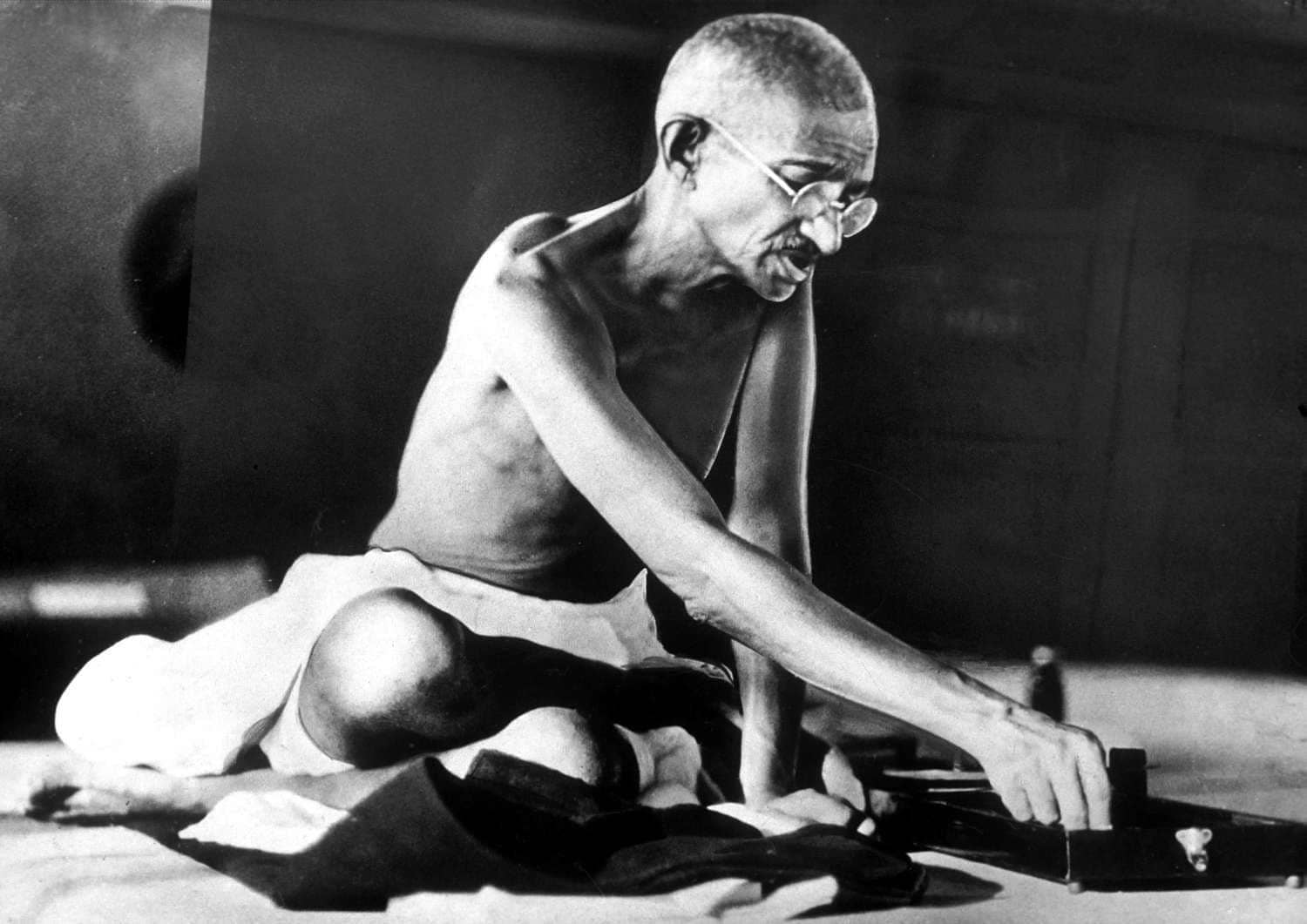
Mahatma Gandhi (1869-1948) stood amidst many difficulties for peace all his life and it was a cruel irony that he died from the bullets of an assassin who had no capacity to understand Gandhi’s essential message of nonviolence.
Louis Fischer wrote at that time, “Just an old man in a loin cloth in distant India, yet when he died, humanity wept.” Albert Einstein wrote, “Generations to come will scarce believe that such a one as this walked the earth in flesh and blood.”
Gandhi died at the age of 78, and now 78 years have passed since he breathed his last. During this period the great value of the essence of his message for peace, for struggles for justice based on nonviolence and for sustainability based in simplicity of personal and community life has increased further.
At a time when wars are becoming easier to start and difficult to end, Gandhi’s message for the path of non-violence in which the possibility of wars as well as many-sided violence in daily life is greatly reduced should get more attention. Gandhi did not just dare to dream that it is possible for humanity to take the less travelled path of nonviolence, he also devoted his life to realizing this possibility in numerous highly creative, innovative and exciting ways. As a result the freedom movement of India during the period of approximately three decades 1917-47 saw innumerable examples of how highly unjust colonial rule could be resisted in nonviolent ways.
Don’t just resist but also reform, don’t just look at the external enemy look at inner weaknesses too. Following this thinking Gandhi also turned his philosophy of nonviolence towards the reform of Indian society to reduce social discriminations, check harmful addictions, promote inter-faith harmony, improve public hygiene and strengthen community life based on equality, simplicity and self-reliance.
In all these diverse activities there is a common thread of nonviolence. Learning to live a life of nonviolence based on a comprehensive understanding helps people to realize the happiness that comes from true love on the one hand and the complete absence of hatred and related feelings on the other hand. This increases happiness and reduces stress in the life of individuals as well as the wider community. There should be no violence towards any other forms of life and towards nature also. Words like environment protection were not much in vogue then but Gandhi’s philosophy of all-inclusive nonviolence, simplicity of life and voluntary reduction of material needs as well his preference for rural communities to be the basic unit of human life all add up to creating a strong base for protection of environment.
Time and again, in several contexts, Mahatma Gandhi did not hesitate to question the most predominant beliefs of his times, whether this related to questioning indiscriminate spread of mechanization or other new technologies, or accepting relentless industrialization of urbanization as the basis for progress. Several of his ideas would be useful for those questioning the indiscriminate spread of AI today.
This willingness to question dominant thinking and concepts while continuing search for more compassionate alternatives has played an important role in the highly durable relevance of these ideas. Several social and environmental movements in India ranging from protecting forests and rivers to protecting livelihoods of farmers and weavers have continued to draw solace and support from the ideas of Mahatma Gandhi and the strong stand taken by him on several issues.
Outside India such prominent social and political leaders as Martin Luther King and Nelson Mandela have acknowledged in glowing terms the contribution of Gandhi’s ideas to their struggles and the importance of his inspirational role. King stated, “Mahatma Gandhi has done more any person in history to reveal that social problems can be resolved without resorting to primitive methods of violence…In our struggle against racial segregation in Montgomery, Alabama, I came to see at a very early stage that a synthesis of Gandhi’s method of nonviolence and the Christian ethic of love is the best weapon available to Negroes for their struggle for freedom and human dignity.”
However, the greatest contribution of Mahatma Gandhi may still be waiting to be realized: his ideas and beliefs being harnessed to create a much stronger base among people worldwide for peace—a base strong enough to significantly reduce wars and the weapons race. Increasing happiness in daily life by reducing violence and helping to save the world by reducing the threats of wars can be the two important sides of such a peace movement.
Disclaimer:The views and opinions expressed in this article are those of the author(s) and do not necessarily reflect the official policy or position of The Rift.
*Mahatma GandhiIndian HistoryMartin Luther King Jr.Nelson MandelaNonviolencePeaceSocial ReformSustainability