Opening The Rift
therift
© 2026 The Rift. All Rights Reserved.
When the Judiciary Shuts Its Doors: A Constitutional Crisis Unfolds
A court that considers the defense of citizens against police brutality to be an improper use of its time is a court that has lost sight of why it exists.

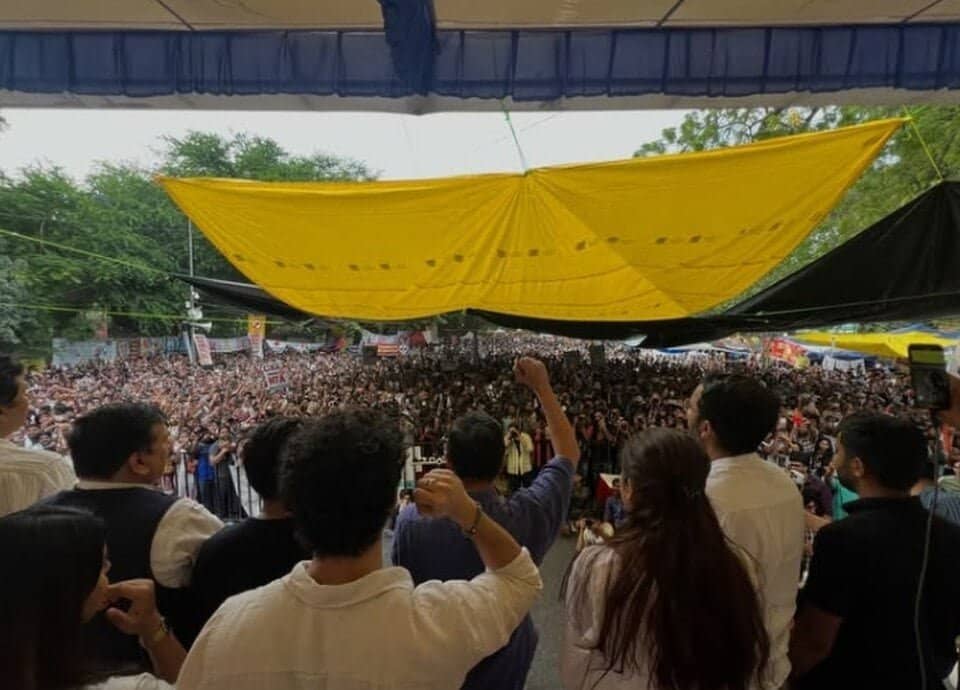
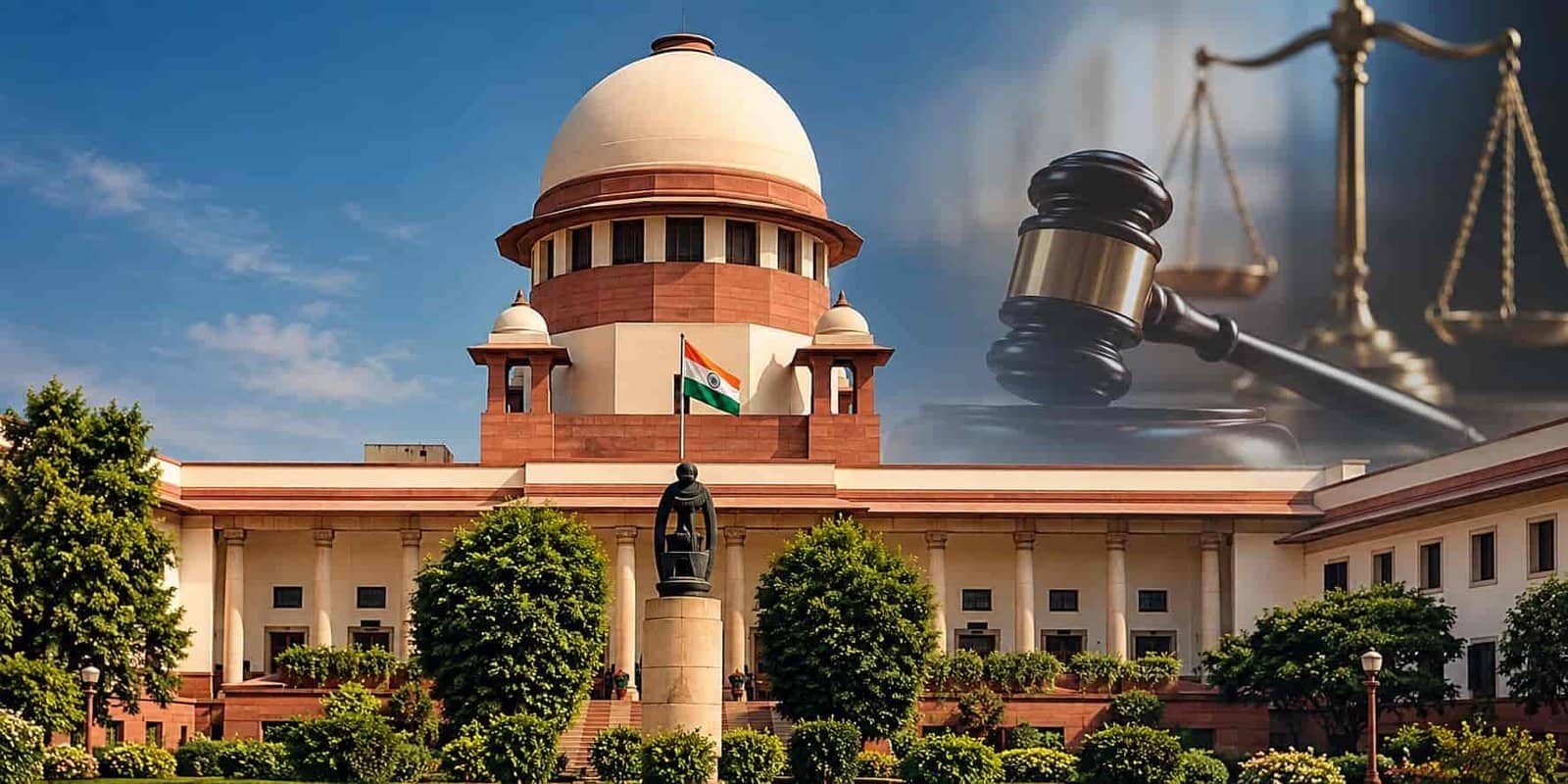
A judiciary in crisis, as doors shut on the rule of law (Representative Image)
Key Takeaways
1 of 3
Automatically generated. Read full article for complete context.
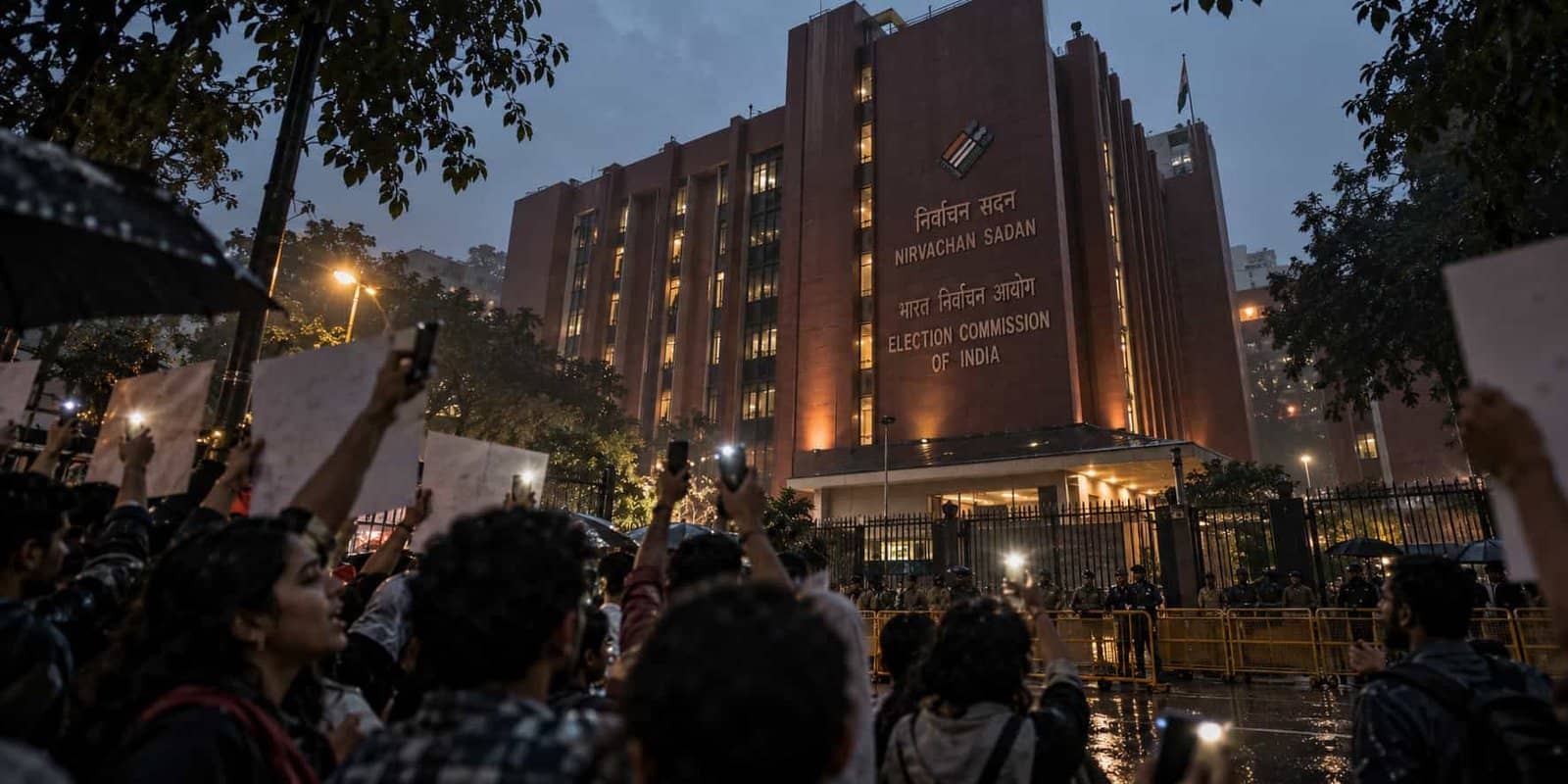
“Mirror Now” carried the following report : Supreme Court Rejects NEETNational Eligibility cum Entrance TestA standardized entrance examination in India for admission to undergraduate medical and dental courses. Protesters Petition Against Delhi Police Brutality : ‘The Supreme Court on Wednesday refused to grant an urgent hearing on a petition seeking a probe into alleged police action against students during the CJP-led ‘Sansad Chalo’ protestCitizens for Justice and Peace (CJP) led ‘March to Parliament’ protestA protest organized by the human rights organization CJP, involving a march towards the Indian Parliament. over the NEET paper leak. Chief Justice Surya Kant declined the request, telling the petitioner’s counsel, “Don’t waste our time, and don’t waste your time.” When the lawyer referred to videos allegedly showing police brutality, the CJI responded, “We are not interested in videos.” The plea sought a court-monitored investigation into the alleged lathi-charge and demanded accountability, while students continued pressing for NTANational Testing AgencyAn Indian government agency responsible for conducting entrance examinations for higher educational institutions. reforms and the Education Minister Dharmendra Pradhan’s resignation.’
The following views are based on the same.
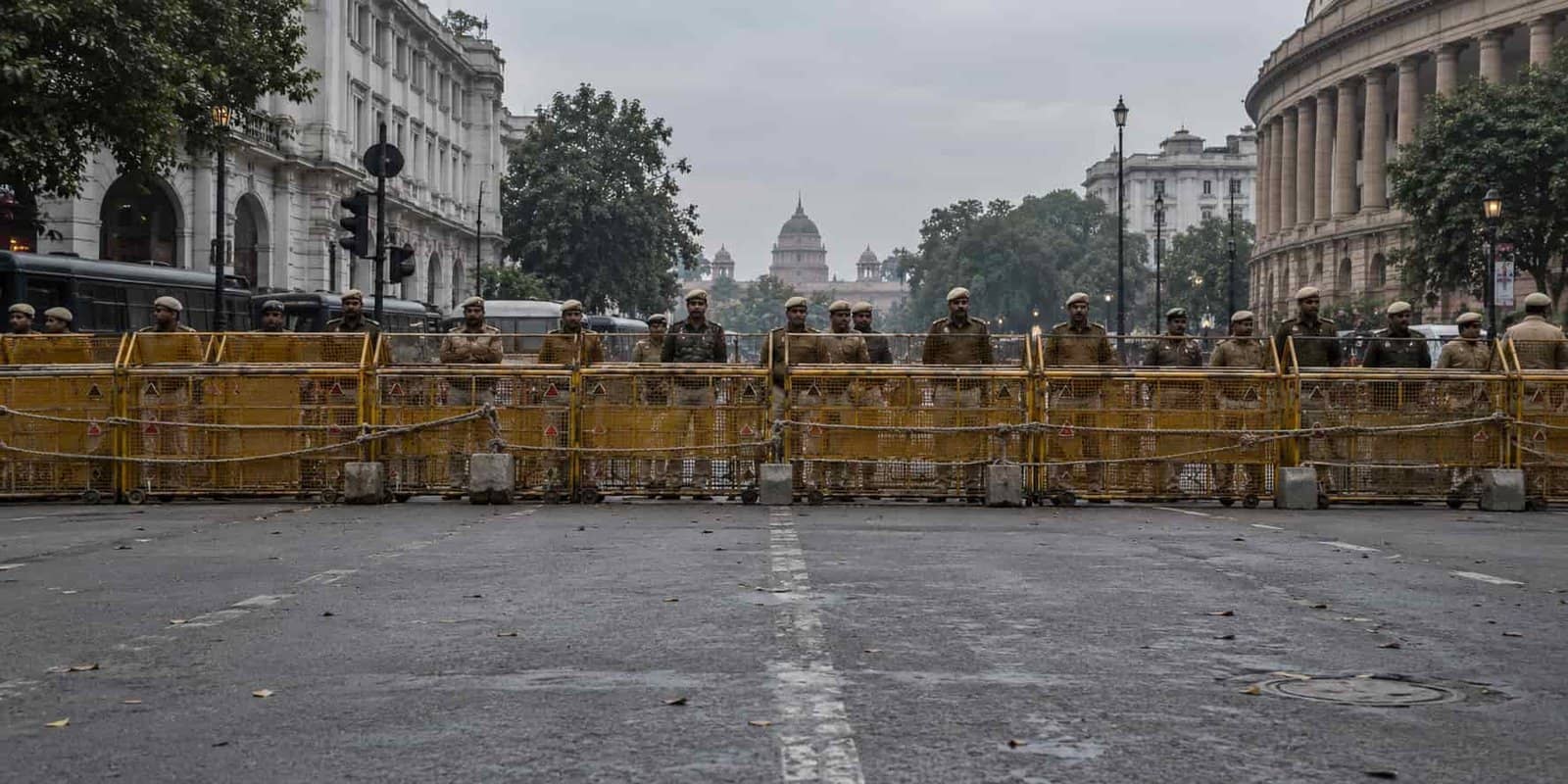
When citizens take to the streets to demand accountability : whether over compromised public examinations, systemic economic distress, or institutional corruption, or for that matter video-recorded police brutality, they do so with a fundamental, constitutional belief: that even if the executive turns a blind eye, the judiciary remains open. They believe that when batons piked with nails in some cases, whether wielded by police personnel or by alleged police personnel in plain clothes, strike unarmed protesters and tear gas fills the capital’s air, the highest court in the land will act as an unyielding shield.
Yet, when a constitutional court dismisses a plea for urgent intervention against alleged police brutality with the observation as reported that the Court’s time should not be wasted, coupled with a refusal to look at video evidence of state-executed violence, a profound constitutional crisis unfolds.
To label pleas against state brutality as a “waste of judicial time” is to fundamentally misunderstand the raison d’êtreReason for ExistenceThe most important reason or purpose for someone or something’s existence. of a constitutional court. Police excess is not merely a localized law-and-order issue : it is a direct assault on the fundamental rights guaranteed under Articles 19 and 21 of the ConstitutionFundamental Rights in the Indian ConstitutionArticle 19 guarantees freedoms like speech and assembly, while Article 21 protects life and personal liberty..
When video evidence documenting state actors inflicting violence on citizens is dismissed at the threshold with statements suggesting specific judges are not interested in videos as they do not have time to watch them, a regrettable message is sent to the populace. It suggests that visual proof of high-handedness holds no weight, that executive impunity is insulated from immediate judicial scrutiny, and that procedural technicalities or docket congestion outweigh human bodily integrity as well as honouring of Constitutional guarantees. If looking at evidence of citizens being beaten on the streets is a misapplication of judicial hours, what urgent matters could possibly eclipse the preservation of constitutional liberties? The question arises in the context of allegations being made on one hand of modified items of assault and resulting grievous injuries and all of those naturally bound to be denied on the other, with the added issue of the allegation of some of the participants being not regular police personnel but stormtroopers of a certain ideology using illegal methods to break up what is claimed to be a legitimate protest, and the video evidence being critical to establish who is and is not a member of the police forces and who is or is not responsible for what acts of omission or commission.
If a constitutional court : armed with the power of judicial reviewPower of Courts to Examine LawsThe power of courts to determine whether a law or government action is constitutional and to strike down those that violate constitutional principles. and the solemn duty to protect fundamental rights : declines to examine state excess because it lacks “time” or does not appreciate immediacy of required steps, one is forced to ask : What exactly are the courts established for?
They cannot become mere forums for corporate arbitrations, property disputes, constitutional issues, and high-stakes commercial litigation, reduced to administrative clearing houses while civil liberties bleed on the pavement and habeas corpusLegal Writ for Detention ReviewA legal action that requires a person under arrest to be brought before a court or judge, especially to secure the person’s release unless lawful grounds are shown for their detention. matters await attention?
Courts of record were not created merely to keep docket numbers moving or to avoid friction with the executive branch. They were forged as the ultimate bulwark against tyranny, arbitrary state action, and executive overreach. When the judiciary shuts its doors on citizens seeking immediate protection against state violence, it risks abdicating its core constitutional function. A court that considers the defense of citizens against police brutality to be an improper use of its time is a court that has lost sight of why it exists.
When citizens seek immediate judicial intervention against alleged police brutality, they invoke a foundational premise of constitutional democracy. Far from being an administrative interruption, the protection of personal liberty and bodily integrity against state excess sits at the absolute core of a constitutional court’s mandate. Examining whether the summary rejection of such urgent pleas aligns with settled domestic jurisprudence and international human rights obligations invites a closer look at the established role of apex courts.
Under Indian constitutional law, the Supreme Court has repeatedly affirmed that access to constitutional remedies under Article 32Right to Constitutional Remedies (India)A fundamental right in the Indian Constitution that guarantees the right to move the Supreme Court for the enforcement of fundamental rights. is an integral part of the basic structure of the ConstitutionDoctrine in Indian Constitutional LawA principle that certain fundamental features of the Indian Constitution cannot be altered or destroyed by a constitutional amendment.. Landmark rulings such as D.K. Basu v. State of West BengalLandmark Indian Supreme Court Judgment (1997)This case laid down detailed guidelines to be followed by police and other agencies during arrest and detention to prevent custodial violence and ensure human rights. established that the judiciary bears a sacred duty to safeguard individuals against custodial violence and executive overreach.
The jurisprudence of the Supreme Court has consistently recognized that procedural technicalities or docket constraints cannot override the enforcement of fundamental rights under Article 21. When photographic or video evidence of alleged state-sponsored high-handedness is presented at the threshold, refusing to entertain or examine the material under the rubric of time constraints runs counter to the active monitoring role carved out in public interest and human rights litigation. Precedents demand that allegations of gross human rights violations by state actors require heightened judicial vigilance, not swift dismissal.
Looking beyond domestic borders, apex courts in other established democracies approach allegations of urgent executive excess with rigorous, immediate scrutiny. Jurisdictions such as South Africa, under its Constitution, treat the enforcement of Bill of Rights guarantees as an overriding priority where the life and physical security of citizens are threatened by state agencies. Similarly, the jurisprudence of the European Court of Human RightsInternational Court for Human Rights in EuropeAn international court established by the European Convention on Human Rights, which rules on individual or state applications alleging violations of civil and political rights. emphasizes that under Articles 2 and 3 of the European Convention on Human RightsKey Rights in European Human Rights LawArticle 2 protects the right to life, and Article 3 prohibits torture, inhuman or degrading treatment or punishment. : protecting the right to life and prohibiting inhuman or degrading treatment : states have a substantive and procedural obligation to conduct prompt, effective investigations into any credible allegation of police brutality.
Furthermore, India is a state party to the International Covenant on Civil and Political Rights (ICCPR). Article 2(3) of the ICCPRObligation for Effective RemedyThis article obligates state parties to ensure that any person whose rights or freedoms are violated shall have an effective remedy, enforced by competent judicial authorities. obligates state parties to ensure that any person whose rights or freedoms are violated shall have an effective remedy, enforced by competent judicial authorities. International standards dictate that systemic or acute allegations of state violence cannot be sidelined by administrative convenience without risking a breach of international treaty commitments.
The Purpose of a Constitutional Court
Constitutional courts are established precisely to act as a counter-majoritarian checkJudicial Power to Invalidate LawsThe power of a court to invalidate laws or actions of the elected branches of government, even if those laws or actions reflect the will of the majority. against executive overreach and state impunity. While docket management is a practical necessity for any high-volume judicial system, it remains a secondary administrative function subservient to the primary constitutional duty of protecting life and liberty. When a court of last resort declines to examine urgent grievances involving state violence, it risks creating an accountability vacuum, testing the boundaries of the rule of law and the foundational social contract between the citizen and the state.
In the architecture of modern litigation, visual evidence occupies a uniquely decisive tier. If a picture is worth a thousand words, a video is worth a hundred thousand, capturing the unbroken, dynamic reality of a disputed event frame by frame. When state actors are accused of high-handedness, the institutional standard operating procedure from police departments and government bodies is almost invariably one of categorical denial. Official reports routinely sanitize incidents, framing baton charges and tear gas deployment as measured responses to public disorder. A picture speaks a thousand words while a video speaks a hundred thousand, and as State authorities are expected to deny any wrongdoing a video would have constituted undeniable essential material.
Against a backdrop where institutional reflex prioritizes denial, objective visual documentation ceases to be mere supplementary material. It becomes the singular equalizer between an unarmed citizen and the coercive apparatus of the state. A video cuts through bureaucratic obfuscation, recording the exact trajectory of a baton, the posture of a protester, and the absence of provocation in real-time.
When a constitutional court is presented with such digital evidence, refusing to view it or setting it aside under the justification of time constraints strips the citizen of their most potent evidentiary tool. Without the judiciary’s willingness to confront moving images of state action, the institutional reflex of denial goes unchecked, leaving victims with no viable mechanism to pierce the shield of executive impunity.
Choosing not to look at contemporaneous video evidence of police brutality creates an evidentiary void that heavily favours the state. It can be read as signal that photographic or videographic proof of structural excess holds little weight at the threshold stage of a petition. For a constitutional court tasked with safeguarding life and liberty, looking away from readily available visual records of state violence risks reducing the pursuit of justice to an exercise in procedural abstraction, detached from the lived reality unfolding on the streets.
The citizens remain confident that the Constitutional Courts will respond to the demands of the time and deliver justice, calling all guilty to account and dispensing harsh punishment that pre-empts such misadventures by State as well as non-State actors in the future, reassuring the citizens that an off the cuff remark of a court pressed for time among increasing pressure of pendency does not define it. Its responsiveness and its remaining moored to its constitutional responsibilities and duties takes precedence, and that mooring defines both its credentials and its primary focus on dispensing justice to the citizen, especially in the face of competing claims on its time.
Jai Hind
Disclaimer:The views and opinions expressed in this article are those of the author(s) and do not necessarily reflect the official policy or position of The Rift.