Opening The Rift
therift
© 2026 The Rift. All Rights Reserved.
When the Witness Cannot Come to Court: A Judgment Worth Noticing
An elderly widow, recently bereaved, should not have to travel across cities to tell a court what she knows. She should be able to tell it from where she is.

Key Takeaways
1 of 3
Automatically generated. Read full article for complete context.
A Punjab and Haryana High Court order quietly does what courts are supposed to do: adapt the law to human reality.
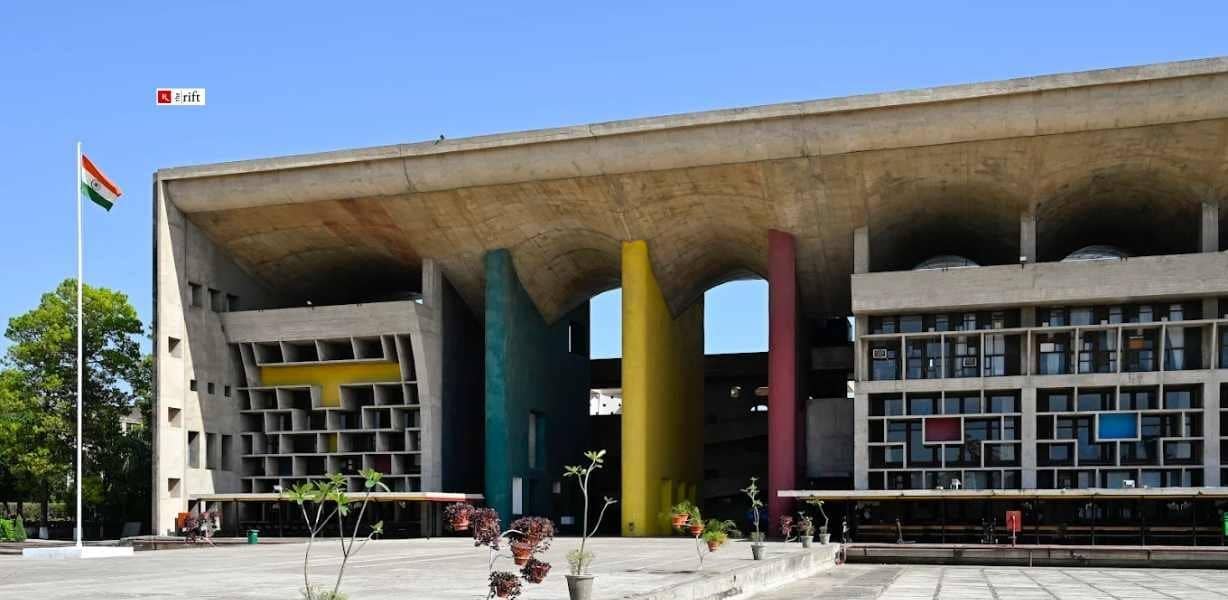
On 27 May 2026, Justice Virinder Aggarwal of the Punjab and Haryana High Court allowed a civil revision petitionCivil Revision Petition (Article 227)A petition filed in a High Court challenging an order of a subordinate court, asserting that the lower court exercised its jurisdiction illegally or with material irregularity. in Ashwani Kumar Sharma v. Rama Rani Sharma and Others (CR-4160-2026). The order is nine pages long and involves a Will dispute. It will likely not make headlines. But it deserves attention — because it addresses a question Indian courts have fumbled for years: when a witness is old, unwell, and physically unable to travel, must justice wait, or worse, fail altogether?
The answer the High Court gave is worth reading carefully.
The Dispute in Brief
The underlying case concerns the succession and inheritance of the estate of one Smt. Prabha Kanta Sharma, with the petitioner relying on a registered Will dating back to 1979. The respondents sought a declaration that this Will was forged and fabricated. At the centre of the evidentiary dispute was a single crucial figure: Dr. Plom Khurana, the attesting witness to the Will — the one person whose testimony could speak to whether the document was genuine.
The petitioner applied to the Trial Court to record Dr. Khurana’s testimony through video conferencing. The reason was straightforward: she is approximately 78 years old, resides in Gurugram, and at the time of the application, was attending to her husband, who was suffering from Stage-IV cancer alongside severe cardiac ailments and diabetes. Physical travel to Chandigarh to depose before the court was, practically speaking, impossible.
The Trial Court dismissed the application. Its reasoning was telling: “the mere age without any ailment of the witness is not a ground to exempt her from appearing in the court.” It offered cost compensation for travel as a remedy.
What the Trial Court Got Wrong
The Trial Court’s reasoning reflects a mindset that Indian civil courts have long struggled to shed, one that treats physical presence before a judge as the only legitimate form of deposition, and views any departure from it as an indulgence rather than a right.
The court did acknowledge that Dr. Khurana’s testimony was “essential for the just decision of the case.” It even recognised her age and offered travel cost compensation. And yet it still dismissed the application because, in its assessment, no specific ailment of the witness herself had been pleaded to prevent travel.
This was a misreading of both the facts and the law. The application did not rest solely on the witness’s age. It rested on a constellation of circumstances: her advanced age, her role as the sole caretaker of a critically ill spouse, and the practical impossibility of leaving Gurugram under those conditions. The Trial Court chose not to engage with this in any meaningful way.
The High Court called this out directly: the impugned order was passed “in a wholly mechanical and perfunctory manner, without due application of judicial mind to the facts and circumstances specifically pleaded in the application.”
The Infrastructure Was Already There
What makes this case more than a routine revision is what the High Court pointed to next. The Punjab and Haryana High Court has already framed Video Conferencing RulesVideo Conferencing RulesGuidelines formulated by High Courts to formalize the use of virtual hearings, standardizing processes like identity verification, document transmission, and oath administration across lower courts. — under Articles 225 and 227 of the Constitution — to govern exactly this kind of situation. These are not aspirational guidelines. They are a comprehensive framework: covering witness identity verification, oath administration, document transmission to witnesses in advance, audio-visual recording, signature protocols for transcripts, and even provisions for examining a witness from their own location using a portable video conferencing system when they cannot reach any court point.
Rule 8.15 of these Rules explicitly provides that where a required person “is not capable of reaching the Court Point or the Remote Point due to sickness or physical infirmity, or presence of the required person cannot be secured without undue delay or expense, the Court may authorize the conduct of video conferencing from the place at which such person is located.”
This provision, designed precisely for situations like Dr. Khurana’s, was apparently not applied — or even considered — by the Trial Court. The High Court noted this failure plainly: the Trial Court had “failed to adequately consider the Rules framed by this Court as well as the technological infrastructure specifically established for facilitating judicial proceedings through video conferencing.”
On the Question of Document Identification
The Trial Court had expressed a concern that deserves acknowledgement, even if the court’s ultimate conclusion was wrong: since Dr. Khurana was being called to identify signatures and “other material circumstances surrounding the Will,” her physical presence was said to be necessary.
The High Court dismantled this cleanly. Rule 8.4 of the Video Conferencing Rules already provides that documents to be relied upon must be transmitted to the witness in advance of the examination, so the witness can familiarise herself with them. Rule 8.5 further provides that where examination concerns a particular document, a certified copy must accompany the summons, and the original exhibited at the Court Point. The mechanism for doing exactly what the Trial Court feared could not be done showing documents to a remote witness and putting them to her is already built into the existing framework.
There was, in short, no procedural impediment. The Trial Court manufactured one.
Why This Matters Beyond One Witness
India has an ageing population and a creaking court system. Millions of cases involve witnesses who are elderly, ill, or simply too far away to appear practically without enormous hardship. The question of how courts accommodate such witnesses is not peripheral to justice it is central to it.
The pandemic forced Indian courts to engage with virtual proceedings at scale, and most did. But the lessons have not uniformly taken hold. Trial courts across the country still default to physical presence as the norm, and treat virtual examination as something requiring extraordinary justification, even when the law and the infrastructure say otherwise.
The Punjab and Haryana High Court’s Video Conferencing Rules and the Supreme Court of India’s own guidelines on the subject reflect a clear legislative and judicial intent: technology should be used to make justice accessible, not to replace human judgment, but to extend its reach. A witness who cannot come to court should not, by that fact alone, lose the ability to testify or be heard.
What the High Court did in this case was enforce that intent against a Trial Court that had ignored it. That enforcement matters.
A Note on What the Judgment Does Not Say
Justice Aggarwal took care to clarify that the order confines itself entirely to the procedural question of how the witness will testify — not to the underlying dispute about the Will’s authenticity. The observations “are confined solely to the adjudication of the limited issue arising for consideration in the instant proceedings and shall not be construed as a determination of any substantive issue of fact or law involved in the main matter.”
This is the correct and careful approach. The High Court did not prejudge whether the Will is genuine or forged. It simply ensured that the person best placed to speak to that question will actually get to do so on terms that are practically workable for her.
That is what procedural justice looks like when it is functioning properly.
Ashwani Kumar Sharma v. Rama Rani Sharma will not be cited in constitutional law textbooks. But for practitioners and litigants navigating Indian civil courts, it is a useful reminder: the infrastructure for video conferencing exists, the rules have been framed, and courts that ignore them in favour of mechanical adherence to physical presence are not just being inconvenient they are acting contrary to the law.
An elderly widow, recently bereaved, should not have to travel across cities to tell a court what she knows. She should be able to tell it from where she is. That should not require a revision petition to the High Court. But when it does, at least the High Court gets it right.
Disclaimer:The views and opinions expressed in this article are those of the author(s) and do not necessarily reflect the official policy or position of The Rift.
*LawCivil ProcedureIndian JudiciaryJustice Virinder AggarwalLegal TechPunjab and Haryana High CourtVideo Conferencing