Opening The Rift
therift
© 2026 The Rift. All Rights Reserved.
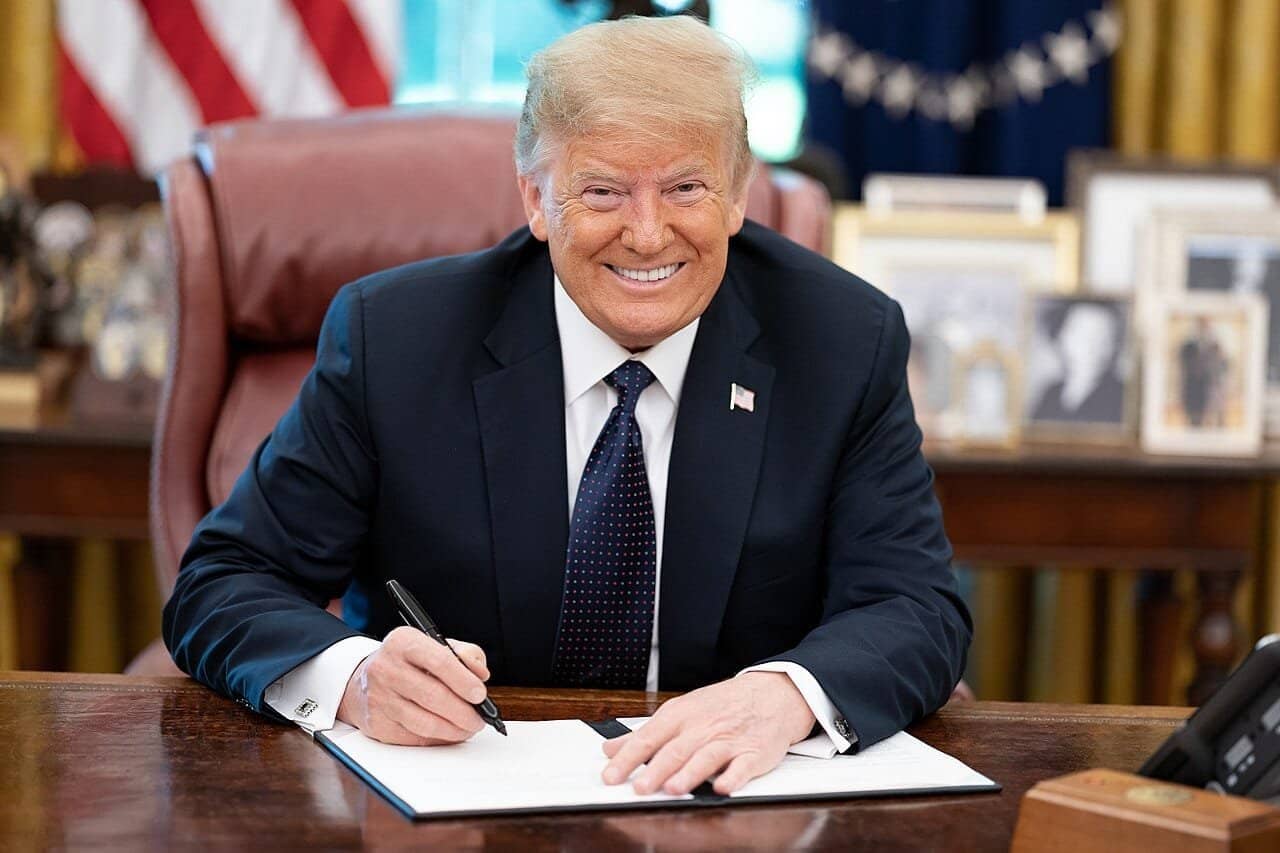
Trump’s America First doctrine stumbles as key allies turn their backs
A doctrine that measures success solely by how many adversaries it can pressure will eventually look around to find it has run out of allies.

Key Takeaways
1 of 3
Automatically generated. Read full article for complete context.
Foreign policy is rarely broken by a single catastrophic explosion; more often, it fractures through the steady accumulation of friction until a single 24-hour cycle reveals that the architecture has collapsed. In a hypothetical scenario under a second Donald Trump administration, the structural strains of transactional diplomacy reach a simultaneous breaking point: in the span of one business day, three pivotal, semi-aligned nations formally recalibrate their strategic orientation away from Washington.
Whether through a sudden trade rupture, a rebuffed security overture, or the final exhaustion of patience with erratic executive ultimatums, losing three key potential partners in twenty-four hours serves as a stress test for the “America First” doctrine. The consequences of such a triple rupture would ripple instantly through global markets, congressional corridors, and the long-term calculus of American hegemony.
The Mechanics of a Triple Severing
To understand the consequences, one must first construct the mechanism of the blow. Picture three distinct regional linchpins—a vital Indo-Pacific democratic anchor, a crucial Middle Eastern energy heavyweight, and a key European economic pivot—reaching the exact same conclusion on the same morning: that alignment with the United States under Trump’s current framework carries a higher domestic and strategic cost than strategic autonomy or hedging toward Beijing and Moscow.
Perhaps it is triggered by an abrupt, uncoordinated tariff announcement that blindsides a primary trading partner, a public diplomatic humiliation of a visiting head of state, and a broken security assurance that exposes a regional partner to existential risk. Whatever the specific catalyst, the result is a coordinated or parallel diplomatic retreat. Ambassadors are recalled for consultations, pending bilateral trade frameworks are suspended, and intelligence-sharing protocols are quietly downgraded.
This isn’t merely a temporary cooling of relations; it is a structural realignment. In foreign affairs, momentum is everything. When three key middle powers move away from Washington simultaneously, it validates the idea that the United States is no longer a stable or predictable partner. The psychological impact on other nations watching from the sidelines is immediate, signalling that the risks of remaining under the American umbrella may now outweigh the benefits.
Immediate Economic Volatility and Market Shocks
The first and most violent consequence would be registered not in foreign capitals, but on Wall Street and within the Federal Reserve. Modern American economic prosperity is deeply tethered to integrated supply chains, cooperative regulatory environments, and the global dominance of the dollar. The simultaneous loss of three key partnerships would immediately inject toxic levels of uncertainty into global financial markets.
Investors, already jittery over recurring tariff threats and the weaponization of economic trade policy, would view a triple diplomatic fracture as the precursor to full-scale commercial isolation. Capital would flee domestic equities as multinational corporations face retaliatory blockades, secondary sanctions tangles, and the instant evaporation of preferential market access.
For an administration that treats the stock market as the ultimate real-time approval rating of its statecraft, a sudden multi-front economic freeze would trigger a frantic scramble. Yet, the traditional levers—tweets, threats of larger levies, or demands for personal audience—would fail. When partners decide to absorb short-term economic pain to escape long-term unpredictability, the leverage of the world’s largest economy begins to hollow out, leaving executive policy exposed as surprisingly limited in its reach.
The Structural Collapse of the “Dealmaker” Model
At the core of the Trump foreign policy ethos is the belief that international relations are fundamentally transactional – that grand bargains can be struck through sheer force of personality, bilateral leverage, and zero-sum pressure. The simultaneous loss of three partners shatters this illusion on the world stage.
In diplomacy, partners do not merely buy and sell; they coordinate expectations. When an administration treats alliances as protection rackets or dispensable overhead, it incentivizes those partners to build alternative insurance policies. A triple departure signals to the rest of the global community that Washington’s word is strictly episodic—good only until the next domestic news cycle or executive whim.
Other nations watching the fallout would accelerate their own hedging strategies. Middle powers across Latin America, Africa, and Southeast Asia would conclude that relying on American security or economic guarantees is an unacceptable liability. Instead, they would lean further into multilateral frameworks managed by rival powers, accelerating the fragmentation of the post-war international order into regional spheres of influence where American influence is systematically locked out.
Domestic Political Firestorms and Institutional Friction
Domestically, a foreign policy crisis of this magnitude would detonate a fierce partisan firefight in Washington. Congressional hawks, internationalists, and economic conservatives who had previously tolerated or championed elements of the populist agenda would face an immediate dilemma. The long-standing narrative of strength and “Winning” would collide directly with the stark reality of diplomatic isolation.
Opponents in Congress would point to the empty chairs at negotiating tables as evidence of a diminished America—isolated, distrusted, and increasingly irrelevant to major global problem-solving forums. Business lobbies, agricultural exporters, and defense contractors would mount an intense, public counter-offensive against the White House, demanding a return to predictable, institutionalized diplomacy to protect their supply chains and export markets.
Furthermore, this fracture would exacerbate deep divisions within the administration itself. National security advisers, diplomatic staff, and economic teams would find themselves at odds with executive instincts, leading to high-profile resignations, leaks, and institutional paralysis. The narrative that personal charisma could substitute for formal alliance structures would be thoroughly dismantled by the very institutions tasked with maintaining American power.
The Geopolitical Void and Competitor Gains
America’s primary strategic competitors—principally China and Russia—would step immediately into the vacuum. Geopolitics abhors a void, and when Washington alienates or abandons potential partners, Beijing’s state-directed capital and Moscow’s cynical offers of unconditioned security cooperation instantly look like viable alternatives to targeted nations.
China, through initiatives like the Belt and Road, would move rapidly to offer economic lifelines, infrastructure financing, and trade agreements to the alienated partners, permanently shifting their economic orientation away from Western markets. Meanwhile, Russia could capitalize on security voids, offering arms sales and mercenary support without the human rights conditions or erratic policy shifts associated with Washington.
The long-term cost of this dynamic is not just lost diplomatic capital; it is the quiet, systematic rewiring of global trade routes, financial clearing systems, and security architectures. Standards for critical technology, telecommunications, and energy transition would increasingly be set in Beijing and Brussels rather than Washington, cutting American firms out of the most lucrative markets of the next century.
The Strategic Paradox of Unilateralism
Ultimately, a single day in which the United States loses three key potential partners exposes the core paradox of modern American unilateralism: the harder an administration squeezes to extract compliance, the more it incentivizes the world to slip out of its grip.
Trump’s worldview assumes that America possesses an unshakeable, permanent monopoly on leverage. But power in the twenty-first century is porous, dispersed, and highly adaptive. Sovereigns—democracies and autocracies alike—ultimately prioritize regime survival, economic resilience, and strategic dignity. When U.S. policy threatens all three simultaneously, even traditional friends will choose to exit the relationship. A doctrine that measures success solely by how many adversaries it can pressure will eventually look around to find it has run out of allies – leaving the nation not stronger and more sovereign, but profoundly alone in an increasingly perilous world.
Disclaimer:The views and opinions expressed in this article are those of the author(s) and do not necessarily reflect the official policy or position of The Rift.