Opening The Rift
therift
© 2026 The Rift. All Rights Reserved.
Thoughtful community efforts for justice, peace and protection of environment
Ultimately most urgently needed change in the world will come not just from the actions of a few leaders or summits, but from the strong base for most meaningful change created by people.

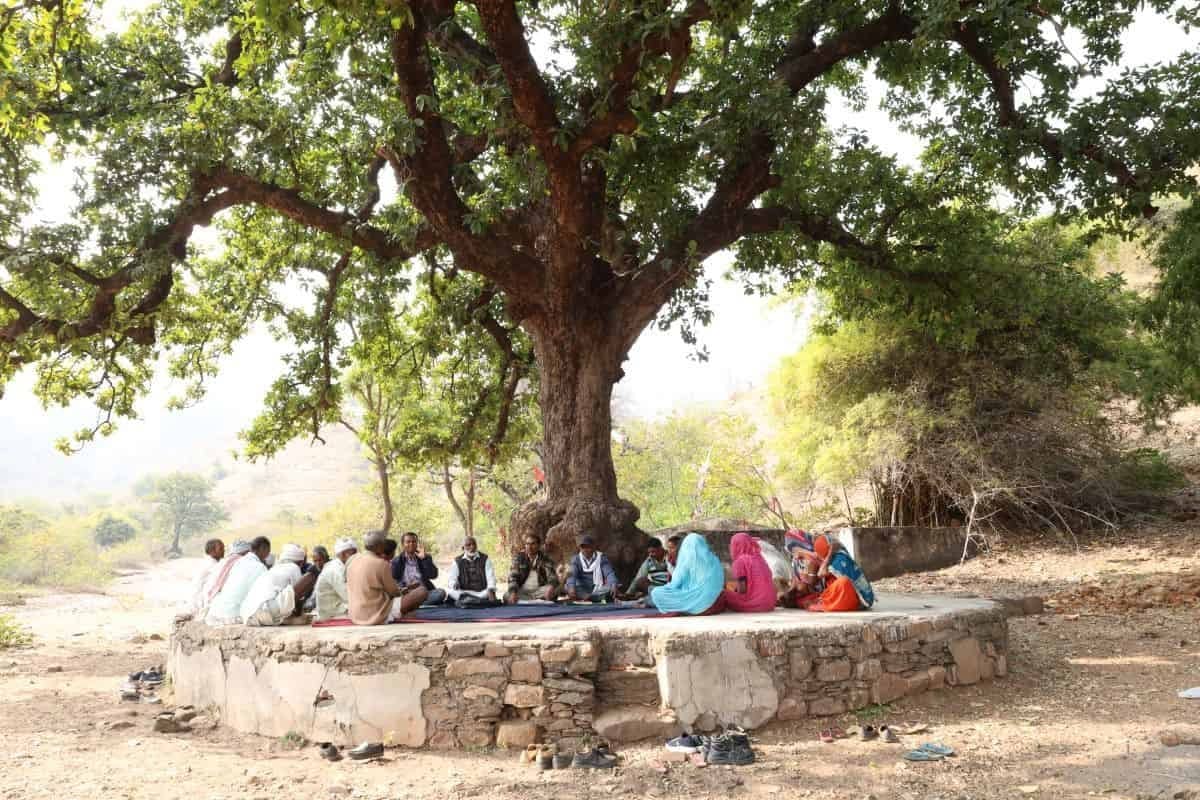
Community members unite for a cause, promoting justice, peace and protection of the environment
Key Takeaways
1 of 3
Automatically generated. Read full article for complete context.
In our world facing many-sided problems, there is an increasing need for thoughtful community efforts which help to create a base at the grassroots for peace, justice and protection of the environment. Such efforts not only resolve problems at the local level, but also contribute valuable experiences of peaceful ways of bringing justice and strengthening sustainable livelihoods while also improving climate resilience. Many such sincere and sustained efforts taken together can contribute to bringing the most desirable changes at a wider level, offering much-needed hope to a deeply troubled world. Ultimately, the most urgently needed change in the world will come not just from the actions of a few leaders or summits, but from the strong base for meaningful change created by people.
It is in this wider context that the initiatives of several organizations that have been making sustained efforts in this direction should be carefully examined for their achievements as well as their learning experiences. Seva Mandir is one such organization making these efforts in hundreds of villages for several decades. Its work has been inspired by the vision of Dr. Mohan Singh Mehta, who despite serving as India’s ambassador to several countries and as Vice Chancellor of Rajasthan University, was even more keen to make a durable contribution to reducing the distress of marginalized people and opening the door to realizing their potential for achieving significant justice-based goals of development and environmental protection. These sincerely held convictions, shared with several colleagues, culminated in the establishment and progress of Seva Mandir (SM).
In the course of its multifaceted initiatives over the decades, SM has emerged as a leader in several important but neglected areas of protecting the ‘common goodCommon GoodRefers to those facilities, whether material, cultural, or institutional, that the members of a community provide to all members in order to fulfill a relational obligation they have to care for certain interests that they share in common.’ of communities, such as regeneration of pastures and community forests. In this context, SM has recorded significant achievements, although even bigger challenges await in the near future. As Ronak Shah who has led several SM initiatives says, it is not just the achievements but the processes of equality and peace-based mobilization of people and bringing together communities for common objectives that are important for meaningful change. The patient, often prolonged consensus-building, with all views heard and differences resolved in non-violent ways, contributes significantly to peace and unity, strengthening the community’s capacity for not just the ongoing work but for future initiatives too.
Narendra Jain, General Secretary of SM, adds that these processes are important for an understanding within the community of who can best take forward the welfare of the entire community, overcoming narrower thinking. On this basis, local leadership emerges with wide community support.
With the increasing recognition of problems like climate change, deforestation and water crisis as life-threatening at a global level, the long experience of SM in protecting forests and pastures, afforestation, water conservation and watershed developmentWatershed DevelopmentA process of integrated management and conservation of land, water, and biomass resources within a specific geographical area (watershed) to achieve sustainable production and minimize environmental degradation. has become more important. With a more recent emphasis on natural farmingNatural FarmingAn ecological farming approach that emphasizes working with natural processes rather than against them, often involving minimal human intervention, no-till methods, and avoidance of synthetic fertilizers and pesticides. and rural energy initiatives, SM has further strengthened its climate resilience model in hundreds of villages.
There are several structural causes of inequalities and not all of these can be removed by voluntary organizations, even at village level. However, what efforts at such a level can achieve is to try to ensure that villages move more in the direction of increasing justice and equality, while at the same time removing or reducing various social discriminations, be they based on caste, faith, or gender. This is what SM has sought to achieve with clarity and commitment in its work area.
This has also created opportunities for an increasing number of persons from weaker sections of society and for women in particular to come forward in highly creative and beautiful ways to make multifaceted social contributions, apart from improving the socio-economic condition of their own households. Baba Amte once said, “Our villagers don’t need charity, they need opportunity.” This can be seen clearly in the achievements of many social leaders and achievers, particularly from marginalized and weaker sections, who emerged in SM’s work areas once opportunities for their potential to flower were created.
Such initiatives have not been confined to villages. In Udaipur city, for example, women in slum areas have responded in highly encouraging ways with development and social successes once some opportunities were created by SM initiatives. In the context of solid waste management, SM’s model has been based on making sanitation a people’s effort, making participation in it more a matter of social respect than stigma, integrating increasing dignity and encouragement for sanitation workers as an essential component. This model has yielded highly encouraging results in several small towns and peri-urban areasPeri-Urban AreasTransitional zones located on the outskirts of cities, characterized by a mix of urban and rural features, often experiencing rapid development and environmental changes., extended later to villages too. As a result, several heritage sites of South Rajasthan have cleaner surroundings, opening up the space for a potentially bigger initiative in the near future covering more areas.
While the successes in SM work areas have been seen more in development and social contexts, the processes should also receive better recognition in terms of their ability to improve social mobilization for united community actions. In the context of issues like removal of encroachments on common land, the possibilities of violence or longer-term hostilities can be avoided.
These processes have provided increasing occasions and opportunities for communities to get together for thoughtful and democratic deliberations to resolve important problems. These efforts are often successful, but even if these are not, or success falls short of expectations, the community has important lessons and hence progresses in the course of making these efforts.
Certainly some mistakes are also made occasionally, and in particular, the leadership of yesteryear may not be able to understand entirely the needs of the younger generation. So there must be increasing room for self-corrections and in particular for better understanding the aspirations and thinking of the younger community members, without sacrificing the many valuable lessons from the past.
Such efforts based on peace, justice and protection of the environment will be increasingly important in the coming years as the world seeks new and different pathways for emerging out of the multifaceted serious crisis in which it is increasingly caught.
Disclaimer:The views and opinions expressed in this article are those of the author(s) and do not necessarily reflect the official policy or position of The Rift.