Opening The Rift
therift
© 2026 The Rift. All Rights Reserved.
Timely Warning—Covert Regime Change Operations Significantly Increase Risks of Civil Wars
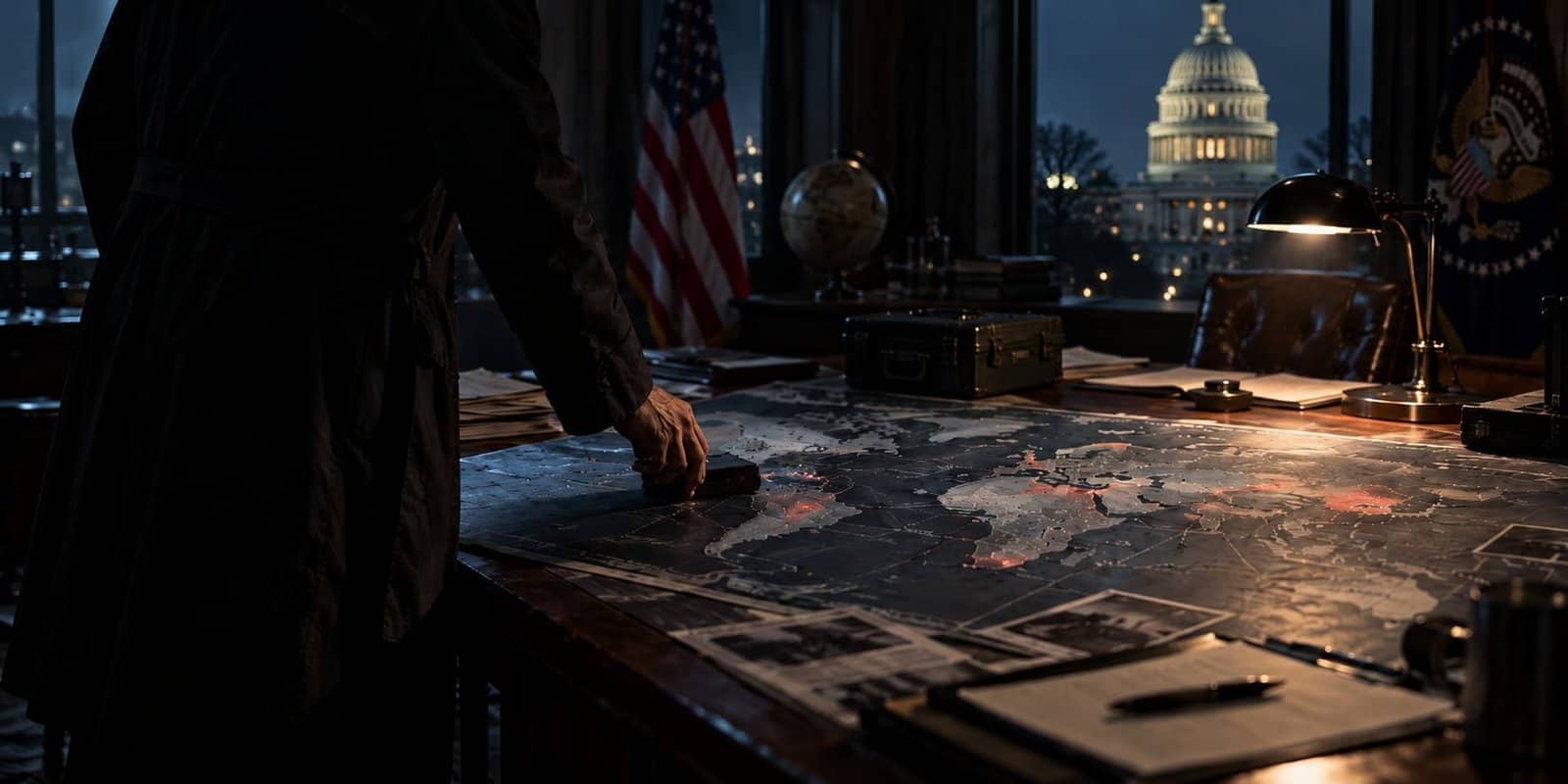
The clear verdict of this study is that in foreign countries where the US attempted covert regime change, the threat of civil war almost doubled while the threat of at least one episode of mass killings more than tripled.

Key Takeaways
1 of 3
Automatically generated. Read full article for complete context.
At a time of increasing covert regime change operationsClandestine Political InterventionsSecret actions undertaken by one state to influence or overthrow the government of another state, often without public acknowledgment or direct military invasion. and related activities, some important findings of a highly significant study of durable value need to be re-emphasized. These clearly show that when covert regime change operations are launched, these significantly increase the risks of civil wars and mass killings, apart from having other highly distressing impacts.
The reference here is to a study of such operations of the USA specifically during the Cold War years. However when this study by Associate Professor Lindsey A O’Rourke (Boston College and earlier University of Chicago) was first published in 2018 by the Cornell University Press under the series on Cornell Studies in Security Affairs with the title ‘Covert Regime Change—America’s Secret Cold War’, this was updated in the form of a chapter on post-cold war years and a few other additions.
This book, “which assembles an original dataset of 64 US secret operations to overthrow foreign governments” is winner, International Studies Association’s ISSS Best Book Award. The Journal of American History has called this book “A well-executed, valuable study.” This book with extensive notes and references is likely to be the most useful book on this subject at present.
This study clearly says that the probability of civil war increases in countries affected by US covert regime change operations. As Chapter 4 of this book tells us, “the base line probability that a foreign country would experience a civil war within a given ten-year period during the Cold War was roughly 19.9 per cent. However this number grows to 39.7 per cent for countries that had experienced a US-backed covert operation within the preceding ten years. This effect was consistent for both successful and failed covert operations.”
There is an even bigger increase when considering the issue of mass killings. As this book says, “The base line probability that a foreign country would experience an episode of mass killing within a given ten-year period during the Cold War was roughly 16.5 per cent. This number grows to 55.2 per cent for countries that had experienced a US-backed covert operation.”
Thus the clear verdict of this study is that in foreign countries where the US attempted covert regime change, the threat of civil war almost doubled (from 19.9 per cent to 39.7 per cent) while the threat of at least one episode of mass killings more than tripled (from 16.5% to 55.2%).
This is a very significant finding of this important book which the world should always remember, particularly now when regime change operations are increasing.
While the author of this study identified 64 case of covert regime interventions of the USA during the cold war years, this identification is related to methodological issues which may exclude several other widely discussed cases of US covert regime change interventions such as those in Indonesia in 1965 which claimed the life of between 500,000 to one million people (although a previous case from Indonesia is identified by the author), Pakistan, Bangladesh and India.
Out of the 64 cases identified by the author, 25 of US covert operations saw a US-backed government assume power, whereas the remaining 39 failed to achieve such a goal. Although sometimes it is believed that mainly communist and left regimes were targeted, the study discussed here demolishes this myth, as it tells us clearly, based on the 64 interventions studied, that “these missions targeted all types of states: adversaries and allies, powerful and weak, democratic and authoritarian, communist and capitalist.”–in other words anyone who in the perception of the US policy makers of the day appeared to be resisting some important objective of US goals, in order to protect national interests or related objectives.
Sometimes the US also obtains help of close allies in such efforts. As this book says (Chapter 1), “Sometimes Washington conspired with other countries to topple a foreign government; at other times, the US government intervened alone.”
In addition this study makes it clear that although its scope is mainly the Cold War period 1947-89, covert regime operations of the USA have continued after this. This book says very clearly (Chapter 1), “each American administration in the post-Cold War era has embraced regime change…This preference for regime change seems unlikely to change anytime soon.”
Another myth that has been widely spread is that the USA promotes democracy with such operations (in themselves inherently secretive and anti-democratic). On the contrary this study tells us very clearly, “The United States supported authoritarian forces in 44 out of 64 regime changes, including at least six that sought to replace liberal democratic governments with illiberal authoritarian regimes.” What is more, “states targeted in a covert regime change operation appear less likely to be democratic afterward and more likely to experience civil war, adverse regime change, or human rights abuses.”
This study states (Chapter 2), “America’s covert operations habitually violated norms of justified intervention: Washington installed brutal dictators. It broke international law. It collaborated with many unsavory organizations, including violent secessionist movements, authoritarian death squads, religious extremists, Mafioso, drug traffickers, and numerous groups known to have committed mass killings. The United States also pursued numerous regime changes for objectives akin to preventive war and was embroiled in several plots involving the assassination of foreign leaders.” Regarding East Europe, including Ukraine, this study says (Chapter 6), “the United States knowingly backed illiberal nationalist groups, many of whom had ties to the Nazis during World War II.”
Despite this, a lot of the intervention is done in the name of improving democracy. Earlier most of this work too was done directly by the CIA, but later organizations like the National Endowment for Democracy (NED) were created. Explaining its role, the director of NED stated in 1991, “A lot of what we do today was done covertly 25 years ago by the CIA.” Further explaining the reasons for this, NED President explained in 1986, “It would be terrible for democratic groups around the world to be seen as subsidized by the CIA.”
During various missions, the US government first provided funding to the NED, which in turn allocated funds to the four ‘core’ constituencies. These groups then distributed grants to selected foreign political parties, dissident movements, student groups, labor unions and civic organizations in the target states. This study reminds us, “This structure is reminiscent of the CIA’s earlier political action and psychological warfare operations, and many of NED recipients had longstanding ties to the CIA.” Pro-American elites training, mass media, propaganda and education received emphasis. (Chapter 3).
Despite all the care taken to promote pro-American outcomes, so many uncertainties were involved that at times even senior US intelligence operatives appeared to be fed up. Thus Director of Central Intelligence William Webster once stated in sheer exasperation that while covert action has been assigned to ‘us’ this “attracts the most heat, the most confusion, and generates the most ill ease and suspicion.” Certainly no person of clear ethical values would like to be associated with actions that promote civil wars, and this highly recommended, invaluable book by Lindsey A. O’Rourke gives a clear verdict against covert regime change operations, even while realistically stating that these are likely to continue.
While this book is basically about Cold War years and only very partially updated until around 2018 or so, readers are also likely to be interested in the latest situation, which is really very worrying, as seen in the recent events of several countries like Venezuela, Iran, Brazil, Bangladesh and others. As seen in these and some other recent experiences, the strategy appears to be to relentlessly promote one-sided narrative in which nothing good about a government is mentioned and only criticism is promoted, resulting in public resentment and anger much beyond what is justified by the real situation. This is then incited in certain chosen contexts in such a way that instead of emphasizing solution based democratic initiatives, chances of confrontations increase, and these confrontations are then taken up more in sensitive places where repressive action to protect high security zones is more likely. The repression then provides the ground for more incitement, and so the spiral continues till the goal of regime change, which is introduced in due course into protests which initially start with different stated aims, is achieved. Such conditions are very shrewdly created that participation in all this appears to be highly exciting while issues like imperialism are forgotten. At the same time several exaggerated reports of repression and the imminent crumbling of the regime are circulated all the time. Clearly, very experienced hands are at work here in all this.
Such regime change could be achieved in Bangladesh with the ouster of Prime Minister Sheikh Hasina in Bangladesh (much earlier her father and most other family members were killed in a mass assassination which has been linked by reputed scholars to wider regime change). The top leader and the first lady could also be removed in a different way in Venezuela. In Brazil, the situation is uncertain after the first stage of the election. However, regime change has been prevented in Iran, although a very significant part of the national leadership was killed in an open attack.
Learning from all this, and also from the inevitably tragic consequences of almost all covert regime change operations (including substantially enhanced possibilities of civil wars), it is the duty of all governments, opposition parties, social movements, communities, and people to protect their country from any covert or overt regime change operations to the extent that it is possible for them, if and when they become aware of the existence of their operations. In any such situation there should be broad-based efforts for national unity. The government’s concern should be not just immediate self-preservation but protecting the interests of people. As pointed out in the data quoted above, covert regime change operations bring massive distress to people regardless of whether these succeed or not, and so the government should have a wider aim of protecting the short and the long term interests of people and the country above all. For this the government should have the ability to convey the truthful situation to the people, as well as the ability to adopt pro-people steps, based on equality and justice for all, so that very broad-based unity to together protect the true interests of the country and the people can be forged.
Disclaimer:The views and opinions expressed in this article are those of the author(s) and do not necessarily reflect the official policy or position of The Rift.
*Covert OperationsCivil WarInternational RelationsMass KillingsNational Endowment for DemocracyRegime ChangeUS Foreign Policy