Opening The Rift
therift
© 2026 The Rift. All Rights Reserved.
Electoral Genocide: Deletion as Ontological Murder
When a name is deleted from the electoral roll, a body does not die, but a person ceases to be counted as a person in the republic.

Key Takeaways
1 of 3
Automatically generated. Read full article for complete context.
SIR, ECI, AND THE SOCIAL ONTOLOGY OF DELETION; AMBEDKAR, POONA PACT, PRESIDENTIAL ORDER 1950, AND IMAYAM’S, ENQUIRING IDENTITY
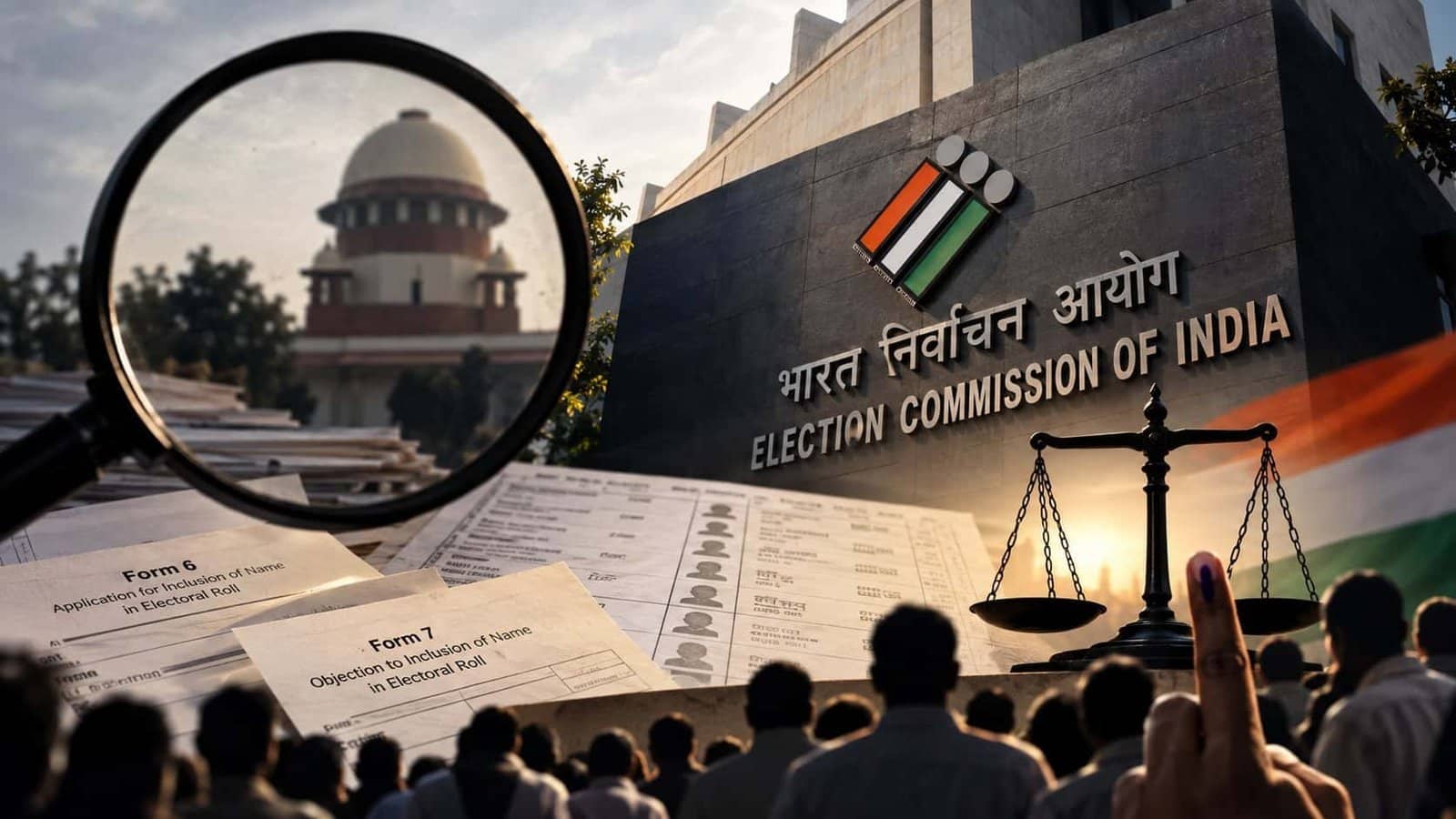
When a name is deleted from the electoral roll, a body does not die, but a person ceases to be counted as a person in the republic. This is not an administrative correction; this is an ontological murder. When the ECI calls Special Intensive Revision, the street calls Vote Chori, the Dalit scholar calls social death.
ELECTORAL GENOCIDE AS A CONCEPT: FROM PHYSICAL TO ONTOLOGICAL ERASURE
Genocide, as Raphael Lemkin defined in 1944 and as Polly Higgins extended to ecocide, is not only the killing of bodies but the destruction of the conditions that allow a people to exist as a people, Electoral genocide is the lesser-known cousin: the systematic, bureaucratic, legalized deletion of a social group from the demos, so that they continue to live, work, clean, build, vote with their labour, but are not counted as voters who can decide their destiny.
The ongoing Special Intensive Revision (SIR) of electoral rolls, and the simultaneous Special Summary Revision (SSR) in 17 States ordered by the Election Commission on October 15, 2026, has triggered what protesters in Hyderabad’s Tank Bund on October 24, in Delhi near Bangla Sahib Gurdwara on the same day where over 100 were detained under BNSS Section 163, in Mumbai University’s Kalina campus on October 23, in Agartala where INDIA bloc planned a rally on October 30, have called mass deletion. The figure shouted on the streets is 13.4 crore deletions across India. The Election Commission has not confirmed or denied it; it has capped bulk Form 7 filings after reports of mass objections filed by unknown persons. To understand why SIR is felt as genocide and not mere technical exercise, we need Ambedkar’s social ontology.
AMBEDKAR ON SOCIAL ONTOLOGY AND SOCIAL MOBILITY: WHO IS A PERSON IN INDIA?
B.R. Ambedkar did not write about voting lists. He wrote about something deeper: who is considered a person in Hindu social order. In Annihilation of Caste (1936), and Who Were the Shudras? (1946) And The Untouchables: Who Were They and Why They Became Untouchables (1948), and his magnum opus, What Congress and Gandhi Have Done to the Untouchables (1945), Ambedkar lays a social ontology, a theory of being. In Brahmanical ontology, a human is not born equal, a human is born into varna, and varna decides whether your existence is counted as sacred or polluting. The Dalit, in this ontology, is not a non-person by accident; he is a non-person by design, an impure body whose labour is necessary but whose presence must be kept outside the village, outside the temple, outside the agrahara, and, we now add, outside the electoral roll. Ambedkar’s concept of graded inequality, Annihilation of Caste, Section 12, is crucial. Caste is not just inequality; it is a system where each caste is unequal to the one above and below, so that no collective consciousness of the oppressed can form. Brahmin at top, Shudra at middle, Ati-Shudra at bottom, and among Ati-Shudras, the scavenger is lower than the leather worker. This gradation ensures that the moment a Dalit claims mobility education, property, vote he is pushed back by the caste immediately above him who fears losing relative superiority.
Social mobility for Ambedkar, therefore, was never merely economic mobility from poverty to middle class. It was ontological mobility, from being counted as a thing to being counted as a person. Conversion, education, political reservation, separate electorate, all were tools of ontological mobility, of forcing Hindu society to count Dalits as equals. In his States and Minorities (1947), submitted to the Constituent Assembly, Ambedkar demanded separate settlement, state socialism, and a Bill of Rights that would make liberty, equality, fraternity enforceable not just against the state but against society. Because, as he warned on November 25, 1949, political democracy without social democracy is top-dressing on Indian soil which is essentially undemocratic.
SIR must be read against this social ontology. When the ECI demands documentary proof, birth certificate, parents’ birth proof, continuous residence proof, linking with ECINET, it assumes a Savarna ontology of settled, propertied, documented life. The Brahmin has ancestral home, land records, and school certificates. The Dalit agricultural labourer in Kalaburagi who migrated to Bengaluru to work as pourakarmika, who was born at home not hospital, whose mother was never registered, whose hut was demolished without notice, has no such documents. When her name is deleted as “unverifiable,” the state is not correcting a roll; it is repeating the old Manu code: you are impure, you cannot be counted. Ambedkar would have called SIR what he called the village system: a device to keep Dalits as bahishkrit, outcasts, from the political village.
POONA PACT AND THE ORIGINAL SIN OF ELECTORAL DELETION: 1932-2026
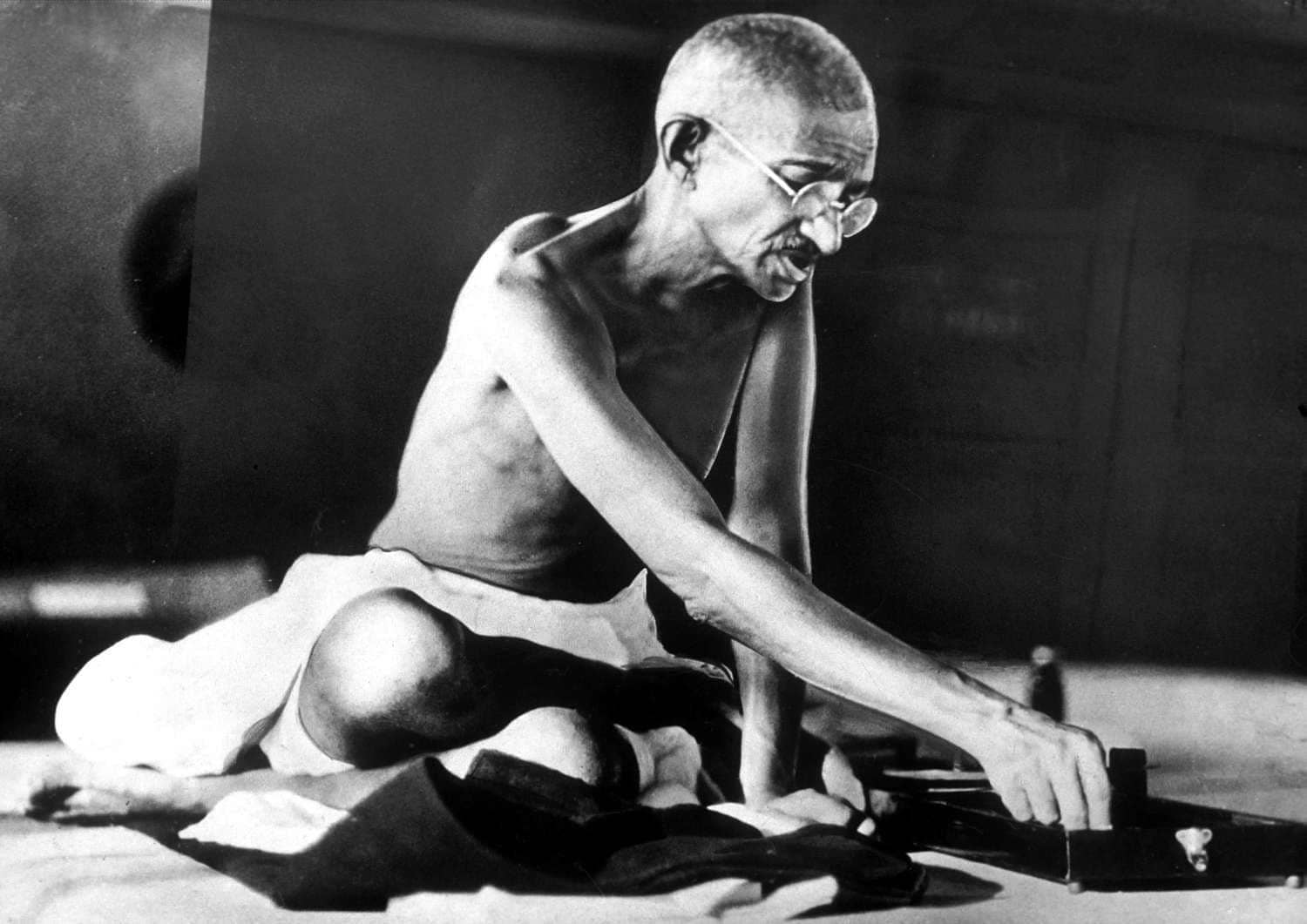
To understand SIR, we must return to Poona Pact, September 24, 1932. Ambedkar had won separate electorates for Depressed Classes from the British Communal Award. Gandhi fasted unto death against it. Ambedkar coerced his own word into surrendering separate electorates for joint electorates with reserved seats. The philosophical difference is ontological. A separate electorate meant Dalits would elect their own representatives from their own, and would be counted as a distinct political community with power to choose. A joint electorate with reservation meant Dalits could contest only in reserved seats but would be elected by caste Hindu majority, Savarna votes would decide which Dalit is acceptable.
As Dalit scholars, Anand Teltumbde in the Republic of Caste (2018), Sharmila Rege in Writing Caste, Writing Gender (2006), Gopal Guru in Humiliation (2009), with Sundar Sarukkai, argue; Poona Pact created the first electoral genocide: the deletion of Dalit political autonomy while preserving Dalit physical presence. We are present as voters in general seats, but our representative in reserved seats is the one most palatable to caste Hindus, often the most compliant, the most sanskritised, the least Ambedkarite.
SIR is Poona Pact by other means. If Poona Pact deleted the right to choose, who represents us, SIR deletes the right to choose, at all. The same social forces that could not tolerate separate electorates, the Congress, the Hindu Mahasabha, now the BJP and its ideological parent RSS, cannot tolerate a full Dalit-Muslim-Adivasi roll. Because a full roll means the bahujan majority SC, ST, OBC, minorities, who are 85% can actually elect a government of their own, as Kanshi Ram dreamed. That is why when protesters shout “Vote Chori,” they echo Ambedkar’s shout in 1932: “We are not part of Hindu society. We are a distinct people.”
THE PRESIDENTIAL ORDER 1950: CONVERSION AND DENIAL OF RIGHTS — THE LEGAL FOUNDATION OF ELECTORAL GENOCIDE
The Constitution (Scheduled Castes) Order, 1950, signed by President Rajendra Prasad on August 10, 1950, is the most under-discussed instrument of social death. Paragraph 3 originally said: “No person who professes a religion different from Hinduism shall be deemed to be a member of a Scheduled Caste.” It was amended in 1956 to include Sikhs, in 1990 to include Buddhists. Christians and Muslims, even if of Dalit origin, are excluded. Its dialectics are theological and economic: Ambedkar’s own conversion to Buddhism in 1956 was after this order. But Dalits who converted to Christianity under British missionaries to escape untouchability, or to Islam to escape caste, were told by independent India: you have escaped Hinduism, therefore you have escaped untouchability, therefore you no longer need reservation. As if untouchability disappears with conversion. As any Dalit Christian in coastal Tamil Nadu or Dalit Muslim in Bihar will tell you, caste follows you like a shadow even into church and mosque; the savarna Christian still will not marry Dalit Christian, the savarna Muslim still calls Dalit Muslim, Arzal. Scholars like Rowena Robinson (1998), Conversion and Shifting Identities, Sathianathan Clarke (1998), Dalits and Christianity, Santhosh Goyipalli, have shown that Christian and Muslim Dalits are doubly deleted: deleted from SC list by Presidential Order, and deleted from OBC list by state indifference, and now deleted from electoral roll by SIR because they cannot prove continuity.
The philosophical violence of the 1950 Order is that it makes religion a test of caste, and caste a test of citizenship. It says to Imayam’s characters: you may change God, but you cannot change your document. If you are Christian, you are not SC, therefore you cannot get a scholarship, therefore you cannot get a school certificate, therefore you cannot prove your birth for SIR, therefore you cannot vote. One deletion leads to another, like a chain of graded inequality.
Ambedkar, in Buddha and His Dhamma, said conversion is not a change of faith but a change of social ontology, from being counted as polluting to being counted as equal. The 1950 Order punishes that very mobility. It says: if you try ontological mobility through conversion, we will delete your legal mobility through denial of rights. SIR completes this circle. It asks for documents that Christian and Muslim Dalits are least likely to have precisely because they were denied SC status for 70 years. Electoral genocide is thus not a new event; it is the logical culmination of the Presidential Order.
IMAYAM AND THE QUESTION OF IDENTITY: WHO IS ALLOWED TO BE A PERSON?
Imayam, born V. Annamalai, Tamil Dalit writer from Cuddalore, Sahitya Akademi winner, is not a political theorist. He is a novelist of the ontologically deleted. His writings like Koveru Kazhuthaigal (1994) (Mules), Arumugam, Sellatha Panam, Pethavan (2012), adapted as a play about a father who kills his daughter for loving and his short story collection, Man Baaram, do not talk about ECI. They talk about what happens when a person is not allowed to be a person. In Pethavan, a father, a non-brahmanical, himself humiliated in the caste structure, becomes the agent of Brahmanical patriarchy and plans to kill his own daughter because her love for a lower-caste man shames him. Imayam’s question is: when you are denied identity by society, you cling to the only identity society allows, caste honour, even if it kills your own child. This is what Ambedkar called the moral paradox of caste: the oppressed become oppressors of their own women to feel like persons. In Koveru Kazhuthaigal, Imayam documents Dalit washermen who carry clothes of the dead, who are not allowed to touch living bodies but must wash their pollution. Their labour is necessary, but their personhood is denied. Is this not exactly the Dalit voter in SIR? Your labour to build Bengaluru’s apartments is necessary, your vote to decide who rules Bengaluru is unnecessary, unverifiable, deletable. Imayam’s central philosophical contribution to Dalit identity, as analysed by Tamil Dalit critics Raj Gauthaman in Dalit Panpaadu and Stalin Rajangam, is that identity in Tamil Nadu is not chosen but assigned. You are not Imayam, you are Paraiyar, Pallar, Arunthathiyar first. Your name, your village, your certificate says it. To be a writer, to be a lover, to be a voter, you must first escape that assigned identity. But every document, school transfer certificate that mentions caste, electoral roll that asks for father’s name, Aadhaar that asks for address proof, brings you back. SIR, therefore, is an Imayam’s novel in bureaucratic form. It says: tell me who you are, prove it with paper that Brahmin has and you don’t, or else you are not. Other Dalit thinkers extend this: Bama (Karukku, 1992), Tamil Dalit Christian woman writer, shows double deletion: as Dalit and as Christian, her identity is not allowed in church or state. Her protagonist cannot be SC because she is Christian, cannot be Christian because she is Dalit. This is exactly the Presidential Order trap. Urmila Pawar (Aaydancha Jheela, 2003) Marathi Dalit woman, shows how Dalit women’s bodies are the site where caste and patriarchy meet. When SIR demands proof of residence, whose residence? A woman who marries and moves, whose name changes, whose address changes, whose documents are in the maiden name, is deleted more easily. Electoral genocide is gendered. Chandra Bhan Prasad, Dalit Capitalism theorist, argues that identity is also economic. Without voting, you cannot demand a budget, cannot demand scholarship, and cannot demand housing. Deletion from the roll is deletion from the economy.
POETIC THOUGHT: LONG SENTENCE OF DELETION
what is a voter deletion? It is not a single act, but a long sentence that begins in 1932 in Yerwada Jail where Gandhi fasted and Ambedkar wept and signed away separate electorates, continues in 1950 in Rashtrapati Bhavan, where Rajendra Prasad signed an order that said a Christian Dalit cannot be SC, continues in 1990 in Mandal Commission office where OBCs were given reservation but not dignity, continues in 2013 in Parliament where Companies Act allowed CSR to become saffron charity, continues in 2026 in Hyderabad Tank Bund where hundreds form a human chain with Tricolour saying Vote Bachao Desh Bachao, continues in Bengaluru’s 100 marches where khaki shorts march through streets cleared by Congress police while farmers marching to ECI are detained under BNSS 163, continues in a small house in Sivasagar where a Dalit woman who built a hospital funded by ONGC cannot get a job as nurse there because she is not savarna enough to be seva, and ends, or rather does not end, in a booth level officer’s register where her name is marked as D, deleted, because she could not produce her grandfather’s birth certificate that was never made because her grandfather was born in a field outside the village where Dalits were not allowed to enter the village record room.
This long sentence is electoral genocide, because genocide is not always gas chamber; sometimes it is paper chamber, where paper decides who lives politically and who dies. Ambedkar said social democracy must be the base of political democracy. Social ontology is the base of social democracy, who is counted as human. SIR, by demanding documentary proof from the undocumented, says Dalits, Muslims, Adivasis, migrant women are not fully human enough to be voters. That is not electoral reform. That is Manusmriti reformatted as software, ECINET as new Manu code, Form 7 as a new bamboo stick that keeps Dalits outside the village gate.
CONCLUSION: FROM DELETION TO AFFIRMATION
If electoral genocide is the problem, what is affirmation? Ambedkar’s answer was not inclusion into Brahmanical order but annihilation of that order. Therefore, affirmation cannot be “include us in SIR.” Affirmation must be “scrap SIR, restore universal adult franchise as automatic right, not document-based privilege.” Imayam’s answer is literature as counter-document. When the state deletes your name from the roll, write your name in the novel, in the story, in memory, so that even if you cannot vote, you are counted as having lived. The protesters’ answer on the Tank Bund, human chain, Tricolour, slogans — is that vote is not a gift from ECI, vote is right from Constitution, and right cannot be deleted by order.
The Dalit scholars’ answer from Poona Pact to Presidential Order is: we have been deleted before, from separate electorate, from SC list of Christian or Muslim, from land records, from school. Yet we remain. Because to be Dalit is to know that deletion is not the end but the beginning of struggle for ontological mobility — from being counted as nothing to being counted as everything. Public money must serve the public. Vote must belong to people. Identity must belong to self, not to state documents. Until then, SIR remains what it is: electoral genocide by paper, slow, silent, savarna, and therefore most dangerous.
Disclaimer:The views and opinions expressed in this article are those of the author(s) and do not necessarily reflect the official policy or position of The Rift.
*Constitutional LawB.R. AmbedkarDalit RightsElectoral ReformsIdentity PoliticsIndian DemocracyPoona PactPresidential Order 1950Social Justice