Opening The Rift
therift
© 2026 The Rift. All Rights Reserved.
Exploring the Ultimate Truth: Intersections of Islamic Theology and Universal Law
The universe is already inherently Muslim: submitted to the laws of its Maker, a reality humanity often fails to perceive.


Key Takeaways
1 of 3
Automatically generated. Read full article for complete context.
Disclaimer and Reader Notice
This treatise is intended for Muslim readers seeking an internal theological and scholarly exploration of Islamic epistemology, scripture, and scientific correlation. In an era marked by heightened sensitivities, reactive discourse, and frequent legal or social penalization of strongly articulated religious convictions, the perspectives presented herein are offered solely as an expression of faith-based philosophy and textual analysis. Those who do not share these theological premises, or who find explicit religious arguments regarding truth, universal law, and the ultimate destiny of mankind objectionable, are advised not to read further. I take no credit : I am the compiler, not the author of this treatise : it draws heavily on information freely available on the internet, and any scientist is welcome to verify everything. As the Qur’an asks, “Will you not then reflect?”
The Architecture of Divine Command
The modern era prides itself on an unprecedented explosion of empirical discovery. Through radio interferometry, high-energy particle colliders, molecular assays, and orbital observatories, humanity has mapped the observable universe from the subatomic spin of leptons to the macro-clustering of superclusters. In the realm of the living, biophysics and genomics have laid bare the astonishingly intricate machinery of life: the precise conformational mechanics of enzymes, the millisecond cascades of neural transmission, and the hydraulic wonders of the microvascular bed.
Yet, this relentless scientific march has produced a curious philosophical illusion: the belief that humanity, through the deployment of its own intellect, is independently inventing order, discovering truth in a vacuum, and establishing an autonomous mastery over nature. Modern civilization celebrates its scientific milestones as though it were writing the laws of existence, rather than merely uncovering a ledger written long before the first conscious gaze was cast toward the stars.
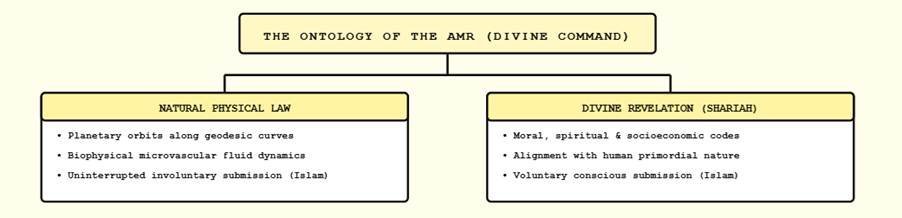
The central premise of the Islamic worldview, articulated fourteen centuries ago in the arid valleys of the Hijaz through an unlettered Prophet, directly shatters this anthropocentric conceit. In the ontology of the Quran, there is no fundamental dichotomy between what modern secularism categorizes as “natural physical law” and what theology defines as “divine revelation”. Both are manifestations of a singular, coherent authority: the Amr (Command) of Allah. The very word Islam fundamentally denotes an active, ontological alignment with the will and design of the Creator.
The tragedy of the modern human condition lies in an existential blindness: humanity lives, breathes, operates, and survives solely by virtue of the exact, unwavering rules ordained by its Maker. Every breath drawn through an exquisitely balanced alveolar membrane, every heartbeat governed by precise fluid shear dynamics, and every celestial body gliding along its gravitationally dictated geodesic curve is already existing in a state of absolute, uninterrupted submission to divine decree. The universe is already inherently Muslim : submitted to the laws of its Maker. A significant portion of humanity fails to perceive this reality, remaining either willfully rebellious or fundamentally astray, mistaking the discovery of a rule for its creation. Yet, by the very nature of existence, this divergence is temporary; ultimately, all of reality converges upon the singular Truth from which it sprang.
The Microcosm : Biological Precision and Prophetic Ergonomics
The human body is an exquisite manifestation of Mizan (absolute equilibrium) and Taqdir (exact measurement). The Quran continually summons the observer to gaze inward:
“And in your own selves. Then will you not see?” , Surah Adh-Dhariyat (51:21)
Long before histology, pharmacology, and ergonomics emerged as empirical disciplines, the lifestyle, direct commands, and physical habits (Sunnah) of the Prophet Muhammad established a comprehensive regimen for the preservation of human physical vitality. Modern biomedical analysis does not validate the Prophetic practice; rather, it merely decodes the profound biochemical and physiological genius embedded within it.

Oral Ecology : the Miswak
For millennia, oral hygiene in many parts of the world was either neglected or addressed through crude, abrasive materials. The Prophet elevated oral care to a sacred, near-mandatory act of daily worship, declaring:
“Were it not that I might overburden my nation, I would have commanded them to use the tooth-stick (Miswak) before every prayer.” , Sahih al-Bukhari
The instrument chosen was not a random piece of wood, but specifically the roots and twigs of Salvadora persica (the Arak tree). Modern pharmacognosy and clinical dental trials, recognized by the World Health Organization (WHO), have demonstrated that Salvadora persica is a sophisticated, natural pharmaceutical complex:
- Natural Fluorides and Silicates: Slowly releases fluoride ions that integrate into hydroxyapatite crystals, remineralizing enamel and conferring resistance to acid demineralization by Streptococcus mutans.
- Alkaloids (Salvadorine): Produces a sustained bactericidal effect against cariogenic and periodontopathic organisms without eradicating the protective commensal oral microflora.
- Tannins and Resins: Act as natural astringents, firming mucosal tissue, reducing gingival bleeding, and laying down an invisible protective film over dental surfaces that prevents early pellicle colonization.
- Salivary Stimulation: Mechanical chew-fraying of the fibers stimulates the parotid and submandibular glands, elevating salivary flow rates and saturating the oral cavity with endogenous bicarbonate buffers that rapidly neutralize postprandial acidity.
Where synthetic mouthwashes often indiscriminately wipe out beneficial oral bacterial colonies, paradoxically predisposing patients to dysbiosis, systemic hypertension via the disruption of oral nitrate-reducing pathways, and fungal overgrowth, the Miswak maintains homeostatic oral ecology.
Metabolic Rhythm and Intermittent Fasting (Sawm)
In the classical Islamic schedule, fasting is not an isolated annual event confined to the month of Ramadan; it is an ongoing rhythmic practice woven into daily life via voluntary fasts on Mondays and Thursdays, and the three consecutive days of the lunar mid-month (Ayyam al-Bid).
When the Prophet instituted this cycle of dawn-to-dusk abstinence from food and hydration, prevailing Greco-Roman and medieval medical philosophies considered constant caloric consumption necessary for maintaining the balance of the four bodily humors : blood, phlegm, black bile and yellow bile. Fasting was often viewed with suspicion or reserved for severe ascetic mortification.
In the twenty-first century, cellular medicine caught up with this cadence through the discovery of autophagy, a fundamental cellular housekeeping and recycling pathway for which Yoshinori Ohsumi was awarded the 2016 Nobel Prize in Physiology or Medicine:
- The Autophagic Clearance: When nutrient sensors, primarily the mTOR (mechanistic target of rapamycin) pathway, are suppressed by protracted caloric and amino acid deprivation, the cell initiates internal quality control. Damaged mitochondria (mitophagy), misfolded protein aggregates, and intracellular pathogens are encapsulated in double-membrane autophagosomes and delivered to lysosomes for enzymatic degradation.
- Metabolic Inflexibility Reversal: Fasting forces the liver to deplete glycogen stores and trigger hepatic lipolysis, shifting the body’s energetic currency from pure glucose consumption to circulating ketone bodies (
-hydroxybutyrate). This metabolic switch dramatically lowers fasting insulin, alleviates peripheral insulin resistance, suppresses chronic inflammatory cascades driven by the NLRP3 inflammasome, and upregulates neurotrophic factors such as BDNF (Brain-Derived Neurotrophic Factor).
- DNA Repair and Longevity Pathways: Fasting stimulates the Sirtuin family of NAD+-dependent deacetylases (particularly SIRT1 and SIRT3) and activates AMPK (AMP-activated protein kinase), stimulating mitochondrial biogenesis and DNA damage repair mechanisms.
What the Prophet prescribed as a routine spiritual discipline is now recognized by longevity researchers and metabolic physicians as an indispensable biological requirement for preventing the diseases of civilization: metabolic syndrome, cardiovascular disease, neurodegeneration, and malignant cellular transformations.
Dietetics : Satiety Dynamics : The Rule of Thirds
The lifestyle guidance of the Prophet regarding food intake stands as an unyielding indictment of the hyper-caloric excess that defines modern consumer culture:
“A human being fills no vessel worse than his stomach. It is sufficient for a human being to eat a few mouthfuls to keep his spine straight. But if he must, then one-third for his food, one-third for his drink, and one-third for his breath.” — Sunan at-Tirmidhi
This guidance directly reflects the neuro-endocrinology of satiety and the mechanics of gastric digestion:
- The Hormonal Lag Phase: Ingestion of food triggers the mechanical stretching of the gastric fundus and the secretion of incretins and satiety hormones, including cholecystokinin (CCK), peptide YY (PYY), and glucagon-like peptide-1 (GLP-1), alongside the suppression of the hunger hormone ghrelin. These peripheral signals travel via vagal afferents to the arcuate nucleus of the hypothalamus, but the regulatory circuit requires 15 to 20 minutes to register fullness. The habitual practice of ceasing food consumption while appetite remains prevents the massive overeating that inevitably occurs when one eats to complete mechanical distension.
- Gastric Fluid Mechanics: The stomach is not an elastic sack that can be filled to 100% capacity without biochemical consequence. It requires empty volumetric space to execute peristaltic contractions, churn food into fine chyme via the antral mill, and mix gastric juices (hydrochloric acid and pepsin) uniformly through the bolus. Overfilling obliterates the functional air space, forces gastric chyme against the lower esophageal sphincter (triggering chronic gastroesophageal reflux and Barrett’s esophagus), and causes heavy postprandial splanchnic blood pooling, leaving the individual physically sluggish and mentally dulled.
Sleep Architecture : Decubitus Ergonomics
The Prophet Muhammad established a defined daily cadence: sleeping early after the Isha (night) prayer, rising in the final third of the night before Fajr (dawn), taking a short rest in the middle of the day (Qaylulah), and physically arranging the body in the right lateral decubitus posture (lying on the right side with the right hand under the cheek).
Modern sleep medicine, neurobiology, and cardiology systematically demonstrate the health benefits of this routine:
- The Power of the Midday Nap (Qaylulah): Extensive clinical research from organizations like NASA and various cardiovascular institutes confirms that a 15–30 minute midday rest restores cognitive acuity, enhances memory consolidation, lowers systemic cortisol levels, and reduces mortality from coronary heart disease by significantly dampening midday sympathetic vascular tone.
- Anatomical Benefits of Right Lateral Sleeping:
- Cardiovascular Offloading: The human heart is situated obliquely in the mediastinum, with the bulk of its ventricular mass shifted to the left of the midline. When an individual sleeps on their left side, the anatomical weight of the heart exerts direct hydrostatic pressure upon the left hemi-diaphragm and causes mediastinal shift; furthermore, the heart itself is compressed between the sternum, spine, and adjacent left lung, which studies show alters end-diastolic filling and elevates resting cardiac output demand. Sleeping on the right side cradles the heart stably in the right hemithorax without compression, permitting uninhibited venous return via the inferior and superior venae cavae.
- Gastric Emptying Dynamics: The human stomach is an asymmetrical, C-shaped organ whose greater curvature sweeps to the left, terminating at the pyloric sphincter, which opens inferiorly and toward the right into the C-loop of the duodenum. Lying on the right side utilizes gravity to pool gastric acid away from the gastroesophageal junction while facilitating the natural gravitational transit of processed chyme through the pylorus into the small intestine, dramatically mitigating the incidence of nighttime nocturnal acid reflux.
- Glymphatic Clearance: The brain clears its toxic neurodegenerative debris, including amyloid-beta and tau proteins, via the glymphatic system, an astrocytic convective fluid pathway running parallel to cerebral blood vessels that expands during sleep. Clinical studies on sleep posture demonstrate that lateral sleeping positions significantly maximize glymphatic transport and clearance compared to prone or supine sleeping, protecting against long-term neurocognitive decline.
The Counter-Intuitive Perfection of Living Systems
Human arrogance has often declared aspects of biological design to be “poor engineering,” only for subsequent, deeper scientific analysis to reveal that what human observers branded as a mistake was in fact a masterwork of structural perfection.
The Inverted Retina: From Evolutionary “Flaw” to Biophysical Masterpiece
For more than a century, standard biological literature, echoed by figures from Hermann von Helmholtz to twentieth-century evolutionary polemicists, pointed to the vertebrate eye as an undeniable example of structural imperfection.
The critique was straightforward: the photoreceptors (rods and cones) of the human retina do not face forward toward the incoming light. Instead, they are oriented backward, facing into the dark wall of the eyeball. Incoming photons must pass through multiple layers of retinal ganglion cells, amacrine cells, bipolar cells, and horizontal cells, as well as an intricate network of unmyelinated nerve fibers, before striking the light-sensitive rhodopsin and iodopsin pigments in the outer segments. Furthermore, because these nerve fibers must coalesce to form the optic nerve and pierce through the retinal sheet to travel to the lateral geniculate nucleus of the brain, a literal structural gap is created: the blind spot (optic disc).
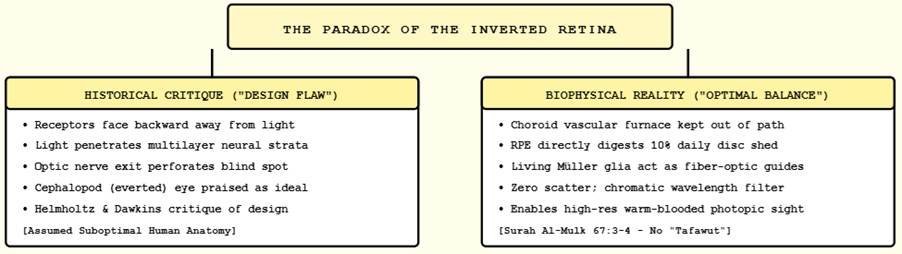
Critics pointed to the cephalopod eye (such as that of the octopus), which possesses an “everted” retina where photoreceptors point forward toward the light and nerve fibres exit from behind, claiming that the human eye was an evolutionary accident, an engineering error that any freshman optical technician could have improved upon.
The advent of molecular biochemistry, advanced retinal imaging, and biophysical modelling in the late twentieth and early twenty-first centuries completely demolished this thesis:
Metabolic Furnace and Photo-Oxidative Defense
Photoreceptors are among the most metabolically voracious cells in the entire animal kingdom. The energetic cost of maintaining the dark current, pumping sodium and calcium ions continuously out of the cell against immense electrochemical gradients via ATP-dependent pumps, requires an oxygen consumption rate per gram that dwarfs that of the cerebral cortex or cardiac muscle.
To sustain this ferocious metabolic rate, the photoreceptor outer segments must sit directly in physical contact with a hyper-vascular, specialized capillary bed: the choriocapillaris of the choroid, backed by the Retinal Pigment Epithelium (RPE):
- The Optical Impossibility of Cephalopod Design: If the human retina were constructed like an octopus’s, the massive vascular bed required to keep the warm-blooded, hyper-metabolic vertebrate photoreceptors alive would have to sit in front of the retina, directly in the path of incoming light. The optical field would be permanently obscured by a dense thicket of pulsating red blood cells, plasma, and haemoglobin, resulting in catastrophic loss of visual acuity, light scatter, and severe optical distortion. The octopus survives with an everted retina solely because it is a cold-blooded marine invertebrate with low oxygen demands and dramatically lower visual acuity operating under dim aquatic light.
- Continuous Phagocytic Rejuvenation: Human vision involves enduring massive, continuous photon bombardment, which generates severe photo-oxidative stress and free radical damage. To prevent cellular death, the tip of each rod and cone sheds approximately 10% of its light-sensitive membranous disks every single day. The RPE cells act as high-capacity phagocytes, engulfing and enzymatically digesting these spent disks while recycling all-trans-retinal back into 11-cis-retinal (a light-sensitive vitamin A derivative that binds to opsin proteins to form rhodopsin and other visual pigments essential for vertebrate vision) through the intricate enzymes of the visual cycle. If the photoreceptors pointed forward, this daily toxic debris would shed straight into the vitreous humor (a clear colourless gel-like substance that fills the space between the lens and the retina) of the eye, rapidly transforming the clear visual medium into an opaque, inflammatory slurry of oxidized cellular waste. Placing the receptors backward allows them to dock directly onto their dedicated industrial recycling and disposal centre.
Living Fiber-Optics: The Müller Cell Discovery
The claim that passing light through the anterior cellular layers of the retina causes light scatter and degrades the visual image was disproven by landmark optical biophysics research (e.g., Franze et al., 2007; Labin & Ribak, 2010).
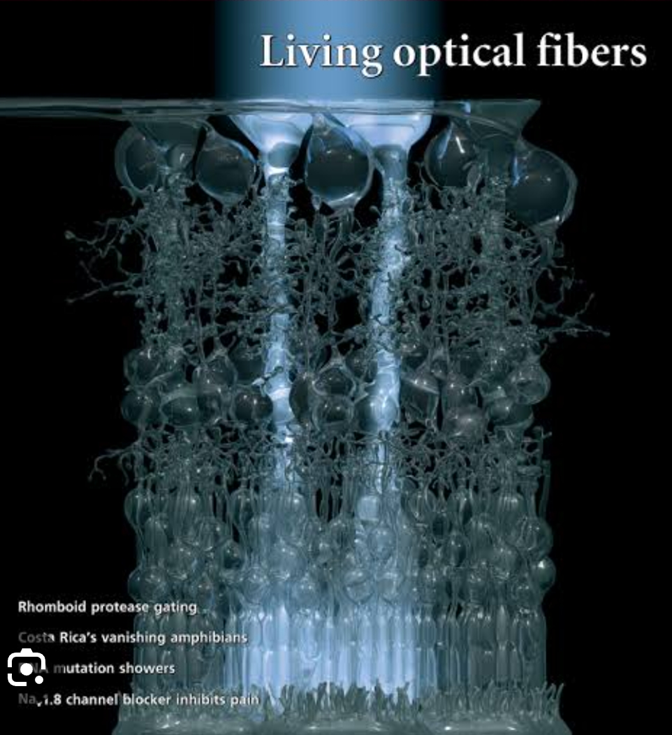
The human retina contains specialized radial glial cells known as Müller cells, which span the entire thickness of the retina, from the inner limiting membrane to the photoreceptor layer:
- Refractive Index Matching: Müller cells possess an inverted refractive index profile that matches that of their surrounding tissue, eliminating internal phase shifts. They act as living fiber-optic cables, capturing incoming photons at the retinal surface and guiding them through the cellular circuitry directly to the cones with virtually zero scatter.
- Spectral Filtering: Müller cells not only transmit light; they actively filter it. Shorter, high-scatter wavelengths (such as blue and ultraviolet) are filtered and channeled to peripheral rods, while green and red wavelengths are focused precisely onto the central foveal cones.
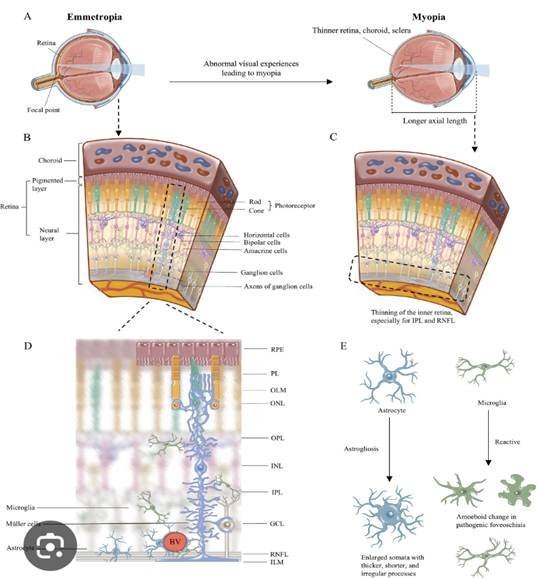
Far from being an obstacle course of evolutionary baggage, the inverted architecture of the human retina is a biophysical system that balances the physical demands of high-resolution photopic vision with metabolic longevity, immediate waste management, and optical transmission.
In this light, one recalls the sweeping challenge articulated in the Quran:
“[He] who created seven heavens in layers. You do not see in the creation of the Most Merciful any inconsistency (Tafawut). So return your vision to the sky, do you see any breaks (Futur)? Then return your vision twice again; your vision will return to you humbled and fatigued.” — Surah Al-Mulk (67:3–4)
The term Tafawut encompasses disproportion, defect, structural oversight, or a failure to balance competing functional demands. The human intellect, when analyzing the retina through incomplete models, imagined a design flaw; upon achieving deeper biophysical comprehension, its gaze returned humbled and fatigued before the perfection of the design.
Hemodynamic Balance : Haemostasis and Fluid Mechanics

The circulatory and haemostatic systems illustrate this principle of fine-tuned balance (Mizan). The cardiovascular tree is tasked with a physical paradox: keeping tens of thousands of miles of dynamic fluid conduits completely patent and liquid under fluctuating pressures, while retaining the capacity to convert that liquid into an insoluble structural plug within a split second the moment an injury occurs.
The Molecular Cascades
When a blood vessel is lacerated, subendothelial Tissue Factor (Factor III) is unmasked, igniting the extrinsic coagulation cascade:
- Trace amounts of Factor VIIa form a catalytic complex with Tissue Factor, activating Factor X to Xa.
- Factor Xa forms the prothrombinase complex with Factor Va, driving an explosive thrombin burst.
- Thrombin rapidly cleaves soluble circulating fibrinogen into insoluble fibrin monomers, which polymerize and are covalently cross-linked into a durable structural clot by Factor XIIIa.
If this explosive cascade operated in an open vessel, a single thrombin molecule could initiate a chain reaction that would solidify the entirety of an organism’s blood in minutes, resulting in fatal systemic thrombosis.
The Countervailing Controls
To prevent runaway thrombosis, the vessel wall deploys an array of active negative feedback controls:
- The Thrombomodulin Allosteric Switch: Healthy, undamaged endothelial cells express a surface receptor called thrombomodulin. When roving thrombin molecules drift away from the wound and encounter thrombomodulin, they bind to it. This binding induces an immediate conformational change in thrombin’s active site: it entirely loses its procoagulant affinity for fibrinogen and platelets, and is instead transformed into a potent activator of Protein C. Activated Protein C (APC), aided by Protein S, rapidly cleaves and inactivates Factor Va and Factor VIIIa, shutting down the primary catalytic engines of the cascade. The procoagulant catalyst is thus co-opted to power its own structural off-switch.
- The Heparan-Antithrombin Amplifier: Endothelial surfaces are coated with a delicate, gel-like bush called the glycocalyx, rich in heparan sulfate proteoglycans. Circulating Antithrombin III (AT-III) binds to these heparans, causing an allosteric shift that accelerates its capacity to capture and permanently neutralize free thrombin and Factor Xa by 1,000 to 4,000 times. Active clotting factors that stray from the site of damage into healthy zones are instantly neutralized.
- Fluid Shear Stress Mechanotransduction: Blood is not a static fluid; its motion exerts a frictional drag parallel to the vessel wall known as wall shear stress (
):
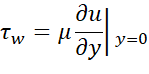
In straight arteries, blood maintains steady laminar flow, producing high, unidirectional shear stress (10 to 40 dyn/cm²). Endothelial cells possess specialized mechanosensory complexes, including the glycocalyx, PECAM-1, and stretch-activated Piezo1 ion channels, that translate this physical drag into biochemical instructions via transcription factors KLF2 and Nrf2. These factors constantly drive the expression of endothelial nitric oxide synthase (eNOS) and prostacyclin (), which elevate cyclic nucleotides (cGMP and cAMP) inside platelets to keep them completely quiescent.
Only where flow becomes pathologically disrupted, or where extreme stenotic shear stresses force von Willebrand Factor (VWF) polymers to mechanically uncoil and expose their reactive A1 domains to platelet GPIb$\alpha$ receptors, does fluid mechanics trigger mechanical clotting.
The modern biomedical engineer attempting to design artificial organs, such as prosthetic heart valves or left ventricular assist devices (LVADs), faces these hydrodynamic challenges directly. Synthetic carbon or titanium materials lack the living endothelial glycocalyx. Mechanical hinges inevitably create microscopic stasis zones where low shear () allows platelets to aggregate, alongside high-shear clearance jets (
) that tear open erythrocytes (hemolysis) and shred VWF multimers.
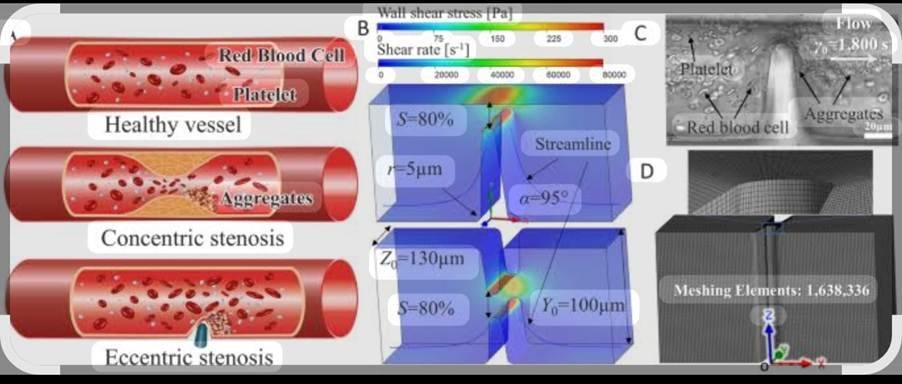
Despite decades of supercomputer computational fluid dynamics (CFD), human medicine cannot construct an artificial cardiovascular surface that operates without requiring the patient to take systemic anticoagulant drugs. Human technology remains a pale imitation of the living architecture of the vessel wall.
Geodynamics of a Dynamic Planet

Leaving the microcosm of human biology, one finds that the macroscopic crust of the Earth is similarly governed by physical laws that were detailed in seventh-century revelation long before the emergence of modern geophysics.
Mountain Isostasy and Deep Roots (Awtad)
For centuries, early geographers viewed mountains as superficial mounds of earth, passive pyramids of rock deposited atop a continuous, rigid terrestrial crust.
The Quran, however, framed their structural reality with engineering terminology:
“Have We not made the earth a resting place? And the mountains as pegs (Awtad)?” — Surah An-Naba (78:6–7)
“And He has cast into the earth firm mountains (Rawasiya), lest it shake with you (an tamida bikum)…” — Surah An-Nahl (16:15)
The word Watad (plural Awtad) in classical Arabic refers to a tent stake: an anchoring device driven predominantly below the surface of the soil, leaving only a smaller portion protruding to secure a load against mechanical tension and lateral sheer.
Modern geophysics has fully vindicated this description through the concept of isostasy, formulated by Sir George Airy in the nineteenth century:
- The Airy Isostatic Model: The brittle continental crust (lithosphere), with an average density of
, floats in gravitational and hydrostatic equilibrium atop the denser, semi-viscous, ductile upper mantle (asthenosphere), with a density of
.
- The Deep Peg Architecture: Just as an iceberg or a floating block of wood must have a submerged mass proportional to its height above the water line, a mountain belt must possess a deep, subterranean crustal root plunging into the mantle to support its surface elevation.
- The Himalayan mountain range, while standing up to 8.8 kilometres above sea level at the summit of Mount Everest, projects a massive, dense continental crustal root reaching downward to depths of 65 to 70 kilometres into the asthenosphere.
- The physical portion of the mountain visible above the surface represents only a fraction of its total vertical profile. The mountain functions structurally as a peg (watad).
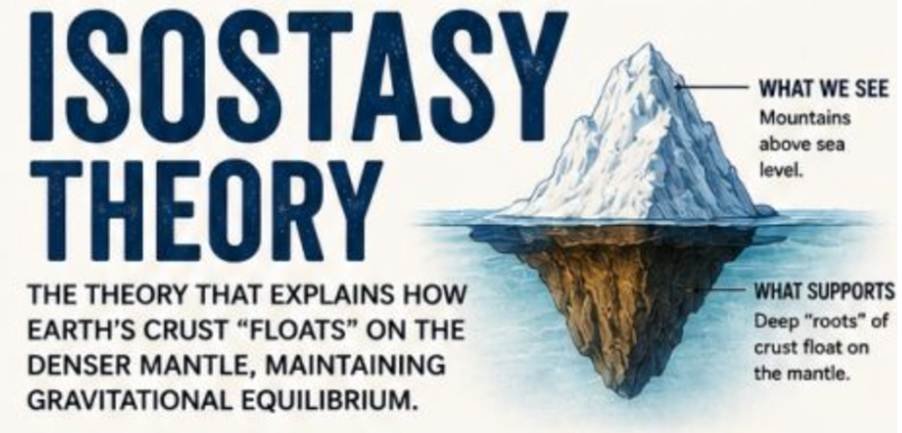
Furthermore, the Quranic assertion that mountains exist “lest it shake with you” (an tamida bikum, preventing erratic swaying, pitching, or chaotic mechanical instability) directly reflects the geodynamics of orogeny.
Mountains are formed along convergent plate boundaries, where tectonic landmasses collide (such as the collision of the Indian Plate with the Eurasian Plate). These collisional zones crumple the lithosphere, thickening the crust into stabilized suture zones that lock adjacent continental fragments together, stabilizing the continental interior against violent, uncontrolled lateral slippage and damping seismic energy across geological timescales.
Continental Drift and Plate Motion
Before the meteorologist Alfred Wegener proposed continental drift in 1912, and long before the confirmation of seafloor spreading and plate tectonics in the 1960s, the continents and mountain ranges were universally assumed to be fixed, permanent features of the Earth’s topography.
The Quran, however, articulated an active kinematic reality:
“And you see the mountains, thinking them rigid (Jamidatan), while they pass as the passing of clouds (Tamurru marra as-sahab). [It is] the work of Allah, who perfected all things…” — Surah An-Naml (27:88)
The passage compares the motion of mountains to the movement of clouds:
- Passive Transport: Clouds do not move under their own internal mechanical propulsion; they have no wings or engines. They are carried passively by the dynamic air mass in which they are embedded.
- Sub-crustal Convection: Mountains do not move independently; they are passive passengers embedded in the lithospheric plates that drift atop the slow convective circulation currents of the underlying asthenosphere.
- Imperceptible Velocity: Continental plates move at speeds of 1 to 10 centimetres per year, a rate comparable to the growth of human fingernails. To a human observer, mountains appear completely solid, immutable, and stationary (jamidah), yet on a macro-geological scale, they are continuously drifting across the face of the planet.
Critically, the verse concludes by attributing this motion to “the work of Allah, who perfected all things (Itqan)”, a phrase exclusively used in Islamic theology to describe the harmonious, ongoing operation of the created physical world, rather than the cataclysms of the Last Day.
Fractured Earth and Oceanic Fire
In Surah At-Tariq (86:12), the Earth is characterized by an intrinsic structural property:
“And [by] the earth which splits (Dhat as-sad’)…”
The word Sad’ denotes a long, continuous fissure, cleft, or fault line that cleaves an otherwise uniform solid body.
In the mid-twentieth century, oceanographic expeditions mapping the ocean floor using sonar led to the discovery of the global mid-ocean ridge system, a continuous, 65,000-kilometre-long undersea volcanic fracture network that encircles the planet like the seams of a baseball. The Earth’s lithosphere is not a continuous shell; it is systematically fragmented (Dhat as-sad’) by global transform faults, rift valleys, and oceanic divergent zones where new crust is continuously born.
Furthermore, in Surah At-Tur (52:6), the text takes an oath by:
“And [by] the sea set on fire / filled with fire (Al-Bahr al-Masjur)…”
To ancient and classical scholars, the conjunction of fire and the ocean was an insurmountable paradox: water naturally snuffs out fire, and fire evaporates water.
Modern deep-sea submersibles exploring divergent plate boundaries (such as the Mid-Atlantic Ridge and the East Pacific Rise) revealed active submarine fissures where basaltic magma erupts directly along the ocean floor at temperatures exceeding 1,000°C to 1,200°C, alongside hydrothermal black smokers discharging superheated, mineral-rich plumes at 400°C directly into freezing abyssal water. The seabed is underlain by active magma chambers; the deep sea is literally underlain by volcanic fire (al-bahr al-masjur).

Oceanography and Atmospheric Layering
Moving from the solid lithosphere to the fluid envelopes of the hydrosphere and atmosphere, we encounter further correlations between Quranic descriptions and physical principles.
Internal Waves and Layered Darkness in the Abyss
In Surah An-Nur (24:40), the psychological state of spiritual denial is described using the fluid dynamics of the ocean:
“Or [their deeds are] like darknesses within an unfathomable deep sea (Bahrin Lujji), covered by a wave, above which is a wave, above which is a cloud, darknesses, some of them upon others. When one puts out his hand, he can hardly see it…”
This passage establishes two physical phenomena that were unknown prior to modern oceanographic instrumentation:
A. Internal Subsurface Waves (Mawj min fawqihi mawj)
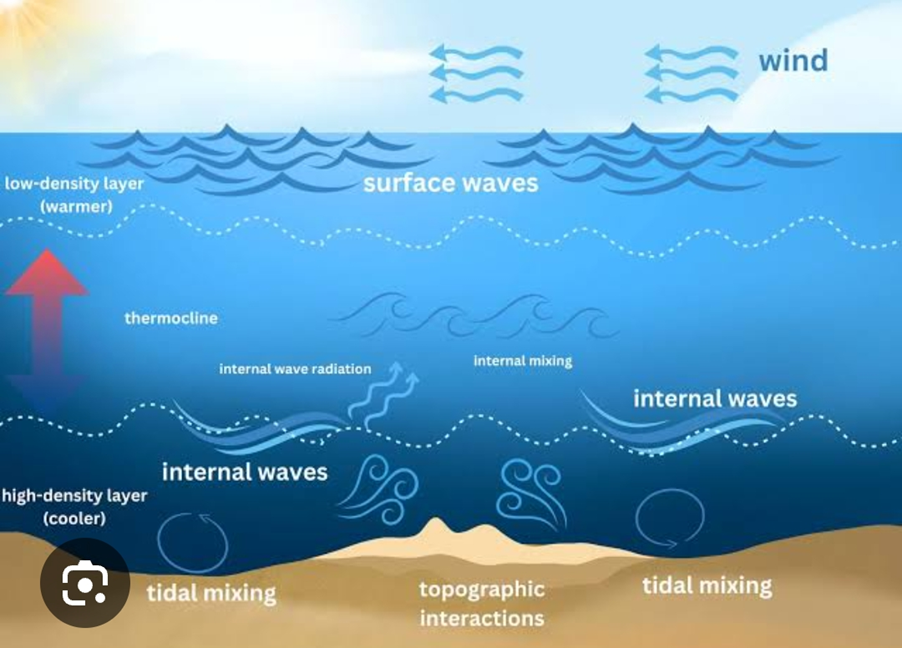
Humanity had only ever witnessed waves breaking on the surface of the sea. Yet the verse describes an ocean covered by “a wave, above which is a wave”, a multi-layered wave structure:
- The Pycnocline/Thermocline: The ocean is not a uniform block of water; it is divided into a warm, sunlit, low-density surface layer and a cold, high-density, highly saline deep layer.
- The Internal Boundary Wave: Along the interface separating these two fluid layers (the pycnocline), gravity and shear generate massive internal waves. These subterranean waves have amplitudes reaching 100 to 200 metres, completely invisible to an observer standing on a ship, undulating silently hundreds of metres below the surface.
- The Sequential Layering: The deep sea (Bahr Lujji) is bounded below the thermocline by these internal waves; directly above them rests the surface layer with its standard wind-driven surface waves; and directly above the surface waves sit clouds (min fawqihi sahab). The verse delineates the vertical stratification of the water column with structural accuracy.
B. The Mechanics of Deep-Sea Darkness (Zulumat)
The verse speaks of “darknesses, some upon others”, followed by the condition where an extended hand cannot be discerned:
- Selective Wavelength Extinction: Sunlight entering seawater does not vanish all at once; it is systematically filtered out by water molecules according to wavelength. The red spectrum (
) possesses the least energy and is completely absorbed within the first 10 to 15 metres. If a diver bleeds at 20 metres, the blood appears green or dark brown because red photons no longer exist in the light field. Orange vanishes at 30 metres, yellow at 50 metres, green at 100 metres, and blue is fully extinguished by 200 metres, the threshold of the euphotic zone.
- The Complete Aphotic Abyss: By the time a submersible reaches 1,000 metres (the bathypelagic zone), not a single photon of surface sunlight remains. It is an absolute, perpetual void of darkness (Zulumat), where human eyes, and human hands, are rendered entirely blind without artificial bioluminescent or electric illumination.
A desert-dweller in seventh-century Arabia could not dive into the abyss, yet the text outlines both the internal wave architecture and the staged light extinction of the deep ocean.
High-Altitude Hypoxia and Barometric Compression
The physiological impact of atmospheric ascent is described in Surah Al-An’am (6:125):
“…and whomsoever He wills to send astray, He makes his breast tight and constricted (Dayyiqan harajan) as though he were climbing into the sky (Ka’annama yassa’adu fi as-sama’).”
In an era when the heavens were considered a domain of pure air and celestial comfort, the Quran linked ascending into the sky with the subjective sensation of acute chest constriction and suffocation:
- The Gas Laws of Altitude: As an individual ascends into the atmosphere, total barometric pressure drops exponentially according to the barometric formula.
- Alveolar Hypoxia: Although oxygen remains ~21% of the gas mixture by volume, its partial pressure (
) collapses. At altitudes above 3,500 metres (and culminating in the “Death Zone” above 8,000 metres on peaks like Everest), the pressure gradient required to drive oxygen molecules across the alveolar-capillary membrane into hemoglobin in red blood cells fails.
- The Sensation of Tightness: The body responds to this acute hypoxemia with hyperventilation, pulmonary arterial hypertension, and respiratory alkalosis. The subjective mechanical feeling is a profound tightening of the chest (Dayyiqan harajan), dyspnea, and air hunger. The text accurately uses high-altitude atmospheric ascent as the physical metaphor for the sensation of severe suffocation.
Cosmogenesis : the Fate of Spacetime

At the grandest scale of physical existence, the origin, evolution, and final geometry of the cosmos, Quranic descriptions parallel modern relativistic and quantum astrophysics.
1. The Primordial Singularity and the Epoch of Smoke (Dukhan)
The birth of the universe is framed in the Quran around two specific physical phases:
“Have those who disbelieved not considered that the heavens and the earth were a joined entity (Ratqan), and then We separated them (Fafataqnahuma)…” — Surah Al-Anbiya (21:30)
The root R-T-Q signifies something fused together, sewn into a singular unseparated mass, or closed up into a point. The verb Fataqa means to rip open, unbind, separate, or cleave apart. This corresponds directly with the standard cosmological model: the Big Bang was not an explosion of matter into an existing empty space, but the expansion of spacetime itself, erupting outward from a unified, infinitely dense, ultra-hot gravitational singularity wherein all matter, energy, and physical dimensions were joined in a single primordial point.
Subsequently, the early cosmos is described in Surah Fussilat (41:11):
“Then He directed Himself to the heaven while it was smoke (Dukhan), and said to it and to the earth, ‘Come [into being], willingly or by compulsion.’ They said, ‘We have come willingly.'”
In classical Arabic, Dukhan does not mean cold steam or mist; it specifically denotes an opaque, hot gaseous body containing suspended particulates.
In observational astrophysics and the analysis of the Cosmic Microwave Background (CMB) by the COBE, WMAP, and Planck satellites:
- For the first ~380,000 years, the universe was an intensely hot, opaque, ionized plasma composed of protons, electrons, and light elements. Photons were trapped in an endless cycle of Thomson scattering off free electrons; the universe was literally dark, hot, and opaque to electromagnetic radiation, a cosmic cloud of glowing “smoke”.
- Only when the universe cooled below
during the Recombination Epoch could electrons bind with protons to form neutral hydrogen gas, clearing the fog and allowing light to propagate freely across the cosmos.
- Furthermore, all subsequent stars, galaxies, and planets condensed via gravitational collapse out of these vast interstellar clouds composed of hot hydrogen, helium, and cosmic silicate/metallic dust particles, a medium matching the term Dukhan.
2. The Dynamic Metric Expansion of the Heavens
Until Edwin Hubble’s observational work in 1929 and the subsequent formulation of the FLRW metric based on Albert Einstein’s field equations of General Relativity, Western physics assumed an immutable, static universe. Even Einstein himself introduced a cosmological constant () into his field equations specifically to force the mathematical model to predict a static cosmos, calling it the “biggest blunder” of his career after cosmic expansion was proven.
The Quran, however, described the celestial expanse not as a static ceiling, but as an actively expanding fabric:
“And the heaven We constructed with strength, and indeed, We are [its] expander (Wa inna lamusi’un).” — Surah Adh-Dhariyat (51:47)
The Arabic construction uses the nominal active participle Musi’un preceded by the emphatic particle la- (lamusi’un), denoting not merely a past historical widening, but an ongoing, active capacity and state of continuous expansion. The fabric of spacetime is not fixed; galaxies are receding from one another as the metric tensor of the universe steadily expands.
3. The Big Crunch: Rolling Up Spacetime Like a Scroll
The ultimate fate of the phy sical universe is described in Surah Al-Anbiya (21:104):
“The Day when We will roll up the heavens like the rolling up of a scroll for records (Ka-tayyi as-sijilli lil-kutub). As We began the first creation, We will repeat it. [That is] a promise binding upon Us. Indeed, We will do it.” In modern relativistic mechanics:
- Space and time are not an empty void; they form a physical, four-dimensional spacetime manifold (
). Spacetime can warp, stretch, bend, and curl under the influence of mass-energy.
- The verse compares the vast celestial expanse to a scroll of parchment (sijill). A scroll is an extended, two-dimensional sheet that can be folded, curled, rolled into a tight cylinder, and closed. Spacetime is conceptualized as a continuous geometric manifold capable of being mathematically compressed and folded upon itself.
- The verse pairs this folding with an explicit return to initial conditions: “As We began the first creation, We will repeat it.” This corresponds to the cosmological model of the Big Crunch (or cyclic recollapse), where the metric expansion of spacetime eventually halts, reverses (
), and all galaxies, radiation, and the spacetime fabric itself contract symmetrically back into the ultra-dense, unified singularity from which it was originally unfurled.
Socio-Economic Equilibrium: Riba, Imperial Extraction, and Planetary Fasaad
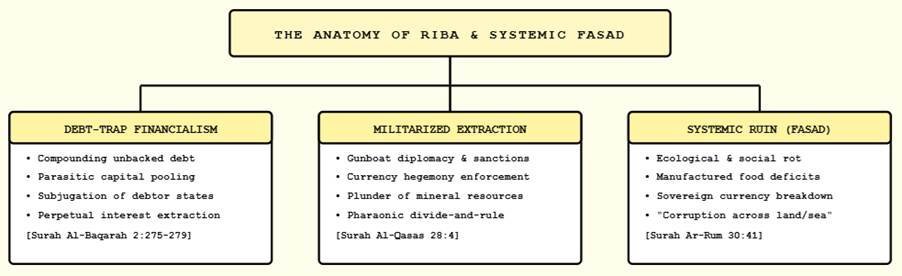
The universal scope of Quranic law extends beyond physical cosmos and human biology into the socio-economic architecture governing human civilization. Just as the physical body suffers systemic necrosis when blood circulation is choked or chanelled into malignant tumours, human society undergoes inevitable breakdown when its economic lifeblood is captured by usury (Riba). The Quran delivers an uncompromising condemnation of interest-based financial paradigms, characterizing them not merely as personal ethical violations, but as an existential war against divine harmony:
“O you who have believed, fear Allah and give up what remains [due to you] of interest (Riba), if you should be believers. And if you do not, then be informed of a war [against you] from Allah and His Messenger…”– Surah Al-Baqarah (2:278–279)
The text declares that while legitimate trade distributes risk and circulates value, usury concentrates capital into fewer, parasitic hands, inevitably generating Fasaad, a comprehensive Quranic concept denoting corruption, structural decay, environmental plunder, and systemic injustice.
On the contemporary global stage, this Quranic diagnosis is made manifest through global debt architectures. Powerful, heavily militarized nation-states and international lending consortiums sit at the apex of an unbacked, fiat-driven global financial system. Developing and Global South nations, wealthy in raw agricultural commodities, fossil reserves, and strategic minerals, are ensnared in predatory, compounding foreign debt cycles. Under structural adjustment programs and sovereign debt servicing, the productive surplus of these populations is redirected away from domestic public health, infrastructure, and education solely to pay down compound interest on debts whose principal can never mathematically be retired.
This financial exploitation relies on military enforcement:
- The Imperial Shield: The petrodollar hegemony and the global supremacy of usury-driven currency regimes are enforced by an architecture of advanced military bases, carrier strike groups, and kinetic interventions.
- The Subversion of Sovereignty: Should an impoverished, resource-rich nation attempt to break free from these extractive debt covenants, nationalize its strategic resources, or trade outside the usurious global banking framework, it faces immediate economic sanctions, weaponized embargoes, covert regime destabilization, or overt military bombardment.
This dynamic exposes the character of imperial power identified in the Quran:
“Indeed, Pharaoh exalted himself in the land and made its people into factions, oppressing a sector among them, slaughtering their [newborn] sons and keeping their females alive. Indeed, he was of the corrupters (Al-Mufsidin).” — Surah Al-Qasas (28:4)
Modern economic neo-colonialism mirrors this Pharaonic archetype: powerful global hegemonies fragment the weak, siphon their wealth through compounding paper debt, and maintain their global supremacy through military armaments (Ba’s). The resulting global disparity, where an elite minority commands disproportionate planetary wealth while billions endure manufactured poverty, hunger, and ecological ruin, is the manifestation of Fasaad:
“Corruption (Al-Fasaad) has appeared throughout the land and sea by [reason of] what the hands of people have earned, that He may let them taste part of [the consequence of] what they have done that perhaps they will return.” — Surah Ar-Rum (30:41)
In laying bare the predatory mechanics of usury and documenting how military might is wielded to sustain financial parasitism, the Quran reveals its universal authority. The secular global order champions free-market humanism while overseeing systemic global immiseration. In contrast, the Quranic economic model, anchored in real-asset trade, compulsory wealth redistribution through Zakat, the absolute prohibition of compounding financial rent (Riba), and the preservation of human dignity, stands as the sole system capable of averting societal collapse. The modern global debt crisis and its military entanglements provide ongoing proof that humanity cannot violate divine social and economic laws without suffering the exact ruin foreseen in revelation.
The Parting of the Sea and the Testimony of Displaced Marine Strata
The Quran records historical interventions where the Creator commanded the physical medium to alter its customary behaviour for a determined purpose:
“Then We inspired to Moses, ‘Strike with your staff the sea.’ And it parted, and each portion was like a great towering mountain (Kal-Tawd al-‘Azim).” — , Surah Ash-Shu’ara (26:63)

In human rationalism, such accounts are often met with scepticism by those who treat physical laws as immutable, self-originating entities rather than sustained decrees. Yet, in theological reality, the Creator who establishes fluid dynamics, hydrostatic pressure, and gravitational attraction retains absolute sovereignty to suspend or redirect those forces at will. The fluid medium that parted like a massive mountain (at-tawd) was merely obeying the same foundational authority (Amr) that dictates the surface tension of an alveolus or the laminar flow within an artery.
This authority over terrestrial matter is mirrored across the crust of the earth. One of the striking discoveries of modern field paleontology is the presence of ancient marine fossils, including pelagic fish, ammonites, crinoids, and trilobite-bearing limestones, embedded within the rock faces of high-altitude mountain chains. Marine strata (such as the Qomolangma formation and the Yellow Band of Mount Everest) reside thousands of metres above current sea level on the other side of continental divides.
While popular lore often attempts to link every displaced fossil directly to specific biblical flood events or historical sea-partings, modern geology demonstrates a profound tectonic mechanism: the sedimentary ocean beds of the ancient Tethys Sea were caught in the collision of moving continents and thrust upward, turning former ocean floors into the highest peaks on Earth.
The physical reality that ancient sea-bottoms, carrying the petrified remains of oceanic life, now crown mountain summits serves as a reminder of the malleability of the Earth under divine command. Whether through the long-term orogenic folding of lithospheric plates or the instantaneous hydrodynamic parting of the sea before the staff of Moses, matter remains entirely pliant to its Creator. The world that stands atop ancient ocean floors and drinks from rain-fed subterranean aquifers bears physical witness that the boundaries between land and sea, fluid and solid, are established and dissolved only according to divine decree.
The Primordial Continuum: Tracing the Universal Monotheistic Cord
A central pillar of the Quranic thesis is that Islam is neither a novel religious innovation nor a regional seventh-century Arabian sect. Rather, it self-identifies as the final, uncorrupted codification of the original primordial religion (Din al-Fitrah) delivered to every human community across history:
“And We certainly sent into every nation a messenger, [saying], ‘Worship Allah and avoid Taghut (false deities)…'” — Surah An-Nahl (16:36)
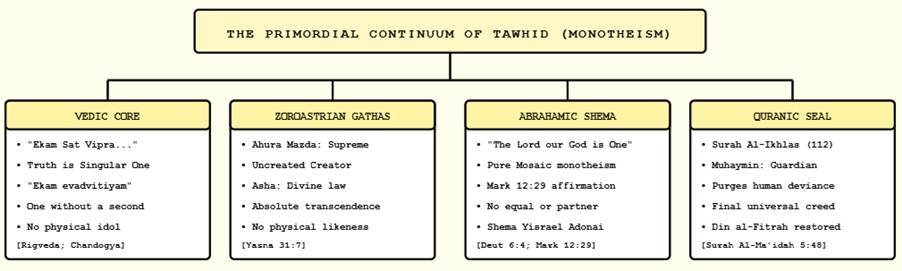
When comparative theology strips away centuries of mythological additions, local pantheons, political distortions, and sectarian schisms, the foundational scriptures of the major world traditions reveal an unmistakable convergence upon a singular, uncreated, transcendent Supreme Reality:
1. Ancient Indian Traditions (The Vedic and Upanishadic Witness)
While later traditions evolved elaborate anthropomorphic expressions and polytheistic vernaculars, the ancient Sanskrit texts attest to pure monotheistic transcendence:
- The Rigveda: Declares explicitly in the Nasadiya Sukta and the Keshin Hymn:
“Ekam Sat Vipra Bahudha Vadanti”, “Truth is One; the wise call it by many names” (Rigveda 1.164.46).
- The Chandogya Upanishad: Formulates the absolute oneness of ultimate reality (Brahman):
“Ekam evadvitiyam”, “He is One only, without a second” (Chandogya 6.2.1).
- The Shvetashvatara Upanishad: Echoes the absolute transcendence beyond physical representation:
“Na tasya pratimā asti yasya nāma mahad yaśah”, “There is no likeness of Him, whose glory is indeed immense” (Shvetashvatara 4.19), matching the Quranic declaration in Surah Ash-Shura (42:11): “There is nothing like unto Him (Laysa kamithlihi shay’).”
2. Ancient Persian Horizon (Zoroastrianism)
Centuries before the Hellenistic era, the prophet Zarathustra in the Gathas called the Iranian plateau away from nature worship and tribal polytheism to the exclusive worship of Ahura Mazda, the Lord of Wisdom:
- Ahura Mazda is described in the Yasna (31:7) as the uncreated, transcendent, all-knowing first cause who created the cosmos through Asha (truth and cosmic law). He possesses no bodily form, has no equal or partner, and is the sovereign judge to whom all human actions ultimately account.
3. Abrahamic Heritage (Judaism and Original Christianity)
The continuum reaches direct clarity in the Semitic prophetic line:
- The Mosaic Shema: Stands as the core of Jewish theology:
“Shema Yisrael Adonai Eloheinu Adonai Echad”, “Hear, O Israel: The Lord our God, the Lord is One” (Deuteronomy 6:4).
- The Prophetic Warnings: Isaiah (45:5–6) reiterates:
“I am the Lord, and there is no other; besides Me there is no God.”
- The Declaration of Jesus: When asked which commandment was greatest of all, Jesus confirmed the Shema verbatim:
“The primary one is: Hear, O Israel, the Lord our God, the Lord is One” (Mark 12:29), explicitly disavowing co-equal divinity and directing all worship solely to the Father in Heaven.
The Quran as the Muhaymin: The Crucible and Final Arbiter
Because human history witnessed the steady decay of these primordial messages, through priestly interpolation, political compromises, and the deification of saints and avatars, the Quran was revealed with a unique textual and theological role:
“And We have revealed to you the Book in truth, confirming that which preceded it of the scripture and as a guardian/criterion (Muhaymin) over it…” — Surah Al-Ma’idah (5:48)
The Arabic term Muhaymin indicates a guardian, an authenticating standard, and a master metric that preserves original truth while identifying and burning away historical deviations. The Quran did not appear to introduce a new deity to the world; it arrived to strip away the encrustations of human innovation and return humanity to the clean, crystalline core of Tawhid, the pure monotheism that every ancient sage and prophet originally taught.
In Surah Al-Ikhlas (112:1–4), this universal truth is distilled into an uncompromising four-line formulation:
“Say, ‘He is Allah, [who is] One. Allah, the Eternal Refuge (As-Samad). He neither begets nor is born, Nor is there to Him any equivalent.'”
The Finality and Universal Convergence
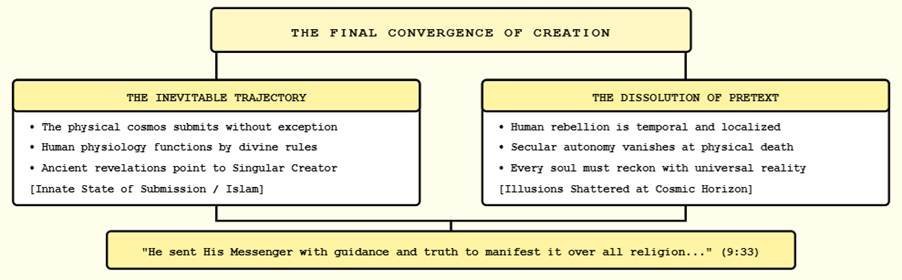
This alignment across civilizations, scriptures, physical laws, and human physiology leads directly to the ultimate Quranic conclusion: Islam is not an alternative among many competing options; it is the terminal revelation (Khatam ar-Risalah) that unifies and seals all previous dispensations.
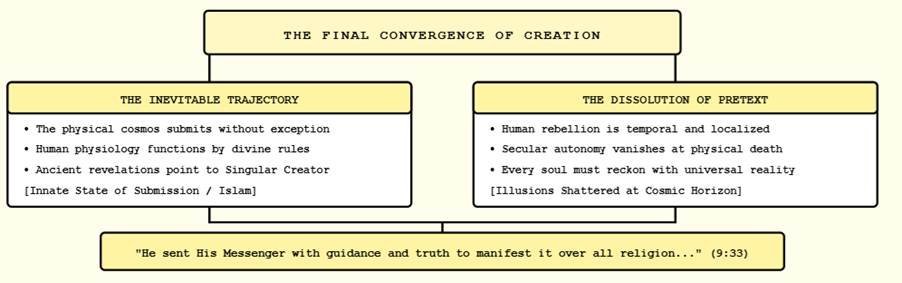
Today, substantial segments of the human population harbour deep-seated animosity, cultural hostility, or intellectual disdain toward Islam. They view it through the lens of geopolitics, media caricatures, or reactionary chauvinism. Yet this animosity is fundamentally powerless against the objective structure of reality:
- Every Human Being Already Lives as a Muslim Biologically: As demonstrated in the biophysical realities of the retina, the haemodynamics of the vasculature, and the cell-surface signalling of haemostasis, the human body obeys the laws of Allah unconditionally. A man may profess atheism, idolatry, or secular materialism with his vocal cords, but his vocal cords oscillate via the exact aerodynamic and neurological laws established by the Creator. His heart pumps according to divine hydrodynamics; his cells repair themselves according to divine genetic codes.
- Every Ancient Truth-Seeker Anticipated This End: The pure core of the Vedas, the Zoroastrian Gathas, the Torah of Moses, and the Gospel of Jesus point to the same singular reality. Those who claim to follow those traditions while rejecting the final revelation are actively in contradiction with their own founding scriptures.
- The Dissolution of Pride at the Cosmic Horizon: Regardless of how much ideological resistance or military might the empires of the Earth marshal against this revelation, human life remains frail and temporary. In the grave, the temporary gift of moral free will expires; all pride is stripped away; and every soul enters an inescapable state of complete, conscious submission to the Judge of all existence:
“It is He who sent His Messenger with guidance and the religion of truth to manifest it over all religion, although those who associate others with Allah dislike it.” — Surah At-Tawbah (9:33)
In the final, inexorable nature of things, all roads converge upon this singular destination. The universe began in submission (Islam), sustains its billions of galaxies and biological cells in perpetual submission, and will conclude its cosmic timeline in submission. Though humanity today is divided between those who understand and those who are astray, the day will arrive when every temporal veil is shattered, all hostility will be rendered completely void, and every single soul and every atom of the created order will submit fully and exclusively to the eternal sovereignty of the One Creator.
And Allah knows best.
Disclaimer:The views and opinions expressed in this article are those of the author(s) and do not necessarily reflect the official policy or position of The Rift.