Opening The Rift
therift
© 2026 The Rift. All Rights Reserved.
Mangifera Indica: A Mango Season Read So Sweet, You Might Overconsume
This Book is peppered with sweetness and as it the mango season, you might overconsume. Diabetics, please proceed with caution!

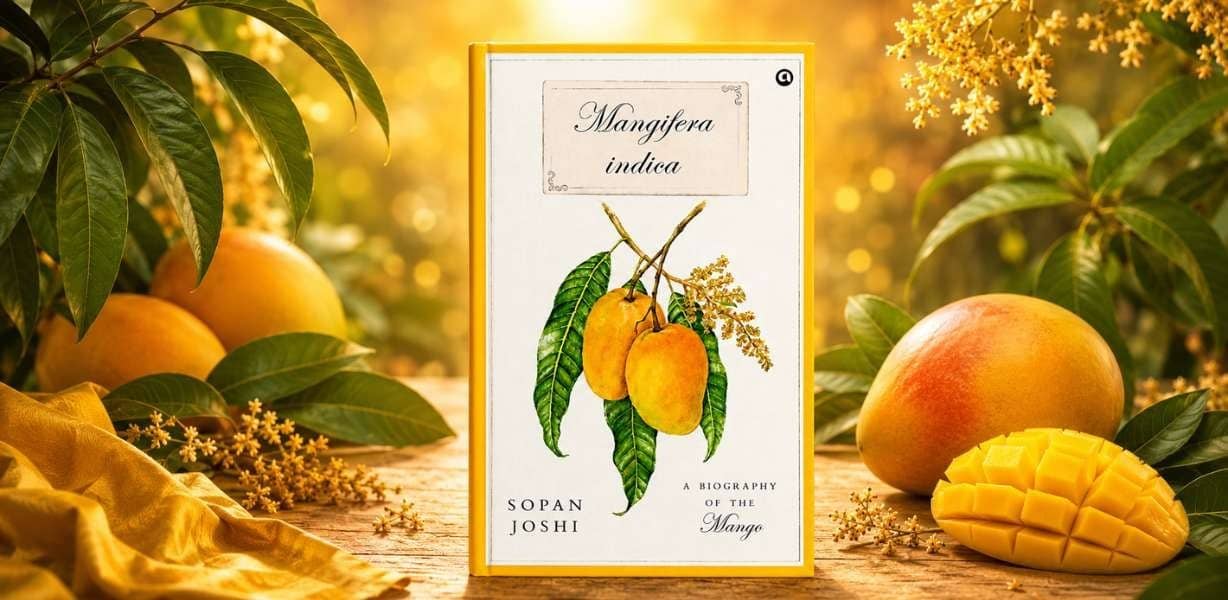
Mangifera Indica by Sopan Joshi
Key Takeaways
1 of 3
Automatically generated. Read full article for complete context.
Mangifera Indica is the scientific name for the mango tree and is the title of Sopan Joshi’s book which makes an intriguing read.
Driven by a passionate urge, the author spent years delving into the depths of mango lore. It was only after tirelessly scouring the orchards and savouring countless varieties that the nib of inspiration bore fruit. Sopan Joshi has long been penning reports and articles for newspapers and magazines. In this delightful book, he journeys through the world’s finest orchards, where delicate mango blossoms transform into vividly coloured, luscious fruits. These then travel to bustling markets, where their fragrant presence enlivens the air, and finally make their way to our plates, delighting our taste buds with their ambrosial sweetness.
In India, the mango isn’t just a fruit; it’s a barometer of relationships, a social currency. It’s a memory stick of sorts. It is the Aadhaar card mandatorily linked to India’s emotional and cultural life. A mango can unearth the child within you. And if, after eating a mango, you emerge looking prim and proper, rest assured, you didn’t savour it as you should have!
The author regales us with tales of mango virtues, the dizzying array of varieties, and the charm of mango season. He weaves in its connections with culture, history, and even religion. The mango, he notes with a wink, is India’s favourite bribe—a cherished token for the babus and their families. Send a crate of mangoes, and voilà, your work just might get done! This book is a flavourful concoction of wit, wisdom, and reverence for India’s king of fruits.
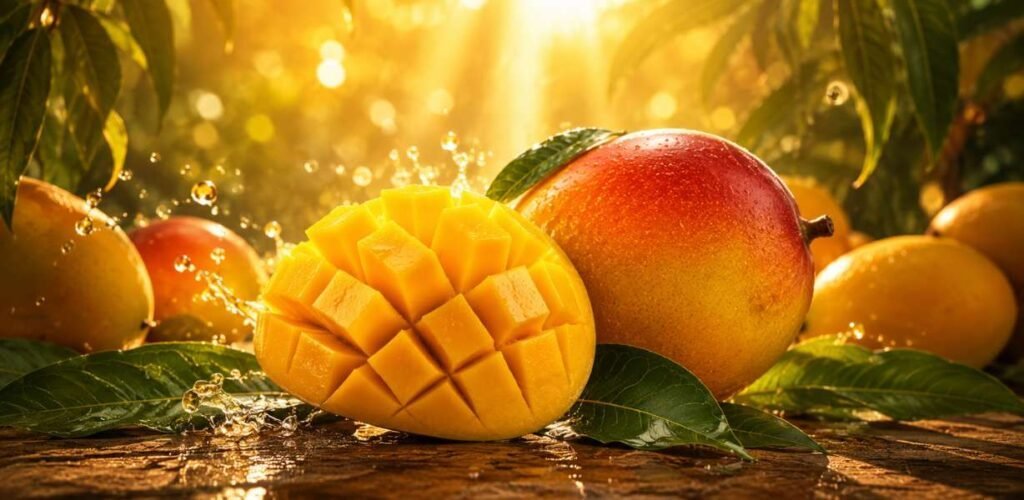
Claiming a connection to one’s regional mango variety is a matter of great pride in India. However, Hapus chauvinism, or the overbearing superiority of the famed Alphonso mangoAlphonso (Hapus)A premium mango variety primarily grown in the Konkan region of Maharashtra, famous for its rich, creamy sweetness. doesn’t quite sway everyone. Devotees of Imam PasandImam PasandA large, exceptionally sweet mango variety cultivated extensively in Andhra Pradesh and Tamil Nadu., LangdaLangdaA famous North Indian mango variety, first cultivated in Benaras (Uttar Pradesh). It is also grown in Bengal and Bihar, and is known for its distinct turpentine-like flavor., or DussehriDussehriA highly popular, sweet, and fragrant mango variety tracing its roots to Malihabad, Uttar Pradesh. “Malihabadi Dussehri” has GI tag scoff at such pretensions. And why wouldn’t they? A veritable army of mangoes stands ready to challenge the Hapus hegemony: ChaunsaChaunsaA remarkably sweet late-season variety highly prized in North India and Pakistan., Totapuri, Neelum, KesarKesarA premium saffron-colored mango predominantly grown in the Gir region of Gujarat., Rani Pasand, Bimli, Zardah, Mankurad, Rataul, Samar Bahisht, Amrapali, Saroli, Romani, Kishan Bhog, Lal Baba, Suvarna Rekha, Zardalu, and Malda—to name a few. Truly, the mango world is as diverse and vibrant as its admirers.
Mangoes are consumed in two ways: either by slicing or by sucking. The former is for the civilized, while the latter, some might argue, is the purest expression of mango joy. So, dear reader, as a biological creature, how do you like to eat your favourite fruit?
Likewise, mango cultivation follows two methods: sowing seeds or grafting. For a horticulturally challenged person like this writer, such books are a treasure trove of mango wisdom.
The author delights us with historical anecdotes. Emperor Ashoka, for instance, decreed mango orchards to be planted along highways. Sher Shah Suri lined the Grand Trunk Road with mango trees. Akbar, the great patron of horticulture, planted a hundred thousand mango saplings near Samastipur and summoned expert gardeners from Central Asia. Aurangzeb, not one to shy away from mango fervour, christened two varieties with Sanskrit names: Sudha Ras and Rasna Vilas. The emperor’s wrath was said to be triggered by bad administrators, unworthy sons, and (you guessed it right) the rotten mangoes!
During the Mughal era, historians recount that landowners who converted their plots into orchards were exempt from taxes. In Mithila, mango orchards remained tax-free until the 20th century. The Peshwa rulers, during acute financial crisis, increased revenue rates but encouraged the cultivation of lucrative cash-crops like mangoes. The British, despite appreciating mangoes, did little to boost their cultivation. Rather than lining railway tracks with mango trees, they indiscriminately cleared forests. Alexander the Great’s soldiers were forbidden from eating mangoes, lest they succumb to dysentery. Ibn Battuta recorded a mango tale during his 14th-century travels to Malabar. Intriguingly, the first battle of Panipat (1526) was fought near a mango grove, while the battle of Plassey (1757) took place within one.
The Nawab of Bengal, Shuja-ud-Daulah, took mango cultivation to new heights by establishing a research centre named Amba Khana in Murshidabad with the help of expert gardeners. Mango orchards flourished under royal patronage in places like Lucknow, Hyderabad, and Junagadh, producing some of the finest varieties to ever grace a plate.
In essence, this book is not just a love letter to mangoes but a celebration of their indelible imprint on history, culture, and the Indian way of life.
The political clout of mangoes has ancient roots and remains as ripe as ever. Pandit Nehru would deftly slice a mango in half and neatly remove the seed. He famously gifted mangoes to U.S. President John F. Kennedy and the celebrated writer Bernard Shaw. To Soviet leader Khrushchev, he handed out lessons on eating the mango by squeezing and sucking—a technique that left Khrushchev marvelling at its simplicity and sweetness. When Chinese Premier Zhou Enlai was offered a mango, elegantly sliced and served with a spoon, he proclaimed that he had been introduced to a new world of sweetness and goodwill. The encounter brought Zhou closer to Nehru, culminating in the signing of a celebrated joint declaration.
Pakistan, too, has wielded mango diplomacy with aplomb. In 1968, Pakistan’s Foreign Minister sent a crate of mangoes to Chairman Mao Zedong, who promptly handed them over to his media team. And just like that, the mango became a symbol of communist leadership! That year, during China’s National Day parade, mango was a political spectacle.
The tradition of “mango diplomacy” is particularly cherished in India-Pakistan relations. Whenever talks between the two nations gain momentum, baskets of mangoes inevitably cross the border. In 1981, General Zia-ul-Haq sent a crate of mangoes to Prime Minister Indira Gandhi. This act inspired a cheeky cartoon in an Indian newspaper, depicting crates of mangoes being loaded onto F-16 jets. Zia was shown instructing the pilot: “Deliver the mangoes first and then the bombs!” In 2015, Nawaz Sharif continued the tradition, sending mangoes to Narendra Modi as an Eid gift.
Mangoes, however, transcend mere politics. Buddhist monks carried mangoes along with the teachings of Buddha, intertwining the fruit’s spread with the growth of Buddhism. In Hindu rituals, mango leaves hold a sacred place, gracing ceremonies of both birth and death. The author also touches upon Sir Syed Ahmed Khan’s abstinence from mangoes for religious reasons and the Jains’ seasonal withdrawal from eating mangoes during the monsoons lest a hidden insect become an unintended meal. In Mumbai, mango trees flourish around the Parsi Towers of SilenceTowers of Silence (Dakhma)Circular, raised structures built by Zoroastrians for excarnation, disposing of the dead by exposure to scavenging birds to avoid polluting the earth or fire.. The author recalls the nineteenth century poet Mirza Ghalib, who penned “Dar Sifat-e-AmbaDar Sifat-e-Amba“In Praise of the Mango”, a celebrated Persian poem by Mirza Ghalib highlighting his legendary fondness for the fruit.” a famous poem on mangoes. Kalidasa’s Shakuntala, too, is held up as the golden standard for mango mentions in classical literature.
Through this delightful blend of humour, history, and mango lore, the book underscores the unmatched significance of this kingly fruit, proving once again that mangoes are not just a treat for the palate but a feast for the soul and occasionally, a tool for diplomacy.
Joshi calls the mango a “Quami” meaning national or “Awaami” meaning people’s fruit, though it has ironically slipped beyond the reach of the common man. In Murshidabad, a single Koh-e-Toor mangoKoh-e-ToorA highly prized and rare aristocratic mango variety originally cultivated under the royal patronage of the Nawabs of Murshidabad in West Bengal. can fetch as much as ₹800. Meanwhile, in Japan’s Miyazaki marketMiyazaki MangoesAlso known as “Taiyo no Tamago” (Egg of the Sun), these are among the most expensive premium mangoes in the world, strictly graded for weight and sugar content., mangoes are sold with the care and reverence reserved for fine jewellery. In 2019, only two Miyazaki mangoes were auctioned for a jaw-dropping ₹3 lakh.
India produces a staggering 44% of the world’s mangoes but ranks only third in exports, far behind Mexico, which leads despite contributing a mere 4% to global production. Joshi laments India’s lag in adhering to global agricultural and horticultural standards. He highlights the careless cultivation practices that have led to declining fruit quality, including the rampant use of chemicals for artificial ripening and the overuse of pesticides. He also warns of the dangers of importing unripe fruits, which often introduce pests that devastate local crops.
The book profiles notable figures in mango cultivation, such as Vidyadhar Joshi of Devgad, Vivek Bhide of Ratnagiri, Kaleemuddin Siddiqui of Amroha, and Mujib Khan of Malihabad. Among traders, it mentions Ashok Hande from Vashi, the Desai brothers of Pune, Qayyum Bhai Kareem Bhai from Junagadh, and Shanne Miyan from Lucknow. It also highlights Tanveer Hussain, a major exporter of mango pulp. Interestingly, Joshi notes that approximately 70% of wholesale mango traders in India today are Muslim, down from 90% in the 1980s.
Joshi reflects that his research into mangoes gave him fresh eyes to appreciate India’s pluralism and diversity. This book is nothing less than a biography of India’s favourite fruit. Published by Aleph, it provides a comprehensive A-to-Z account of mangoes, delivering as much mental nourishment through its light-hearted prose as mango slices do to the palate.
This reviewer enthusiastically recommends the book to all discerning readers. It’s peppered with sweetness and as it is the mango season, you might overconsume. Diabetics, please proceed with caution!

Sopan Joshi
is an Indian journalist, author, and environmentalist recognized for his deep research into ecology and sanitation, notably in his acclaimed Hindi book Jal Thal Mal.
Disclaimer:The views and opinions expressed in this article are those of the author(s) and do not necessarily reflect the official policy or position of The Rift.