Opening The Rift
therift
© 2026 The Rift. All Rights Reserved.
How Best to Resolve the Issue of Missing Names in Voter Lists in India
Democracy works best when all sides can cooperate for improvements in true democratic spirit.

Key Takeaways
1 of 3
Automatically generated. Read full article for complete context.
In recent weeks, the question of missing names in voter lists has become the most controversial issue in India. This controversy relates to alleged irregularities during the ongoing Special Intensive Revision (SIR) of lists of eligible voters.
Those opposing the government and the Election Commission are claiming that names of around 130 million (13 crore) eligible voters may be missing from these lists. are saying that names of around 130 million (13 crore) eligible voters may be missing in these lists. It is also being stated that 11 to 12% of the names may be missing. One way of reaching these figures is to deduct the names appearing on revised voter lists from estimates of the adult population. There are some minor problems with this procedure, but I will set these aside and accept the estimates provided by critics of SIR before proceeding further.
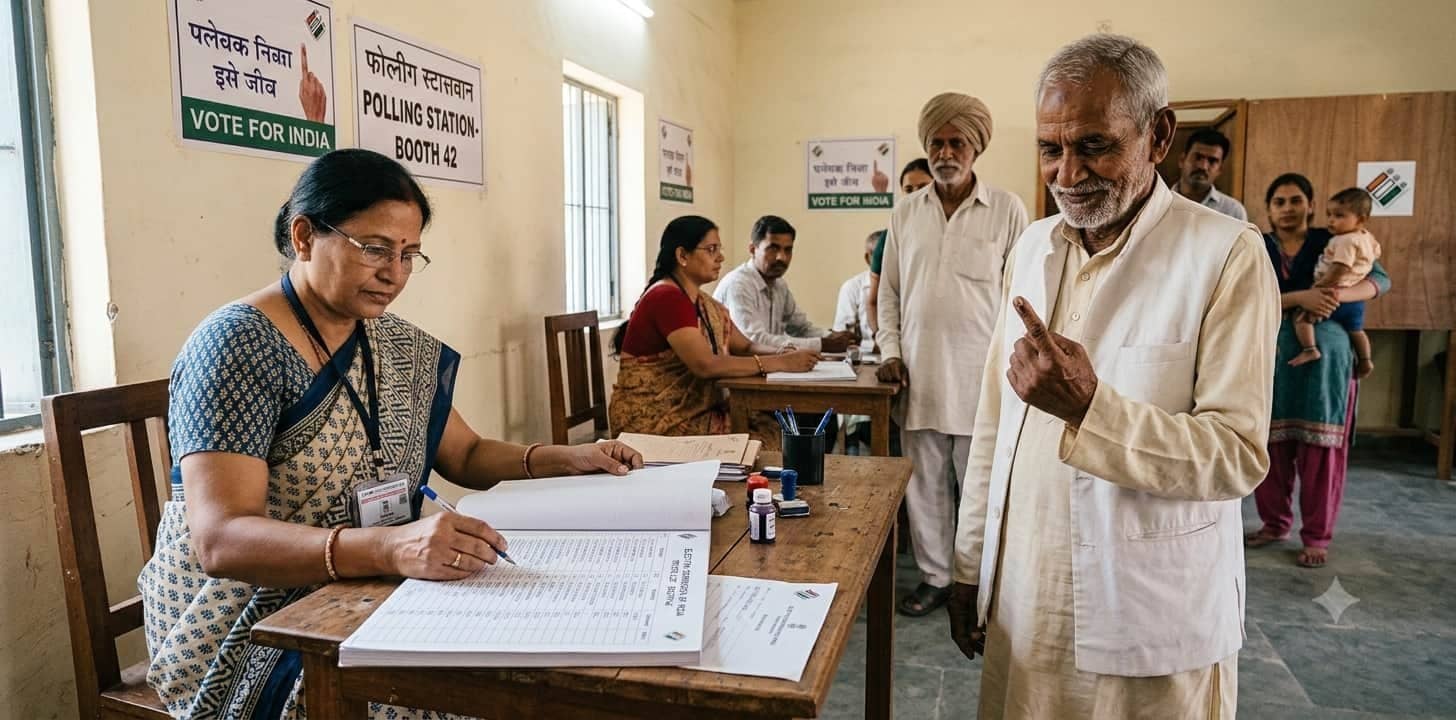
Here, I would like to draw attention to the fact that in the dozens of elections in India in which I have voted over the last five decades, there were always complaints on voting day that some voters who went to the polling booth were told their name was not on the voting list and so they could not vote, or who came to know their name was not on the list and thus did not go to vote. While such complaints existed even in our colony, they were even more prevalent in the nearby slum area, where there was greater mobility of people shifting elsewhere, coming in, or more regularly going to their villages.
Why has this been happening to a lesser or greater extent in most elections? This is likely to happen partly because of genuine issues in conducting elections in the most populated country in the world, logistical problems and overworked election staff (such as temporary staff from other government jobs given additional election duties). Partly, this may also be due to deliberate dishonesty under political pressure to exclude certain targeted groups or persons.
Whatever the reasons, there is a certain entity called the ‘estimate of the percentage of voting-age people missing from voting lists in a normal election in India’. The percentage missing in SIR should be compared to this percentage to find out the extent of extra exclusion this time. There is clearly a difference between a headline which proclaims ‘12% voters excluded for the first time in India’ and one which states, more truthfully in my humble opinion, that voters excluded appear to be higher than what has been normally seen in elections in India.
Secondly, SIR is still an ongoing process, so those who have been excluded have a chance, using laid-down procedures, to get their names included. I agree with critics that these processes are often too difficult, particularly for poorer or less literate people, and therefore need significant improvement—something to which opposition parties and social movements can contribute better in more constructive, less confrontational ways.
Of course, I do not disagree with the issue raised by critics that in certain cases, some individuals and groups may have been deliberately targeted for exclusion. The challenge ahead is precisely to remove such injustices and ensure the inclusion of those who were left out in the first phase due to more routine and logistical reasons, such as being away from home or overworked staff being unable to reach them.
So, the way ahead, in the humble opinion of this writer, is for the courts, election bodies, the government, opposition parties, social movements, community organizations, and people to work together cooperatively to correct voter lists and make them truly inclusive. The official side must agree that mistakes have been made; the opposition side must agree that they have been too confrontational. Ultimately, democracy works best when all sides can cooperate for improvements in a true democratic spirit. There should not be any undue denial, there should not be any undue exaggeration. Let’s get together to resolve the issue without allowing this to result in any violence or harm to our country. This is all the more important in the present complex international situation, which is very difficult and calls for increasing national unity in India and, indeed, in all countries of the Global South.
Before concluding, let me add with due humility that the issue of election irregularities is not at all new to me. In my younger days, as an independent reporter, I had gone to cover elections in some villages of Bihar where there was almost complete booth capturing, and probably not a single voter could vote fairly in certain villages. and probably not a single voter could vote in a fair way in certain villages. I could get these reports published only with the greatest difficulty. However, I took care to mention that this was not happening everywhere and, on the whole, regular elections and the democracy based on them were an achievement for India. Nothing is to be gained from exaggeration, just as nothing is to be gained from hiding actual irregularities.
Disclaimer:The views and opinions expressed in this article are those of the author(s) and do not necessarily reflect the official policy or position of The Rift.
*Voter ListsDemocracyElection Commission of IndiaElectoral ReformsIndian ElectionsSpecial Intensive Revision