Opening The Rift
therift
© 2026 The Rift. All Rights Reserved.
Mere Presence At Protest Venue Beyond Permitted Hours Not Offence: Delhi HC
Mere presence at a protest venue beyond permitted hours does not constitute an offence without specific allegations of disobedience or common intention.

Key Takeaways
1 of 3
Automatically generated. Read full article for complete context.
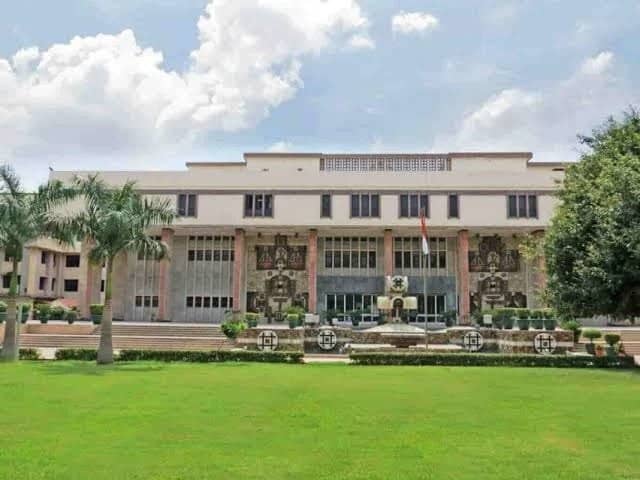
It definitely stands absolutely justified that while taking a pragmatic step in the right direction, the Delhi High Court in a most learned, laudable, landmark, logical and latest judgment titled Khurshid Ahmed vs State of NCT of Delhi through SHO PS Kamla Market in CNR No. DLHC010358382026 and W.P.(Crl) 2356/2026 that was pronounced just recently on 13.10.2026 has minced absolutely just no words whatsoever to hold indubitably that mere presence at a protest venue beyond permitted hours does not constitute an offence. This was held so while quashing an FIR that had been registered against a competitive examination aspirant who had participated in a demonstration at Ramlila Maidan in Delhi on August 24, 2025 concerning Staff Selection Commission (SSC) exams. For my esteemed readers exclusive indulgence, it must be laid bare that the Single Judge Bench comprising of Hon’ble Mr Justice Sanjeev Narula allowed the petition that had been filed by Khurshid Ahmed who was an SSC aspirant and which had sought the quashing of an FIR that had been registered at Kamla Market police station under Sections 223(a) (disobedience to order promulgated by public servant) and 3(5) (common intention) of the Bharatiya Nyaya Sanhita, 2023 (BNS).
By all accounts, the Delhi High Court very rightly held that continuation of proceedings against Ahmed would amount to an abuse of the process of law. We thus see that the Delhi High Court accordingly quashed the FIR and all consequential proceedings qua Ahmed, clarifying that the order would not affect proceedings against the other accused. Very rightly so!
CRL.M.A. 31977/2026 (seeking early hearing)
At the very outset, this robust, rationale, remarkable and recent judgment authored by the Single Judge Bench comprising of Hon’ble Mr Justice Sanjeev Narula of Delhi High Court sets the ball in motion by first and foremost putting forth in para 1 that, “By this application, the Petitioner seeks early hearing of the petition having regard to the fact that the Petitioner has cleared an exam of Eklavya Model Residential School and has to appear for document verification.”
As we see, the Bench then lays bare in para 2 disclosing that, “Considering the above, the application is allowed and the writ petition is taken up for final hearing today itself.”
W.P.(CRL) 2356/2026
As things stands, the Bench then reveals in para 3 stating that, “This petition under Article 226 of the Constitution of India read with Section 528 of the Bharatiya Nagarik Suraksha Sanhita, 2023 \[“BNSS”\], seeking quashing of FIR No. 351/2025 dated 24th August, 2025, registered at Police Station Kamla Market under Sections 223(a) and 3(5) of the Bharatiya Nyaya Sanhita, 2023 \[“BNS”\], and all consequential proceedings arising therefrom, insofar as they concern the Petitioner.”
To put things in perspective, the Bench envisages in para 4 stating succinctly that, “The impugned FIR arises out of a protest organised at Ramlila Maidan, Delhi, on 24th August, 2025, by aspirants of the Staff Selection Commission \[“SSC”\], concerning alleged irregularities in the conduct of examinations. Permission had been granted for holding a peaceful demonstration on 24th and 25th August, 2025, between 10:00 AM and 5:00 PM. According to the prosecution, approximately 800 to 1,000 persons assembled at the venue. Upon expiry of the permitted time, the organisers and protesters were repeatedly directed to vacate the ground. It is alleged that certain organisers refused to conclude the demonstration and instigated the gathering to remain at the venue until their demands were fulfilled. The police further allege that, despite repeated announcements regarding the prohibitory orders under Section 163 of the BNSS, the protesters continued to occupy the ground and some of them pushed and scuffled with police personnel. Consequently, 44 persons, including the Petitioner, were detained and the impugned FIR was registered.”
While delving into the version of the petition, the Bench enunciates in para 5 mentioning that, “Counsel for the Petitioner submits that the Petitioner is a competitive examination aspirant who had attended the protest to express his grievances regarding the SSC examinations. He was neither an organiser nor a speaker at the demonstration and had no role in directing or instigating the gathering. It is contended that the Petitioner has been implicated merely because he was present at the venue after the permitted time. No specific allegation of disobedience, obstruction, violence or altercation with the police has been attributed to him. Counsel further submits that there is no material to establish that the Petitioner had knowledge of any particular prohibitory order issued under Section 163 of the BNSS. Reliance is placed on Bhoop Singh Tyagi v. State, 2002 SCC OnLine Del 277 to emphasise that knowledge of a lawfully promulgated order and its deliberate disobedience are essential ingredients of the offence. It is accordingly urged that the ingredients of Section 223(a) of the BNS are not disclosed against the Petitioner.”
Further, the Bench observes in para 6 that, “It is further pointed out that the Petitioner duly joined investigation pursuant to the notice issued under Section 35(3) of the BNSS and cooperated with the Investigating Officer. Reliance is also placed on State of Haryana v. Bhajan Lal, 1992 Supp (1) SCC 335 to contend that criminal proceedings are liable to be quashed where the allegations, even if taken at face value, do not disclose the commission of an offence.”
Plainly speaking, the Bench propounds in para 9 holding that, “Having considered the submissions and examined the material placed on record, the Court finds that the allegations against the Petitioner require consideration in the context of the ingredients of Section 223(a) of the BNS. The provision penalises disobedience of an order lawfully promulgated by a public servant, where the person concerned has knowledge of such order and the disobedience causes, or tends to cause, obstruction, annoyance or injury, or the risk thereof, to persons lawfully employed. Thus, knowledge of the order and disobedience thereof are essential elements of the offence.”
Truth be told, the Bench then points out in para 10 that, “In the present case, the protest was initially permitted by the police. The prosecution alleges that the gathering continued beyond the permitted hours and that repeated directions were issued for its dispersal. The Court does not overlook these allegations, nor does it suggest that participants in a permitted demonstration are entitled to disregard lawful directions regulating its duration or conduct. However, the question is whether the material on record discloses the commission of the alleged offence insofar as the Petitioner is concerned.”
Quite significantly, the Bench notes in para 11 pointing out that, “In this regard, it is significant that the allegations concerning refusal to vacate the ground, instigation of the protesters and scuffling with police personnel are directed against the organisers or the gathering generally. Neither the impugned FIR nor the subsequent Status Report attributes any such conduct specifically to the Petitioner. His alleged role is confined to remaining at the venue after the permitted hours, despite the directions issued by the police.”
Most significantly, the Bench encapsulates in para 12 what constitutes the cornerstone of this notable judgment postulating precisely that, “The repeated announcements through loudhailers may be relevant to establishing the Petitioner’s knowledge of the directions to disperse. Indeed, continued presence despite such knowledge may amount to disobedience of those directions. However, for an offence under Section 223(a) of the BNS to be made out, the disobedience must also cause, or tend to cause, the consequences specified in the provision. The material on record does not disclose how the Petitioner’s continued presence, in the circumstances alleged, attracted this further requirement. His mere presence amongst the protesters cannot, without more, be treated as sufficient to establish the offence.”
Most forthrightly, the Bench points out in para 13 holding that, “The invocation of Section 3(5) of the BNS does not alter this position. The principle of common intention requires that the criminal act be committed in furtherance of an intention shared by the persons sought to be held jointly liable. Mere participation in the same demonstration does not, by itself, establish a common intention to disobey lawful directions or obstruct police personnel. The material on record does not disclose any basis for attributing such common intention to the Petitioner.”
It cannot be lost sight of that the Bench specifies in para 14 stating that, “It is also relevant that the Petitioner joined investigation pursuant to the notice issued under Section 35 of the BNSS. The State does not allege that he failed to cooperate or attempted to obstruct the investigation.”
While citing the relevant case law, the Bench puts forth in para 15 that, “In State of Haryana v. Bhajan Lal, the Supreme Court recognised that criminal proceedings may be quashed where the allegations, even if accepted at their face value, do not prima facie constitute an offence against the accused. The Court is conscious that the jurisdiction to quash criminal proceedings must be exercised with restraint and that a detailed appreciation of evidence is ordinarily impermissible at this stage. However, where the material does not disclose the foundational ingredients of the offence against a particular accused, continuation of the proceedings would amount to an abuse of the process of law.”
Most rationally, it is worth noting that the Bench notes in para 16 that, “Applying these principles, the Court finds that the material presently placed on record does not disclose sufficient grounds for continuing the prosecution against the Petitioner under Sections 223(a) and 3(5) of the BNS. The Petitioner cannot be subjected to criminal proceedings merely on account of his presence amongst the protesters, in the absence of material indicating his knowing participation in the alleged disobedience or any common intention to commit the offence. The continuation of the proceedings against him, in these circumstances, would serve no worthwhile purpose.”
As a corollary, it would be instructive to note that the Bench then hastens to add in para 17 noting that, “Accordingly, the present petition is allowed. FIR No. 351/2025 dated 24th August, 2025, registered at Police Station Kamla Market under Sections 223(a) and 3(5) of the BNS, and all consequential proceedings arising therefrom, are hereby quashed qua the Petitioner, Khurshid Ahmed.”
For sake of clarity, the Bench then clarifies in para 18 stating that, “It is clarified that the observations made herein are confined to the role of the present Petitioner and shall not affect the investigation or proceedings against any other accused person.”
Finally, the Bench then concludes by directing and holding in para 19 that, “The petition, along with any pending applications, stands disposed of.”
In a nutshell, we thus see that the Delhi High Court has definitely been most unambiguous in holding explicitly that mere participation in a protest venue beyond permitted hours does not, by itself, establish a common intention to disobey lawful police directions or obstruct personnel and is not an offence. To put it differently, it was made crystal clear by the Bench that merely remaining at a demonstration beyond permitted hours was insufficient to establish a criminal liability without material satisfying the essential ingredients of the alleged offences. Very rightly so!
Disclaimer:The views and opinions expressed in this article are those of the author(s) and do not necessarily reflect the official policy or position of The Rift.