Opening The Rift
therift
© 2026 The Rift. All Rights Reserved.
Nuclear War: A Day or Two to Armageddon
Nuclear war, regardless of its trigger, ends with complete Armageddon-like destruction, rendering the Northern Hemisphere uninhabitable.

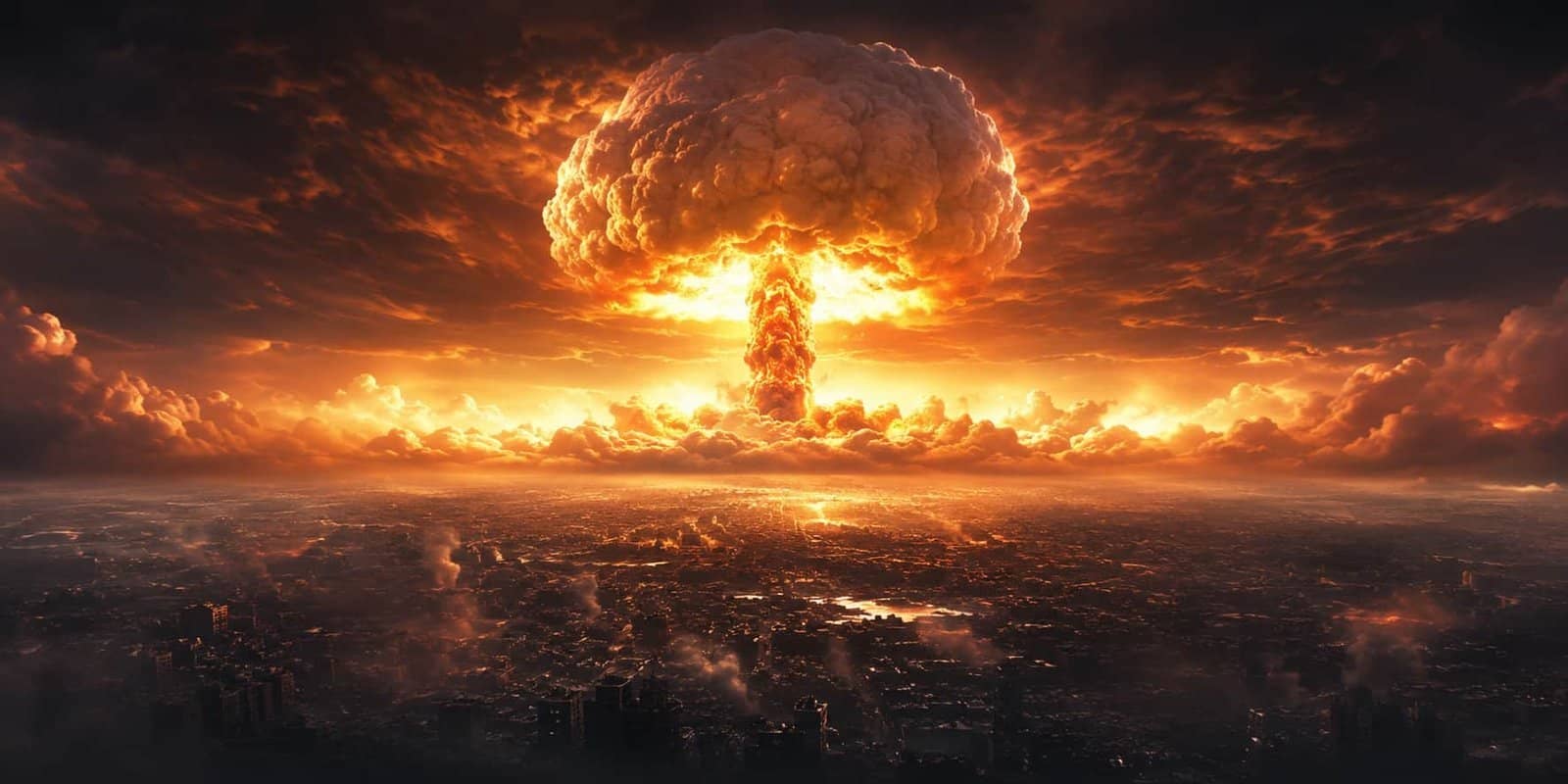
(Representative Image)
Key Takeaways
1 of 3
Automatically generated. Read full article for complete context.
In 1983 US President Ronald Reagan asked for a simulated war game, ironically called Proud ProphetSimulated War GameA major command post exercise conducted by the US Joint Chiefs of Staff in 1983, simulating a global nuclear war to explore its outcomes and effects., to explore the outcome and effects of a nuclear war. The results of these efforts have been summarized by Annie Jacobsen in her widely discussed book ‘Nuclear War-A Scenario’ (2024), “According to Proud Prophet, regardless of how a nuclear war begins, it ends with complete ArmageddonBiblical Term for End of WorldIn the context of nuclear war, it refers to a catastrophic and final battle or event leading to widespread destruction and the end of civilization.\-like destruction. With the US, Russia and Europe totally destroyed. With the entire Northern Hemisphere uninhabitable from fallout. With the death of, at minimum, a half billion people (or 500 million people) in the war’s opening salvo alone. Followed by the starvation and death of almost everyone who initially survived.”
Key Nuclear Threat Statistics
Proud Prophet Initial Deaths
500 Million+
in opening salvo alone
Thermonuclear Power
1,000x+
more explosive than Hiroshima bomb
Total Nuclear Weapons
~12,000+
10% use can destroy most life
Ohio-Class Sub Warheads
80
can be unleashed in minutes
VISUALS BY THE RIFT
Professor Paul Bracken from Yale, one of the participants in this exercise, stated that the result was so catastrophic it made all the ‘wars of the past five hundred years pale in comparison’. He also noted that over the course of two weeks, in every simulated scenario, regardless of the initial trigger, nuclear war consistently ended the same way: with no victors and the destruction of all involved.
Since then, despite a substantial reduction in the number of nuclear weapons, there has been no decrease in the overall capacity for global destruction; in fact, it has increased in some important ways.
The destructive capacity of nuclear weapons remains at a level far exceeding what is needed to destroy most life on Earth. Thermonuclear weapons, which are 1,000 times or more explosive than the bomb dropped on Hiroshima, are available now. which are 1000 times or more explosive than the bomb which was dropped on Hiroshima are available now. There are over 12,000 nuclear weapons in the world today, and if just 10% of these are used in a nuclear war, they could destroy most life on Earth through direct and indirect impacts.
The capacity to attack with more nuclear weapons and the speed of such attacks have increased to an incredible extent. Way back in 1960, senior Pentagon scientist Herb York requested a scientific investigation into how long an ICBM fired from a Soviet Union site would take to reach a US city; the resulting finding was 26 minutes and 40 seconds. fired from a site in the Soviet Union will take to reach a US city and the resulting finding was that it’ll take 26 minutes 40 seconds. However due to the deployment of US weapons in several European countries and the possibility of US or French weapons reaching countries even closer to Russia, the exchange of weapons from the closest possible site to Moscow and from Moscow or near Moscow to this site is further greatly reduced. However, it may be possible to strike more easily, rapidly, and on an even larger scale using nuclear-powered submarines carrying nuclear weapons. An Ohio-class submarine of the USA (Russia has similarly capable submarines) is the size of two football fields in length, can reach close to an enemy’s coast well hidden, and can unleash 80 nuclear warheads in a matter of minutes. of the USA (Russia has similarly capable submarines) is of the size of two football fields in its length, can reach close to enemy’s coast well hidden and can unleash 80 nuclear warheads in a matter of minutes. Several dispersed targets can be hit, and a single such attack can destroy a country. The time taken by a submarine attack can also be much less. Ted Postol, a former adviser to the Chief of US Naval Operations, offered this opinion about the rapidity of a submarine attack: ‘If Washington were attacked by a Russian sub 1,000 kilometers from our (US) coast, the time of flight would be less than seven minutes from launch to impact.’ He also pointed out evidence showing that a Soviet submarine can launch all of its missiles at roughly five-second intervals, unloading them in about eighty seconds.
Nuclear Delivery Speed Comparison
| Delivery System | Key Metric | Time |
|---|---|---|
| 1960s ICBM (Soviet to US) | Flight Time | 26 min 40 sec |
| Modern Submarine (Close Range) | Flight Time (1000km) | < 7 minutes |
| Soviet Submarine | Missile Launch Interval | 5 seconds |
| Soviet Submarine | Full Salvo Launch Time | ~80 seconds |
VISUALS BY THE RIFT
The risks associated with the control systems of highly destructive nuclear weapon systems are further amplified by the inherent dangers of these weapons. In the USA, the President alone has the authority to launch nuclear weapons, which, at the time of writing, meant that Trump alone had the authority to unleash the biggest ever destruction. The world should shudder at this prospect.
The use of AI in nuclear weapons, despite warnings from many top experts, has further increased risks and dangers in several ways.
The risks of accidental use of nuclear weapons, stemming from misunderstandings and technical factors, have increased further in recent times. This is exacerbated by high levels of suspicion among nuclear weapon power adversaries and an all-time low in trust for conducting international relations, particularly during the Trump era, when he could easily say one thing in the morning and another in the evening.
Several treaties and agreements aimed at reducing nuclear war and weapon risks have either broken down or were not renewed.
Disclaimer:The views and opinions expressed in this article are those of the author(s) and do not necessarily reflect the official policy or position of The Rift.