Opening The Rift
therift
© 2026 The Rift. All Rights Reserved.
Ascendance of Defiance : The Pathology of Power
A republic remains healthy only when power understands that its legitimacy comes from law, not personality. When that understanding weakens, the pathology of power has already begun.


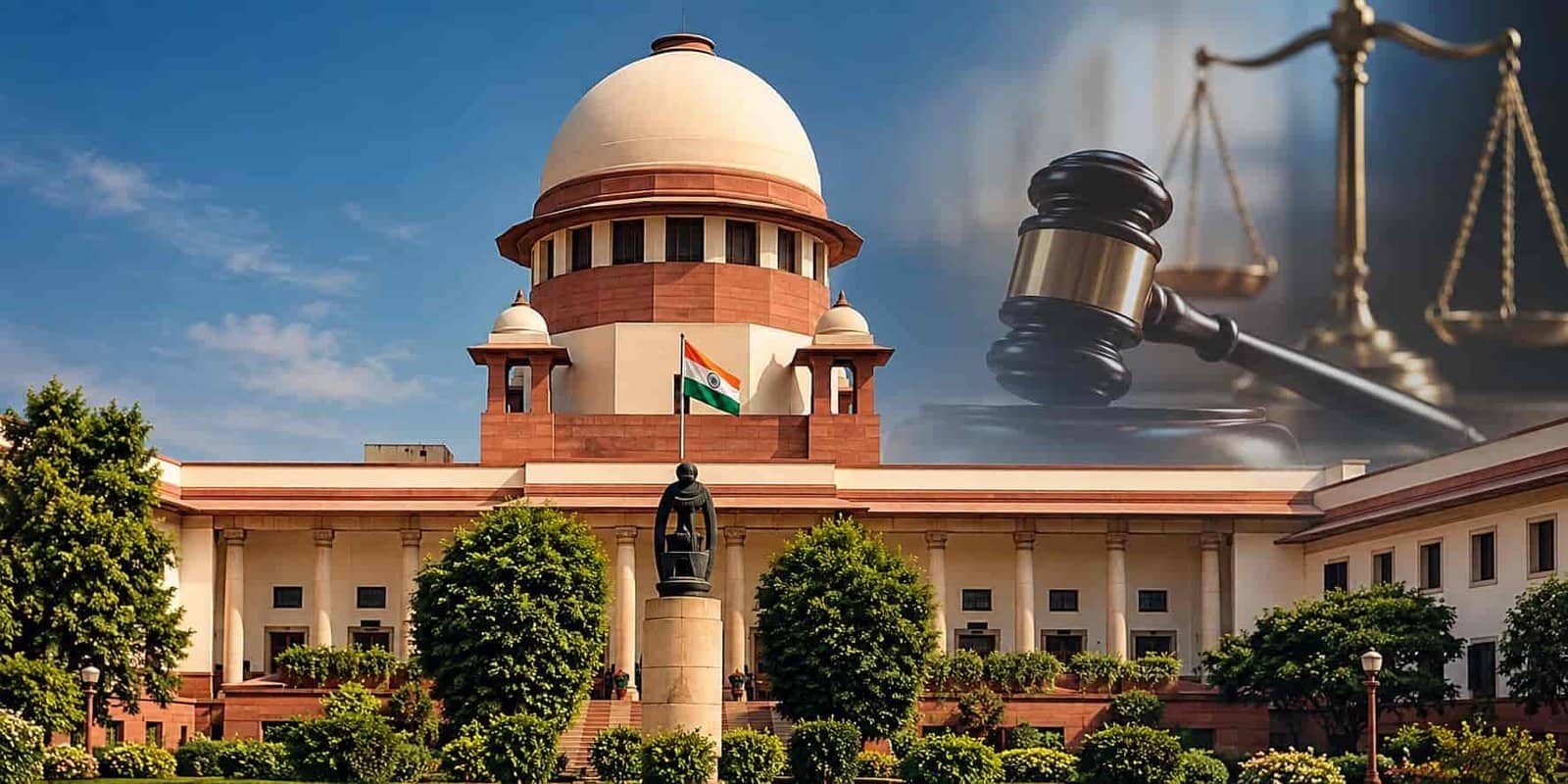
The corrupting influence of power and its consequences (Representative Image. AI Generated)
Key Takeaways
1 of 3
Automatically generated. Read full article for complete context.
A “leader” slaps a teacher. A “leader” forces food into the mouth of a fasting canteen employee. A journalist who wrote against some leaders is murdered. A journalist who investigated a politically inconvenient matter is charged and sent to prison. Students who raised questions are charged and sent to prison. Trees are cut down in a national park despite court restraint. SC guidelines are not implemented. Faith in the administration, in the judiciary, erodes… What is going on, and why? Are the comforting assumptions we live our lives under, no longer relevant? Are we out of tune, or is the malaise elsewhere? If so, is there a cure? If there is, what is it?
Every civilization has faced the question of who should govern, and on what terms? The answer has always carried an implied demand that those who hold power possess the discipline, judgment, and constitutional restraint necessary to exercise it lawfully. Classical political thought approached that problem by tying authority to virtue. PlatoAncient Greek PhilosopherA student of Socrates and teacher of Aristotle, Plato’s political philosophy, particularly in ‘The Republic,’ argued that legitimacy in governance should be tied to wisdom and the rule of philosopher-kings. located legitimacy in wisdom, AristotleAncient Greek PhilosopherA student of Plato, Aristotle’s political thought emphasized practical reason directed towards the common good, analyzing various forms of government and their potential for justice and stability. in practical reason directed to the common good, and the Roman republican traditionPolitical PhilosophyA tradition emphasizing civic virtue, public service, and the idea that holding public office is a trust for the common good, rather than a means for personal gain or power. treated office as a public trust rather than a private possession. Modern constitutional democracy did not abandon that premise; it modified the method of selection while retaining the expectation that public power should be entrusted to persons capable of acting within law.
That is why constitutional design has never rested on trust in individual goodness alone. Madison’s warningJames Madison’s QuoteRefers to James Madison’s Federalist Paper No. 51, where he famously stated, ‘If men were angels, no government would be necessary. If angels were to govern men, neither external nor internal controls on government would be necessary.’ It underscores the need for checks and balances due to human fallibility. that government must be administered by human beings rather than angels captures the basic point with precision. Power must therefore be divided, checked, and made answerable to law, not because institutions are perfect, but because persons are not. The constitutional order survives only so long as office is understood as a responsibility to institutions, not as a licence to use institutions as instruments of personal ambition.
For much of the twentieth century, representative politics broadly reflected that understanding. Parties generally preferred candidates with administrative experience, legislative competence, professional standing, or at least a record of public service. Patronage, corruption, and violence were never absent, but they were treated as departures from the norm, rather than as political assets. Power still had to be defended in constitutional language, even when its exercise fell short of constitutional ideals.
That arrangement now appears less secure. In a growing number of democracies, visibility has begun to outrank competence, confrontation to outrank deliberation, and personal force to outrank institutional restraint. The leader who dominates the conversation may be valued more highly than the leader who governs carefully. In such a climate, restraint can begin to look like weakness, while displays of command are mistaken for constitutional seriousness.
The deeper difficulty is not the existence of flawed leaders; democracies have always produced them. The difficulty arises when political incentives begin to reward the very characteristics constitutional government was designed to regulate. Criminal proceedings cease to operate as liabilities; institutional conflict becomes a badge of courage; and personal intervention is celebrated over orderly process. At that point, the pathology of power begins to take hold.
This is not a story of sudden collapse. It is a story of gradual incentive change. Political actors adapt to what voters reward, and voters respond to the political culture in which they are situated. If strength, confrontation, and personal dominance are consistently presented as marks of leadership, then parties will rationally continue to nominate those who embody such traits. The result is not irrational politics; it is distorted constitutional selection.
India provides a particularly revealing setting for this inquiry because its electoral framework requires unusually extensive disclosure of criminal antecedentsLegal TermRefers to a person’s past criminal record or history, including any previous arrests, charges, or convictions., assets, and educational qualifications. That disclosure regime makes visible a problem that may be easier to conceal elsewhere: the extent to which political success can become detached from constitutional aptitude. It also shows why the question is not merely about individual wrongdoing, but about the conditions that make certain candidates electorally attractive in the first place.
The answer lies in the accumulation of different forms of political capital. Financial resources matter because elections are expensive and candidates who can finance themselves reduce the burden on parties. Organizational strength matters because local networks, patronage structures, and informal influence often matter more than policy competence. Symbolic capital matters because public controversy, media attention, and the image of fearlessness can translate into electoral advantage even where legal proceedings are pending or unresolved.
This creates a troubling paradox. Conduct that should ordinarily damage a political career may instead enhance it. A criminal case may be recast as evidence of persecution. Institutional confrontation may be sold as courage. Visibility may matter more than legality, and public resilience more than constitutional propriety. The distinction between constitutional legitimacy and political legitimacy begins to widen, and once that happens, the incentives of representative politics begin to shift in a systematic way.
Judicial intervention can improve transparency, but it cannot by itself alter the underlying market. Mandatory disclosures, public explanations for candidate selection, and electoral accountability are valuable reforms, but they do not automatically change what voters reward. Nor do they fully overcome the problem of delay, which allows pending proceedings to become politically useful while accountability remains deferred. In that interval, uncertainty itself becomes a resource.
The implications are serious for legislatures as institutions. A legislature selected primarily for visibility and dominance may continue to function formally while losing deliberative quality. That is not an argument against democracy or for technocracy. It is simply a reminder that representative institutions are meant to do more than produce governments; they are meant to scrutinise power, deliberate upon law, and preserve constitutional balance. When electoral incentives reward spectacle more than substance, those functions weaken.
The same concern appears in the growing performance of power outside ordinary institutional channels. A constitutionally organized state distributes authority among the legislature, executive, police, regulators, and courts. When political actors intervene publicly in matters that belong to those institutions, the message is not merely about the immediate incident. It suggests that visible authority may displace lawful process. The performance itself becomes politically valuable, even when it undermines the separation of functions on which constitutional government depends.
This is why public interventions against citizens, officials, journalists, lawyers, or others who play a constitutional role are not trivial matters. They may be framed as isolated incidents, but their symbolic force is broader. They communicate that personal power can substitute for institutional decision-making. They also encourage the perception that law follows influence, rather than the other way around. Over time, that perception weakens confidence in constitutional procedure and strengthens dependence on patronage.
Violence or intimidation directed at institutions with constitutional significance is especially corrosive. Lawyers, judges, journalists, academics, and civil servants are not merely private individuals in such settings; they are participants in the system through which power is checked. Attacks on them are therefore not only criminal acts. They are also signals that the channels of scrutiny and accountability are being pressured by force, intimidation, or spectacle.
A comparable danger exists when opposition or criticism is treated as disloyalty. Representative democracy depends on the legitimacy of disagreement. Governments govern; they do not acquire immunity from criticism. Where opposition is reclassified as hostility and scrutiny as subversion, the constitutional balance begins to shift. The problem is not confined to any one ideology or party. It is a structural tendency that emerges whenever electoral incentives favor concentration of authority over constitutional forbearancePolitical NormThe practice of exercising self-restraint in the use of institutional power, even when legally permissible, to uphold democratic norms and preserve the spirit of the constitution..
The broader comparison is important. Democratic decline rarely begins with the formal abolition of elections or courts. It begins with the slow weakening of conventions, habits, and restraints. Each departure may seem small in isolation. Together, they alter the political baseline. An unchallenged breach becomes normal; a normal breach becomes expected. That is how constitutional erosion often proceeds in practice.
The Broken ‘Windows’ analogy helps explain the process. In criminal theory, visible disorder sends a signal that rules are not being enforced, which can invite further disorder. Transposed to constitutional life, the insight is similar: repeated tolerance of minor departures from institutional discipline can weaken public confidence in the system as a whole. The point is not zero tolerance in a punitive sense. The point is that constitutional legitimacy depends on visible consistency, not merely formal legality.
That is why isolated incidents should not be the only focus. The real issue is the cumulative effect. One delayed criminal case, one dramatic intervention, one ignored convention, one politicized investigation, one weak response to institutional impropriety may each be defensible on its own facts. But taken together, they can slowly reshape what citizens regard as acceptable political conduct. When that happens, constitutional decline becomes culturally embedded before it becomes formally visible.
India’s constitutional resilience remains substantial. Elections are vigorous, institutions continue to operate, and civil society remains active. None of this suggests collapse. But resilience should not obscure pressure. A system can remain formally intact while its constitutional habits deteriorate. The danger is not immediate rupture; it is gradual normalization of conduct that once would have been viewed as incompatible with responsible government.
The final constitutional question is therefore simple, even if the answer is difficult. Do democratic institutions continue to reward those best suited to exercise power responsibly, or do they increasingly reward those best able to display, acquire, and preserve power regardless of constitutional restraint? If the latter tendency continues, the law will not disappear overnight. It will be displaced slowly, one incentive at a time, until the culture of office changes from stewardship to domination.
The task of constitutional renewal is therefore not only to punish misuse after the fact but to restore the political value of restraint before erosion becomes entrenched. A republic remains healthy only when power understands that its legitimacy comes from law, not personality. When that understanding weakens, the pathology of power has already begun.
Indian civil society possesses intellectual resources unmatched by most democracies. Its universities, bar associations, retired judges, former civil servants, constitutional scholars, journalists, scientists, entrepreneurs, armed forces veterans, social workers, and professional institutions collectively represent an extraordinary reservoir of experience and public credibility.
Their influence need not be confined to criticism after elections. They can contribute before elections by helping transform the quality of democratic choice itself. One possible institutional innovation would be the establishment of a broad, independent and non-partisan national civic forum dedicated exclusively to constitutional governance. Its function would not be to become another political party. Nor would it seek executive office. Its purpose would instead be to evaluate prospective candidates according to publicly announced constitutional criteria: integrity, demonstrated public service, professional accomplishment, legislative aptitude, constitutional literacy, financial transparency, respect for the rule of law and commitment to democratic institutions.
Its assessments would possess no legal force. Their authority would derive solely from credibility, transparency, and intellectual independence. Where political parties nominate candidates who satisfy those standards, the forum could publicly acknowledge them irrespective of party affiliation. Where parties fail to do so, the forum could encourage capable and respected independent candidates to enter public life with organized civic support.
Such candidates would possess neither vast financial resources nor entrenched organizational structures. Many would lose. Some would eventually succeed. However, the presence of even a small number of legislators distinguished by constitutional understanding, professional accomplishment, and intellectual independence can materially improve legislative discourse. Parliament has never depended exclusively upon numbers. It has always depended upon the quality of voices capable of questioning assumptions, demanding evidence, exposing constitutional infirmities, and reminding governments that electoral mandates are broad but never unlimited.
Every enduring constitutional transformation began as a minority position. The abolition of slavery, universal adult suffrage, judicial review, freedom of the press, equality before law, and constitutional limitations upon executive authority all entered public life through minorities willing to defend principles before those principles commanded majorities.
The strength of a constitutional democracy lies in the diversity of informed voices participating in its deliberations. Governments will continue to change. Parties will continue to rise and decline. The constitutional objective is to ensure that whoever governs remains governed by the Constitution. India frequently describes itself as the world’s largest democracy.
Civilizational leadership is demonstrated when power voluntarily accepts restraint, when institutions command greater loyalty than personalities, when disagreement is protected, when minorities seek justice with confidence, and when governments understand that constitutional limits do not diminish authority but legitimize it. The true measure of a republic is whether an ordinary citizen, unknown, powerless, and unconnected, can stand before the might of the State confident that justice, based on Constitutional rights, will prevail. When that begins to disappear, the pathology of power has taken root.
History will not ultimately ask whether a nation elected strong leaders. History will ask a far more enduring question. Did power remain accountable to law, or did law gradually become accountable to power?
Jai Hind.
Disclaimer:The views and opinions expressed in this article are those of the author(s) and do not necessarily reflect the official policy or position of The Rift.