Opening The Rift
therift
© 2026 The Rift. All Rights Reserved.
Their Share of the Environment
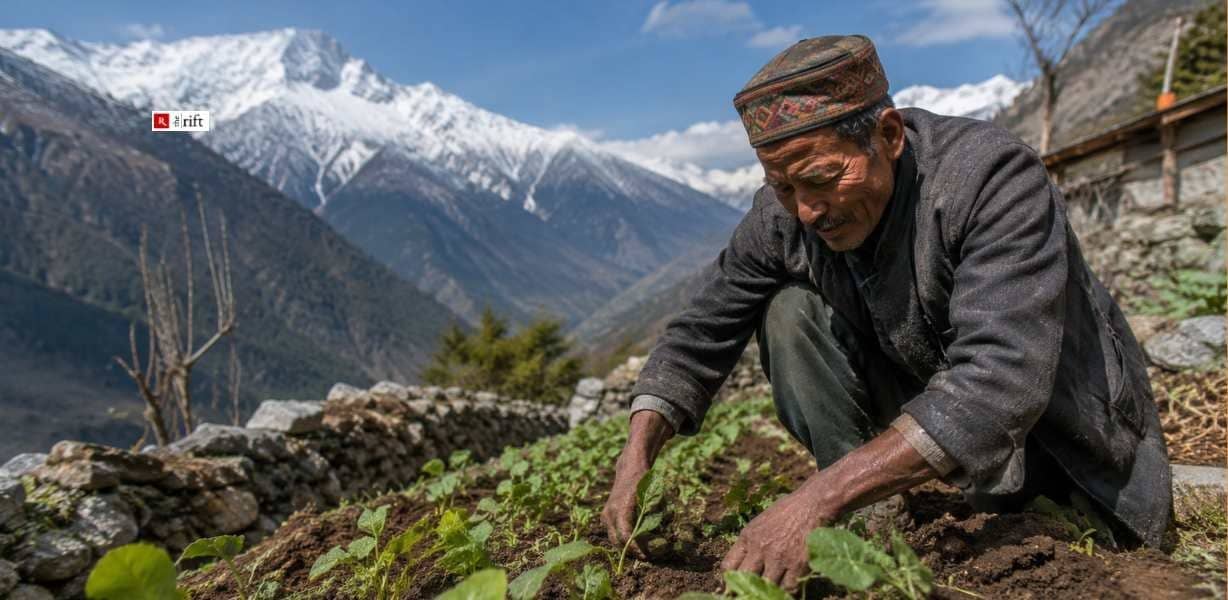
If environmental discourse fails to connect with villages, farms, water sources, mountain slopes, and local livelihoods, it will remain confined to seminars, speeches, and newspaper columns.

Key Takeaways
1 of 3
“Yet the common citizen’s understanding of environmental concerns is shaped largely by the articles, speeches, seminars, and media discussions produced by this academic class.”
Automatically generated. Read full article for complete context.
June 5 comes and goes every year.
A few articles appear in newspapers and magazines, panel discussions are held, and environmental concerns briefly find a place in the headlines. Then comes another day, another date—June 6—and an entirely new set of concerns. Before long, newspapers and television channels are once again stripped of the heavy rhetoric loaded with statistics and imposing terms such as ozone depletion, carbon footprints, and global warming. The urgency fades almost as quickly as it arrives.
I often feel that the unnecessary ritualism surrounding such a sensitive issue, along with an excessive dependence on complex scientific terminology and intimidating data, has made the subject of the environment far more distant from ordinary people than it ought to be.
Within academic discussions on the environment, one often encounters the familiar slogan: Think Globally, Act Locally. The “globally” part of this phrase largely belongs to the academic world. It concerns those who engage with environmental issues as scholars, researchers, or commentators. Many among them are remarkably well informed about the latest ecological developments across the world.
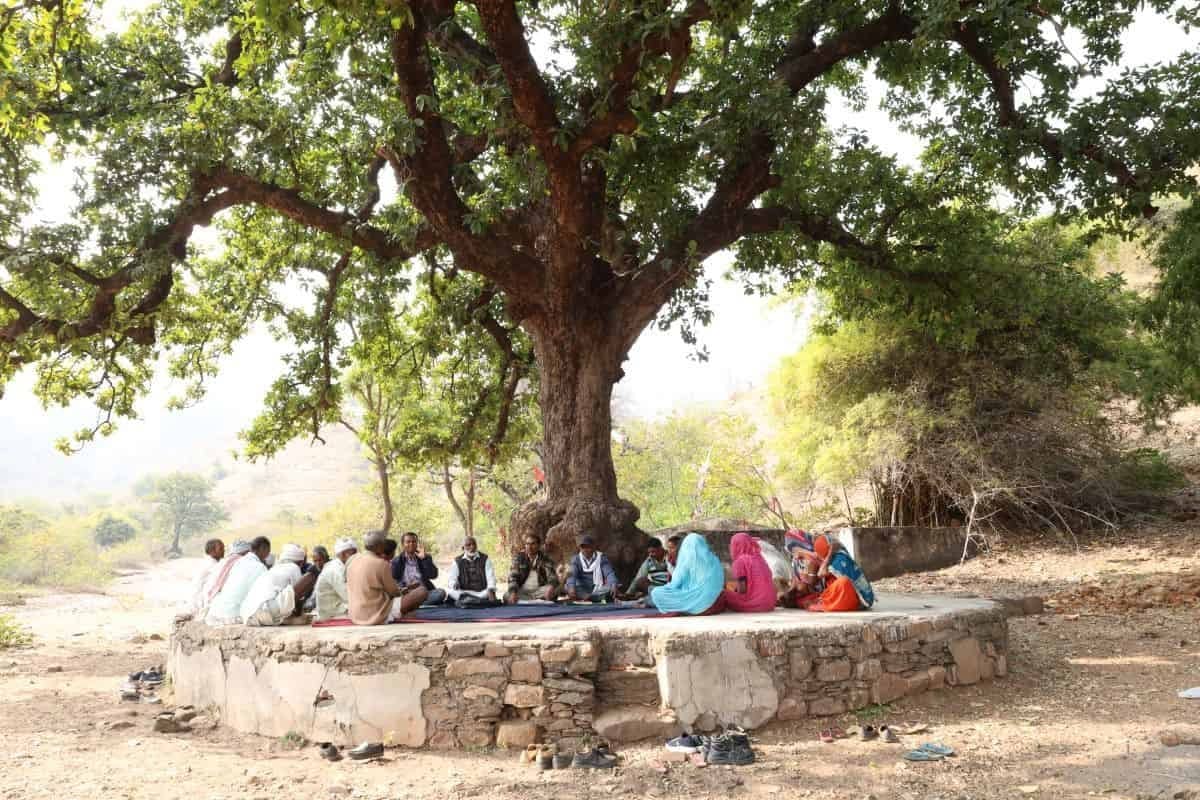
The “act locally” part, however, belongs to ordinary people.
Yet the common citizen’s understanding of environmental concerns is shaped largely by the articles, speeches, seminars, and media discussions produced by this academic class. Ironically, these discussions frequently revolve around the Amazon rainforest, whales hunted in distant oceans, oil spills in the Atlantic, endangered bird species in South America, or cyclones in the Arabian Sea triggered by rising temperatures. In this vast academic discourse, the priority of connecting people with their immediate environmental realities often gets lost.
Let me illustrate this through the example of my own small hill town, Bhimtal, situated in the Middle Himalayas.
Here, mountains are being cut in an utterly unscientific manner to make way for expanding concrete structures. Lakes and ponds continue to fill with debris. Hillsides are excavated indiscriminately in the obsession with building roads everywhere. Invasive plants such as Mexican DevilMexican Devil (Ageratina adenophora)A highly invasive plant species native to Mexico that has aggressively spread across the Himalayas, threatening local biodiversity and agriculture. continue to spread unchecked. The use of chemicals in farming and horticulture has increased sharply. Crop damage caused by birds and wild animals is rising steadily. Landslides have become more frequent. Water sources are drying up. Minerals are being extracted recklessly, and tourism is expanding without any meaningful regulation.
These are all serious environmental concerns, yet most continue to remain on the margins of public consciousness.
The Grassroots Disconnect
When academic priorities overshadow immediate environmental crises
Academic Focus
Global Discourse
Amazon Rainforest Deforestation
Atlantic Oil Spills
Distant Ocean Whaling
Ground Reality
Bhimtal’s Crisis
Spread of invasive Mexican Devil weed
Increasingly frequent landslides
Unscientific hillside excavation
VISUALS BY THE RIFT
Public awareness regarding such issues is still largely absent.
At the same time, environmental concerns often lose out to the pressures of immediate development priorities. And if public discourse remains focused primarily on subjects such as America’s indifference towards climate change, deforestation in tribal regions, or ecological crises in faraway places, how can one realistically expect a poorly educated hill farmer or a daily-wage labourer to become environmentally conscious?
This is not to suggest that global or national environmental issues should not be discussed locally. Such discussions are extremely important. My concern is something else entirely: how do we connect environmental awareness with the daily realities of local people—the farmer living in a nearby village, the roadside vendor, the boatman, the mule owner transporting sand and stones, or the labourer cutting through a mountainside for a new construction project?
A farmer in my town who uses excessive pesticides and fungicides on crops such as cabbage, peas, and tomatoes is often completely unaware of the long-term harm these chemicals can cause. He may not realise that he himself is partly responsible for the increasing damage to crops caused by birds and changing ecological patterns.
Similarly, when a labourer cuts into a steep hillside to create an access road for a villa being built by a new settler at some scenic vantage point, or when he excavates unstable slopes in the name of “site development,” he rarely realises that he may actually be laying the groundwork for a future landslide that could threaten the very village below.
These are only a few examples. If one honestly observes environmental realities at the local level, the list can become quite extensive.
Perhaps this is why, in many hill regions, environmental awareness among ordinary people remains limited largely to planting trees, avoiding the killing of animals, and understanding that cutting trees is illegal. The extent to which human actions themselves contribute to climate extremes, changing behavioural patterns among wild animals, flash floods, cloudbursts, declining soil fertility, and the drying up of water sources is something that still remains insufficiently understood.
I suspect this condition is not unique to my town alone.
Yet this does not mean that change at the grassroots level is impossible.
I would like to cite another example from Bhimtal itself.
Until a few years ago, there was virtually no understanding here regarding the proper disposal of polythene bags, wrappers, kitchen waste, and household garbage. The shoreline of the lake remained littered with waste. Most families simply dumped garbage into nearby drains or along roadsides. A cleanliness-conscious family living near my home would regularly burn accumulated neighbourhood waste in a drain every Sunday morning.
A few years ago, however, the young and visionary Executive Officer of the local civic body, Mr. Vijay Bisht, initiated an earnest campaign that combined door-to-door garbage collection with sustained public awareness efforts. Today, children and young people carrying waste bins wait for the garbage vehicle to arrive. People are slowly beginning to understand the importance of waste segregation and composting biodegradable garbage.
As a result, my small hill town has begun to look noticeably cleaner and more beautiful than before.
The irony is difficult to miss. The mountains that once gave birth to the Chipko MovementChipko MovementA non-violent social and ecological movement by rural villagers, particularly women, in India in the 1970s aimed at protecting trees and forests slated for government-backed logging. and taught the world a unique lesson in environmental stewardship are today witnessing a growing indifference towards environmental concerns among ordinary people.
If environmental discourse fails to connect with villages, farms, water sources, mountain slopes, and local livelihoods, it will remain confined to seminars, speeches, and newspaper columns. Environmental protection is undoubtedly a global challenge, stretching from the Amazon rainforest to the Himalayan peaks, but meaningful action must begin much closer to home—with an understanding of the soil beneath our feet, the water we depend upon, the forests around us, and the fragile ecological balance that sustains our daily lives.
Perhaps this is the true meaning of “Think Globally, Act Locally.” The future of our environment will be determined not only by international agreements and scientific conferences, but also by the choices made by farmers, labourers, shopkeepers, boatmen, and ordinary citizens within their own communities.
Unless they become active participants in the environmental conversation, genuine and lasting change will remain elusive.
The Article, first appeared on Countercurrents, is republished with the author’s Permission.
Disclaimer:The views and opinions expressed in this article are those of the author(s) and do not necessarily reflect the official policy or position of The Rift.
*EnvironmentChipko MovementClimate ChangefeatureGrassroots ActionHimalayasPublic AwarenessWaste Management