Opening The Rift
therift
© 2026 The Rift. All Rights Reserved.
Threats Without Hegemony: The Limits of US Power in West Asia
The conflict has exposed the limits of American coercive power in West Asia and revealed the dangers of strategic arrogance dressed up as certainty.

Key Takeaways
1 of 3
Automatically generated. Read full article for complete context.
If there is one thing that now appears irreversible, it is that Iran did not lose this war and that the United States and Israel have collectively looked irrational and overconfident in their predictions. The assumption that overwhelming military pressure would quickly subdue Tehran has not materialised. Instead, the conflict has exposed the limits of American coercive powerCoercive PowerThe ability of a state to force another state or entity to change its behavior, typically through military or economic threats. in West Asia and revealed the dangers of strategic arrogance dressed up as certainty. It increasingly appears that Washington’s room for manoeuvre is constrained by Benjamin Netanyahu’s escalation strategy and the influence of the pro-Israel lobby within American politics.
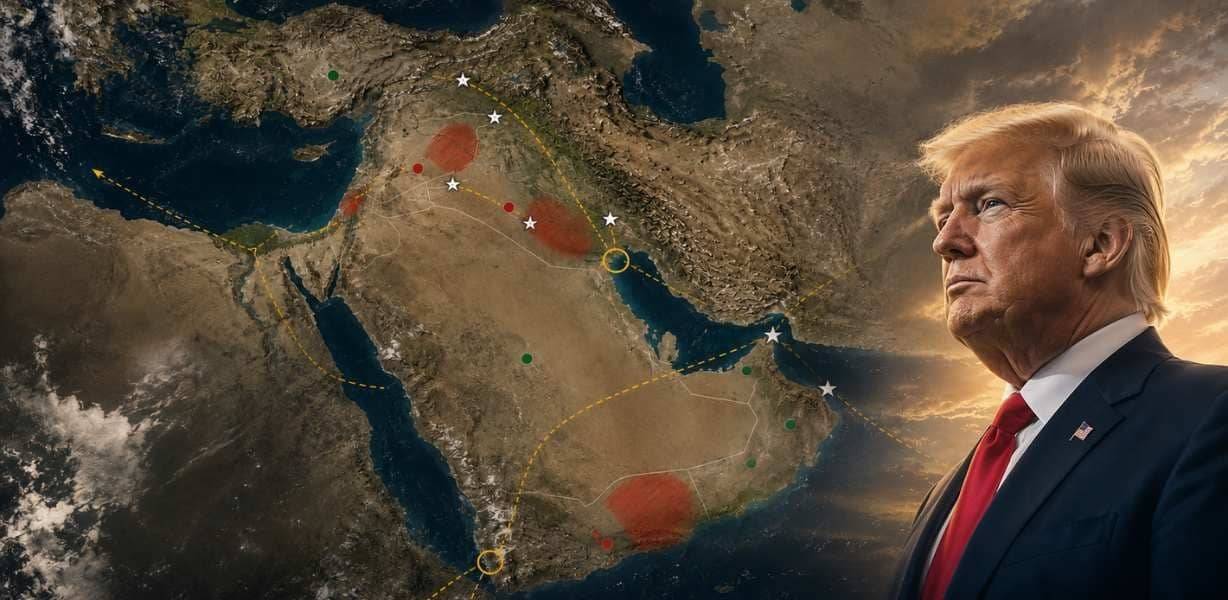
For decades, Washington relied on military superiority, sanctions, diplomatic intimidationDiplomatic IntimidationUsing intense diplomatic pressure, threats of isolation, or aggressive negotiation tactics to force an adversary’s compliance., and regional alliances to discipline adversaries into submission. Iran, however, neither collapsed internally nor retreated strategically. Tehran demonstrated that it possesses the ability to absorb punishment while retaining retaliatory capacity through missiles, regional alliances, proxy networksProxy NetworksAllied armed groups or political factions funded and supported by a larger state to act on its behalf in regional conflicts., and the strategic leverage associated with the Strait of HormuzStrait of HormuzA highly strategic waterway between the Persian Gulf and the Gulf of Oman, crucial for global oil shipments.. The image of invincibility that Washington cultivated since the end of the Cold War now stands visibly weakened.
The primary face-saving strategy available to Donald Trump is to declare victory by claiming that American military operations, including targeted strikes, achieved their intended objectives. Such an approach allows him to frame the end of the conflict as a calculated success rather than a retreat. Trump is likely to follow a familiar political pattern: loudly proclaiming success while simultaneously moving toward hurried negotiations behind the scenes. His administration will attempt to present the outcome to his political base as proof of strong leadership, even if critics interpret it as strategic withdrawal under pressure.
Yet Trump faces a profound domestic contradiction that weakens his political room for manoeuvre. His political identity was built around promises to avoid “forever wars” and prioritise American economic recovery over costly military adventures abroad. A prolonged confrontation with Iran directly undermines that promise. Rising fuel prices, instability in global shipping routes, inflationary pressures, and growing public anxiety could rapidly erode support even among sections of his nationalist base. What may initially be marketed as patriotic strength can quickly come to be seen as reckless adventurism if ordinary Americans begin to experience sustained economic pain.
The deeper problem for Washington is that this conflict has demonstrated that military supremacy alone cannot guarantee political outcomes. The United States may still possess unmatched military capabilities, but the political effectiveness of those capabilities is increasingly being questioned. Across large parts of the Global SouthGlobal SouthA term broadly referring to developing countries in Asia, Africa, and Latin America, often sharing common historical experiences of colonialism., the spectacle of a heavily sanctioned nation resisting coordinated pressure from both the United States and Israel reinforces a growing perception that Western power is neither morally credible nor strategically omnipotent.
Trump’s most plausible exit route may therefore lie in diplomacy disguised as triumph. A peace initiative facilitated through intermediaries such as China or Pakistan could provide him with a way to claim that tough military pressure forced Iran toward negotiation. Such a framework would likely involve some form of sanctions reliefSanctions ReliefThe lifting or easing of economic penalties placed on a country in exchange for policy concessions. in exchange for guarantees related to maritime securityMaritime SecurityThe protection of oceans and sea routes from threats such as piracy, military blockades, or terrorism, ensuring safe international trade and travel. and the reopening or stabilisation of shipping lanes through the Strait of Hormuz. Trump could then market the outcome as a “deal-maker’s victory” rather than an open-ended military entanglement.
But even this route carries risks. Beijing’s growing role as a potential mediator signals a changing geopolitical landscape in which the United States no longer enjoys a monopoly over diplomacy in the Middle East. If China, alongside regional actors such as Pakistan, Türkiye, or Gulf states, becomes instrumental in de-escalation efforts, Washington risks appearing less like the architect of peace and more like a reluctant participant compelled toward compromise. For a leader such as Trump, who thrives politically on projecting dominance and control, such optics are deeply uncomfortable.
Trump may also attempt to pressure allies, particularly Israeli Prime Minister Benjamin Netanyahu, to reduce hostilities against Iran and Hezbollah while framing the move as a courageous effort to restore peace in the region. Yet this is where the contradictions within the U.S.–Israel alliance become increasingly visible. The relationship between Netanyahu and the American administration shows signs of growing friction and shifting leverage, with divided opinions emerging over who ultimately shapes the direction of regional strategy.
Netanyahu has pursued an aggressive military approach across multiple fronts — Gaza, Lebanon, Syria, and Iran — often disregarding international pressure and repeated calls for restraint. Many analysts argue that Netanyahu has increasingly prioritised the survival of his coalition government and his own political future over immediate peace settlements. Military escalation, in this reading, has become both a strategic doctrine and a mechanism for domestic political survival. Netanyahu has also been associated with spoiling tacticsSpoiling TacticsActions taken by a political or military actor to intentionally disrupt, delay, or sabotage ongoing peace negotiations or diplomatic efforts. that undermine negotiations at sensitive moments, including targeted assassinations or escalatory actions designed to derail diplomatic openings and reinforce more confrontational approaches.
There is also the uncomfortable reality that Israel’s strategic calculations do not always align neatly with Washington’s broader global priorities. Netanyahu’s government appears willing to sustain prolonged regional instability if it ensures Israel’s military dominance and diverts attention from internal political crises. The United States, however, must simultaneously manage tensions involving China, Russia, NATO allies, fragile global markets, and growing domestic economic anxieties. This divergence creates an increasingly visible imbalance in which Washington often appears dragged into escalations initiated by Tel Aviv rather than directing events according to its own strategic timetable.
Israel nevertheless remains deeply intertwined with the United States through extensive military, economic, technological, and diplomatic partnerships. Long-term military aid agreements, intelligence sharing, and cooperation on missile defence systems create a foundational level of interdependence that neither side can easily abandon. Washington also continues to provide Israel with crucial diplomatic backing in international institutions, frequently shielding it from growing international criticism and legal scrutiny. These ties ensure that bilateral stability remains a strategic priority even during periods of visible disagreement.
There are additional challenges complicating any American exit strategy. The fragile nature of ceasefire arrangements, combined with mounting pressure within sections of Congress, could eventually challenge the legal and political basis for prolonged military operations. Trump also faces the risk that his own supporters may not fully accept a carefully constructed “victory narrative” if economic consequences continue to intensify. Rising fuel costs, inflation, disruptions in trade, and fears of wider regional instability have the potential to create political backlash at home.
Perhaps the greatest irony is that a war intended to isolate Iran may instead strengthen Tehran’s narrative of resistance while deepening anti-American sentiment across the region. Far from restoring unquestioned American authority, the conflict has exposed fractures in Western credibility and limitations in military power. The assumption that force alone can reorder political realities in West Asia now appears far less convincing than it once did.
The relationship between an Israeli Prime Minister and the United States administration has always involved a complex interplay of domestic political compulsions, strategic dependency, and mutual influence. While Israeli leaders often make tactical decisions based on coalition pressures and national security calculations, those decisions are inevitably weighed against the strategic importance of the American partnership. Rather than one side permanently holding all the cards, the relationship is better understood as one of continuous negotiation, leverage, and periodic tension in pursuit of overlapping — but not always identical — regional objectives.
Trump may still attempt to script a triumphant ending to this conflict, but history rarely judges wars by declarations of victory alone. It judges them by the realities left behind. In this conflict, the realities are deeply uncomfortable for both Washington and Tel Aviv: military superiority did not translate into political control, and the world has now witnessed the limits of power presented as certainty.
Disclaimer:The views and opinions expressed in this article are those of the author(s) and do not necessarily reflect the official policy or position of The Rift.