Opening The Rift
therift
© 2026 The Rift. All Rights Reserved.
From Anti-Caste Struggle to Women’s Liberation The Transformative Contribution of Gail Omvedt
Dr. Gail Omvedt constructed an independent intellectual framework rooted in the Indian context, engaging directly with Indian realities.

Key Takeaways
1 of 3
Automatically generated. Read full article for complete context.
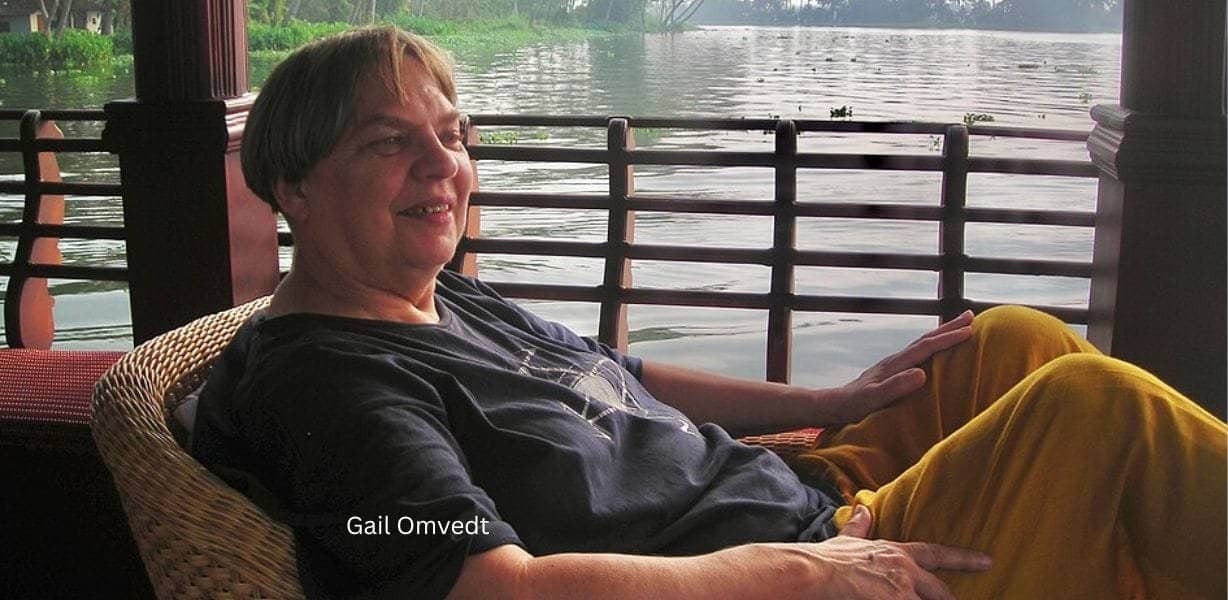
In the history of India’s social movements, one rarely finds individuals who, despite being born on foreign soil, became completely at one with this land and its deprived, exploited communities for their entire lives. Dr. Gail Omvedt is one such extraordinary name. She is known internationally as a sociologist, a founding member of the Shramik Mukti DalWorkers’ Liberation LeagueA social and political organization in Maharashtra, India, founded by Gail Omvedt and Bharat Patankar, focused on the rights of farmers, agricultural laborers, and marginalized communities., and a senior researcher-writer who presented the ideas of Buddha, Phule, Ambedkar, and Marx, along with feminist thought, saint literature, and Warkari philosophyWarkari SampradayaA devotional tradition within Hinduism, particularly popular in Maharashtra, centered on the worship of Vithoba (a form of Vishnu) and emphasizing egalitarianism, devotion through pilgrimage (wari), and saint poetry., in new and original ways. This thinker-activist, who worked with tireless energy in the women’s liberation movement, the movement of abandoned women, and the struggles of tribal communities, dedicated her entire life to the grassroots communities of India.
Dr. Gail was born on August 2, 1941, in Minneapolis, in the United States. Although she was originally American, she was active in various movements from her student days onward. After completing her education in America, she came to India and began research on social movements, particularly the work of Mahatma Jyotirao Phule. After earning her degree from Carleton College, she pursued her postgraduate and doctoral studies at the University of California, Berkeley. She was at the forefront of the youth movement that rose up against America’s imperialist, war-mongering policies, and she was also actively involved in the protests against the Vietnam War. It was during this period that she first came to India, and later, when she returned to India for research, she made her way to Maharashtra.
After arriving in Maharashtra, she learned the Marathi language and undertook a deep study of Mahatma Phule’s movement. She earned her doctorate at Berkeley by presenting a thesis titled “Non-Brahmin MovementAnti-Caste MovementA social and political movement in colonial India, particularly strong in Western and Southern India, that challenged the dominance of Brahmins in society, administration, and education, advocating for the rights and representation of non-Brahmin castes. in Western India,” which examined the cultural revolt within colonial society. No one before her had produced such an extensive study of Mahatma Phule’s movement, one that involved traveling across the length and breadth of Maharashtra. This thesis became a milestone not only for scholars in India but for scholars around the world. This book brought renewed and fresh attention to Phule’s movement. Indeed, the late Kanshi Ram, founder of the Bahujan Samaj PartyMajority Society PartyA national political party in India, primarily representing the Bahujan (majority) communities, including Scheduled Castes, Scheduled Tribes, Other Backward Classes, and religious minorities, founded by Kanshi Ram., was so influenced by this book that he would travel to Kasegaon to seek Dr. Gail’s guidance and counsel.
Rather than being drawn into the comforts of a developed nation like America, Dr. Gail chose to live in India, particularly in Maharashtra. While she was studying women’s liberation movements, she came to know the revolutionary woman Indutai Patankar and Dr. Bharat Patankar. This whirlwind of a man, who had left his medical studies unfinished to devote himself entirely to the movement, was chosen by Dr. Gail as her life partner; the two were married in 1976. Thereafter began their shared, turbulent journey together. Later, in 1983, she renounced her American citizenship and accepted Indian citizenship. Through their fearless partnership, Dr. Gail and Dr. Bharat carried forward the legacy of Savitribai and Jotiba Phule, setting up an ideal before the new generation. The couple has a daughter, Prachi Patankar, who herself is active in anti-caste movements existing in America.
The organization Dr. Gail built, Shramik Mukti Dal, fought for decades for the rights of farmers, agricultural laborers, and people displaced by dams and afflicted by drought in western Maharashtra. Through this organization, the struggle was not confined merely to economic demands; broader social questions such as the eradication of caste, equality between men and women, and equitable rights over natural resources were also brought to the center. The movement built jointly by Dr. Gail and Dr. Bharat Patankar became a rare bridge between the leftist and Ambedkarite movements of Maharashtra, since bringing these two traditions together to work in unison was not, until then, a common practice. Giving the left movements, which spoke the language of class struggle, an awareness of caste realities, and giving the struggle against caste a class dimension — this was the work Dr. Gail consistently carried out through her writing and through her direct organizational work.
The village of Kasegaon, in Sangli district, became the permanent home of Dr. Gail and Dr. Bharat. Rather than settling into the elite academic circles of big cities, they chose to live among grassroots people, amid their struggles. Because of her immense capacity for reading and her restless, ever-traveling spirit, she kept traveling and writing across the whole of India. She kept joining various movements with initiative, and gradually became the intellectual guide of these movements. In particular, she remained at the forefront of the movement of abandoned women that began in western Maharashtra under the initiative of Indutai Patankar. She also took the lead in the movement against drought that was carried out by the Mukti Sangharsh movement in what was then Khanapur taluka of Sangli district, as well as in the struggle for the construction of the Baliraja Dam undertaken to address drought. Right until the end, she remained a firm pillar of support for the various movements that ran across the state under the leadership of Shramik Mukti Dal.
Dr. Gail’s academic contribution is equally vast. She worked for some time as a reader in the Department of Sociology at Savitribai Phule Pune University, and at the same university she also headed the Phule-Ambedkar Chair. Besides this, she also taught and conducted research at the Ambedkar Chair at the Nisvas Institute in Odisha, as a visiting Asian professor in the Nordic countries, at the Institute of Asian Studies in Copenhagen, at the Nehru Memorial Museum and Library in New Delhi, and at the Institute in Shimla. She worked as a consulting sociologist on issues of gender, environment, and rural development for the United Nations Development Programme (UNDP), Oxfam Novib, and other organizations. She was also a consultant to the FAO, and on behalf of the Indian Council of Social Science Research (ICSSR) she conducted research on the Bhakti tradition. Her numerous articles were published in the prestigious journal Economic and Political Weekly as well as in the widely-read English daily The Hindu. It is recalled that Veerappan, moved by one of her articles in The Hindu, once wrote her a letter of appreciation.
Key Milestones: Dr. Gail Omvedt’s Life & Work
1941
Born in Minneapolis, USA
Began her journey as an American citizen.
Student Days
Anti-War Activism & India Research
Active in Vietnam War protests; began research on Indian social movements.
Doctorate
“Non-Brahmin Movement in Western India”
Earned PhD from UC Berkeley, a milestone study.
1976
Marriage to Dr. Bharat Patankar
Began a shared journey of activism and scholarship in India.
1983
Accepted Indian Citizenship
Renounced US citizenship, fully embracing her commitment to India.
Decades
Shramik Mukti Dal & Grassroots Work
Led struggles for farmers, laborers, and marginalized communities.
Academic Career
Reader, Phule-Ambedkar Chair, Consultant
Held various academic and consulting roles (UNDP, FAO, ICSSR).
August 25, 2021
Passed Away in Kasegaon
Her legacy continues to inspire social justice movements.
VISUALS BY THE RIFT
The scope of Dr. Gail’s body of writing is astonishing. She wrote more than twenty-five books, including Cultural Revolt in Colonial Society: The Non-Brahmin Movement in Western India, Seeking Begumpura, Buddhism in India, Dr. Babasaheb Ambedkar, Mahatma Jyotiba Phule, Dalits and the Democratic Revolution, Understanding Caste, We Will Smash This Prison, and New Social Movements in India. Her book We Will Smash This Prison, known in Marathi as Dasyacha Turung Phodite, is regarded as a valuable addition to the historiography of the women’s movement in India. Her books continue to be studied today across many disciplines, including sociology, history, and political science, and their reference value endures in ongoing discussions on caste, women’s issues, farmers’ movements, and social justice.
One important hallmark of Dr. Gail’s work is that she broke down the wall between the two disciplines of history and sociology. She did not formulate her theories merely by sitting in libraries and studying documents; instead, she shaped her writing through actual fieldwork and direct conversation with people. Her scholarly article on the “Prati Sarkar,” the parallel government structure that arose in Satara district against the backdrop of the 1942 Quit India Movement, is regarded as a striking example of this approach. The eminent historian Ramachandra Guha too made admiring mention of this very contribution of Dr. Gail’s, noting that erasing the boundary between history and sociology was one of her great contributions. Ruth Manorama, head of the National Federation of Dalit Women, also described Dr. Gail, after her passing, as an “inspiring organizer and an unprejudiced scholar.” Manorama further noted that Dr. Gail had introduced her to many unknown Dalit movements.
Dr. Gail’s contribution in the field of the farmers’ movement has also been significant. She did not view the problems of agricultural laborers, small landholding farmers, and people in drought-affected regions merely as economic problems; instead, she connected them to caste, gender, and ownership of natural resources. She gave the movements of Maharashtra a new vision, one that placed Dalit-Bahujan and tribal communities at the center of the struggle for rights over water, land, and forest resources. Out of this emerged the ideological framework she articulated, linking environment, sustainable development, and social justice — a framework that continues to guide many movements even today. After embracing Buddhist Dhamma, she viewed Dr. Babasaheb Ambedkar‘s Dhamma revolution as a path to socio-political liberation, and it was from this perspective that she wrote the book Buddhism in India, in which the reformulation of Buddhist Dhamma is presented as an instrument of social revolution.
In her later years, after the lockdown, walking gradually became difficult for Dr. Gail, and she received treatment at home in Kasegaon under the care of Dr. Bharat Patankar. After a prolonged illness, she passed away at her home in Kasegaon on August 25, 2021, at the age of eighty. The news of her death spread grief across social movements, academic circles, and progressive intellectual spaces throughout Maharashtra and the rest of the country. Her last rites were performed according to Buddhist tradition; she had adopted this path some time after coming to India from Berkeley in the 1970s. Thousands of activists, scholars, and ordinary people took part in her funeral procession, and the surrounding area echoed with slogans of “Comrade Gail Amar Rahe.”
In the latter half of the twentieth century and the early part of the twenty-first, when studying India’s caste system, most Western scholars looked at Indian society from the outside, purely from the position of an observer. Dr. Gail, however, broke from this convention. In unraveling the interrelationship between caste and class, she situated Marxist analysis within the framework of India’s caste reality and brought to the center the question of caste, which Western Marxists had neglected. At the same time, while traditional Marxist frameworks relegated the ideas of Mahatma Phule and Dr. Ambedkar to a secondary place, Dr. Gail placed the thought of these two great figures at the very center of India’s social transformation. It was through this that she accomplished the great intellectual work of creating a dialogue between Phule-Ambedkarite and Marxist ideologies.
In evaluating the work of Dr. Gail Omvedt, one cannot look only at her body of written work or her academic scholarship. At her core, she was an activist who believed in direct action. Without allowing a gap between theory and practice, she stepped outside the boundaries of scholarship and made the problems of drought-stricken farmers, landless agricultural laborers, abandoned women, and tribal communities her own problems. She consistently highlighted, through her writing and through direct movement work, the interconnections of exploitation along the three axes of caste, class, and gender. By weaving together the thought of Buddha, Phule, Ambedkar, and Marx, she constructed an independent intellectual framework rooted in the Indian context — one that was not merely an imitation of Western sociological concepts but one that engaged directly with Indian realities.
Dr. Gail’s home in Kasegaon was not merely her residence; it became an intellectual center point for many social movements in Maharashtra. Scholars, activists, and students from across the country would come to Kasegaon to meet her and seek her guidance. Even though she produced high-caliber academic writing in English, Dr. Gail also mastered the Marathi language and continually made the effort to communicate with ordinary people in the local tongue. Despite being a foreign-born scholar, she never considered herself separate from this land; rather, she made the struggles of this soil her own, and she kept working for them until her very last breath.
Today, many years later, the work and thought of Dr. Gail Omvedt still feel just as relevant. Caste reality has still not ended, injustice against women has still not ended, and the problems of farmers and agricultural laborers remain unresolved — in such circumstances, the ideological foundation Dr. Gail laid out, and the path of action she demonstrated, continue to guide scholars and activists of the new generation. Any history of Maharashtra’s social movements would remain incomplete without the contribution of Dr. Gail Omvedt. She carried the transformative tradition of Phule-Shahu-AmbedkarSocial Reformer LineageA lineage of influential social reformers from Maharashtra, India: Mahatma Jyotirao Phule, Chhatrapati Shahu Maharaj, and Dr. B.R. Ambedkar, whose collective work laid the foundation for anti-caste, egalitarian, and social justice movements. to the international stage, and at the same time she connected this very tradition with women’s liberation, farmers’ rights, and environmental justice, building a broad and inclusive framework. The influence of her ideas is still felt today, from university curricula to grassroots village movements. For students, researchers, and activists newly taking up the study of the social sciences, Dr. Gail’s writing continues to serve as an important point of reference. The work of Dr. Gail Omvedt is not something to be recorded merely on the pages of history; it stands as a living monument that continues to give strength and inspiration to the ongoing struggle for social justice. As long as inequality based on caste, class, and gender remains in Indian society, there is no doubt that the thought and work of Dr. Gail will continue to serve as a guiding light.
Disclaimer:The views and opinions expressed in this article are those of the author(s) and do not necessarily reflect the official policy or position of The Rift.
*Gail OmvedtAmbedkariteAnti-CasteIndian SociologyMaharashtraMarxistSocial MovementsWomen's Liberation