Opening The Rift
therift
© 2026 The Rift. All Rights Reserved.
War by Another Name—West-led Sanctions Have Turned into Big Killer
Mortality arising from economic strangulation may be almost as high as, or even more than, what is caused by wars.

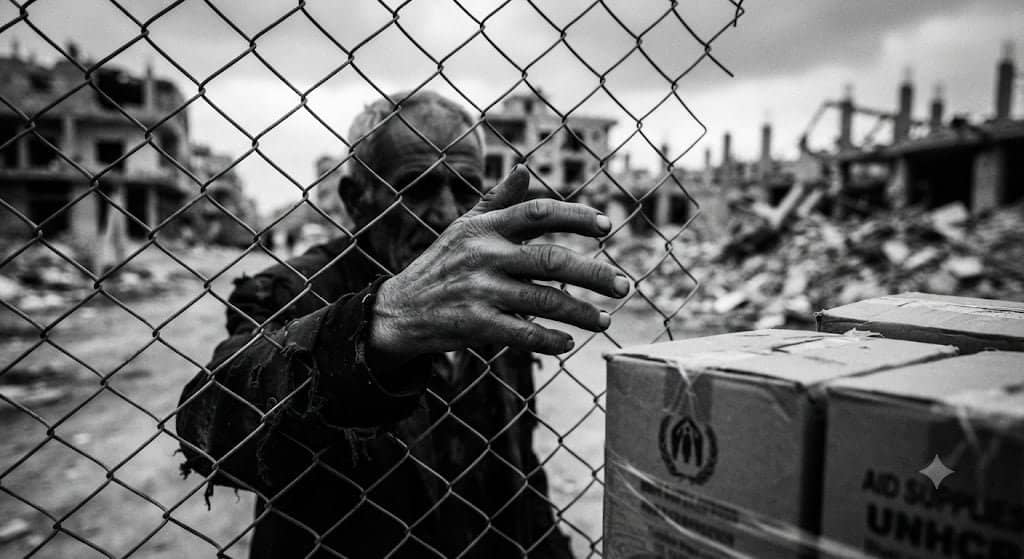
West-led sanctions, often described as a form of economic warfare, have led to significant humanitarian crises and widespread suffering. (Representative Image)
Key Takeaways
1 of 3
Automatically generated. Read full article for complete context.
Cuban doctors have been famous for willingly going to conflict and disaster zones to provide life-saving medical assistance. It is a cruel irony that today doctors here cannot access medical supplies and medicines to save the lives of their own people and children. The reason is clearly the strangulating system of sanctions and restrictions imposed by the USA. Tens of thousands of surgeries had to be cancelled in recent times. In a country known worldwide for achieving great progress in lowering child mortality at relatively much lower levels of income, it has been very disturbing to see the near doubling of infant mortality rate in recent times due to the impacts of these extremely high level of sanctions and restrictions. People here face devastating shortages of fuel and electricity, and often of other daily needs including food as well. Significantly, senior US policy makers express no regret at this, merely saying that this is helping the objective of regime change. The UN Human Rights Chief Volker Turk said in June this year (2026), “Such severe sanctions package that targets entire sectors of an economy and produce broad, indiscriminate and harsh effects on populations are incompatible with basic principles of international human rights law.”
Earlier this year, the attack on Iran was preceded by extensive sanctions and restrictions, which continue. Similarly, the attempted kidnapping of the Venezuelan president was also preceded by extensive sanctions and restrictions. Various studies and reports have documented immense human distress associated with these sanctions. However this is not reflected in the statements of senior US decision makers who instead emphasize aspects like regime change. US Treasury Secretary Scott Bessent said on August 20, commenting on the strategy based on economic pressures, “It worked in Venezuela when we imposed the blockade, it is working in Cuba right now, and it’ll work in Iran, and we’re going to bring this regime down.” More recently, US Secretary of State Mario Rubio (speaking in the context of what he had earlier said to G7 leaders) told reporters in Paris on November 10, “We don’t need to conduct military strikes if we are achieving the same objective through economic means and economic pressure.” However the problem with this ‘war by other means’ (even as the wars with most destructive actual weapons have also continued in recent years and in fact increased) is that this is causing massive distress, and mortality arising from such economic strangulation may be almost as high or even more than what is caused by wars. Deaths caused by US led sanctions and restrictions has been in the millions at world level in recent years, according to recent estimates.
This is confirmed by a study by Prof Francisco Rodrigues, Silvio Rendon and Mark Weisbrot published in The Lancet Global Health in 2025. This study, titled ‘Effects of International Sanctions on Age-Specific Mortality: a cross-national panel data analysis,’ It is based on sanction episodes from 152 countries during 1971-2021 and their mortality impacts, with sanctions imposed mainly by the USA, European Union, and the UN. This study estimates, mainly in the context of the first two, that the unilateral sanctions were associated with the annual toll of 564,258 deaths during this period, similar to the global mortality burden associated with armed conflict (along with its indirect impacts). Nearly half the deaths linked to sanctions related to children. As in several such studies, a range of mortality estimates may sometimes be given. The results of this study have been widely presented in several reports in terms of a total number of 38 million deaths caused by sanctions during the period covered.
Economic sanctions and restrictions, led by the USA and often followed by several Western allies, have become so numerous and extensive that it is difficult to keep track of their numbers. Still, recently published estimates mention over 20,000 active sanctioned entities and individuals globally. According to a review of the sanctions administered by the Office of Foreign Assets Control (OFAC) in the USA (sanction designation), made by the US Department of Treasury, the number of these sanctions has increased at a very past pace, and what is more, these sanctions tell only a part of the story as the US continues to rely on export control, foreign direct investment reviews, import restrictions and restrictions with respect to use of information and communications technology and services supplies to achieve foreign policy goals. According to various estimates, the number of countries affected by sanctions averaged around 15 in the 1970s, around 30 in the 1990s, and is reported to have increased to over 60 in the 2020s, with most countries belonging to the Global South and including many low-income countries.
In his book on this subject titled ‘The Economic Weapon—The Rise of Sanctions as A Tool of Modern War’, Nicholas Mulder has argued that while sanctions started as a peace making tool after World War 1, these have become more and more hostile and appear more like a form of warfare now. The author has stated in an interview, “Both in their underlying goals (regime change and breaking the will to resist) and in their effects on civilian society, immisseration, starvation, disease, bankruptcy, –these approaches to sanctions can produce measures whose functions and consequences are identical to war.” This book has quoted an official in the UN as stating in 2015 that nearly one third of the world’s population lives in countries that have some form of economic sanctions.
Keeping all these factors in view, a UN General Assembly resolution from April 2023, submitted by Azerbaijan on behalf of the Non-Aligned Movement and approved with an overwhelming majority, assumed significant importance. This resolution strongly condemned the continued unilateral application and enforcement by certain powers of such measures as tools of pressure, including political and economic pressures, against any country, particularly least developed and developing countries, with a view to preventing them from exercising their right to decide, of their own free will, their own political, economic, and social systems. This resolution urged the removal of such measures as they are contrary to the Charter and norms and principles governing peaceful relations among states. Further, and significantly, this resolution urged all states to stop accepting, maintaining, implementing, complying with unilateral coercive measures.
Lessons from Iraq and Syria’s Sanction-Based Tragedies
As there is increasing concern all over the world regarding the increasing and widespread use of economic and related sanctions by some of the richest and most powerful countries, led by the USA and other NATO member countries, this may be the right time to revisit one of the most controversial sanction regimes, one imposed by the United Nations Security Council and pushed most by the US-UK combine, during the period 1990-2003, although traces of this continued even after this.
One of the most controversial aspects of these wide-ranging sanctions related to the very heavy costs these imposed very unjustly on ordinary people, including women, children, the elderly, the already sick and disability affected at a time when the 1991 Gulf War and the massive bombing, including of civilian infrastructure, had already left people in great distress. This should have been a time of healing of war-ravaged people led by the United Nations whose own studies had confirmed widespread devastation; instead the UN Security Council imposed cruel sanctions which further aggravated the adverse impacts of the destruction of essential infrastructure caused by war-time bombing.
There is no better way of understanding the impact of these sanctions than to recall what two of the most senior and highly respected UN humanitarian officials have said about these. The first of these is Denis J. Halliday who had 34 years of distinguished service at the United Nations in the course of which he had risen to the rank equivalent of UN Assistant Secretary General. He became the UN Humanitarian Coordinator for Iraq in 1997 and resigned in 1998. The second is an equally distinguished UN official of similar rank Hans von Sponeck who became the UN Human Coordinator in Iraq in 1998 and resigned in 2000. (Along with him Jutta Burghardt, the head of the World Food Program in Iraq also resigned). What prompted these resignations was the undoubted fact that sanctions were leading to unbearably high costs for people of Iraq, including children.
Some time after his resignation Denis J. Halliday, who received the Gandhi International Peace Prize stated very clearly—I was driven to resignation because I refused to continue to take orders of the same Security Council that had imposed and sustained genocidal sanctions on the innocent of Iraq…my innate sense of justice was, and still is, outraged by the violence these sanctions had brought upon, and continue to bring upon, the lives of children, families—extended families, the loved ones of Iraq.
Hans von Sponeck, who received the Coventry Peace Prize and other honours, was also very critical about the adverse impact of sanctions. He along with Denis Halliday co-authored an article titled ‘The Hostage Nation’ which was published in The Guardian dated November 29, 2001. In this article the two former UN Humanitarian Coordinators stated that the economic sanctions had destroyed society in Iraq and caused the death of thousands, young and old. They wrote, “The UK and the US have deliberately pursued a policy of punishment since the Gulf War in 1991. The two governments have consistently opposed allowing the UN Secretary General to carry out the mandated responsibility to assess the impact of sanctions policies on civilians. We know about this first hand, because the governments repeatedly tried to prevent us from briefing the Security Council about it.”
Further they wrote, “The uncomfortable truth is that the west is holding the Iraqi people hostage, in order to secure Saddam Hussein’s compliance to ever-shifting demands. The UN Secretary General who would like to be a mediator has repeatedly been prevented from taking this role by the US and UK governments.”
Regarding the terrible impact on the people of Iraq and the responsibility for this, these former senior humanitarian officials with the most credible understanding of the reality they saw from very close up said, “The most recent report of the UN Secretary General in October 2001, says that the US and UK governments’ blocking of $4 billion of humanitarian supplies is by far the greatest constraint on the implementation of the oil for food program. The report says that in contrast the Iraqi government’s distribution of humanitarian supplies in fully satisfactory (as it was when we headed this program). The death of some 5-6000 children a month (five thousand to six thousand a month) is mostly due to contaminated water, lack of medicines and malnutrition. The US and UK governments’ delayed clearance of equipment and materials is responsible for the tragedy, not Baghdad.”
The two senior diplomats and humanitarian officials concluded on two notes. First, by stating—“We are outraged that the Iraqi people continue to be made to pay the price for the lucrative arms trade and power politics. Secondly, they quote Martin Luther King’s famous words, “A time comes when silence is betrayal. That time is now.”
These strong words of UN officials with the most intimate knowledge of the Iraqi sanctions makes it clear that the sanctions led to untold sufferings and avoidable deaths of many thousands of people , including children. This happened despite the fact that the Iraqi government, functioning in very adverse circumstances and facing pressures from the most powerful countries, had succeeded in increasing local food production, implementing a functional ration system and ensuring an efficient distribution of limited humanitarian supplies they could still access in the middle of crippling and cruel sanctions. Hence there is a strong case for reopening the issue and the Security Council of the United Nations making adequate compensation for the immense harm caused to the people of Iraq. This compensation fund can be administered by a group of persons, including representation of women and minorities, of impeccable reputation and honesty within Iraq, helped by experienced UN officials or former UN officials like Halliday and Sponeck, who will ensure that the fund is spent keeping in view the urgent and real priorities of the people of Iraq, with emphasis on the poor and the vulnerable people, women and children.
Even before the terrible damage caused by earthquake in Syria in early 2023, there was a strong case for ending sanctions against Syria as the existing sanctions imposed by the USA and its close allies, continuing for several years, had already accentuated the humanitarian crisis greatly in Syria. In the post-earthquake situation, the heavy costs imposed by sanctions in terms of aggravating the humanitarian crisis in this country increased further.
Of course the sanctions were imposed in the name of the Assad regime which was the target of many accusations by the sanction imposers, but the real consequences had to be borne by the people in the form of denial of food, denial of life-saving medical treatment and other essential needs in a country where over 80% of people were suffering from denial of some basic needs.
As far as the many accusations against the Assad regime are concerned, without even trying to come to the defence of this regime, it can be stated that there were more than one sides of this narrative and what was stated by the USA and its allies could not be accepted without listening to the other side of the more complex story. What concerns us here more directly is that regardless of the details of these narratives, there was no case at all for the continuation of the sanctions which only added to the immense distress of the people of a war-ravaged and disaster-ravaged country.
Earlier in 2022 UN Special Rapporteur Alena Douhan had stated in a report that sanctions against Syria were resulting in denying food, medicines, medical equipment and essential spare parts for infra-structure in a country in which nearly 90% of the people were living in poverty, where vast numbers suffered from food insecurity and where a very substantial part of infra-structure had been destroyed. In such a situation, the sanctions were creating suffocation, the report said, and their continuation amounted to a crime against humanity.
Here it may be pointed out that according to some estimates the number of people , particularly children, who died from the impact of sanctions in Iraq was even higher than the number of people who died in direct warfare, even though the number of people who died from very highly destructive weapons here was also very high.
The highly destructive nature of sanctions should be recognized, particularly in disaster affected areas. The past tragic experiences in countries like Syria should prompt the United Nations to issue an open declaration that in any part of world struck by a natural calamity, any sanctions which exist will cease to be operative and there will be no restrictions on sending relief supplies and equipment.
Killing half a million people in a year without waging war
According to a study on sanctions imposed on Venezuela by economist Hellen Yaffe, nearly a hundred thousand deaths were caused by these during 2014-20, while another study by Mark Weisbrot and Jeffrey Sachs estimated 40,000 excess deaths in Venezuela related to sanctions in 2017-18.
As pointed out above, a more recent study by Prof Francisco Rodrigues, Dr. Silvio Rendon and Dr. Mark Weisbrot has estimated annual mortality related to sanctions at world level at over half a million. These researchers have also pointed out that US sanctions “often aim to create conditions conducive to regime change or shifts in political behaviour, with the deterioration in living conditions in target countries in some cases being acknowledged by policy makers as part of the intended mechanism through which objectives are to be attained. The USA–and to a lesser extent Europe—also has important mechanisms at its disposal that serve to amplify the economic and human effects of sanctions including those linked to the widespread use of the US dollar and the euro in international banking transactions and as global reserve currencies, and the extraterritorial application of sanctions, particularly by the USA.”
Woodrow Wilson had stated that sanctions were “more tremendous than war.” This study says “it is hard to think of other policy interventions with such adverse effects on human life that continue to be pervasively used.”
While this study covers the situation up to 2021, it can be clearly seen today that the situation has aggravated further since then, resulting in mass distress, stress and discontent in several countries related to the impact of sanctions. While generally people expect a country’s leaders to speak in terms of the help and happiness they take to the other countries, in the context of sanctions we find western leaders speaking in terms like—we made them scream, we created such a breakdown and collapse, we caused so much hunger, we created so much distress and discontent. Such is the cruel logic of these sanctions, as these are considered more successful in terms of the greater harm, disruption and ruin these cause, which in turn is likely to involve more deaths.
Depending on local conditions, sanctions can lead to disruption of trade, imports, exports, currency, availability of goods and utilities of daily need and their price, massive loss of livelihoods, shortages of medicines and other medical supplies and equipment, serious harm to health and food systems, breakdown of supply chains, shortages of goods and materials of critical importance, stress and uncertainty, all of which can harm tens of millions of people, resulting in adverse health impacts and even death.
Serious questions need to be raised regarding the ethics of achieving (questionable) foreign policy objectives by causing the untimely death of several hundred thousand people, a majority of them likely to be children, year after year.
Many of those people who have suffered in wars have also suffered from sanctions. The people of Iran have suffered recently from both direct attack and very extensive sanctions. Similar was the case earlier with Iraq, Libya and several other countries. Then there are those people who suffer from the joint impact of sanctions and various kinds of foreign covert regime change operations.
There is a very strong case for withdrawing sanctions imposed by western or any other countries. If at all there are to be sanctions, there should be sanctions only in very compelling circumstances by the UNO only after widespread consensus among most UN members has been achieved.
Disclaimer:The views and opinions expressed in this article are those of the author(s) and do not necessarily reflect the official policy or position of The Rift.
*International LawEconomic SanctionsGeopoliticsHuman RightsHumanitarian CrisisSocial JusticeUS Foreign Policy