Opening The Rift
therift
© 2026 The Rift. All Rights Reserved.
Cockroach Janta Party: The Complete Story Behind India’s Viral Satirical Movement
A single courtroom insult by the Chief Justice of India on May 15, 2026, spawned a satirical political movement that surpassed the ruling BJP’s Instagram following within five days, attracted over 350,000 registered members, and drew international coverage from Forbes to Al Jazeera.

Key Takeaways
1 of 3
Automatically generated. Read full article for complete context.
On May 15, 2026, Chief Justice of India Surya Kant was hearing arguments on the designation of senior advocatesSenior Advocate DesignationA formal title conferred by the Supreme Court or High Courts on lawyers of exceptional standing, granting them specific privileges in court. The process has long been debated for lacking transparency. when he called unemployed youth “cockroaches” and “parasites.”
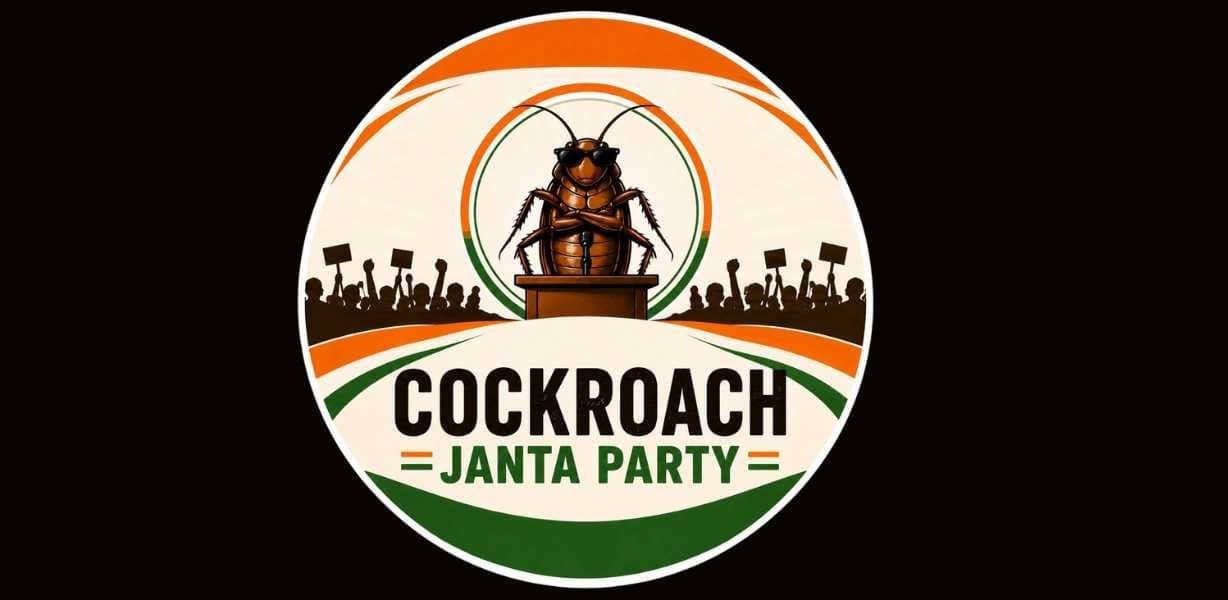
The Cockroach Janta Party was born the next morning. Within six days, it hit 17.7 million Instagram followers, making it the fastest-growing political brand in Indian social media history. The government responded by censoring its X account.
This is everything we know: who is behind it, what it demands, how it grew, and what it means.
17.7M
Insta Followers
350K+
Registered Members
6 Days
To Surpass BJP
The Remark That Started It
The CJI’s comments came during a hearing on senior advocate designation in the Supreme Court. The exact context was a discussion about individuals using fake law degrees to gain professional standing.
But the framing was broad enough to sound like a sweeping indictment of India’s unemployed youth. The CJI reportedly remarked that youngsters who don’t find employment become social media critics, RTI activists, or online commentators, and “start attacking everyone.”
The next day, the CJI issued a clarification stating his remarks were “misquoted” and directed at individuals using “fake and bogus degrees,” not at the country’s youth broadly.
Too late. The remark was already trending across 𝕏 and Instagram. And a 30-year-old Boston University graduate student, sitting thousands of miles away, had already decided what to do with it.
Who Is Abhijeet Dipke?

Dipke is not a random internet user. He is a trained political communication professional from Pune, Maharashtra. He volunteered with the AAP social media team during the 2020 Delhi Assembly elections, playing a hands-on role in the party’s meme-driven digital campaigns.
Between 2019 and 2024, he held communications roles in the Delhi Chief Minister’s Office and the Delhi Education Department. He then moved to the US to complete a master’s in public relations at Boston University.
The CJP’s launch was not a spontaneous eruption of anger. It was the work of someone who understood exactly how to turn an insult into a brand.
The Six-Day Explosion
From a single X post to a social media force dwarfing the ruling party’s digital footprint, in six days flat:
17.7 million — CJP’s Instagram followers as of May 21, 2026, evening. It surpassed the BJP’s official account (~8.7 million) within five days. A record in itself.
The BJP has spent over a decade building its digital infrastructure: IT cells, content farms, influencer networks. The CJP bypassed this in less than a week, using nothing but a Google Form, a .buzz domain, and the meme-producing energy of a generation that felt spoken about rather than spoken to.
The Five-Point Manifesto
Despite the satirical branding, the CJP’s five-point manifesto is politically specific and substantively serious:
Every demand targets a visible systemic failure: the revolving door between judiciary and legislature, the gender deficit in elected bodies, voter deletion, party-switching corruption, and corporate media capture. None is ideologically radical.
The membership criteria, by contrast, are pure satire: applicants must be “unemployed, lazy, chronically online, and able to rant professionally.” The sign-up form crashed Google Forms servers during the initial rush.
Politicians Come Calling
On May 19, sitting politicians began publicly engaging with the movement:
Mahua MoitraMahua MoitraTrinamool Congress MP and former JP Morgan banker known for her combative speeches in Parliament and her high-profile expulsion over a cash-for-questions controversy in 2023. and Kirti Azad gave the CJP mainstream political legitimacy. But it also exposed the movement to the criticism that it risked becoming a tool for opposition politicians looking for easy digital currency.
The Censorship Backlash
The censorship triggered a classic Streisand effectStreisand EffectA phenomenon where an attempt to suppress or censor information has the unintended consequence of increasing public awareness and interest in the suppressed material.. The withholding itself became a trending topic on 𝕏, drawing even more followers and registrations.
The Identity Card
The CJP’s official tagline: “A political front of the youth, by the youth, for the youth — Secular, Socialist, Democratic, and Lazy.”
It is not registered with the Election Commission of IndiaElection Commission of India (ECI)India’s autonomous constitutional body responsible for administering and supervising elections at all levels. It registers and recognises political parties, allocates election symbols, and enforces the Model Code of Conduct.. No election symbol, no organisational structure, no state committees. Its content strategy: memes, satirical videos, fake membership IDs, and crowd-sourced posts from a Gen Z demographic fluent in internet irony.

The World Watches
Forbes
Detailed profile of manifesto and demands
Al Jazeera
Gen Z reshaping political dissent
The Guardian
Viral growth and censorship
Reuters
Wire coverage
AP News
Wire coverage
Deutsche Welle
Segment on Indian youth
India’s ruling establishment has spent years curating its image abroad as a tech-forward, stable democracy. A sitting Chief Justice calling youth cockroaches, then the government censoring the satirical backlash, cuts directly against that narrative.
What Happens Next?
The CJP is in a state of rapid, chaotic expansion. Supporters have discussed fielding candidates in upcoming by-elections, with the Bankipur constituency in Bihar mentioned as a possibility. Dipke says he’ll decide the movement’s future upon returning to India.
The fundamental question: can it leap from digital virality to sustained political organisation? The CJP’s strength is its speed, its humor, and the depth of the frustration it channels. Its weakness is the absence of the grinding institutional infrastructure that turns a brand into a party.
For the moment, however, the cockroaches are everywhere. And the establishment’s attempts to stamp them out have only made them multiply.