Opening The Rift
therift
© 2026 The Rift. All Rights Reserved.
India’s Treaty Obligations and Minority Inclusiveness: The Paradox of Legislative Inaction
Where there is no inconsistency between an international norm and domestic law, and where there is a void in domestic law, international conventions must be regarded in judicial construction


Key Takeaways
1 of 3
Automatically generated. Read full article for complete context.
Part-2
The International Covenant on Civil and Political RightsICCPRA multilateral treaty committing nations to respect civil and political rights. has evolving influence as a persuasive interpretive source rather than enforceable law, with the Supreme Court progressively expanding its reliance on the Covenant across five decades.
India ratified the ICCPR on 10 April 1979, with reservations and declarations affecting Articles 1, 9, 13, 12, 19(3), 21, and 22. The reservation on Article 9 (liberty of person) was entered on the ground that the provision must be consonant with Articles 22(3)–(7) of the Indian Constitution, which permits preventive detention. India also declared that the right to self-determination under Article 1 applies only to peoples under foreign domination, not to internal minority groups. That is a reservation with continuing significance. Despite these carve-outs, India has submitted periodic reports to the Human Rights Committee under Article 40 of the Covenant. That is a tacit acknowledgment of a continuing duty to align domestic law with ICCPR standards, even where treaty provisions stand excepted.
“Where there is no inconsistency between an international norm and domestic law, and where there is a void in domestic law, international conventions must be regarded in judicial construction.”
International law does not become automatically operative as a gateway is provided by two constitutional provisions: Article 51(c)Article 51(c)Directs the State to foster respect for international law and treaty obligations., a Directive Principle directing the State to foster respect for international law and treaty obligations, and Article 253Article 253Empowers Parliament to legislate to give effect to international obligations., which empowers Parliament to legislate to give effect to those obligations. If Parliament chooses not to, is that an abdication of its duty, failure to exercise jurisdiction? I will not in this argument play up that aspect, but the Supreme Court’s approach refined over decades is that “any international convention not inconsistent with the fundamental rights and in harmony with its spirit must be read into those provisions” meaning Articles 14, 15, 19, and 21, to enlarge their meaning and content. Where there is no inconsistency between an international norm and domestic law, and where there is a void in domestic law, international conventions must be regarded in judicial construction. That follows logically as a non-negotiable.
“The ICCPR’s foundational philosophy recognising inherent human dignity is demonstrably embedded in India’s constitutional framework.”
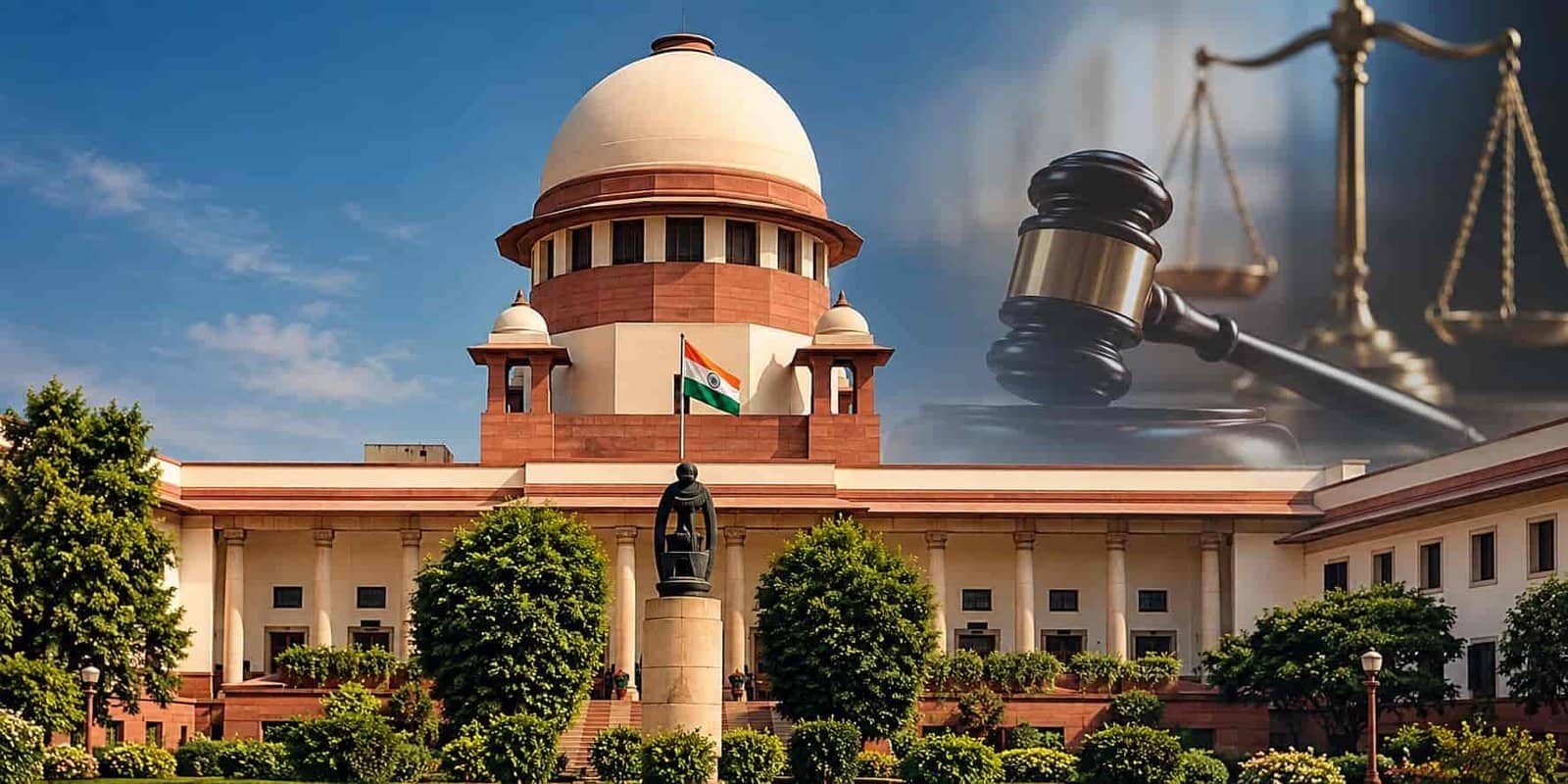
The trajectory of judicial engagement with the ICCPR can be traced across several landmark judgements : Maneka Gandhi v. Union of India (1978)Maneka Gandhi (1978)Expanded Article 21 to require that any procedure affecting personal liberty be just, fair and reasonable. : The Court’s expansive reading of Article 21 to require that any procedure affecting personal liberty be “just, fair and reasonable” laid the constitutional groundwork for later harmonisation with ICCPR Article 9 (liberty) and Article 14 (fair trial). Nilabati Behera v. State of Orissa (1993)Nilabati Behera (1993)Awarded constitutional compensation for custodial death, explicitly invoking ICCPR Article 9(5). : The Court explicitly invoked ICCPR Article 9(5) which recognises an enforceable right to compensation for unlawful arrest or detention, to award constitutional compensation for custodial death, even though India had reserved this article. This demonstrated the Court’s willingness to draw on the Covenant’s normative content even against the grain of India’s own reservations.
Vishakha v. State of Rajasthan (1997)Vishakha (1997)Foundational precedent stating international conventions must be read into domestic law where there is a void.: The Court stated directly that “regard must be had to international conventions and norms for construing domestic law when there is no inconsistency between them and there is a void in the domestic law,” using CEDAWCEDAWConvention on the Elimination of All Forms of Discrimination Against Women. alongside the ICCPR to define the scope of Articles 14, 15, 19(1)(g), and 21. This remains the foundational precedent for treaty-informed constitutional interpretation.
In People’s Union for Civil Liberties v. Union of India (1997)PUCL (1997)Invoked ICCPR Article 17 to uphold privacy rights against State surveillance. the Court invoked ICCPR Article 17 (privacy) to uphold privacy rights against State surveillance, treating the Covenant’s provision as directly informing the content of Article 21. In National Legal Services Authority v. Union of India (2014)NALSA (2014)Recognised transgender persons as a third gender using international human rights instruments., the Court recognised transgender persons as a third gender by referring to the UDHRUDHRUniversal Declaration of Human Rights., ICCPR, ICESCRICESCRInternational Covenant on Economic, Social and Cultural Rights., and the Yogyakarta PrinciplesYogyakarta PrinciplesPrinciples on the application of international human rights law regarding sexual orientation and gender identity., holding that international conventions “not inconsistent with fundamental rights” must be “read into” constitutional protections. The Court stated explicitly that the ICCPR’s foundational philosophy recognising inherent human dignity is demonstrably embedded in India’s constitutional framework. In Navtej Singh Johar v. Union of India (2018)Navtej Singh Johar (2018)Used ICCPR non-discrimination norms to strike down Section 377 of the IPC. a five-judge bench relied on ICCPR General Comment 16 on Article 17 while recognising the right to privacy as a fundamental right, and used ICCPR non-discrimination norms under Articles 2 and 26 in striking down Section 377 of the IPC. The judgment went further than most predecessors in treating ICCPR General Comments, interpretative instruments of the Human Rights Committee, as substantively persuasive authorities. The SC of the past has shown the way forward. It falls on the SC we have now, to walk the path illuminated by its predecessor.
The ICCPR’s influence, while substantial, remains constrained in important ways. Courts have declined to enforce ICCPR obligations where they conflict with explicit constitutional text or India’s reserved articles. The Supreme Court also has not always applied ICCPR standards consistently : in Mohammad SalimullahMohammad SalimullahCase concerning Rohingya deportations where the Court refused to apply the non-refoulement principle. (concerning Rohingya Muslim deportations), the Court refused to accept the non-refoulement principle despite its grounding in international human rights law. Academic commentary has observed that Indian courts sometimes use international law “instrumentally” : selectively invoking it when it supports rights-expansion while sidelining it when politically inconvenient.
The ICCPR’s most active face-off in Indian constitutional law is the meeting of Articles 25 (political participation) and 27 (minority rights) with the Court’s basic structure democracy doctrine. A necessity to follow international conventions to which India is a party and to give due respect to non-binding conventions applies with particular force when marginalised communities face structural exclusion. This renders the Covenant a live and increasingly sophisticated tool in public interest litigation targeting systemic deprivations or deficits : not merely in cultural and civil liberties contexts where it has historically operated, but in the political-structural domain that may well define Indian constitutional discourse in both litigation and electoral politics.
India’s Constitution is one where international treaties do not become part of domestic law merely upon ratification. Article 253 grants Parliament the competence to legislate for implementing treaty obligations, but the provision is an enabling power, not a self-executing command. The consequence, stated plainly by the Karnataka High Court in Bangalore v. Union of India, is that “if Parliament does not enact any law for implementing obligations under a treaty, courts cannot compel Parliament to make such law and, in the absence of such law, courts cannot enforce obedience to treaty obligations.” The Rajasthan High Court in Birma v. State and Nanka v. Government of Rajasthan reinforced this position saying treaties do not form part of the law of the land unless the legislative authority expressly makes them so. This foundational rule produces the primary judicial limitation : a treaty unimplemented by legislation creates obligations at the international plane only, and Indian citizens cannot directly invoke unimplemented treaty rights before domestic courts.
There are five core judicial limitations. The most significant structural limitation on treaty incorporation is the rule of inconsistency. Even under the more expansive post-Vishakha jurisprudence which permits international conventions to be “read into” fundamental rights in the absence of domestic law this rule applies only where there is no inconsistency between the international norm and existing domestic law. This means that a treaty provision cannot function as an independent ground of constitutional invalidity. It can only function as an interpretive aid where domestic law is ambiguous or silent.
“This creates a paradox : legislative inaction becomes, ironically, the precondition for treaty-norm effectiveness. As soon as Parliament acts,… the treaty recedes.”
Then, treaty norms may be read into constitutional rights only when there is a void in domestic law. Once Parliament occupies the field through legislation, however inadequately, the justification for direct judicial incorporation of treaty standards dissolves. This creates a paradox : legislative inaction becomes, ironically, the precondition for treaty-norm effectiveness. As soon as Parliament acts, even partially or imperfectly, the treaty recedes from the court’s operative reasoning.
Courts have consistently acknowledged that enforcing treaty obligations is primarily a function of the executive and legislature, not the judiciary. The conduct of foreign affairs, including the decision whether and how to implement treaty commitments, lies within the domain of the political branches. A court that converts unimplemented treaty obligations into directly enforceable individual rights would effectively be arrogating to itself a legislative and executive function. This separation of powers concern is particularly acute where implementing a treaty obligation would require the allocation of public resources, the restructuring of institutions, or the creation of new legal entitlements, none of which courts are institutionally equipped to accomplish. Even in the Vishakha case the Court framed its directions as guidelines operative until Parliament legislated, and not judge-made law derived from treaty text.
India’s ratification of major human rights treaties has significant reservations and interpretive declarations that limit the domestic legal reach of those instruments. Also, the Supreme Court has been inconsistent in its application of the incorporation methodology. In Mohammad Salimullah v. Union of India, the Court declined to recognise the obligation not to return persons to territories where they face serious harm as part of customary international law applicable in India, despite its recognised status in international human rights law. The selective response undermines the incorporation argument.
A critical refinement that defines the boundary of treaty incorporation in India is the distinction between a treaty norm as a directly enforceable right and a treaty norm as an interpretative tool. Indian courts have firmly refused to accept a treaty norm as a directly enforceable right : they have increasingly relied only on the latter. The operative formula is as follows : International conventions ratified by India, not inconsistent with domestic law and not occupying a field covered by legislation, may be read into constitutional provisions as interpretive aids to expand or clarify their content, but they do not themselves create enforceable rights independent of constitutional or statutory text.
This means the practical limitation is a petitioner relying on an ICCPR provision must anchor the argument in a domestic constitutional article and use the treaty norm to illuminate the content of that article. The treaty cannot stand alone as an independent cause of action.
A further limitation arises from the doctrine of non-justiciability of political questions, particularly as applied to the conduct of foreign affairs and treaty implementation. Courts have declined to review executive decisions on treaty ratification, withdrawal, or non-implementation as matters within the exclusive prerogative of the executive. Where implementing a treaty obligation would require India to alter structural features of its governance, be it delimitation processes, electoral architecture, or parliamentary composition, courts have been especially reluctant to intervene, characterising such matters as lying beyond the supervisory jurisdiction of constitutional courts. The net result of these limitations is that treaty norms in India occupy a peculiar middle space: they are neither irrelevant nor fully operative.
The Five Core Judicial Limitations
A framework governing the domestic incorporation of international treaty norms.
1. Rule of Inconsistency
Treaties cannot invalidate existing domestic law.
2. Domestic Void
Norms only apply when local legislation is silent.
3. Separation of Powers
Courts defer to political branches on enforcement.
4. Reservations
Ratification carve-outs limit legal reach.
5. Non-Justiciability
Executive treaty decisions are beyond review.
THE PARADOX
“Legislative inaction is the precondition for treaty-norm effectiveness.”
These reservations are most powerful precisely where domestic law is silent, the constitutional text is ambiguous, the right claimed maps onto an existing fundamental right, and the community seeking protection is structurally marginalised. Outside those conditions, the dualist baseline reasserts itself, and the treaty recedes to the international plane where it constrains India’s conduct before treaty bodies but provides no individual remedy before domestic courts. For lawyers trying to construct arguments from treaty obligations, the most durable strategy remains what the Court itself has sanctioned : using the treaty not as a sword to create new rights, but as a reference point from and through which to read existing constitutional guarantees more expansively and in a manner consistent with India’s professed international commitments.
“What cannot be fashioned into a sword to assault must then be fashioned into a shield.”
What cannot be fashioned into a sword to assault must then be fashioned into a shield, use it to read into and illuminate the Treaty article mapping it to constitutional provisions highlighting rights that stand implied, independent of constitutional or statutory text.
The judiciary, which may not legislate, can nevertheless value, and exercise, its power to interpret and, interpreting, bring about political justice. Will it ?
Jai Hind
Disclaimer:The views and opinions expressed in this article are those of the author(s) and do not necessarily reflect the official policy or position of The Rift.