Opening The Rift
therift
© 2026 The Rift. All Rights Reserved.
Sixty Days to Peace, or Sixty Days to the Next War: Inside the US-Iran MoU
Until that final deal is reached, what exists is a ceasefire arrangement with an attached incentive structure, not a resolved peace.

Key Takeaways
1 of 3
Automatically generated. Read full article for complete context.
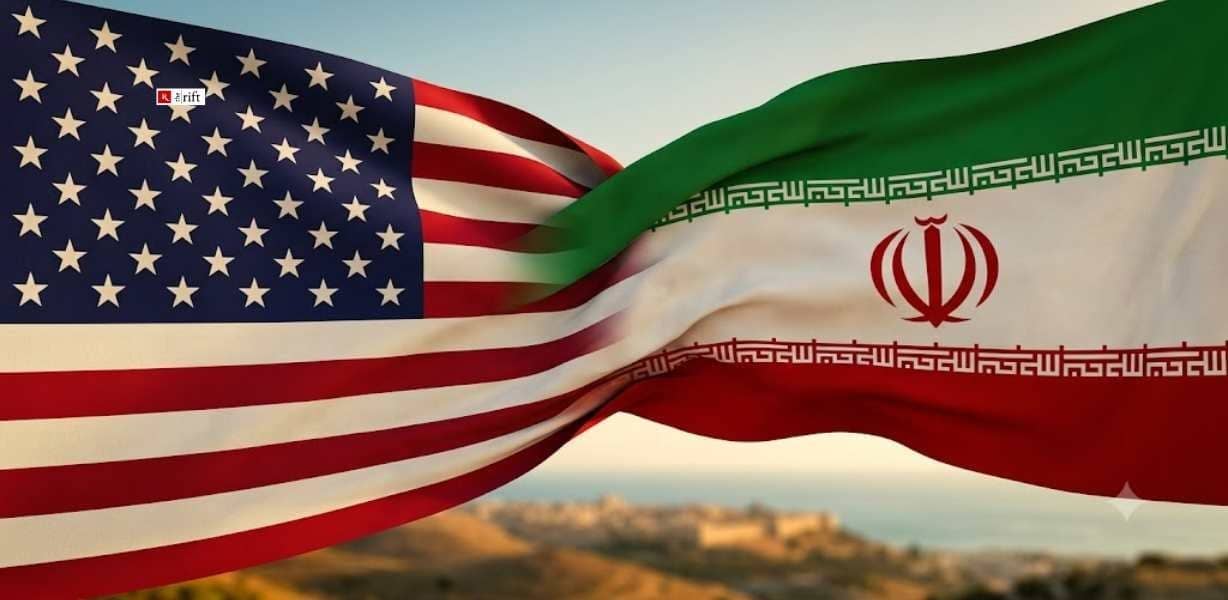
After a war that drew in Israel, threatened the world’s most important oil chokepoint, and pushed American forces to the edge of a wider regional conflict, the United States and Iran have signed a document that promises peace without yet defining it. The “Islamabad Memorandum of UnderstandingIslamabad MoUA 14-point framework agreement brokered primarily by Pakistan to halt US-Iran hostilities and initiate 60 days of negotiations. between the United States of America and the Islamic Republic of Iran” was read out to reporters by senior US officials on June 17, 2026, and Iran’s government released matching text the following day. Presidents Trump and Pezeshkian are due to formally sign it in Switzerland on June 19, though reporting suggests an electronic signature may already have been exchanged days earlier to accelerate the reopening of the Strait of Hormuz.
For a region that spent the first half of 2026 lurching toward catastrophe, Israeli strikes on Iranian military leadership and nuclear scientists, American bombing of nuclear sites, Houthi threats of retaliation, a mass evacuation of US personnel from the Gulf, the 14-point memorandum is being presented as a turning point. It is worth reading carefully, because what it actually commits both sides to is considerably narrower than “peace.”
What the Document Actually Says
The MOU’s first three points establish the headline achievement: an immediate and permanent end to military operations “on all fronts, including in Lebanon,” a mutual undertaking to respect sovereignty and territorial integrity, and a commitment to negotiate a “final deal” within sixty days, extendable by mutual consent.
Everything that follows is, in essence, a sequencing arrangement for confidence-building measures rather than a settlement of the underlying disputes. The United States agrees to begin lifting its naval blockade of Iranian ports immediately and to complete that process within thirty days. Iran agrees to make the Strait of Hormuz safe and toll-free for commercial shipping for the same sixty-day window, with full normalization of traffic within thirty days once mines and military obstacles are cleared. The two sides commit to a joint reconstruction plan for Iran worth at least $300 billion, financed with regional partners, though the mechanism for delivering that money is left to be “finalized as part of the final deal.”
On sanctions, the document distinguishes between what happens now and what happens later. The US Treasury will immediately begin issuing waivers allowing Iran to export crude oil and petroleum products, along with the banking and insurance services needed to move that trade, but the wholesale termination of UN, IAEA, and US sanctions is explicitly tied to the conclusion of a final deal, not to the signing of this memorandum. Iran’s frozen assets, reportedly in the range of $100 billion, are to be made fully usable, but again only “upon the implementation” of the MOU and according to procedures still to be negotiated.
The nuclear provisions are the most consequential and the vaguest. Iran reaffirms, in language identical to commitments it has made for decades, that it will not pursue nuclear weapons. The two sides agree to address the disposition of Iran’s stockpile of highly enriched uranium through a mechanism to be negotiated, with a “minimum methodology” of on-site down-blending under IAEA supervisionIAEA SupervisionMonitoring by the International Atomic Energy Agency, the UN nuclear watchdog responsible for verifying nuclear safeguards.. Enrichment levels themselves, the issue at the heart of years of failed diplomacy, are deferred entirely to the sixty-day negotiation period. In the interim, both sides agree to a status quo: Iran freezes its program where it stands, and the US refrains from new sanctions or additional troop deployments to the region.
A Bridge, Not a Building
It is important to be precise about what kind of document this is. A memorandum of understanding is, by its nature, a statement of intent and a procedural roadmap, not a binding treaty. This MOU says so itself: paragraph fourteen specifies that only the eventual “final deal” will be endorsed by a binding UN Security Council resolution. Until that final deal is reached, what exists is a ceasefire arrangement with an attached incentive structure, not a resolved peace.
This structure explains both the document’s appeal and its fragility. It is appealing because it immediately addresses the two most urgent crises: active warfare and a blocked Strait of Hormuz, through which a significant share of the world’s seaborne oil trade passes, without requiring either side to resolve the nuclear question that has defeated every previous round of negotiation. It is fragile for exactly the same reason. President Trump’s own framing of the stakes, delivered at the G7 summit in France as the text was released, captured this starkly: “If it doesn’t get done in 60 days, that’s all right. We go back to bombing.” The sanctions relief, the reconstruction funding, and the broader normalization are all explicitly contingent on a final agreement that has not yet been reached and that depends on resolving precisely the issue: uranium enrichment, that has proven hardest to resolve.
The Domestic Politics on Both Sides
The MOU’s reception within Iran has reportedly been far from unified. Hardline factions, particularly the Paydari FrontPaydari FrontAn ultra-conservative and hardline Iranian political group historically opposed to concessions with the West. associated with the ideological core of the 1979 revolution, have voiced fierce opposition, with reports of death chants directed at Iran’s negotiators, Foreign Minister Abbas Araghchi and parliamentary speaker Mohammad Bagher Ghalibaf. Iran analysts who have studied the reaction suggest the dissent reflects internal disagreement over tactics rather than a genuine challenge to the deal’s survival: most of the political establishment, including hardliners, reportedly view some accommodation with Washington as necessary to the Islamic Republic’s own survival, particularly in the aftermath of a reported nationwide crackdown on anti-regime protests in January 2026 that left a substantial civilian toll and continues to shape Iran’s domestic legitimacy.
On the American side, the deal has drawn its own range of reactions, from G7 leaders welcoming it as a historic opening to prevent Iranian nuclearization, to domestic commentators questioning whether the terms amount to relief for Tehran disproportionate to what Washington has secured in return. The asymmetry in the document is real: Iran receives immediate economic relief: oil exports, asset access, a path to a $300 billion reconstruction fund, while the corresponding nuclear constraints are pushed into a future negotiation with no guaranteed outcome.
What to Watch in the Next Sixty Days
Three things will determine whether this memorandum becomes the foundation of a durable settlement or another entry in the long history of Iran-US negotiations that collapsed before completion.
First, the actual reopening of the Strait of Hormuz and the verifiable lifting of the US naval blockade will be the first real test of good faith on both sides, since these are the measures meant to begin immediately rather than await the final deal.
Second, the question of enrichment, not just the disposition of existing stockpiles, but whether Iran retains any enrichment capacity going forward, is the issue most likely to determine whether sixty days is enough time, given that it is the same issue that has defeated negotiators since the 2015 nuclear deal’s collapse.
Third, the durability of domestic political support in Tehran, where the hardline backlash suggests the deal’s survival may depend as much on internal regime politics as on the substance of what Washington offers.
The memorandum’s own architecture acknowledges its fragility. It does not ask either side to trust the other; it asks them to sequence very specific, narrow actions and revisit the harder questions on a deadline. Whether that sequencing produces a final, binding peace endorsed by the UN Security Council, or simply delays a return to conflict by sixty days, is the question this document deliberately leaves open.
Disclaimer:The views and opinions expressed in this article are those of the author(s) and do not necessarily reflect the official policy or position of The Rift.